Executive Overview
For modern content creators, mobile filmmakers, and digital journalists capturing high-end footage on smartphones, the pursuit of uncompromising visual quality has long been hindered by a frustrating hardware bottleneck: storage capacity. As mobile sensor technology continues to evolve, smartphones are now capable of shooting cinema-grade formats like Apple ProRes in 4K at blistering framerates of 60fps or 120fps. However, this level of visual fidelity comes with an immense data footprint. ProRes files can be up to 30 times larger than standard HEVC equivalents, devouring roughly 7GB of storage space every single minute.
Even the most advanced, high-end devices—such as the iPhone 18 Pro—can see their internal drives maxed out in what feels like mere moments under these intensive workflows. Consequently, external solid-state drives (SSDs) have transformed from optional accessories into absolute necessities for serious mobile creators.
Yet, acquiring external storage has become a punishing financial endeavor. Throughout 2026, the global storage market has experienced unprecedented turbulence, with SSD and memory prices skyrocketing to historic highs. This acute hardware crunch has been primarily driven by unrelenting demand from enterprise AI data centers, which have aggressively bought up global semiconductor and flash-memory supplies. For individual creators operating on tight budgets, outfitting a mobile rig with reliable, high-speed external storage has felt increasingly out of reach.
Amid this challenging landscape, notable relief has finally arrived. B&H Photo has slashed the price of the ultra-portable Lexar Professional Go Portable SSD (1TB) from its inflated MSRP of $379.99 down to $229.99. Representing the most aggressive discount seen since the broad memory price hikes earlier this year, this deal offers a rare financial reprieve. While the headline promotion applies to the standalone 1TB drive, creators can also opt to bundle the purpose-built hub for an additional $20 to unlock charging and accessory capabilities, with parallel discounts similarly touching the 2TB variants. This report investigates the intersection of soaring enterprise tech demands, mobile video innovation, and why this specific hardware discount matters deeply for the future of independent content creation.
Detailed Chronology: The Evolution of Mobile Cinema and the Storage Crisis
To fully appreciate the significance of current storage solutions and their associated pricing volatility, it is essential to examine the trajectory of smartphone video technology and the market forces that collided with it over the past several years.
The Shift Toward Pro-Level Mobile Production (2023–2025)
The democratization of mobile filmmaking accelerated rapidly when Apple introduced native ProRes recording and high-frame-rate 4K log profiles starting with the iPhone 15 Pro and Pro Max lineup. This capability effectively bridged the gap between pocket-sized daily drivers and professional mirrorless cinema cameras. Suddenly, independent creators, travel vloggers, and documentary filmmakers could capture dynamic range and color grading latitudes previously reserved for dedicated Hollywood equipment.
However, the hardware architecture of smartphones was not initially designed to handle the sustained throughput of uncompressed or lightly compressed video streams written directly to internal flash memory. While manufacturers expanded internal storage capacities up to 1TB and 2TerraBytes, filling those drives with high-bitrate video meant constantly offloading footage to computers—a workflow killer in fast-paced field environments.
The industry’s response was the adoption of external USB-C SSD recording. Filmmakers began rigging their iPhones and Android flagships with external drives clamped to the back of their phones, running high-speed USB-C cables to capture footage directly in-camera.
The 2026 AI Boom and the Semiconductor Squeeze
As mobile videographers grew increasingly dependent on external SSDs, a massive macroeconomic shift occurred in the broader technology sector. Throughout late 2025 and into 2026, the explosive expansion of artificial intelligence infrastructure required the construction and scaling of massive data centers worldwide. These facilities demanded immense volumes of enterprise-grade NAND flash memory and high-performance controller chips.
The ripple effects were felt immediately across consumer electronics. Supply chains that typically catered to everyday consumers, PC builders, and creative professionals were abruptly strained. Manufacturers prioritized high-margin enterprise orders, causing consumer SSD prices to climb steadily. By the spring of 2026, external storage solutions had experienced historic price hikes, pricing many independent creators out of necessary hardware upgrades and forcing them to compromise on video resolution, framerates, or recording lengths.
The Current Market Correction: Mid-2026
The recent price adjustment on the Lexar Professional Go SSD at major retailers like B&H Photo marks a vital turning point. While the broader market remains elevated due to ongoing component scarcity, targeted retail promotions are beginning to offer windows of opportunity for creators. Dropping the 1TB model from $379.99 to $229.99 brings the drive back down to a tier of economic feasibility that mirrors pre-crisis accessibility, making it a critical focal point for mobile production enthusiasts looking to upgrade their toolkits without breaking the bank.
Supporting Context & Metrics: The Math Behind Mobile Video and SSD Performance
Understanding why external drives like the Lexar Professional Go are vital requires looking closely at the technical specifications, data rates, and physical constraints of mobile content creation.
The Data Deluge: A Quantitative Breakdown
To contextualize the storage crisis, consider the following metrics regarding mobile video formats:
- Standard HEVC (H.265) 4K at 30fps: Consumes roughly 230MB to 350MB per minute. Manageable for internal storage over short bursts.
- Apple ProRes 4K at 30fps: Scales dramatically up to 1.7GB to 2GB per minute.
- Apple ProRes 4K at 60fps or 120fps: Consumes an astonishing 6GB to 7GB per minute.
At 7GB per minute, a standard 15-minute shooting session in maximum-quality ProRes will consume over 100GB of data. An entire day of field production can easily generate a terabyte of raw footage. Filling up a standard 512GB iPhone internal drive can happen in under an hour of active rolling, rendering internal-only recording an unsustainable practice for professional workflows.
Hardware Spotlight: Lexar Professional Go Portable SSD
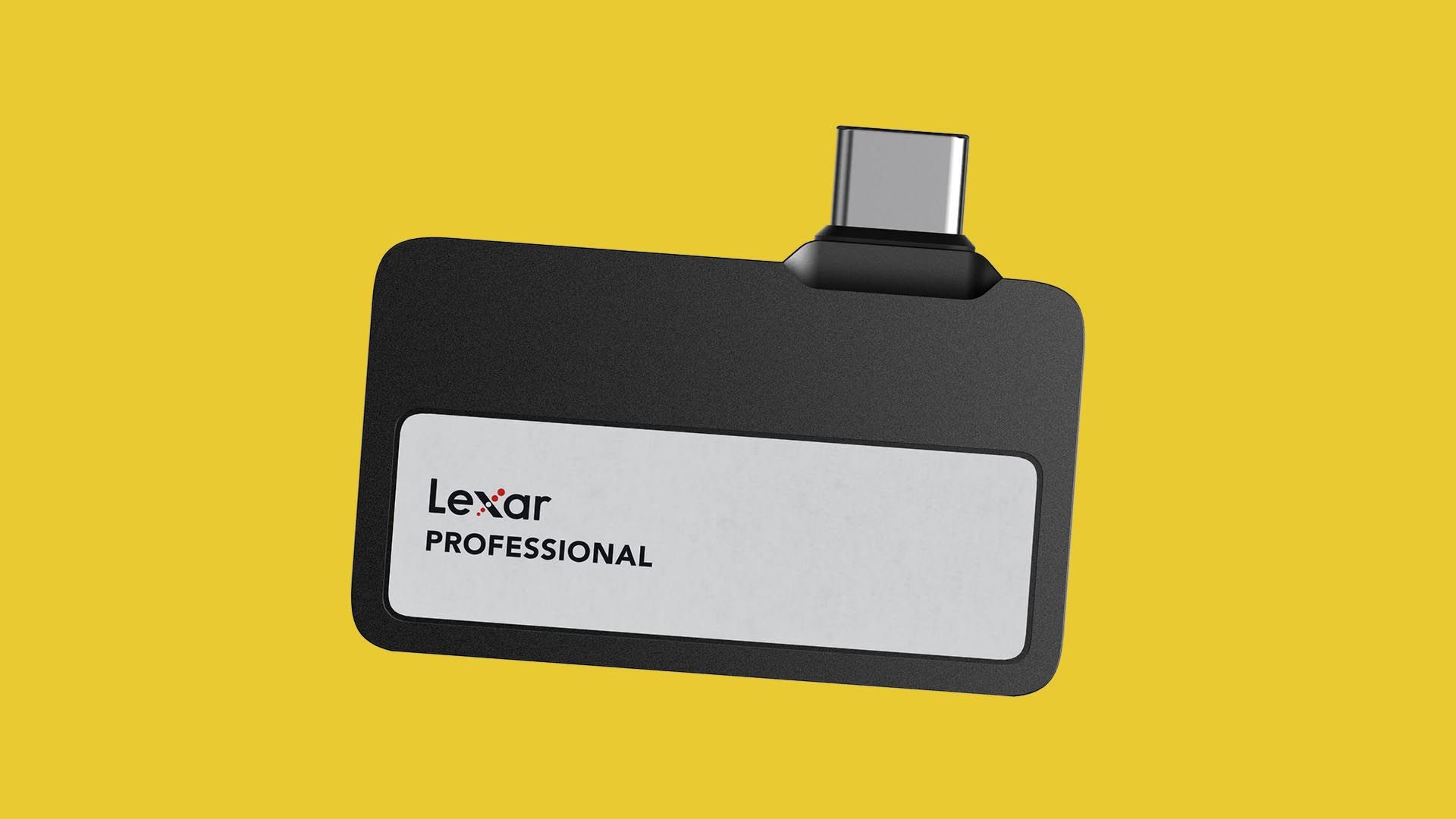
Designed specifically to alleviate these bottlenecks, the Lexar Professional Go Portable SSD introduces a modular form factor that sets it apart from traditional cable-reliant external drives.
- Form Factor and Portability: Measuring as a minuscule, lightweight square, the drive plugs directly into the USB-C port of compatible Apple and Android devices. This eliminates the dangling wires and awkward cable management typically associated with tethered mobile SSD setups.
- Direct-to-Drive Recording: Users can bypass the phone’s internal storage entirely, writing high-framerate ProRes footage straight to the SSD in real time.
- Modular Versatility: The ecosystem includes an optional hub (available for an additional $20 in current promotions) that provides simultaneous power delivery, allowing creators to charge their phones and power accessories while recording extended sessions.
- Capacity Options: While the spotlight sits on the heavily discounted 1TB tier ($229.99 down from $379.99), scaled discounts also apply to the 2TB iterations, catering to heavy-duty professional creators who require even larger buffers in the field.
Industry Perspectives and Expert Analysis
The intersection of hardware pricing and content creation demands has sparked considerable commentary throughout the tech and film production sectors. Industry analysts note that while enterprise AI infrastructure continues to dictate memory pricing trends, niche consumer products that solve specific ergonomic problems—such as mobile vlogging rigs—retain high value among creators who refuse to compromise on production quality.
Storage hardware specialists emphasize that finding a reliable, high-speed drive at a discount is increasingly rare in the current economic climate. "When you look at the supply chain pressures affecting NAND flash memory throughout 2026, seeing a specialized mobile SSD drop by over $150 is an anomaly worth noting," remarks consumer hardware market analyst Sarah Jenkins. "For mobile videographers who have been postponing their upgrades due to inflated component costs, these targeted retail drops represent the best window to secure professional-grade throughput."
Furthermore, professional mobile filmmakers have lauded the design philosophy of modular direct-plug SSDs. By removing the friction of external cables and mounting brackets, accessories like the Lexar Professional Go lower the barrier of entry for run-and-gun journalists and independent creators who need a nimble, pocket-sized kit that can transition effortlessly from a handheld smartphone rig to a desktop editing suite via USB-C.
Future Outlook: What Lies Ahead for Mobile Creators and Storage Markets?
As the digital content landscape marches toward higher resolutions, immersive formats, and higher frame rates, the relationship between mobile devices and external storage will only grow more interdependent.
1. The Persistence of AI-Driven Hardware Costs
Industry forecasts suggest that enterprise demand for high-capacity memory will remain robust well into the foreseeable future as data centers continue their global expansion. Consequently, consumers should not expect a sudden, permanent return to pre-crisis hardware pricing across the board. Instead, savvy creators will need to monitor the market closely for strategic retail promotions, holiday sales, and localized discounts to acquire essential gear without overspending.
2. The Next Wave of Smartphone Integration
Looking forward, future iterations of flagship smartphones will likely continue to expand native recording capabilities, pushing past current 4K limits toward widespread 8K mobile capture and advanced spatial video formats. As these file sizes scale exponentially, the reliance on ultra-fast, high-capacity external drives will transition from a prosumer workaround into a universal standard for all mobile media production.
3. Innovation in Accessory Design
The success of modular storage solutions points toward a future where hardware accessories are designed with seamless cross-device compatibility in mind. As USB-C standards evolve to support even faster data transfer protocols and higher power delivery thresholds, portable SSDs will become even smaller, faster, and more deeply integrated into mobile workflows.
For now, creators navigating the high-cost landscape of 2026 have a tangible opportunity. With deals like the Lexar Professional Go 1TB SSD reduction at B&H Photo demonstrating that relief is occasionally possible, mobile videographers can equip themselves to capture uncompromised 4K ProRes footage without letting storage constraints—or inflated market prices—hold their creative vision back.