Executive Overview
In an era dominated by generative artificial intelligence, automated text generation, and digital saturation, the humble ballpoint pen has emerged as an unlikely instrument of rebellion. For years, prognosticators foretold the absolute death of handwriting, predicting that the tactile art of putting ink to paper would soon join the rotary telephone and the typewriter in the museum of obsolete technologies. Yet, a powerful cultural correction is underway. As digital fatigue sets in and the internet grapples with an influx of low-effort, algorithmically generated content—often disparagingly referred to as "AI slop"—society is experiencing a profound yearning for authenticity.
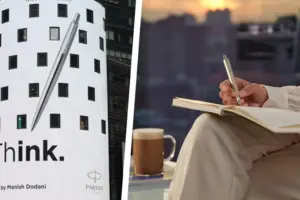
Enter Parker, the legendary writing instrument manufacturer. Capitalizing on a spontaneous viral creative challenge that reimagined classic pens specifically for the AI age, the heritage brand executed a masterclass in modern marketing. Rather than ignoring the grassroots conversation happening among designers and creatives online, Parker breathed life into unsolicited spec advertisements by projecting them onto a high-profile digital billboard in New York City’s Times Square.
This unexpected intersection of artificial intelligence, viral design culture, and heritage craftsmanship highlights a fascinating paradox: the very technologies threatening to replace human expression are simultaneously driving a renaissance for analog tools. To explore this phenomenon further, this deep-dive report examines the chronology of the viral campaign, the broader socio-cultural backlash against digital automation, the psychology of handwriting in the modern workplace, and current retail trends making iconic pens more accessible than ever.
Detailed Chronology: From Grassroots Spec Ads to Times Square Stardom
The sequence of events that brought Parker back to the forefront of global advertising culture unfolded rapidly, driven by the agility of internet creatives and the opportunistic vision of modern brand managers.
Phase 1: The AI Advertising Landscape and Creative Exhaustion
By mid-2024, the graphic design and advertising industries reached a saturation point regarding artificial intelligence. While corporate entities rushed to integrate generative tools to cut costs, public sentiment began to sour. Social media feeds flooded with low-quality, sterile AI-generated flyers, poorly rendered imagery, and synthetic copywriting lacking human nuance. In response, a counter-movement took shape within creative communities. Designers began stepping in to manually fix AI-generated visual clutter, while copywriters and content creators championed the raw, imperfect nature of human thought.
Phase 2: The Viral Spec Campaign
Amid this climate of creative friction, an informal design challenge went viral across digital platforms like Creative Bloq and Instagram. Creatives began spontaneously conceptualizing spec ads—unsolicited creative concepts—that pitted traditional pens against generative AI tools. These concepts humorously and pointedly reframed classic stationery as the ultimate offline utility, a direct pushback against algorithmic homogeneity. The messaging resonated instantly, tapping into a collective fatigue with digital-first living.
Phase 3: Brand Agility and the Times Square Activation
Unlike many legacy corporations that might have ignored consumer-generated spec work or issued cease-and-desist notices to protect brand guidelines, Parker recognized a generational marketing opportunity. Moving with unprecedented speed, the brand’s marketing team took the viral, fan-made anti-AI pen concepts and transformed them into reality.
The campaign culminated in a striking digital billboard display in the heart of New York City’s Times Square. By broadcasting these counter-cultural designs on one of the most expensive and visible advertising real estate markets in the world, Parker bridged the gap between internet subculture and mainstream corporate marketing, cementing its status as an ally to the human-first creative movement.
Supporting Context & Metrics: The Science and Sociology of Handwriting
The sudden resurgence of analog writing instruments is not merely a nostalgic hipster trend; it is supported by a growing body of neuroscientific research and shifting consumer behavior metrics.
The Cognitive Benefits of Pen and Paper
For over a decade, cognitive scientists and educational researchers have studied the differences in brain activation between typing on a keyboard and writing by hand. Studies consistently show that physical handwriting engages complex motor skills, spatial-visual awareness, and tactile feedback in ways that digital typing simply cannot replicate.
- Enhanced Memory Retention: The physical act of forming letters forces the brain to process and synthesize information rather than transcribing verbatim. This leads to superior conceptual understanding and long-term memory retention.
- Deep Focus and Reduced Distraction: Writing in a notebook inherently isolates the user from the endless cascade of notifications, pop-ups, and browser tabs that plague digital devices, fostering deep work states.
- Emotional Well-being: Journaling and analog reflection have been clinically linked to lower stress levels, improved emotional regulation, and enhanced creative problem-solving.
The Rise of Analog Rebellion in Marketing
As automated content floods digital channels, consumers have developed sophisticated internal detectors for authenticity. In response, brands and individual creators are adopting radically analog tactics to break through the noise.
Recently, businesses large and small have begun abandoning slick, sterile graphic design templates in favor of handwritten social media posts, hand-drawn illustrations, and tactile product packaging. In a digital landscape where anyone can prompt an AI to generate a thousand words in seconds, the physical mark of a human hand has become the ultimate luxury commodity and a badge of integrity.

Official Perspectives and Industry Reactions
The intersection of heritage manufacturing and cutting-edge viral culture has elicited strong reactions from brand strategists, design critics, and cultural commentators alike.
Industry insiders have praised Parker for letting go of rigid corporate control in favor of participatory marketing. By embracing grassroots creativity, the brand demonstrated that heritage companies do not need to invent every campaign from scratch; sometimes, listening to what consumers are already saying about your product yields the most authentic results.
Furthermore, design critics have pointed out the ironic brilliance of using digital billboards—the epitome of modern, high-tech advertising—to promote a low-tech, analog writing instrument that encourages people to disconnect from screens. This juxtaposition amplified the message, transforming the medium into part of the narrative.
Market Dynamics: Iconic Writing Instruments in the Digital Age
As the cultural appreciation for analog tools grows, market accessibility has adapted to meet the demand. Surprisingly, owning a piece of writing history—complete with pop-culture pedigree—is more affordable than ever, often costing less than a monthly subscription to premier generative AI platforms.
The Parker Jotter: A Cinematic Legacy on Discount
The legendary Parker Jotter, celebrated for its durability, iconic click mechanism, and distinctive arrowhead clip, holds a special place in design history. Pop-culture aficionados will note its cinematic pedigree as the weapon of choice for James Bond in films like Goldeneye.
Current retail trends reflect steep discounts across major e-commerce platforms like Amazon, making these timeless tools accessible to a new generation:
- The Classic Parker Jotter: The standard black-and-steel ballpoint model is currently seeing price reductions of up to 30%, dropping to approximately $8.34.
- The Parker Jotter XL: For those preferring a heavier, more substantial grip, the larger monochrome stainless steel Jotter XL has seen price cuts of roughly 18%, bringing it down to $32.79.
The Parker 51: Royalty and Literary Espionage
For enthusiasts looking to embrace an even more traditional writing experience, fountain pens offer an unmatched tactile connection to the page. The Parker 51 fountain pen carries profound historical and literary weight. It was famously favored by the late Queen Elizabeth II for official state correspondence and appeared in Ian Fleming’s James Bond novel Moonraker.
E-commerce promotions have similarly impacted these high-end heritage pieces, with the Parker 51 seeing discounts of nearly $25, bringing its retail price down to $101.25.
Future Outlook: Where Analog Meets Algorithm
Looking ahead, the success of Parker’s impromptu campaign signals a broader shift in how heritage brands will navigate a technology-saturated future. Rather than viewing artificial intelligence as an existential threat that must be fought with competing software, forward-thinking brands are positioning themselves as sanctuaries for humanity.
The future of productivity is unlikely to be a zero-sum game where digital tools entirely replace analog ones. Instead, a hybrid model is taking shape: AI will continue to handle routine data sorting, administrative drafting, and algorithmic optimization, while human beings will reclaim pen and paper for high-level strategic thinking, emotional reflection, and authentic creative expression.
Parker’s unexpected viral triumph proves that when technology threatens to make the world feel artificial, the human desire for something real, tactile, and permanent only grows stronger. Whether scribbling notes in a leather-bound journal or signing a critical contract with a classic stainless steel Jotter, the pen remains not just mightier than the sword, but a steadfast anchor in an increasingly fluid digital world.