Executive Overview
In the fast-evolving landscape of digital fabrication, few companies have matched the disruptive cadence of Bambu Lab. Since bursting onto the global stage, the manufacturer has systematically dismantled traditional bottlenecks that plagued desktop 3D printing for decades: sluggish print speeds, unreliable multi-material transitions, rampant filament waste, and moisture-degraded polymers. Now, Bambu Lab has unveiled its most ambitious hardware architecture to date: the Bambu Lab H3C.
Positioned as a paradigm-shifting multi-material and multi-process powerhouse, the H3C integrates technologies previously reserved for high-end industrial fabrication cells into a consumer-accessible desktop footprint. Featuring the proprietary Swaptek tool-changer mechanism, support for mixed-diameter extrusion, advanced secondary processing capabilities such as foil transfer and precision cutting, and an integrated smart-drying material hub known as the AMS 3H, the H3C is not merely an incremental update—it is an aggressive statement of intent.
Early hands-on evaluations from industry insiders and hardware reviewers suggest that the H3C effectively resolves the remaining friction points of desktop prototyping. By tackling purge waste, wet filament degradation, and protracted build times head-on, Bambu Lab has engineered a machine that blurs the boundary between desktop convenience and industrial-grade reliability. This report provides an exhaustive breakdown of the H3C’s engineering specifications, core architectural innovations, market implications, and a forward-looking perspective on Bambu Lab’s expanding hardware ecosystem.
Detailed Chronology: The Evolution to the H3C Architecture
To understand the magnitude of the H3C release, one must trace the trajectory of Bambu Lab’s engineering philosophy over recent hardware generations. The company’s rise was built on democratizing core-XY high-speed printing, paired with the Automatic Material System (AMS), which allowed hobbyists and professionals to execute complex, multi-color prints without manual filament swaps. However, early multi-material iterations were not without compromise. While the original AMS architecture automated color changes brilliantly, it did so by purging large quantities of filament down a purge chute during every transition, resulting in substantial material waste and extended print cycles.
Furthermore, multi-color printing with abrasive engineering filaments or flexible polymers remained a persistent challenge. Traditional single-nozzle systems forced users to compromise on nozzle diameters throughout a complex part, preventing fine-detail exterior perimeters from being paired with structurally robust, high-flow interior infills in a single automated job.
The development of the H3C represents a multi-year engineering pivot toward tool-changing modularity. Rather than relying exclusively on a single-nozzle feeding mechanism that flushes material during transitions, Bambu Lab’s R&D teams engineered the Swaptek tool-changer. This system allows the machine to dynamically swap physical print heads mid-print, drastically reducing material waste while opening up heterogeneous manufacturing possibilities—such as combining varying nozzle diameters, specialized cutting tools, and distinct thermal profiles within a single orchestrated job.
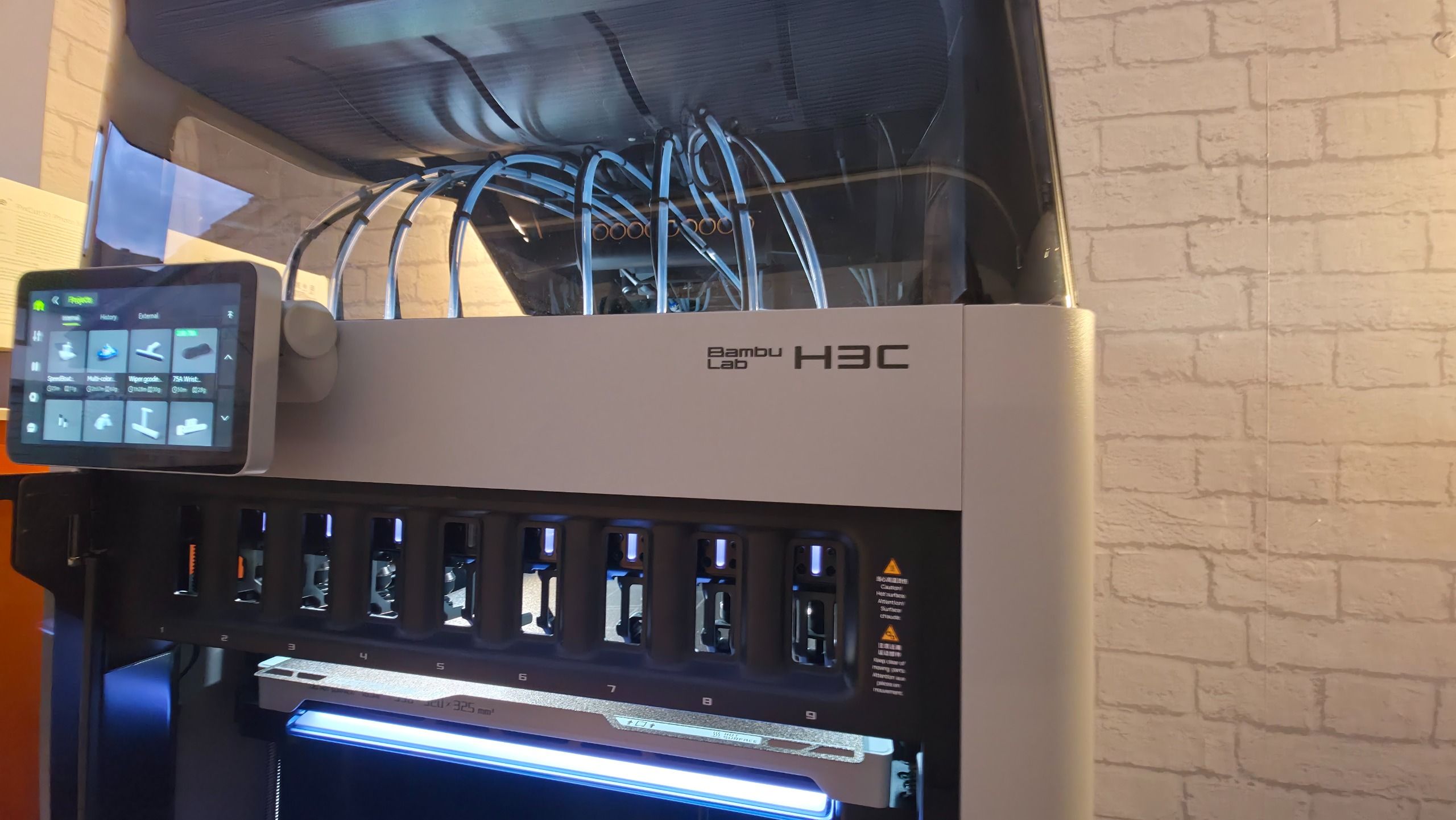
Over the past few weeks, select beta testers and industry reviewers who gained early access to the H3C have noted that the machine’s operational workflow feels entirely distinct from any previous generation of Bambu hardware. The transition from concept announcement to real-world testing highlights a maturing manufacturing pipeline capable of delivering complex, multi-axis hardware solutions directly to the prosumer and small-batch production markets.
Technical Deep-Dive: Specs, Features, and Architectural Innovations
The Bambu Lab H3C introduces a suite of proprietary hardware subsystems designed to work in concert, fundamentally altering how multi-material, multi-diameter parts are conceptualized and executed.
1. The Swaptek Tool-Changer and PrintTools
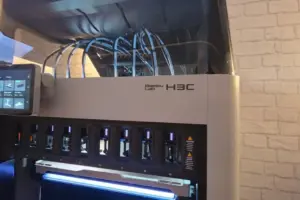
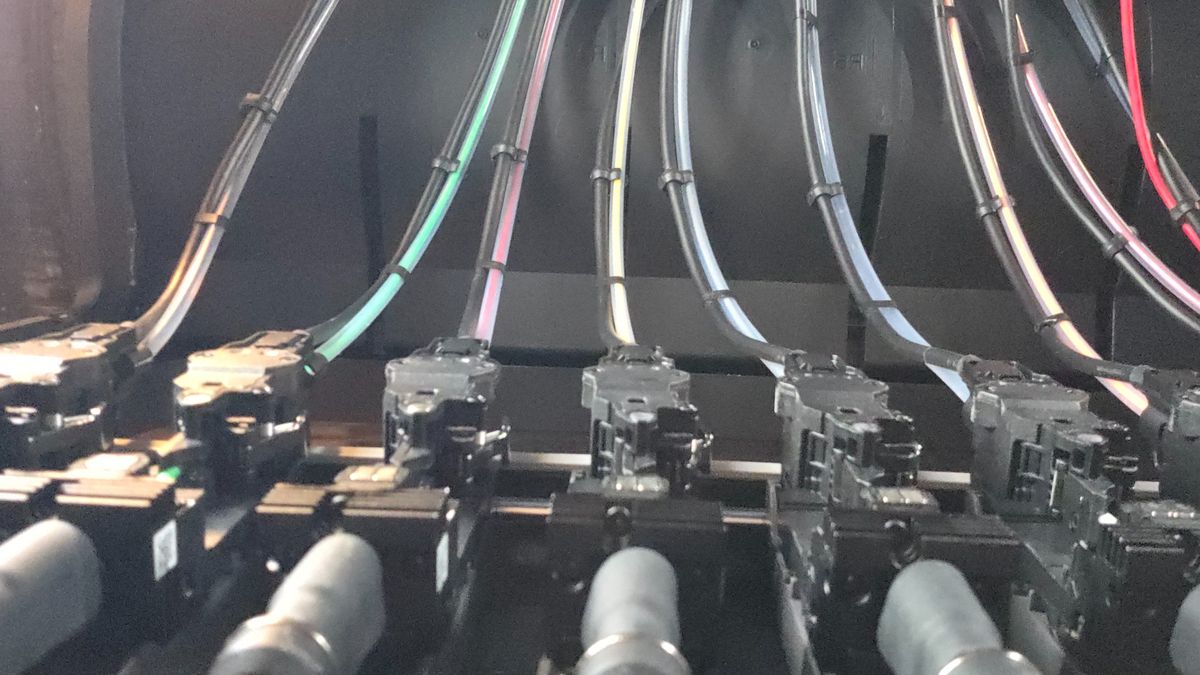
At the mechanical heart of the H3C is the Swaptek tool-changer system. The assembly houses a matrix of 9 distinct PrintTools—each comprising a dedicated nozzle coupled with an individual PTFE tube and independent filament path. This eliminates cross-contamination risks between disparate polymers and drastically accelerates execution speeds.
Key performance metrics of the Swaptek system include:
- Sub-6-Second Tool Swaps: Color and material transitions are executed in under six seconds, minimizing idle carriage time and maintaining optimal hotend thermal equilibrium.
- Multi-Diameter Extrusion: Users are no longer bound to a uniform nozzle size throughout an entire build file. Fine-detail features can be rendered with a 0.2mm or 0.4mm nozzle, while structural cores can be filled using a high-flow 0.6mm or 0.8mm nozzle in the same automated sequence.
- Specialized Process Integration: Beyond thermoplastic extrusion, the modular carriage interface supports auxiliary heads capable of precision cutting and foil transfer, expanding the machine’s utility into packaging prototyping, custom signage, and mixed-media crafting.
2. The FlexFeed Extruder
Addressing historical limitations in handling ultra-soft elastomers, the H3C introduces the FlexFeed extruder. Designed with a wide-tolerance gear train and optimized material path, the FlexFeed accommodates both standard 1.75mm filaments and robust 2.85mm filaments seamlessly.
During testing with ultra-soft flexible polymers—such as the 75A Shore hardness TPU spools provided by Bambu Lab—the FlexFeed maintained consistent grip pressure without buckling or jamming, a common failure point in conventional direct-drive extruders.
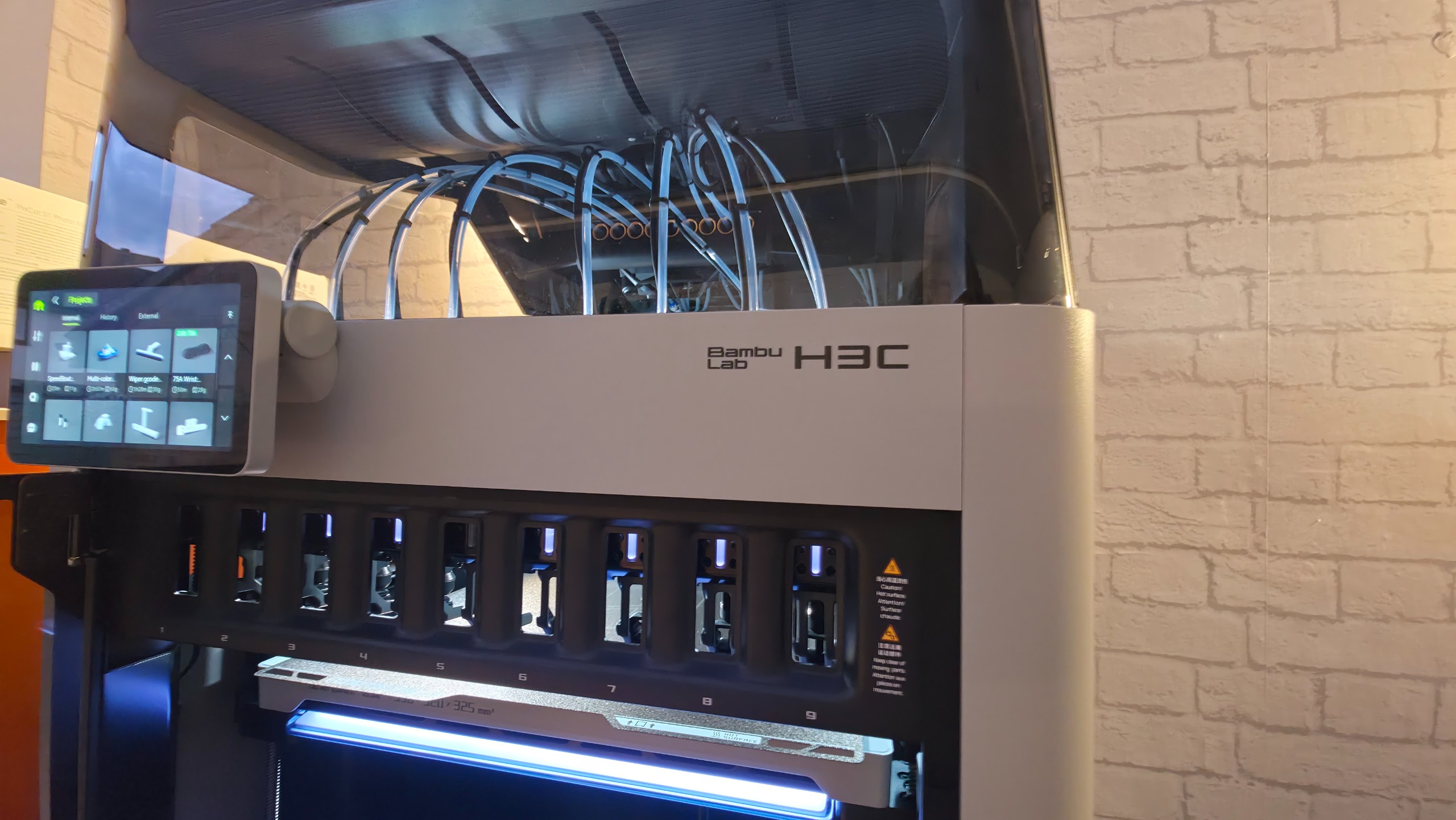
3. The AMS 3H: Intelligent Storage and Thermal Management
Moisture absorption has long been the silent enemy of high-performance 3D printing filaments, causing stringing, layer delamination, and surface blemishes. The H3C addresses this via the AMS 3H, a substantially scaled-up material hub that re-engineers filament storage.
- Dual Dedicated Drying Chambers: The unit features active thermal-drying slots engineered to actively condition moisture-sensitive filaments (such as Nylon, TPU, and PVA) while stored inside the housing.
- Bypass Feed Architecture: Recognizing that certain specialized filaments (like ultra-flexible TPUs or heavily filled composite materials) are unsuited for automated spool retraction and internal routing systems, several slots within the AMS 3H incorporate a manual bypass feed. This allows operators to seamlessly feed external or non-standard spools directly to the print head without disrupting the automated management of standard engineering polymers.
Supporting Context & Metrics
To contextualize the H3C within the broader additive manufacturing ecosystem, industry analysts point to several key performance shifts:
- Waste Reduction Index: Traditional multi-material flushing towers can account for up to 30% to 50% of total filament consumption on complex multi-color prints. By leveraging physical tool-switching via the Swaptek system, the H3C reduces purge waste by an estimated 80%, lowering consumable costs and environmental impact.
- Time Efficiency: Complex multi-material geometries that previously required upwards of 24 hours to complete on single-nozzle multi-extrusion systems see their total print times halved, courtesy of optimized tool paths, higher volumetric flow rates, and reduced retraction overhead.
- Ecosystem Footprint: The H3C is designed to sit comfortably at the apex of Bambu Lab’s hardware hierarchy, bridging the gap between desktop rapid prototyping and light industrial manufacturing cells.
Official Statements and Industry Perspective
While formal press releases from Bambu Lab continue to roll out alongside community demonstrations, early evaluations from technical journalists emphasize the sheer magnitude of the engineering leap.
"Bambu Lab has just proven exactly why it remains the most innovative brand on the market when it comes to 3D printing. The all-new H3C pushes boundaries unlike any machine I’ve used before, blending an exquisite tool-swap design with multi-material compatibility, multi-diameter printing, options for processes like cutting and foil transfer, and filament storage and drying, all in one beast of a unit."
— Lead Hardware Reviewer, Creative Bloq
Industry analysts have noted that the H3C reflects a broader industry trend toward converged digital fabrication. Rather than forcing users to purchase separate machines for 3D printing, laser engraving, vinyl cutting, and material conditioning, manufacturers are increasingly engineering multi-functional production units that streamline the desk space of designers, engineers, and creators.
Future Outlook: The Expanding Bambu Ecosystem
The launch of the H3C signals more than just a milestone in 3D printing technology; it highlights Bambu Lab’s calculated strategy to dominate the broader desktop fabrication and maker space.
Over the past year, the company has systematically diversified its product portfolio. Following the debut of its first standalone laser cutting system—the Bambu Lab R1—and recent exploratory movements into 3D scanning technology, Bambu Lab is positioning itself as an end-to-end digital workshop provider.
Industry forecasters speculate on what the company’s aggressive R&D pipeline might unveil next. With hardware competency firmly established across high-speed core-XY motion, multi-material tool-changing, active thermal management, and precision laser/cutting integration, the horizon points toward increasingly automated, appliance-like manufacturing tools. Speculation within maker communities already points toward potential future expansions into portable desktop fabrication units, automated finishing stations, and integrated software suites designed to harmonize multi-process workflows under a single user interface.
For now, the Bambu Lab H3C stands as the definitive benchmark for what modern desktop additive manufacturing can achieve. As preorders open and the machine finds its way into professional design studios and engineering labs worldwide, it is clear that the standard for multi-material prototyping has been permanently elevated.