Executive Overview
In an era of rapid technological obsolescence, where consumer electronics are frequently sidelined by the relentless march of planned upgrades, Google has extended an olive branch to owners of its legacy smart home hardware. The tech giant has initiated a firmware rollout, version 3.79.550760, specifically targeting its foundational smart speakers. While this update does not promise to transform a 2016-era speaker into a state-of-the-art AI command center, it represents a significant commitment to software longevity.
By leveraging its "Home Preview Program," Google is allowing users to stress-test these updates, ensuring that older devices—many of which have been staples in households for nearly a decade—remain functional and reliable within an increasingly complex ecosystem. This move serves as a crucial case study in the sustainability of smart home infrastructure, proving that hardware longevity is not just about physical durability, but about the consistent, behind-the-scenes optimization of the software layer that powers our domestic lives.
Detailed Chronology: From Innovation to Endurance
The Genesis of the Nest Ecosystem
To understand the significance of this update, one must look back at the trajectory of Google’s smart home hardware. The journey began in 2016 with the original Google Home, a device that effectively introduced voice-controlled automation to the mainstream consumer market. It was a revolutionary piece of hardware, but in the fast-paced world of silicon and cloud-based AI, eight years is a lifetime.
Following the initial launch, Google rapidly iterated on the design. The 2017 release of the Home Mini brought the Assistant into smaller, more affordable form factors, while the 2019 Nest Mini and 2020 Nest Audio refined the acoustic and microphone capabilities of the line. However, as the focus shifted toward more advanced hardware—such as the Nest Hub Max and the latest integrations with the Gemini AI model—the older, workhorse speakers risked being relegated to "legacy" status, prone to bugs and connectivity issues.
The Current Firmware Rollout
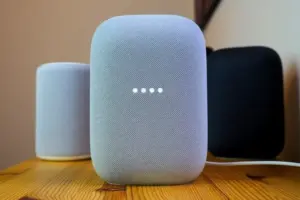
The current update, version 3.79.550760, is currently in a testing phase. It encompasses the original 2016 Google Home, the Home Mini, the Nest Mini, and the Nest Audio. Notably, the Google Home Max—the premium, high-fidelity outlier of the early series—has been excluded from this specific testing round, leaving owners of that particular device wondering if they have reached the end of their hardware support cycle.
The deployment method is deliberate. By utilizing the Google Home Preview Program, Google is soliciting real-world performance data from a dedicated subset of users. This staged approach allows for the identification of potential instabilities before a global release, a standard but essential practice for maintaining the integrity of smart home networks that rely on constant connectivity.
Supporting Context & Metrics: The Sustainability Question
The "Good Enough" Hardware Paradigm
There is a prevailing narrative in the tech industry that smart speakers are disposable commodities. However, the data suggests otherwise. For millions of users, a smart speaker’s value is not derived from its processor speed or its deep-learning capabilities, but from its ability to perform basic, high-frequency tasks: setting timers, managing light switches, and streaming background music.
When these devices fail to respond to voice commands or drop off the network, the frustration stems from a breach of trust in the "smart home" promise. By maintaining these devices through firmware updates, Google is protecting its user base from the "update-induced obsolescence" that plagues many other IoT sectors. Even if these devices cannot run the latest on-device Gemini features, ensuring they remain robust hubs for the Google Assistant is a major victory for consumer retention.
Performance Benchmarks and Expectations
It is imperative for users to calibrate their expectations. Firmware updates for older hardware are primarily "maintenance-heavy." They involve:
- Connectivity Optimization: Improving the stability of Wi-Fi and Bluetooth handshakes to ensure the speaker stays tethered to the local network.
- Latency Reduction: Streamlining the processing loop between the microphone input and the cloud-based AI response.
- Security Patches: Addressing vulnerabilities that may have been discovered since the hardware’s initial release.
While these improvements won’t turn a first-generation Home Mini into an audiophile-grade speaker or an AI-powered conversationalist, they ensure that the "baseline utility" remains high. In a world where e-waste is a mounting environmental crisis, keeping a 2017-era device operational for an additional two or three years is an objectively positive outcome for both the user and the planet.
Official Statements and Accessing the Preview
How to Participate
For enthusiasts and early adopters, Google has provided a clear path to accessing the latest software before it reaches the general public. Accessing the Preview Program is handled entirely within the Google Home application:
- Open the Google Home app.
- Select the specific speaker device from the dashboard.
- Navigate to Settings > Device information.
- Locate the Preview program tab and sign up if your device is eligible.
Once enrolled, the firmware is designed to install automatically during overnight hours to minimize disruption. While Google has not provided a hard date for the general rollout, industry trends suggest that a successful test phase typically leads to a widespread update within three to five weeks.
A Broader Context: The Gemini Integration
It is important to note that this speaker update is occurring in parallel with a wider, systemic update to the Google Home ecosystem. As of October, Google has been rolling out enhancements specifically designed to integrate Gemini—the company’s most advanced AI model—into the smart home experience. These updates are expected to make voice commands more natural, weather reporting more context-aware, and device controls more responsive. While the oldest speakers may not support the full breadth of Gemini’s generative AI capabilities, they will benefit from the improved backend infrastructure that powers these conversations.
Future Outlook: The Long-Term Viability of Smart Hardware
As we look toward the future, the question remains: How long can legacy hardware remain relevant? The integration of Large Language Models (LLMs) like Gemini marks a paradigm shift in how we interact with our homes. We are moving from a world of "command and control" (e.g., "Turn on the lights") to "contextual intent" (e.g., "I’m going to watch a movie; set the room accordingly").
Older speakers, by their very nature, are limited by their RAM, processing power, and microphone arrays. They are designed to act as "thin clients"—sending audio to the cloud for processing. This architectural design is actually a boon for longevity, as the "heavy lifting" is performed on Google’s servers, not on the local device. As long as the cloud-side infrastructure remains compatible with these older devices, they will continue to serve as viable entry points into the Google ecosystem.
However, the exclusion of the Google Home Max from this update cycle serves as a cautionary tale. Eventually, every hardware product reaches a "sunset" phase where the cost of maintaining compatibility outweighs the benefits of a shrinking user base. For now, the owners of the original Google Home and the subsequent Mini/Audio series have been granted a reprieve.
Google’s latest actions demonstrate a nuanced strategy: they are continuing to push for innovation in newer hardware while simultaneously refusing to abandon the legacy devices that built their market share. For the average consumer, this is the best-case scenario. It means their smart home investment is protected, their devices are secure, and they are not being forced into a cycle of unnecessary upgrades—at least not yet. As the smart home continues to evolve, the ability of companies to manage this balance between the new and the old will become the defining measure of their success.