Executive Overview
In a decisive and legally unprecedented cross-border maneuver, the United Kingdom has levied sweeping economic sanctions against Cryptomus, a notorious, highly adaptable cryptocurrency payment platform. Regulators and blockchain intelligence agencies have identified Cryptomus as a critical financial conduit for ransomware syndicates, international narcotics traffickers, darknet marketplaces, and specialized cybercrime services. Crucially, the platform has emerged as a key vector through which Russian state actors and affiliated entities bypass international financial restrictions, directly sustaining the Kremlin’s wartime economy.
Announced on October 8, the U.K. Treasury’s sanctions freeze any domestic assets held by Cryptomus—which has operated under various guises including Certa Payments and Xeltox Enterprises—and strictly bar British corporate entities, financial institutions, and individuals from conducting any business with the firm, virtual or otherwise. Alongside Cryptomus, the U.K. government targeted several associated virtual payment rails, including VexPay, TokenSpot, and the Tsunami Payments service, effectively dismantling a vital financial lifeline for illicit networks operating in Eastern Europe and beyond.
This regulatory action represents a watershed moment in international financial enforcement. Notably, it marks the first known instance of a "Five Eyes" intelligence-sharing nation (Australia, Canada, New Zealand, the United Kingdom, and the United States) officially sanctioning a corporate cryptocurrency entity incorporated within another jurisdiction belonging to the same alliance.
While Canada previously issued a record-shattering CAD $176 million administrative monetary penalty against Cryptomus for egregious anti-money laundering (AML) violations, that fine ultimately proved uncollectible and unenforceable in practice. Industry experts emphasize that while monetary fines merely sting, asset freezes and comprehensive economic sanctions kill criminal crypto operations. This report explores the architecture of Cryptomus, its tactical evolution into parallel networks like Heleket, its reliance on phantom regulatory bodies in disputed geopolitical zones, and the collaborative intelligence efforts that finally brought its infrastructure into the regulatory crosshairs.
Detailed Chronology: From Certa Payments to Heleket
The operational lifespan of Cryptomus is a masterclass in corporate evasion, identity shifting, and regulatory arbitrage. Understanding how the platform managed to process billions of dollars in illicit funds requires tracing its trajectory from its inception through successive crackdowns.
2022–2023: The Emergence of Certa Payments and Cryptomus
Emerging onto the digital landscape in 2022, the platform initially established its footprint under corporate banners such as Certa Payments and Xeltox Enterprises, before consolidating its public-facing brand as Cryptomus. Positioned ostensibly as a standard payment gateway for merchants, Cryptomus quickly carved out a lucrative niche by offering anonymous or minimally vetted payment processing solutions.
Investigators soon discovered that the platform was acting as the primary payment processor for dozens of Russian cryptocurrency exchanges and underground websites hawking illicit cybercrime services—ranging from exploit kits and stolen credentials to DDoS-for-hire platforms. Despite operating out of a Vancouver office address shared with dozens of other foreign currency dealers and money transfer businesses—none of which appeared to have a physical presence at the location—Cryptomus expanded aggressively.
2025: The Canadian Crackdown and the Birth of "Heleket"
By late 2025, mounting pressure from international watchdogs culminated in Canada levying a historic CAD $176 million fine against Cryptomus for severe violations of anti-money laundering regulations. Faced with catastrophic regulatory penalties, Cryptomus executed a classic "chameleonic" maneuver.
Instead of complying with Canadian law or paying the levied fine, the platform appealed the penalty while simultaneously launching a parallel, unverified service dubbed Heleket. While Cryptomus briefly instituted stricter "Know Your Customer" (KYC) protocols that caused a temporary dip in its transaction volume, Heleket was intentionally engineered to absorb the overflow of high-risk, no-KYC transactions. Operating seamlessly behind the scenes, Heleket’s support agents on Telegram brazenly claimed—despite overwhelming cryptographic and structural evidence—that the platform bore no corporate or operational affiliation with Cryptomus.
October 2026: The U.K. Hammer Drops
The cat-and-mouse game came to an abrupt halt on October 8, 2026. Recognizing that monetary fines do little to deter decentralized or loosely anchored digital criminal syndicates, the United Kingdom stepped in with comprehensive economic sanctions.
Within hours of the U.K. announcement, automated systems and support bots associated with Cryptomus and Heleket began displaying error messages on Telegram, informing panicked users that the platforms were suddenly incapable of processing transactions. The coordinated targeting of Cryptomus, VexPay, TokenSpot, and Tsunami Payments effectively severed the platforms’ access to Western banking channels, liquidity providers, and compliant fiat off-ramps.

Supporting Context & Metrics: The Scale of Illicit Processing
The sheer volume of capital moving through Cryptomus and its successor entities staggers the imagination, highlighting the vital role these unregulated gateways play in global financial crime and state-sponsored sanctions evasion.
Tracing Billions in Global Illicit Flows
According to forensic data published by leading blockchain intelligence firm TRM Labs in April 2026, Cryptomus had processed more than $7 billion in cumulative transactions since its founding in 2022. This massive ledger was not limited to traditional financial infractions; TRM Labs identified direct transaction flows linked to some of the most abhorrent corners of the internet, including:
- Vendors distributing child sexual abuse material (CSAM).
- State-aligned and independent terrorist financing networks.
- International human trafficking and smuggling rings.
- Ransomware operations targeting critical infrastructure in Western nations.
Chainalysis Insights on Wartime Economies
Data crunching from Chainalysis further underscored the systemic threat posed by the platform, noting that the U.K. sanctions directly target the broader economic infrastructure supporting Russia’s wartime state.
In an October 8 advisory, Chainalysis revealed that Cryptomus and Heleket rapidly eclipsed traditional cryptocurrency mixing services in terms of illicit volume intake. "Cryptomus and Heleket have emerged as major payment hubs for illicit activity," Chainalysis reported. "Together, these services received more illicit funds across tracked categories than the mixers in our dataset, and the number of illicit counterparties surged to more than 900 in a single month in late 2025."
This data paints a vivid picture of a platform that evolved from a boutique underground payment processor into an institutional-grade laundering engine for transnational organized crime and geopolitical adversaries.
Official Statements and Investigator Insights
The takedown of Cryptomus has generated widespread commentary from top-tier blockchain investigators, forensic analysts, and regulatory bodies, all of whom agree that the U.K.’s intervention represents a paradigm shift in how illicit crypto infrastructure is targeted.
The Power of Sanctions Versus Fines
Richard Sanders, a prominent blockchain analyst and investigator who spent months mapping out Cryptomus’s intricate payment infrastructure and directly transacting with its customer base, provided vital clarity on the legal mechanics of the takedown. Writing on professional networks following the announcement, Sanders stressed the qualitative difference between administrative fines and economic sanctions.
"A fine doesn’t stop a cryptocurrency payment processor from processing payments," Sanders wrote. "Sanctions kill the operation. The distinction matters."
Sanders noted that while Canada’s CAD $176 million fine generated significant headlines in late 2025, it was ultimately an uncollectible paper tiger. Cryptomus simply absorbed the financial threat, spun up parallel non-compliant entities like Heleket, and continued business as usual. By contrast, the U.K. sanctions impose severe criminal liability on any domestic entity interacting with the platform, effectively cutting off its oxygen supply within Western financial markets.
Furthermore, Sanders highlighted the geopolitical significance of the U.K.’s actions: "These sanctions are also notable because they are the first known instance of a ‘Five Eyes’ country sanctioning a cryptocurrency operation incorporated in another Five Eyes jurisdiction." This unprecedented cross-jurisdictional strike signals a willingness among Western allies to aggressively pierce corporate veils regardless of where a shell company formally claims to reside.
Unmasking the Phantom Regulators: The Western Sahara Connection
One of the most bizarre and methodologically revealing aspects of the Cryptomus investigation—uncovered during deep-dive forensic audits—revolves around how these platforms manufactured their legal authority to operate international financial services.

The 25-Year-Old Ukrainian Director and the Phony State
Where do rogue entities like Cryptomus and Heleket derive the apparent regulatory legitimacy they present to nervous merchant partners? The answer reads like a geopolitical thriller, involving fake financial institutions overseen by a phony regulatory body positioned within a region that is not widely recognized as a sovereign nation.
Investigative disclosures revealed that the sole shareholder of Cryptomus’s parent company, Certa Payments, was a 25-year-old Ukrainian woman. Beyond her role at Certa Payments, she simultaneously headed several other shell corporations, including the WS Management and Advisory Corporation.
This firm aggressively marketed itself as an exclusive regulatory body responsible for issuing licenses to cryptocurrency exchanges, foreign exchange brokers, and online gaming businesses incorporated within the disputed territory in northwest Africa known as the Western Sahara.
The Mechanics of the Bureaucratic Facade
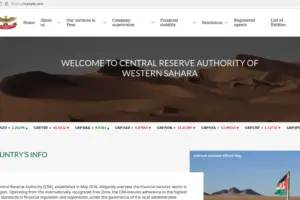
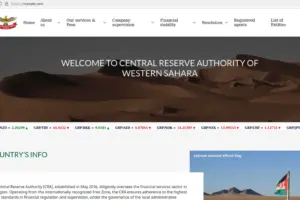
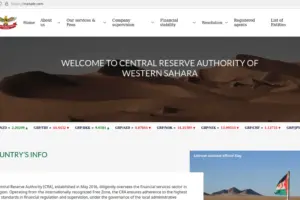
The regulatory body’s official portal—hosted at crasadr.com—billed itself as the website of the Central Reserve Authority of Western Sahara. The site publicly listed the entities that had purportedly been awarded official government licenses for cryptocurrencies, gaming, and foreign exchange services.
Forensic analysis of the digital infrastructure revealed glaring links: one of Certa Payments’ former web domains (certa.website) shared a physical server with 12 distinct domains, including rasd-state.ws, a digital outpost explicitly tied to the Central Reserve Authority of Western Sahara.
By fabricating a regulatory paper trail through a non-existent sovereign authority, the architects of Cryptomus created a superficial veneer of legitimacy that allowed them to pass basic compliance checks with third-party banking partners and acquire merchant trust—all while systematically laundering billions of dollars for cybercriminals and the Russian state.
Future Outlook: The Death Knell for Chameleonic Gateways?
The U.K.’s decisive action against Cryptomus, Heleket, VexPay, TokenSpot, and Tsunami Payments establishes a formidable precedent for the future of global cryptocurrency regulation.
As blockchain analytics firms continue to map out illicit transaction flows with granular precision, the era of the "chameleonic" payment processor—platforms that simply rebrand, spin up parallel no-KYC portals, or hide behind phantom regulators in disputed territories—is rapidly drawing to a close.
While criminal networks will undoubtedly attempt to engineer new, decentralized alternatives to replace Cryptomus, the U.K. Treasury’s asset freezes and business bans have delivered a devastating blow to the subterranean financial plumbing connecting Western liquidity with Russian wartime procurement and global cybercrime syndicates. Moving forward, international regulators have signaled that corporate shell games and fictional regulatory licenses will no longer suffice to shield bad actors from the full force of international law.