Executive Overview
The landscape of tabular machine learning has undergone a fundamental transformation. For years, the decision of which algorithm to deploy
—ranging from gradient-boosted decision trees to classical random forests and deep neural networks—was largely defined by empirical heuristics, localized experimentation, and a persistent lack of standardized benchmarking. Practitioners weighed the raw speed of gradient boosting against the representational capacity of deep learning, often falling back on familiar routines due to contradictory evaluation protocols across the data science community.
Today, that landscape has expanded and matured in equal measure. The introduction of pre-trained transformer models engineered specifically for structured tabular data—collectively known as Tabular Foundation Models (TFMs)—has fundamentally disrupted traditional performance hierarchies. Spearheaded by frameworks such as TabPFN, TabICL, and Google’s TabFM, these models operate via in-context learning, treating the training data as immediate context rather than executing traditional iterative gradient updates.
Concurrently, the emergence of TabArena, developed by the AutoGluon team, has brought rigorous methodology to the field. Utilizing nested cross-validation, Elo-rating systems, and standardized default, tuned, and ensembled configurations, TabArena has cleared away years of noise caused by data leakage and inconsistent tuning.
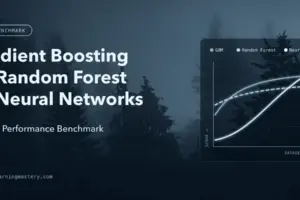
This deep dive evaluates how gradient boosting, random forests, specialized neural networks, and tabular foundation models stack up across accuracy, training speed, and data requirements. By examining the current performance regimes, architectural nuances, and production realities, engineering teams can establish a clear, data-backed framework for algorithm selection.
Detailed Chronology: The Evolution of Tabular Benchmarking
To understand the current state of tabular machine learning, it is helpful to trace how the algorithmic ecosystem has evolved, particularly over the critical period from 2024 through late 2026.
The Pre-Tuned Era and the Benchmark Crisis (Pre-2024)
Historically, the data science community relied on ad-hoc evaluations to compare tree-based models and neural networks. While gradient-boosted decision trees (GBDTs) like XGBoost, LightGBM, and CatBoost firmly established dominance across Kaggle competitions and industry applications, deep learning researchers repeatedly argued that multi-layer perceptrons (MLPs) and custom transformers could achieve parity if properly regularized. However, these claims were frequently hampered by inconsistent hyperparameter tuning budgets, uneven data preprocessing pipelines, and accidental data leakage during cross-validation.
The Breakthrough of In-Context Learning for Tables (2025)
A major inflection point occurred in January 2025 with the publication of TabPFN v2 in Nature. This demonstrated that pre-trained transformers could perform zero-shot inference on small-to-medium tabular datasets entirely without gradient-based training loops. While revolutionary in concept, these early iterations were strictly constrained by small context windows, limiting their practical application to modest row-and-column dimensions.
The Scaling and Standardization Era (2026)
By mid-to-late 2026, the field reached a new plateau of maturity.
- May 2026: The release of TabPFN-3 introduced critical architectural upgrades, including row chunking and a reduced key-value cache. This dramatically expanded context windows, allowing models to process datasets scaling up to 1,000,000 rows by 200 features, or 1,000 rows by 20,000 features.
- Late 2026: TabPFN-3.5 pushed these boundaries even further, securing the top position on the newly minted TabArena benchmark.
Simultaneously, specialized retrieval-based neural architectures (such as TabR) and ensembled modern MLPs (such as TabM and RealMLP) proved that deep learning could compete with GBDTs, provided they were supported by rigorous post-hoc ensembling and extensive hyperparameter optimization.
Supporting Context & Metrics: The Two Performance Regimes
The modern tabular machine learning ecosystem is cleanly split into two distinct performance regimes. Recognizing which regime applies to a specific business problem dictates the optimal algorithm choice.
+-------------------------------------------------------------------+
|                  THE 2026 TABULAR PERFORMANCE SPLIT               |
+-------------------------------------------------------------------+
|                                                                   |
|   SMALL-TO-MEDIUM DATASETS                  LARGE-SCALE DATASETS  |
|   (< 1M rows, moderate cols)             (> 1M rows, high dims)   |
|               |                                       |           |
|               v                                       v           |
|      [ TABULAR FOUNDATION ]                 [ GRADIENT BOOSTING ] |
|      [   MODELS (TFMs)    ]                 [ (XGBoost, LightGBM] |
|      [ TabPFN-3.5, TabICL ]                 [    CatBoost)      ] |
|               |                                       |           |
|     * Zero-shot inference                  * Maximum scalability  |
|     * Native missing values                * Superior regression  |
|     * Context-window limits                * Low CPU inference    |
|                                                                   |
+-------------------------------------------------------------------+
1. Small-to-Medium Datasets: The Reign of Foundation Models
For datasets that fit within the context windows of modern TFMs, foundation models lead the field in pure predictive accuracy. Because these models utilize in-context learning—processing labeled examples and a query row in a single forward pass—they eliminate the trial-and-error cycle of iterative hyperparameter tuning.
Furthermore, TFMs offer architectural conveniences that streamline data engineering pipelines. For example:
- TabPFN handles missing values natively by incorporating binary missing-value indicators concatenated directly with cell values.
- TabICL applies specialized preprocessing layers.
Together, these mechanisms allow practitioners to bypass traditional imputation pipelines entirely. According to late-2026 TabArena evaluations, models like TabPFN-3.5 hold the highest Elo ratings for classification tasks within this data bracket.
2. Large-Scale Datasets: The Unbroken Dominance of GBDTs
Once datasets exceed the row and feature limits of TFMs—or when the task shifts heavily toward complex regression—gradient boosting reasserts its dominance.
XGBoost, LightGBM, and CatBoost continue to serve as the industrial backbone of tabular machine learning. Modern implementations leverage histogram-based methods to accelerate training across millions of samples while maintaining minimal memory overhead. Evaluations through 2024–2026 confirm that while TFMs have narrowed the gap, they cannot yet displace GBDTs on heavy regression tasks or ultra-wide, high-cardinality enterprise datasets.
3. The Baseline Benchmark: Random Forests
While random forests rarely capture the top spot on modern accuracy leaderboards, they remain invaluable as a baseline. Unlike gradient boosting, which demands meticulous tuning of learning rates, tree depths, and subsample ratios, random forests deliver robust performance out of the box with default parameters. They degrade gracefully in the presence of noisy data or irrelevant features, serving as an essential sanity check for data science workflows.
Official Perspectives and Benchmark Insights
The establishment of TabArena by the AutoGluon research collective has provided the machine learning community with unprecedented transparency. By testing models across default, tuned, and ensembled configurations using nested cross-validation, TabArena offers key insights into the operational realities of modern algorithms:
- The Power of Post-Hoc Ensembling: A central finding from TabArena is that single-model evaluations do not tell the whole story. When modern neural architectures like TabM and RealMLP undergo rigorous hyperparameter tuning and are combined via post-hoc ensembling, deep learning matches the peak accuracy of gradient-boosted trees on large datasets.
- The Compute-Accuracy Trade-Off: Accuracy benchmarks obscure operational realities. Gradient boosting and random forests execute entirely on CPU hardware, training in seconds on medium-sized data while delivering ultra-low inference latency. In contrast, running inference on TFMs often requires maintaining the training dataset in GPU memory to support in-context processing. For cost-conscious engineering teams operating under strict latency budgets, GBDTs remain the most economically viable choice.
Future Outlook: Choosing Your Algorithm in 2026
Matching a machine learning algorithm to an enterprise problem requires evaluating four primary dimensions: data volume, feature dimensionality, compute infrastructure, and tuning resources.
Decision Framework
-
Choose Tabular Foundation Models (TabPFN, TabICL, TabFM) when:
- Your dataset falls within small-to-medium size thresholds (under 1 million rows).
- You require immediate, zero-shot predictions without iterative hyperparameter tuning cycles.
- Your data contains missing values and you want to bypass manual imputation pipelines.
- Adequate GPU infrastructure is available to support in-context inference.
-
Choose Gradient Boosting (XGBoost, LightGBM, CatBoost) when:
- You are working with large-scale tabular datasets (millions of rows) or complex regression tasks.
- Inference latency and operational cost are paramount, favoring lightweight CPU deployment.
- You require maximum control over feature importance attribution and model interpretability.
-
Choose Random Forests when:
- You need a robust, low-maintenance baseline before investing in complex hyperparameter optimization.
- Your data is noisy, heavily corrupted, or contains numerous uninformative features.
- Compute resources are heavily constrained and rapid iteration is required.
-
Choose Specialized Tabular Neural Networks (TabR, TabM, RealMLP) when:
- You have deep learning infrastructure in place and the capacity to execute rigorous hyperparameter tuning.
- You plan to implement post-hoc ensembling strategies to push accuracy to the absolute limit.
-
Choose General Deep Learning (Transformers, CNNs) when:
- Your dataset contains unstructured modalities—such as raw text, audio, or high-resolution images—rather than purely tabular features.
Conclusion
The 2026 benchmarking landscape is undeniably more complex than it was in previous years, but this complexity brings clarity for practitioners who match their tools to their data profiles. Tabular foundation models lead the accuracy charge for small-to-medium datasets, gradient boosting remains the undefeated champion of large-scale tabular and regression tasks, and random forests endure as the ultimate resilient baseline.
By looking beyond marketing claims and evaluating algorithms through the empirical rigor of standardized platforms like TabArena, engineering teams can bypass leaderboard chasing and deploy robust, cost-effective machine learning solutions tailored to their exact operational constraints.