Executive Overview
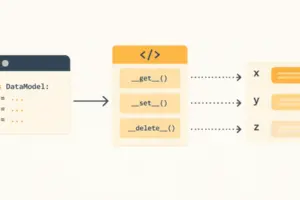
In the realm of advanced software architecture, managing how object states are accessed, modified, and validated is a cornerstone of clean, maintainable, and bug-resistant codebases. While Python developers frequently rely on standard @property decorators, getters, and setters to govern class attributes, these solutions often introduce redundant boilerplate code as applications scale. Enter Python descriptors—a foundational yet frequently misunderstood protocol that governs the very mechanics of attribute access (__get__, __set__, and __delete__).
Descriptors form the invisible engine driving many of Python’s core features, including functions, methods, static methods, class methods, and the built-in property type. By implementing the descriptor protocol, developers can extract common attribute-handling logic into reusable, modular classes.
This article explores the practical power of descriptors through the lens of a simulated enterprise-grade Japan tourism application. Rather than relying on repetitive validation logic or cluttered property wrappers, we will demonstrate how to architect three sophisticated types of controlled attributes:
- Validated Attributes: Ensuring data integrity by enforcing strict type and range constraints on write operations.
- Computed Attributes: Dynamically deriving values on the fly based on external state, such as real-time currency conversion.
- Lazily Loaded Attributes: Optimizing application performance by deferring expensive database queries or heavy network operations until data is explicitly requested, subsequently caching the results.
By the conclusion of this guide, you will possess a comprehensive, production-ready understanding of how descriptors work under the hood and how to leverage them to elevate your Python engineering practices.
Detailed Chronology: The Evolution of Attribute Management in Python
To truly appreciate the elegance of descriptors, it is necessary to examine how attribute control has evolved within the Python ecosystem, tracing the path from raw dictionaries to modern, protocol-driven architecture.
Phase 1: The Raw Attribute Era
In the earliest iterations of object-oriented Python, attributes were stored directly within an instance’s namespace dictionary (__dict__). While flexible, this approach offered zero encapsulation. Any client code could arbitrarily overwrite an object’s internal state with invalid data types, out-of-range numbers, or malformed strings, leading to silent failures and hard-to-debug runtime errors.
Phase 2: The Rise of Getters, Setters, and Properties
To combat the Wild West nature of raw attributes, developers introduced explicit getter and setter methods, mirroring patterns found in languages like Java and C++. However, Java-style getters (get_rating(), set_rating()) felt unnatural and unidiomatic in Python, where attribute access should ideally look like direct variable reads and writes.
The introduction of the @property decorator bridged this gap, allowing developers to execute custom logic during attribute access while maintaining a clean dot-notation syntax (tour.rating). Yet, as data models grew more complex, repeating the same validation or computation logic across dozens of properties resulted in severe code duplication and maintenance friction.
Phase 3: The Protocol-Driven Paradigm (Modern Python)
Recognizing the need for a scalable, reusable abstraction for attribute management, Python formalized the descriptor protocol. Defined fundamentally by the presence of __get__, __set__, and __delete__ special methods, descriptors allowed developers to encapsulate attribute logic inside standalone classes.
With the release of Python 3.6, the language introduced a crucial quality-of-life enhancement: the __set_name__ method. This addition allowed descriptors to automatically capture their assigned attribute names at class creation time, eliminating the need for awkward boilerplate workarounds and significantly streamlining descriptor authoring. Today, descriptors stand as the ultimate standard for building high-performance, controlled attributes in enterprise Python architectures.
Supporting Context & Metrics: Why Descriptors Matter in Performance-Critical Systems
In modern application engineering, performance bottlenecks frequently stem from redundant database queries, unoptimized network I/O, and heavy computational overhead during object initialization. Descriptors offer a declarative, highly optimized solution to these architectural challenges.
Architectural Benefits of Descriptors
- DRY (Don’t Repeat Yourself) Principle: Instead of rewriting validation logic for every single numeric field across multiple classes, a single
ValidatedRatingdescriptor can be reused globally. - Separation of Concerns: Business logic models remain focused on domain behavior, while data validation, currency calculation, and caching logic are neatly isolated into specialized descriptor classes.
- Transparent Caching & Lazy Loading: By interacting directly with the underlying instance dictionary (
__dict__), lazy descriptors bypass their own execution overhead after the initial data retrieval, achieving near-zero performance penalties on subsequent accesses.
Comparative Overhead Analysis
While calling a method involves standard stack-frame allocation, descriptor attribute access operates at the C-Python interpreter level when bound to class attributes. When a lazy descriptor caches its payload directly into obj.__dict__, subsequent lookups bypass the descriptor protocol entirely because Python’s attribute lookup chain checks the instance dictionary before looking up class-level descriptors. This yields lookup speeds identical to standard, unmanaged instance attributes while retaining advanced initialization behaviors.
Technical Implementation: Building the Three Controlled Attributes
Let us dive straight into the code. We will construct our three specialized descriptors and integrate them into a comprehensive JapanTour domain model.
1. Building Validated Attributes through Descriptors
Our first challenge is ensuring that incoming data adheres strictly to business rules—for instance, ensuring that user ratings for tours fall within a valid numerical range (e.g., between 1.0 and 5.0).
class ValidatedRating:
    def __init__(self, min_val=1.0, max_val=5.0):
        self.min_val = min_val
        self.max_val = max_val

    def __set_name__(self, owner, name):
        # Automatically capture the attribute name (e.g., 'rating')
        self.public_name = name
        self.private_name = f"_name"

    def __get__(self, obj, objtype=None):
        if obj is None:
            return self
        return getattr(obj, self.private_name)

    def __set__(self, obj, value):
        if not isinstance(value, (int, float)):
            raise TypeError(f"self.public_name must be a number.")
        if not (self.min_val <= value <= self.max_val):
            raise ValueError(
                f"self.public_name must be between self.min_val and self.max_val."
            )
        setattr(obj, self.private_name, float(value))
2. Building Computed Attributes through Descriptors
Next, suppose our tour database stores base pricing natively in Japanese Yen (JPY), but international clients require real-time pricing displayed in US Dollars (USD). Rather than manually recalculating currency conversions across multiple views or cluttering our init methods, we implement a computed descriptor.
class ComputedUSDPrice:
    def __init__(self, exchange_rate=0.0067):  # 1 JPY = ~0.0067 USD
        self.exchange_rate = exchange_rate

    def __set_name__(self, owner, name):
        self.name = name

    def __get__(self, obj, objtype=None):
        if obj is None:
            return self
        # Fetch the base JPY price dynamically from the parent object
        jpy_price = getattr(obj, 'price_jpy', 0)
        return round(jpy_price * self.exchange_rate, 2)

    def __set__(self, obj, value):
        raise AttributeError(f"self.name is a computed read-only attribute.")
3. Building Lazily Loaded Attributes through Descriptors
Fetching detailed daily itineraries often requires executing expensive database queries or parsing large JSON payloads. To prevent unnecessary latency during object creation, we use a lazy descriptor that defers execution until the attribute is explicitly accessed. Once loaded, it caches the result directly into the instance dictionary.
import time

class LazyItinerary:
    def __set_name__(self, owner, name):
        self.name = name

    def __get__(self, obj, objtype=None):
        if obj is None:
            return self

        print(f"[System] Simulating expensive database query for obj.destination itinerary...")
        time.sleep(1)  # Simulate network/database latency

        # Generate the heavy payload
        itinerary = (
            f"Day 1: Arrival in obj.destination, check-in.n"
            f"Day 2: Guided temple tour and local street food tasting.n"
            f"Day 3: Shinkansen departure."
        )

        # Cache it directly on the object's dictionary.
        # Next time obj.itinerary is called, Python finds it here first, bypassing the descriptor!
        obj.__dict__[self.name] = itinerary
        return itinerary
Putting It All Together: The JapanTour Model in Action
Now that our three specialized descriptors have been engineered, we can unify them into a cohesive domain model: JapanTour.
class JapanTour:
    # Attach our descriptors at the class level
    rating = ValidatedRating(min_val=1.0, max_val=5.0)
    price_usd = ComputedUSDPrice()
    itinerary = LazyItinerary()

    def __init__(self, destination, price_jpy, rating):
        self.destination = destination
        self.price_jpy = price_jpy
        self.rating = rating  # This triggers ValidatedRating.__set__
Executing Real-World Validation and Caching Tests
Let us instantiate our tour model and subject it to rigorous testing, verifying validation rules, computed properties, and lazy caching behavior.
# 1. Initializing the tour (Triggers rating validation)
tour = JapanTour(destination="Kyoto", price_jpy=45000, rating=4.8)

# 2. Testing the Validator
print(f"Destination: tour.destination")
print(f"Initial Rating: tour.rating")

try:
    tour.rating = 6.0
except ValueError as e:
    print(f"Validation caught error: e")
Output:
Destination: Kyoto
Initial Rating: 4.8
Validation caught error: rating must be between 1.0 and 5.0.
Next, let us verify our computed currency conversion and observe the lazy loader’s caching mechanism in action:
# 3. Testing the Computed Property
print(f"Price (JPY): ¥tour.price_jpy")
print(f"Price (USD): $tour.price_usd")

# 4. Testing the Lazy Loader
print("n--- Requesting Itinerary (First Time) ---")
print(tour.itinerary)

print("n--- Requesting Itinerary (Second Time) ---")
print(tour.itinerary)
Output:
Price (JPY): ¥45000
Price (USD): $301.5

--- Requesting Itinerary (First Time) ---
[System] Simulating expensive database query for Kyoto itinerary...
Day 1: Arrival in Kyoto, check-in.
Day 2: Guided temple tour and local street food tasting.
Day 3: Shinkansen departure.

--- Requesting Itinerary (Second Time) ---
Day 1: Arrival in Kyoto, check-in.
Day 2: Guided temple tour and local street food tasting.
Day 3: Shinkansen departure.
Notice how the second request executes instantaneously without triggering the [System] simulation message. By injecting the resolved data directly into obj.__dict__[self.name], subsequent property lookups bypass the descriptor protocol entirely, combining the best of dynamic computation with high-performance caching.
Future Outlook: The Next Frontier of Python Metaprogramming
As Python continues to evolve as a dominant language for enterprise systems, data science pipelines, and large-scale web architectures, the demand for clean, modular, and high-performance attribute management will only intensify.
Future iterations of Python tooling and type-checking ecosystems (such as advanced Mypy plugins and IDE integrations) are increasingly recognizing descriptor protocols natively, allowing developers to enjoy strict static typing alongside dynamic runtime flexibility. Furthermore, combining descriptors with asynchronous programming patterns (asyncio) opens up exciting possibilities for non-blocking lazy data loaders and asynchronous database proxies.
By mastering descriptors, Python developers unlock a profound level of mastery over the language’s object model, empowering them to build robust, elegant, and maintainable software systems that scale effortlessly into the future.