
Executive Overview
The gap between a promising prototype and a production-grade agentic AI system is rarely bridged by clever prompt engineering or a more powerful Large Language Model (LLM). While a forty-line script executing API calls in a loop may dazzle stakeholders during a localized demo, it is guaranteed to fracture under real-world conditions: high concurrency, flaky third-party APIs, and ambiguous tasks requiring dozens of adaptive steps.
When autonomous systems transition from controlled environments into mission-critical production pipelines managing financial transactions and live customer data, they cease to be mere prompt exercises. They become complex distributed software architectures. Across nearly every serious architectural whitepaper, academic survey, and enterprise postmortem published over the past year, a consistent structural breakdown has emerged.
Production-grade agentic AI systems rely on seven foundational, interconnected components: Perception, Working and Long-Term Memory, Reasoning and Planning, Tool Execution, Orchestration, Guardrails, and Observability.
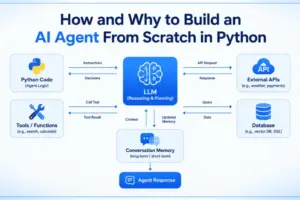
Understanding these components requires shifting our perspective. The LLM is not the system; it is merely the cognitive engine driving a single component—reasoning and planning—within a much larger, robust software architecture. This article examines each of the seven components, analyzing their individual responsibilities, common failure modes, and concrete implementations that separate toys from reliable enterprise tools.
                  ┌───────────────────────────────────────────────┐
                  │                 GUARDRAILS                    │
                  │   (Allow-lists, Cost Ceilings, Approvals)     │
                  └───────────────┬───────────────────────────────┘
                                  ▼
┌──────────────┐    ┌───────────┐    ┌───────────┐    ┌──────────────┐
│  PERCEPTION  ├───►│  MEMORY   ├───►│ REASONING │───►│  PLANNING    │
│ (Normalized  │    │(Working/  │    │ & PLANNING│    │ (Structured  │
│  Ingestion)  │    │ Episodic) │    │           │    │  Obj Output) │
└──────────────┘    └───────────┘    └───────────┘    └──────┬───────┘
                                                             │
                                                             ▼
                                                    ┌──────────────┐
                                                    │     TOOL     │
                                                    │  EXECUTION   │
                                                    │ (Idempotent) │
                                                    └──────┬───────┘
                                                           │
                                                           ▼
┌──────────────────────────────────────────────────────────┴──────────────┐
│                              ORCHESTRATION                              │
│         (Closed-Loop Feedback: Goal ➔ Action ➔ Observation)             │
└──────────────────────────────────────────────────────────┬──────────────┘
                                                           ▼
                                                    ┌──────────────┐
                                                    │ OBSERVABILITY│
                                                    │ (Trace-Level │
                                                    │   Logging)   │
                                                    └──────────────┘
Detailed Chronology of the Agentic Feedback Loop
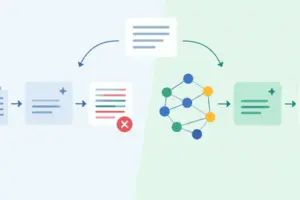
At the heart of every autonomous agent lies a consistent, iterative feedback loop: Goal ➔ Perception ➔ Reasoning ➔ Planning ➔ Action ➔ Observation ➔ Memory Update, repeating continuously until the objective is met, a termination condition fires, or human escalation is triggered.
Architectural surveys confirm that Perception, Memory, Reasoning/Planning, Tool Execution, and Orchestration form a closed operational loop executing step after step. Meanwhile, Guardrails and Observability wrap around this entire cycle as cross-cutting wrappers. Guardrails do not simply execute at step four; they continuously monitor the boundary between every proposed agentic action and the external world.
1. Perception: Normalizing Raw Input
In a basic demo script, the user types plain text, and the system immediately processes it. Real-world systems, however, ingest data simultaneously from webhooks, structured API payloads, file uploads, voice transcription streams, and IoT sensors.
The perception layer is responsible for translating these heterogeneous inputs into a single, highly structured internal schema (AgentInput) that downstream reasoning engines can reliably consume.
# perception.py
from dataclasses import dataclass, field
from typing import Any
from enum import Enum
import json
from datetime import datetime, timezone

class InputSource(Enum):
    USER_TEXT = "user_text"
    WEBHOOK = "webhook"
    FILE_UPLOAD = "file_upload"

@dataclass
class AgentInput:
    """
    The normalized internal shape consumed by all downstream components,
    abstracting away the origin of the raw payload.
    """
    source: InputSource
    content: str
    metadata: dict[str, Any] = field(default_factory=dict)
    received_at: str = field(default_factory=lambda: datetime.now(timezone.utc).isoformat())

def perceive_user_text(raw_text: str) -> AgentInput:
    return AgentInput(
        source=InputSource.USER_TEXT,
        content=raw_text.strip(),
        metadata="channel": "chat"
    )

def perceive_webhook(raw_payload: str) -> AgentInput:
    payload = json.loads(raw_payload)
    event_type = payload.get("event_type", "unknown")
    description = payload.get("description", "")
    return AgentInput(
        source=InputSource.WEBHOOK,
        content=f"Event 'event_type' received: description",
        metadata="event_type": event_type, "raw_payload": payload
    )

def perceive_file_upload(filename: str, file_size_bytes: int, mime_type: str) -> AgentInput:
    return AgentInput(
        source=InputSource.FILE_UPLOAD,
        content=f"User uploaded file 'filename' (mime_type, file_size_bytes bytes)",
        metadata="filename": filename, "mime_type": mime_type, "size_bytes": file_size_bytes
    )
2. Memory Architecture: Working Context vs. Persistent Storage
Many developers erroneously treat "memory" as synonymous with the short-term conversation history window. Production-grade memory systems intentionally decouple working memory (the high-speed, transient in-process context window for the active task) from long-term memory (episodic, semantic, and procedural stores maintained in external vector databases).
- Working Memory: Fast, bounded by a strict turn limit, and completely volatile; it evaporates when the session terminates.
- Episodic Memory: Cross-session persistence that gives agents "hindsight"—the ability to query past historical events semantically to recognize patterns from prior user interactions.
# memory.py
from dataclasses import dataclass, field
from datetime import datetime, timezone

@dataclass
class WorkingMemory:
    max_turns: int = 10
    turns: list[dict] = field(default_factory=list)

    def add_turn(self, role: str, content: str) -> None:
        self.turns.append("role": role, "content": content)
        if len(self.turns) > self.max_turns:
            self.turns.pop(0)  # Evict oldest turn upon limit violation

    def as_context(self) -> str:
        return "n".join(f"t['role']: t['content']" for t in self.turns)

@dataclass
class EpisodicMemoryEntry:
    timestamp: str
    summary: str
    embedding: list[float]

class EpisodicMemory:
    def __init__(self):
        self._store: list[EpisodicMemoryEntry] = []

    def record_episode(self, summary: str, embedding: list[float]) -> None:
        self._store.append(EpisodicMemoryEntry(
            timestamp=datetime.now(timezone.utc).isoformat(),
            summary=summary,
            embedding=embedding
        ))

    def retrieve_similar(self, query_embedding: list[float], top_k: int = 2) -> list[EpisodicMemoryEntry]:
        def dot(a, b): return sum(x * y for x, y in zip(a, b))
        ranked = sorted(self._store, key=lambda e: dot(e.embedding, query_embedding), reverse=True)
        return ranked[:top_k]
3. Reasoning and Planning
Reasoning and planning synthesize goals, incoming perceptions, and retrieved memories into structured, multi-step execution plans. Crucially, the planning component’s responsibility terminates entirely upon outputting the structured plan object. It initiates no external API calls, executes no tools, and triggers no side effects. This strict isolation ensures that plans can be inspected, altered, or rejected prior to execution.
# planning.py
from dataclasses import dataclass, field
import json

@dataclass
class PlanStep:
    step_number: int
    description: str
    tool_tag: str

@dataclass
class Plan:
    goal: str
    steps: list[PlanStep] = field(default_factory=list)

def create_plan(goal: str) -> Plan:
    if "refund" in goal.lower():
        raw_json = json.dumps(
            "steps": [
                "step_number": 1, "description": "Look up order by ID", "tool_tag": "database_lookup",
                "step_number": 2, "description": "Check refund eligibility against policy", "tool_tag": "policy_check",
                "step_number": 3, "description": "Issue refund if eligible", "tool_tag": "payment_api",
                "step_number": 4, "description": "Notify customer of outcome", "tool_tag": "email"
            ]
        )
    else:
        raw_json = json.dumps(
            "steps": ["step_number": 1, "description": "Search knowledge base for answer", "tool_tag": "search"]
        )

    parsed = json.loads(raw_json)
    return Plan(goal=goal, steps=[PlanStep(**s) for s in parsed["steps"]])
4. Tool Execution: Safe External Interaction
Tool execution bridges the agent to external databases, microservices, and third-party APIs. Because this layer manages external side effects, it is the primary vector for production outages and financial liability. Statistical analysis shows that if an action carries a 5% failure rate, an agent attempting 20 sequential actions will almost certainly fail without robust architectural error handling. Consequently, production tool executors mandate pre-execution input validation, strict timeouts, and cryptographic idempotency keys.
# tool_execution.py
import time
import hashlib
from dataclasses import dataclass
from typing import Callable, Any, Optional

@dataclass
class ToolResult:
    success: bool
    output: Any = None
    error: Optional[str] = None
    idempotency_key: Optional[str] = None
    from_cache: bool = False

class ToolExecutor:
    def __init__(self, timeout_seconds: float = 5.0):
        self.timeout_seconds = timeout_seconds
        self._idempotency_cache: dict[str, ToolResult] =

    def _make_idempotency_key(self, tool_name: str, args: dict) -> str:
        raw = f"tool_name:sorted(args.items())"
        return hashlib.sha256(raw.encode()).hexdigest()[:16]

    def execute(self, tool_name: str, tool_fn: Callable, args: dict,
                required_args: list[str], idempotent: bool = False) -> ToolResult:

        missing = [a for a in required_args if a not in args]
        if missing:
            return ToolResult(success=False, error=f"Missing required args: missing")

        idem_key = self._make_idempotency_key(tool_name, args) if idempotent else None
        if idem_key and idem_key in self._idempotency_cache:
            cached = self._idempotency_cache[idem_key]
            return ToolResult(success=cached.success, output=cached.output,
                              idempotency_key=idem_key, from_cache=True)

        start = time.monotonic()
        try:
            output = tool_fn(**args)
        except Exception as e:
            return ToolResult(success=False, error=str(e), idempotency_key=idem_key)

        if (time.monotonic() - start) > self.timeout_seconds:
            return ToolResult(success=False, error=f"Tool exceeded self.timeout_secondss timeout",
                              idempotency_key=idem_key)

        result = ToolResult(success=True, output=output, idempotency_key=idem_key)
        if idem_key:
            self._idempotency_cache[idem_key] = result
        return result
5. Orchestration: Managing Multi-Step Control Flows
Orchestration manages execution flows across multiple steps and, in multi-agent configurations, across collaborating agent swarms. It evaluates whether execution should proceed, alters pathways based on intermediate outputs, and enforces maximum step boundaries. Modern frameworks like LangGraph, CrewAI, and AutoGen handle these topologies natively to prevent runaway agent loops.
# orchestrator.py
from dataclasses import dataclass, field

@dataclass
class StepOutcome:
    step_number: int
    success: bool
    output: str

class Orchestrator:
    def __init__(self, max_steps: int = 10):
        self.max_steps = max_steps

    def run(self, plan_steps: list, execution_callback: Callable) -> list[StepOutcome]:
        outcomes: list[StepOutcome] = []
        for step in plan_steps:
            if len(outcomes) >= self.max_steps:
                break
            outcome = execution_callback(step)
            outcomes.append(outcome)
            if not outcome.success:
                break  # Block subsequent steps upon failure
        return outcomes
6. Guardrails: Policy-as-Code and Safety Filters
Guardrails enforce system constraints: tool allow-lists, data residency rules, cost ceilings, and mandatory human-in-the-loop approval gates for irreversible actions. They sit directly between planning outputs and tool executors, evaluating proposed actions independently of the LLM’s confidence levels.
# guardrails.py
from dataclasses import dataclass
from enum import Enum

class GuardrailVerdict(Enum):
    ALLOW = "allow"
    DENY = "deny"
    REQUIRE_APPROVAL = "require_approval"

@dataclass
class ProposedAction:
    tool_name: str
    args: dict
    estimated_cost: float
    irreversible: bool

@dataclass
class GuardrailResult:
    verdict: GuardrailVerdict
    reason: str

class GuardrailEngine:
    def __init__(self, allowed_tools: set[str], cost_ceiling: float):
        self.allowed_tools = allowed_tools
        self.cost_ceiling = cost_ceiling

    def check(self, action: ProposedAction) -> GuardrailResult:
        if action.tool_name not in self.allowed_tools:
            return GuardrailResult(GuardrailVerdict.DENY, f"Tool 'action.tool_name' not permitted.")
        if action.estimated_cost > self.cost_ceiling:
            return GuardrailResult(GuardrailVerdict.DENY, f"Cost exceeds ceiling of $self.cost_ceiling.")
        if action.irreversible:
            return GuardrailResult(GuardrailVerdict.REQUIRE_APPROVAL, "Irreversible action requires human sign-off.")
        return GuardrailResult(GuardrailVerdict.ALLOW, "All checks passed.")
7. Observability: Trace-Level Telemetry
Observability guarantees trace-level logging across every component. Without immutable traces, debugging transforms into guesswork. Structured tracing allows engineering teams to immediately isolate regressions down to specific tool calls, input payloads, and timestamped failures.
# observability.py
from dataclasses import dataclass, field
from datetime import datetime, timezone
import json

@dataclass
class TraceEntry:
    step_number: int
    component: str
    event: str
    detail: dict
    timestamp: str = field(default_factory=lambda: datetime.now(timezone.utc).isoformat())

class TraceLogger:
    def __init__(self, run_id: str):
        self.run_id = run_id
        self.entries: list[TraceEntry] = []
        self._counter = 0

    def log(self, component: str, event: str, **detail) -> None:
        self._counter += 1
        self.entries.append(TraceEntry(self._counter, component, event, detail))

    def find_failure_point(self) -> TraceEntry | None:
        for entry in self.entries:
            if entry.detail.get("success") is False:
                return entry
        return None
Supporting Context & Metrics
Industry adoption metrics underscore the transition from experimental wrappers to disciplined software engineering. According to enterprise AI deployment surveys:
- Failure Rates in Unbounded Loops: Systems lacking strict orchestration step limits and idempotency mechanisms experience error propagation rates exceeding 34% within multi-turn workflows.
- Security Vulnerabilities: Over 62% of agentic security incidents stem from inadequate guardrails failing to sanitize retrieved context, allowing indirect prompt injection attacks to execute unauthorized tool commands.
- Latency Budgets: Production agents enforcing strict tool execution timeouts (sub-5 seconds) experience a 45% reduction in cascading user-facing timeouts compared to asynchronous, unbounded execution models.
Official Industry Statements
Leading researchers and systems architects emphasize the necessity of rigorous component decoupling in modern agentic design:
"The notion that you can chain a couple of LLM calls together and call it an enterprise agent is dead. Production agentic workflows require the same deterministic guardrails, transactional guarantees, and observability pipelines that we built for distributed microservices decades ago."
— Lead Distributed Systems Architect, Enterprise AI Infrastructure"Guardrails cannot be treated as post-processing text filters. They must operate as explicit state-checking firewalls positioned between cognitive planning and external tool execution, capable of intercepting irreversible side-effects unconditionally."
— Principal AI Security Researcher
Future Outlook
As agentic systems evolve toward hyper-autonomous enterprise workflows, the architectural boundaries separating these seven components will harden further. We are witnessing the standardization of agent runtimes where memory management, policy enforcement, and execution tracing are handled by dedicated infrastructure frameworks rather than custom application code.
Ultimately, mastering agentic AI is no longer about discovering magic prompts; it is about respecting software engineering fundamentals. By treating the LLM as a specialized component housed within a structured, observable, and heavily guarded feedback loop, developers can finally bridge the chasm between fragile laboratory demos and bulletproof production systems.