Executive Overview: A Historic Windfall
In the high-velocity world of venture capital, conviction is the rarest currency. When Notable Capital—the firm formerly known as GGV Capital—decided to commit roughly 10% of its billion-dollar fund into Anthropic’s Series E, the move was met with profound skepticism. At the time, Anthropic was an underdog trailing the cultural juggernaut of OpenAI, while the emergence of models like DeepSeek’s R1 signaled a looming threat to closed-source dominance. With a valuation of $61.5 billion, the investment represented the most expensive gamble in Notable’s 25-year history.
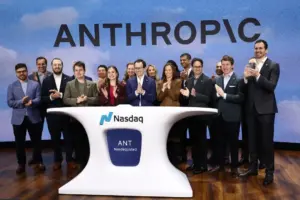
Fast forward less than two years: that skepticism has dissolved into one of the most profitable chapters in the annals of finance. Following Anthropic’s record-shattering $81.3 billion IPO—the largest in market history—the company achieved a fully diluted valuation of $1.5 trillion. For early backers like Notable, this translated to a 15x paper return. But the story of Anthropic’s rise is not merely one of lucky timing; it is a masterclass in reading the developer ecosystem, navigating geopolitical headwinds, and identifying the shift from "hype" to "mission-critical" enterprise infrastructure.
The Developer Pivot: How Notable Saw the Future
Notable’s decision-making process was rooted in a granular analysis of developer behavior. A team spearheaded by managing partners Hans Tung and Glenn Solomon, alongside principal Dan Cahana, looked past the superficial "AI hype" to identify where the real work was being done.
"We just knew that for AI, the developer is at the center because they’re the early adopters," Hans Tung explained. The firm’s data revealed a pivotal, tectonic shift: developers were abandoning ChatGPT in favor of Claude. By the time of the Series E, developers were utilizing Claude roughly 70% of the time—a stark reversal from the previous year.
Furthermore, Notable’s historical expertise in U.S.-China relations provided them with a unique lens. While others worried about global model parity, Notable concluded that the "mission-critical" tier of the corporate world would always demand U.S.-based, closed-source models for security and compliance. This geopolitical conviction turned out to be a key moat for Anthropic, shielding it from the volatility of open-source fluctuations.
A Chronology of Capital: From Che Fico to the IPO
The trajectory of Anthropic’s capital structure is a testament to the compounding nature of institutional conviction. While early-stage firms took the initial risks, massive sovereign wealth funds and growth-equity giants later solidified the company’s position as a permanent pillar of the global economy.
The GIC Strategy
Singapore’s sovereign wealth fund, GIC, serves as a prime example of the "measured conviction" model. After monitoring Anthropic throughout 2024, GIC’s head of tech investments, Chris Emanuel, facilitated a crucial meeting with Anthropic CFO Krishna Rao at the San Francisco Italian restaurant Che Fico.
Rao didn’t just sell a vision; he presented hard data. By demonstrating that model improvements were directly driving enterprise adoption, he bridged the gap between academic research and commercial viability. Following this, GIC entered during the Series F at a $183 billion valuation. GIC’s commitment only deepened as the company matured:
- Series G: GIC co-led the round alongside Coatue at a $380 billion valuation.
- Pre-IPO Round: GIC returned as a co-lead, valuing the firm at $965 billion.
- Total Stake: Through a combined investment of over $4.5 billion across three rounds, GIC now holds approximately 1% of the company.
The Baillie Gifford Perspective
Baillie Gifford, known for its long-term investment horizon, took a similarly disciplined approach. Lilian Li, who leads U.S. growth investments, spent two years in dialogue with the Anthropic team before pulling the trigger on the Series F. For Baillie Gifford, the catalyst was consistent execution and, perhaps more importantly, the emergence of "compelling gross margins."
"It’s actually quite incredible how consistent they have been with how quickly everything has been changing," Li noted. By focusing on the company’s ability to scale into vertical-specific applications—legal services, life sciences, and enterprise tools like Cowork—Baillie Gifford validated its $1.5 billion investment across three rounds.
Supporting Context: The Metrics of Maturity
The transition from a high-valuation startup to a $1.5 trillion enterprise was driven by fundamental business metrics that many AI startups fail to achieve.
- Developer Stickiness: The 70% preference rate among developers signaled that Anthropic had moved from a "toy" model to a production-grade tool.
- Gross Margin Expansion: Unlike many early AI firms that burned capital on infrastructure without clear revenue paths, Anthropic proved it could generate revenue alongside its heavy R&D spend.
- Vertical Integration: The move into specialized sectors—legal and life sciences—ensured that Anthropic’s revenue was not tied solely to generic chatbot traffic, but to deeply embedded, high-value enterprise workflows.
Official Statements and Firm Perspectives
The consensus among the primary investors is that Anthropic succeeded because it ignored the "arms race" mentality in favor of "utility-first" development.
Hans Tung of Notable emphasized that the firm’s investment was not a gamble on a single model release, but a bet on the infrastructure layer of the next decade. "We didn’t just invest in a model," Tung remarked, "we invested in the platform that developers refused to stop using."
For investors like Lilian Li, the success of the IPO is a validation of Anthropic’s organizational discipline. "Many companies in this space were blinded by the hype cycle," Li said. "Anthropic kept its head down, focused on gross margins, and expanded its footprint into sectors that require the highest levels of reliability."
Future Outlook: The Next Phase of AI Dominance
As Anthropic enters the public markets with a $1.5 trillion valuation, the conversation shifts from "how did they raise the money?" to "how will they maintain the pace?"
The challenges ahead are significant. As the "first-mover" advantage of the early AI labs begins to commoditize, Anthropic will face intense pressure to continue innovating while maintaining its enterprise-grade security standards. The market is now looking for:
- Sustained Revenue Growth: Investors will demand that the IPO valuation is matched by exponential growth in enterprise software licensing.
- Model Efficiency: As compute costs remain a primary concern, Anthropic must continue to optimize its models to remain profitable at scale.
- Ecosystem Expansion: Following the success of Claude Code, the company is expected to push further into automated software development, potentially disrupting the legacy IT services market.
The story of Anthropic is, at its core, a story of patience. By waiting for the right moment to enter—and by betting on the people who were actually building the future of the internet—firms like Notable, GIC, and Baillie Gifford have proven that in the AI era, the most successful investors are those who can distinguish between the noise of the hype cycle and the signal of developer adoption. As the company transitions into its public life, it does so with a massive war chest and the continued confidence of the most sophisticated capital in the world. The $1.5 trillion valuation is merely the opening chapter.