
Executive Overview
When SpaceX officially launched the public beta phase for its satellite internet constellation in October 2020, it entered the telecommunications market with a refreshing dose of radical candor. Appropriately dubbed the "Better Than Nothing Beta," the service required consumers to tolerate intermittent connectivity drops, experimental hardware, and a steep financial barrier to entry. For rural households, remote researchers, and underserved communities lacking access to traditional infrastructure, it was a literal lifeline—provided they were willing to swallow a nearly $600 upfront cost and a flat $99 monthly subscription fee.
Fast forward six years, and the landscape of satellite internet has undergone a dramatic transformation. Starlink has matured from a speculative, high-risk venture into a mainstream broadband competitor boasting millions of global subscribers. Yet, the economics of connecting to a low-Earth orbit (LEO) constellation have shifted in complex ways.
Today, Starlink’s cheapest residential tier starts at $55 per month—a notable $44 reduction compared to the original 2020 base subscription. However, this headline-grabbing price drop does not tell the whole story. The contemporary Starlink ecosystem is defined by tiered speed brackets, regional demand-based pricing algorithms, promotional discounts, and a significant shift toward equipment rental models that mirror traditional cable providers.
This retrospective examines how Starlink’s pricing, hardware models, and service tiers have evolved from the infancy of its public beta in 2020 to its mature, highly localized operations. By analyzing these shifts, we can better understand how SpaceX has attempted to balance accessibility, network congestion, and corporate profitability in an increasingly crowded broadband market.
Detailed Chronology: Starlink’s Pricing and Service Evolution (2020–2026)
2020: The Genesis of the "Better Than Nothing Beta"
The public rollout of Starlink in late 2020 was a landmark moment for commercial space technology. For the first time, high-speed, low-latency internet was delivered globally via a rapidly growing constellation of LEO satellites rather than traditional geostationary (GEO) arcs, which suffered from notoriously sluggish ping times.
- The Hardware: Early adopters were required to purchase a starter kit for $499 (plus shipping, handling, and applicable taxes). This kit included the iconic original circular satellite dish, a mounting tripod, a Wi-Fi router, and power supplies.
- The Subscription: The baseline service cost a flat $99 per month.
- The Experience: Subscribers were explicitly warned to expect download speeds fluctuating between 50 Mbps and 150 Mbps, upload speeds between 10 Mbps and 20 Mbps, and latencies ranging from 20ms to 40ms. Crucially, SpaceX warned users of occasional periods of total connectivity loss as the satellite constellation was still being populated.
Despite these caveats, the initial capital outlay of $598 (excluding taxes and installation accessories) represented a major commitment. Over the course of the first year, an early beta user would spend roughly $1,787 just to establish and maintain their connection. For users stuck on aging copper-wire DSL or metered cellular connections, however, the performance leap justified every penny.

2022: Inflationary Pressures and the First Major Hikes
As global supply chains buckled under the weight of pandemic-era disruptions and inflation spiked, SpaceX adjusted its pricing strategy.
In March 2022, the company announced sweeping price increases. The monthly subscription fee jumped from $99 to $110 for existing and new users alike. Simultaneously, the hardware kit experienced a two-tier price adjustment: new customers faced an increased hardware cost of $599, while those who had previously placed fully refundable deposits saw a slightly mitigated price of $549. Elon Musk’s enterprise pointed directly to mounting macroeconomic pressures and supply chain strains as the drivers behind the hikes.
2023: Introduction of Capacity-Based Variable Pricing
By 2023, Starlink had moved away from a uniform global or national flat rate, introducing a more sophisticated—and controversial—capacity-based pricing model.
Subscribers found themselves subjected to regional pricing variations driven by local network congestion. In areas with excess network capacity (where satellite beams had plenty of available bandwidth), the monthly subscription dropped to $90. Conversely, in densely populated or high-demand regions where network capacity was constrained, the monthly bill surged to $120. This shift marked Starlink’s transition into dynamic utility pricing, mirroring strategies long utilized by traditional energy and cellular providers.
2026: Tiered Speeds, Promotional Discounts, and Rental Shifts
Entering 2026, Starlink completely restructured its residential service offerings into a multi-tiered architecture designed to capture different market segments. Instead of a single "one-size-fits-all" connection, customers could now select from three distinct residential tiers:
- Residential 100 Mbps: Priced initially at $55 per month, offering unlimited data capped at a baseline speed tier.
- Residential 200 Mbps: Priced initially at $85 per month, tailored for moderate streaming and multi-device households.
- Residential Max: Priced initially at $130 per month, offering top network priority and speeds exceeding 400 Mbps under optimal conditions.
However, 2026 has also been characterized by near-constant price volatility. In May 2026, SpaceX enacted structural rate hikes across these plans, bumping them up by $5, $5, and $10, respectively. By October 2026, location-based adjustments struck again: some Residential Max customers saw their monthly bills climb as high as $156, while others in different regions experienced unexpected price cuts designed to stimulate local adoption.

Parallel to these adjustments, Starlink took a page out of the traditional cable playbook by introducing hardware rentals. In June 2026, the company rolled out a $10 monthly rental fee for the satellite dish kit, effectively lowering the upfront financial barrier that had deterred cost-sensitive consumers since 2020. By July 2026, this rental fee was temporarily waived for select new orders in promotional regions. Subscribers opting for rentals must exercise caution, however: canceling the service requires returning the complete hardware kit within 30 days, or face being charged the full retail price of the equipment.
Supporting Context & Metrics: Cost Comparison at a Glance
To fully grasp how Starlink’s financial model has evolved over the past six years, a direct comparison between the foundational beta period of 2020 and the mature, diversified landscape of 2026 is illuminating.
| Metric / Feature | 2020 (Beta Era) | 2026 (Mature Era) |
|---|---|---|
| Minimum Monthly Cost | $99.00 (Flat Rate) | $55.00 (Residential 100 Mbps Tier) |
| Maximum Monthly Cost | $99.00 (Flat Rate) | Up to $156.00+ (Residential Max / High-Demand Zones) |
| Upfront Hardware Cost | $499.00 (Mandatory Purchase) | $0.00 (Available via monthly rental in select regions) to Full Retail |
| Hardware Ownership | 100% Customer-Owned | Optional Purchase vs. Leased/Rented Model ($10/mo typical fee) |
| Service Tiers | Single tier (50–150 Mbps) | Multiple tiers (100 Mbps, 200 Mbps, and Max 400+ Mbps) |
| Pricing Structure | Uniform national pricing | Dynamic, regional, and capacity-based pricing with rolling promos |
| Initial Year Total Outlay | ~$1,687 (Hardware + 12 mos) | Varies widely (Promotional discounts up to 50% off active subscriptions) |
The Value Proposition: Speed vs. Availability
When evaluated purely on a dollar-per-megabit basis, Starlink remains more expensive than entrenched terrestrial options like urban fiber-to-the-home (FTTH), coaxial cable, or even high-capacity 5G home internet gateways. Consumers in major metropolitan areas can routinely secure gigabit fiber connections for $70 to $80 per month.
Starlink’s true value proposition, however, has never been about undercutting urban broadband. Its market dominance lies in absolute geographic availability. For remote cabins, maritime vessels, agricultural operations, and rural residential pockets completely bypassed by utility companies, paying $55 to $130 a month for high-speed LEO internet is a game-changer.
Furthermore, for users requiring mobility, Starlink offers specialized alternatives. The portable Roam service provides 100GB of high-speed mobile data for $55 per month, throttling speeds thereafter. For power users unwilling to accept data caps while on the move, Roam Unlimited commands a premium of $175 per month.
Official Statements and Industry Response
SpaceX has consistently defended its fluid pricing strategies as a necessary mechanism to manage orbital bandwidth and fund the continuous launch cadence required to maintain its massive constellation. As the number of active satellites in orbit has grown—surpassing several thousand units—the company has scaled its manufacturing capabilities to reduce unit costs while simultaneously dealing with localized traffic jams in high-density subscription areas.
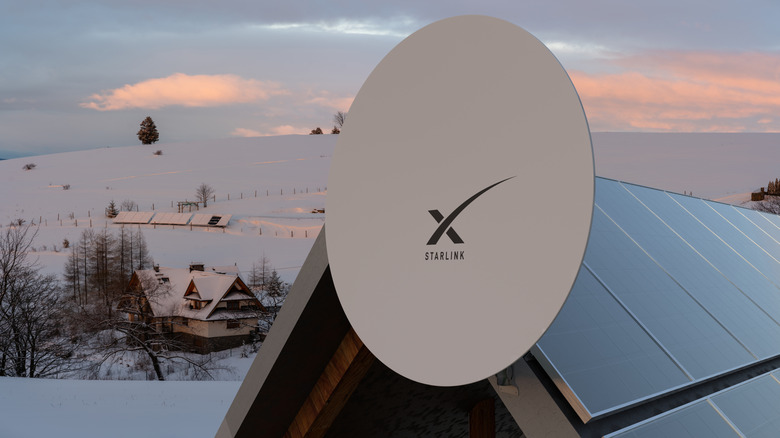
Industry analysts have noted that Starlink’s pivot toward hardware rentals and aggressive localized discounting (such as the 50 percent promotional slashes reported by PCMag in late 2026) signals a shift in corporate maturity. Having captured the low-hanging fruit of wealthy early adopters and desperate rural users, SpaceX is now actively hunting for price-sensitive mainstream consumers who might otherwise choose local fixed-wireless or low-cost cable packages.
Telecommunications watchdogs have closely monitored these shifting terms. Consumer advocacy groups frequently highlight the fine print associated with promotional rates: subscribers who alter their service tier mid-promotion often forfeit their discounts immediately, and regional price adjustments can take customers by surprise if they reside in zones experiencing sudden surges in local network congestion. Furthermore, the 30-day return window for rented hardware has drawn scrutiny, with critics warning that unreturned equipment fees can quickly accumulate if cancellations are mismanaged.
Future Outlook: Where is Starlink Heading?
As we look beyond 2026, the trajectory of Starlink’s pricing and service structure points toward even deeper integration with global telecommunications frameworks. Several key trends are expected to shape the next phase of satellite internet:
- Direct-to-Cell Integration: With SpaceX actively deploying cellular-compatible payloads on its newer generation satellites in partnership with major mobile network operators (like T-Mobile), the boundary between traditional cellular roaming and satellite coverage will continue to blur. This could introduce entirely new subscription bundles combining terrestrial mobile plans with LEO backup data.
- Maturing Infrastructure and Economies of Scale: As rocket reusability drives launch costs down and second-generation Starship vehicles come online, the marginal cost of lofting heavier, higher-capacity satellites will drop. This could eventually stabilize residential pricing, reducing the need for aggressive, capacity-driven rate hikes in congested cells.
- Heightened Regulatory and Competitive Scrutiny: As Starlink expands its subscriber base into suburban and semi-urban markets, it will increasingly rub shoulders with traditional cable monopolies and municipal fiber initiatives. Expect intensified regulatory oversight regarding dynamic pricing models, promotional transparency, and equipment return policies.
Conclusion
Starlink’s journey from the $598 experimental setup of 2020 to the flexible, multi-tiered, and promotion-driven ecosystem of 2026 demonstrates a remarkable commercial evolution. While the entry-level monthly subscription has dropped by $44, the introduction of speed tiers, hardware rental fees, and dynamic regional pricing means that no two subscribers are guaranteed the same financial experience. For millions of consumers worldwide, however, the ability to connect to high-speed internet from virtually anywhere on Earth remains a technological marvel—regardless of how the bill is calculated.