Executive Overview
The Walt Disney Company has secured a monumental victory ahead of the upcoming broadcast calendar, announcing during a recent earnings call that it has officially achieved a complete sellout of its advertising inventory for Super Bowl LXI. This milestone coincides with the successful closure of the company’s upfront negotiations, which yielded total volume commitments surging by double digits year-over-year.
In an increasingly fragmented media ecosystem where linear television faces persistent headwinds from streaming alternatives, Disney’s ability to command high-value commitments underscores the enduring power of live, can’t-miss cultural events. With Super Bowl LXI completely sold out—commanding premium rates ranging between $8 million and $9 million per 30-second spot following initial peaks as high as $10 million—Disney has proven that its integrated portfolio of linear networks, streaming platforms, and high-profile intellectual property remains a must-buy asset for the world’s leading brands.
This comprehensive report examines the mechanics behind Disney’s upfront success, the unprecedented demand for Super Bowl LXI, the strategic category diversification achieved by the global advertising team, and the broader industry implications as media giants lock in their advertising futures.
Detailed Chronology: The Road to a Sold-Out Super Bowl LXI
The path to securing a complete inventory sellout for one of the most-watched television broadcasts in history was carefully orchestrated by Disney’s global advertising leadership, spearheaded by Rita Ferro, president of global advertising at The Walt Disney Company.
Laying the Groundwork in May
The strategy began taking shape months ahead of the company’s official upfront presentation in May. Rather than relying solely on traditional bundled packages, Ferro and her team set out to curate a diverse mix of advertisers willing to invest heavily in creative execution. Recognizing that modern consumers expect more than standard commercial breaks, Disney pitched brands on innovative integrations, custom content tied to the NFL’s marquee moments, and immersive on-the-ground activations.
The Upfront Market Closes
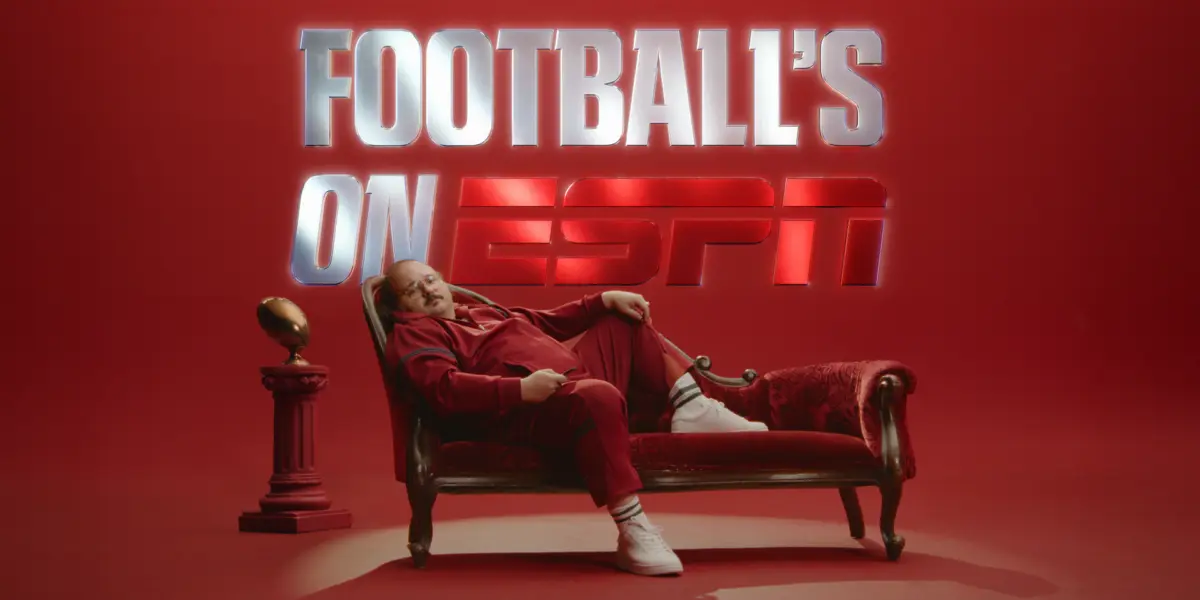
As negotiations progressed through the spring and summer, Disney’s dual-pronged approach—leveraging the massive reach of its streaming services (such as Disney+ and Hulu) alongside traditional linear giants like ESPN and ABC—began paying dividends. During a crucial earnings call on Wednesday, the company officially announced the conclusion of its upfront cycle.
The headline figures were striking: total advertising volume commitments rose by double digits compared to the previous year. Within this growth, sports programming emerged as a powerhouse, fueled by massive commitments across the National Football League (NFL), College Football Playoff (CFB), National Basketball Association (NBA), and a rapidly expanding market for women’s sports.
Finalizing Super Bowl Inventory
Parallel to the broader upfront negotiations, sales teams worked furiously to place brands into Super Bowl LXI. After initially testing the waters by seeking up to $10 million for standard 30-second units, market demand dictated a stable pricing floor in the $8 million to $9 million range. Despite these eye-watering price tags, demand outpaced supply, resulting in an absolute sellout of all available commercial slots.
With this announcement, Disney joins an elite tier of media conglomerates—including Fox, NBCUniversal, and Amazon—that have successfully wrapped up their upfront markets with strong year-over-year gains, signaling renewed confidence from major corporate marketers.
Supporting Context & Metrics: Breaking Down the Numbers
A closer inspection of the data reveals a masterclass in portfolio diversification. Disney’s execution for Super Bowl LXI was not merely about filling ad slots; it was about engineering an economically resilient roster of brands designed to insulate the broadcast against sector-specific downturns.
A Historic Mix of Brands and Categories
For Super Bowl LXI, Disney secured 58 distinct brands spanning 34 separate categories. The company has characterized this roster as "one of the broadest advertiser and category mixes in Super Bowl history."
- Category Diversity: While traditional heavy-hitters like automotive and beverage brands maintained a presence, the 2027 broadcast saw significant surges from financial services, personal care, software, candy, healthcare, and artificial intelligence (AI).
- First-Time Advertisers: Demonstrating the continued allure of the Big Game—even amidst shifting digital landscapes—nine brands are stepping up as first-time advertisers in the Super Bowl. This influx of rookies highlights how emerging sectors view live television as an indispensable tool for immediate, mass-market brand awareness.
Sponsorship and Activation Ecosystem
Advertisers today are looking for holistic campaigns rather than isolated commercial spots. Disney capitalized on this shift by offering multifaceted sponsorship opportunities that extended far beyond the television screen. Key integration pillars included:
- Custom Content Integration: Tailored narratives running across the NFL’s highest-profile broadcast windows.
- Super Bowl Week Activations: Immersive physical and digital experiences leading up to kickoff.
- The ESPN Beach Celebration: A high-visibility, branded activation hub that serves as a central gathering point for fans, athletes, and media personalities during Super Bowl week.
Financial Performance and Market Dynamics
While Disney, in alignment with industry peers like Fox and NBCU, declined to disclose exact figures regarding specific cost-per-thousand viewers (CPMs) or total monetary volume, financial analysts point to the double-digit volume increase as proof of robust pricing power.

The settling of 30-second spot prices in the $8 million to $9 million bracket sets a new benchmark for live-event television monetization. It reflects an evolving advertiser calculus: while fragmented digital channels offer targeted precision, nothing matches the instantaneous, cross-demographic scale of a live NFL broadcast distributed across Disney’s vast ecosystem.
Official Statements and Industry Perspectives
The success of Disney’s upfront and Super Bowl sales campaign elicited strong commentary from executive leadership, reinforcing the company’s positioning as an indispensable partner for modern marketers.
Rita Ferro, president of global advertising at The Walt Disney Company, emphasized the strategic necessity of Disney’s platform ecosystem in a public statement:
"Our upfront and a sold-out Super Bowl LXI make it clear: Brands see Disney as a must-have investment—one built on our ability to deliver audiences at scale, across live events and streaming, all year long."
Ferro further contextualized the Super Bowl triumph within Disney’s broader live-event portfolio, pointing out that the momentum generated by the Big Game naturally bolsters the network’s entire calendar of marquee cultural touchpoints:
"That momentum carries through our live event calendar too—from The Oscars and The Grammys to New Year’s Rockin’ Eve, the College Football Playoff, and the CMA Awards, advertisers keep showing up for the can’t-miss moments only Disney can deliver."
Industry analysts have echoed these sentiments, noting that Disney’s unified ad-sales strategy—which seamlessly packages streaming inventory on Disney+ and Hulu with premier linear broadcasts on ABC and ESPN—has effectively addressed marketers’ demands for reach, accountability, and premium creative environments.
Future Outlook: What This Means for the Media and Advertising Landscape
As the dust settles on the upfront market and preparations ramp up for Super Bowl LXI, Disney’s early triumphs offer critical insights into the future trajectory of television advertising.
1. The Undisputed Value of Live Sports and Events
The traditional television model has undergone radical disruption over the past decade, driven by cord-cutting and the rise of subscription video-on-demand (SVOD) services. However, live sports and major cultural events have proven to be bulletproof. Disney’s ability to sell out Super Bowl inventory months in advance at record-breaking price points demonstrates that live communal viewing experiences are more valuable than ever. Advertisers recognize that appointment-viewing is the final frontier for guaranteed, unduplicated mass scale.
2. The Maturation of Streaming Ad Tiers
Disney’s success also validates its strategic pivot toward ad-supported streaming tiers. By integrating its digital platforms into the broader upfront conversations, the company has provided brands with a hybrid ecosystem. Advertisers no longer have to choose between the linear reach of traditional TV and the data-driven targeting of streaming; Disney offers both bundled into cohesive, enterprise-level campaigns.
3. Sector Resilience and Emerging Categories
The diverse category mix observed in Super Bowl LXI—particularly the influx of AI, software, and specialized financial services—signals a broadening of the advertiser base. As legacy spenders fluctuate based on macroeconomic conditions, the emergence of tech-driven and service-oriented categories ensures a healthy, competitive bidding environment for prime inventory.
Looking Ahead to 2027 and Beyond
For Disney, the immediate focus shifts to executing the creative visions promised by its 58 Super Bowl brands and ensuring that its expansive live-event calendar—spanning Hollywood award shows, collegiate athletics, and professional leagues—continues to deliver the promised return on investment.
With its upfront commitments safely locked in and its premier inventory entirely depleted, The Walt Disney Company enters the upcoming broadcast cycle from a position of undeniable strength, setting a high watermark for the entire media industry.