Executive Overview
In the fast-paced world of modern feature animation, delivering a visually striking, conceptually ambitious, and emotionally resonant full-length movie within a strict two-year window is widely considered an impossibility. For decades, standard industry pipelines have required anywhere from four to six years of meticulous planning, storyboarding, iteration, and rendering to bring a major cinematic release to the big screen.
However, the creative and technical teams behind Warner Bros. Pictures Animation’s upcoming adaptation of Dr. Seuss’s beloved classic, The Cat in the Hat, chose to rewrite the rulebook. Facing a compressed timeline and an immense geographic distribution of talent, the production leaned heavily on cutting-edge software and streamlined project management ecosystems to achieve what many thought could not be done.
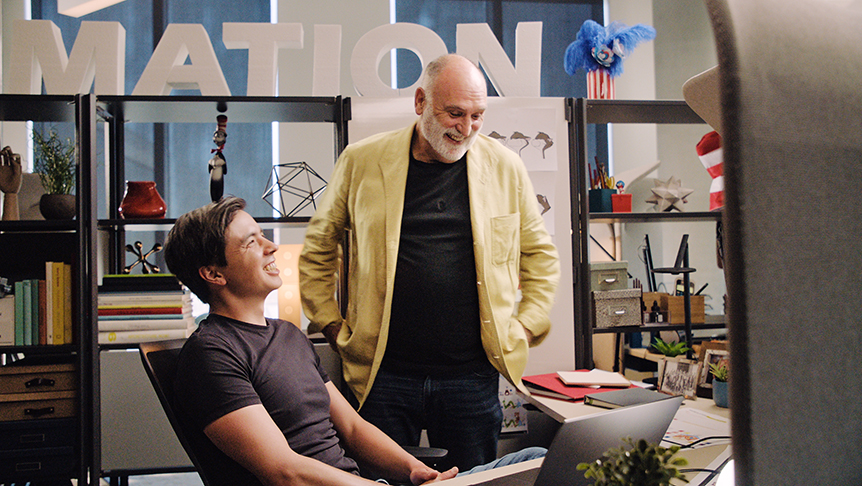
This unprecedented production feat is the focal point of the debut episode of Made to Make, a brand-new documentary series launched on YouTube by software giant Autodesk. Hosted by renowned chef, entrepreneur, and passionate animation enthusiast José Andrés, the series takes viewers deep behind the scenes to explore the human ingenuity, artistic determination, and foundational technology required to turn wild creative ambitions into tangible reality.
Featuring insights from writer-director Alessandro Carloni, co-director Erica Rivinoja, animator Marek Kochout, central supervisor Jessica Killiam, VFX supervisor Matt Waters, and production designer Aidan Sugano, the first installment of Made to Make reveals how advanced 3D tooling and global collaboration platforms allowed an international workforce to pull off a miraculous two-year sprint.
Detailed Chronology: Overcoming a Compressed Two-Year Pipeline
The Global Blueprint and Distributed Workforces
When Warner Bros. Pictures Animation committed to an aggressive delivery schedule for The Cat in the Hat, the studio realized it could not rely on a single, centralized studio model. To meet the demanding two-year deadline, production had to be decentralized, establishing a massive collaborative network spanning Los Angeles, London, Montreal, and multiple development and animation hubs across India.
Managing thousands of assets—ranging from intricate character models and complex prop designs to hyper-stylized digital environments—across disparate time zones presented an organizational nightmare on paper. Yet, the production team utilized advanced digital pipelines to bridge these continental divides, ensuring that artists working thousands of miles apart could iterate on assets in near-real time without bottlenecking the creative flow.
Sculpting Unique Visual Worlds
Unlike previous cinematic adaptations of Dr. Seuss’s work, the creative team behind this version sought to expand the scope of the original literary source material significantly. The narrative not only captures the anarchic, mischievous energy of the iconic feline intruder but also explores what happens after he finally leaves the children’s house, introducing audiences to entirely new dimensions.
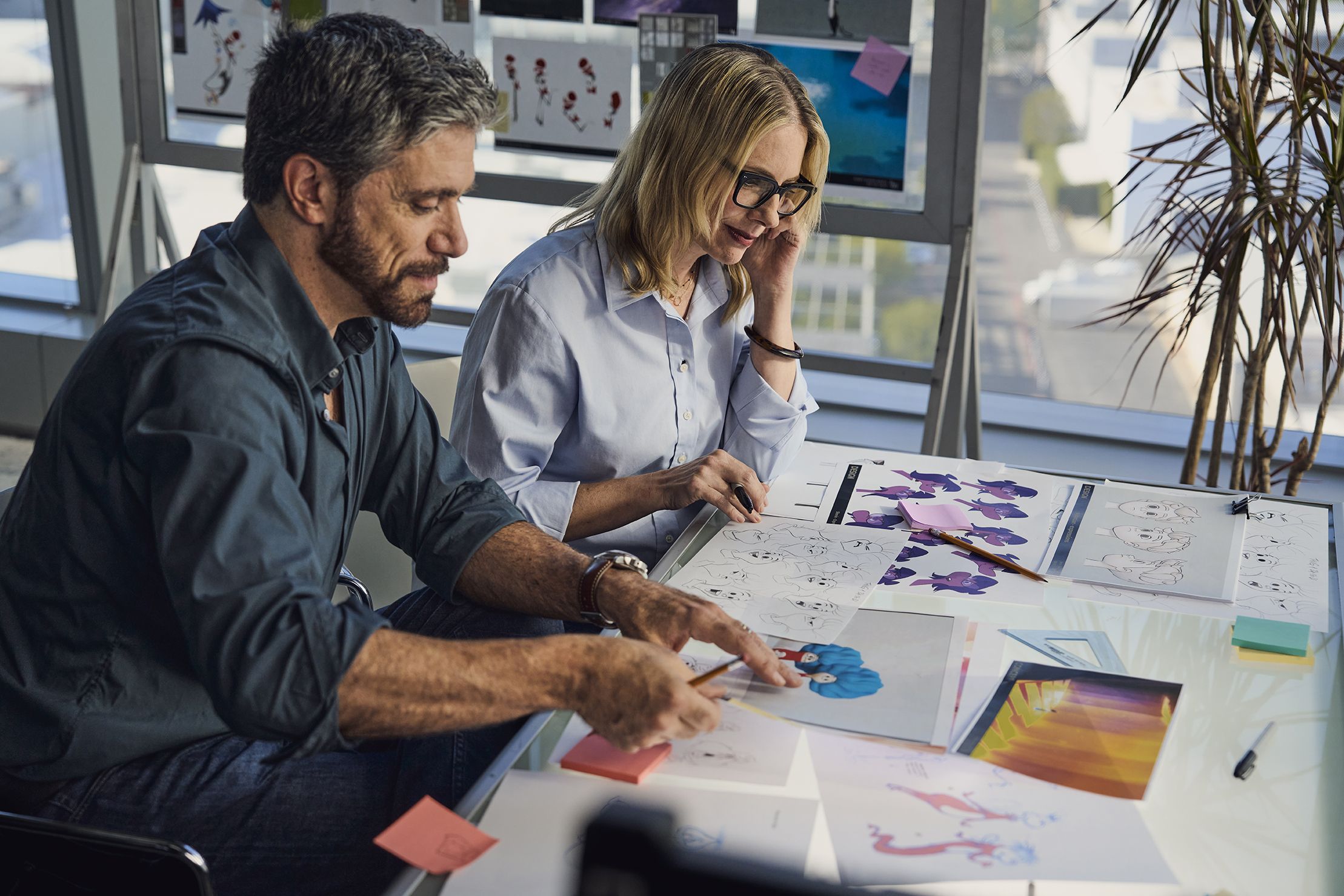
To achieve this, production designer Aidan Sugano and the art department built stylistically distinct, heavily contrasting visual environments. The film juxtaposes the mundane realism of the "real world" against the iconic, whimsical physics of the traditional Dr. Seuss universe, while also carving out three brand-new worlds tied directly to the emotional arcs of the film’s characters.
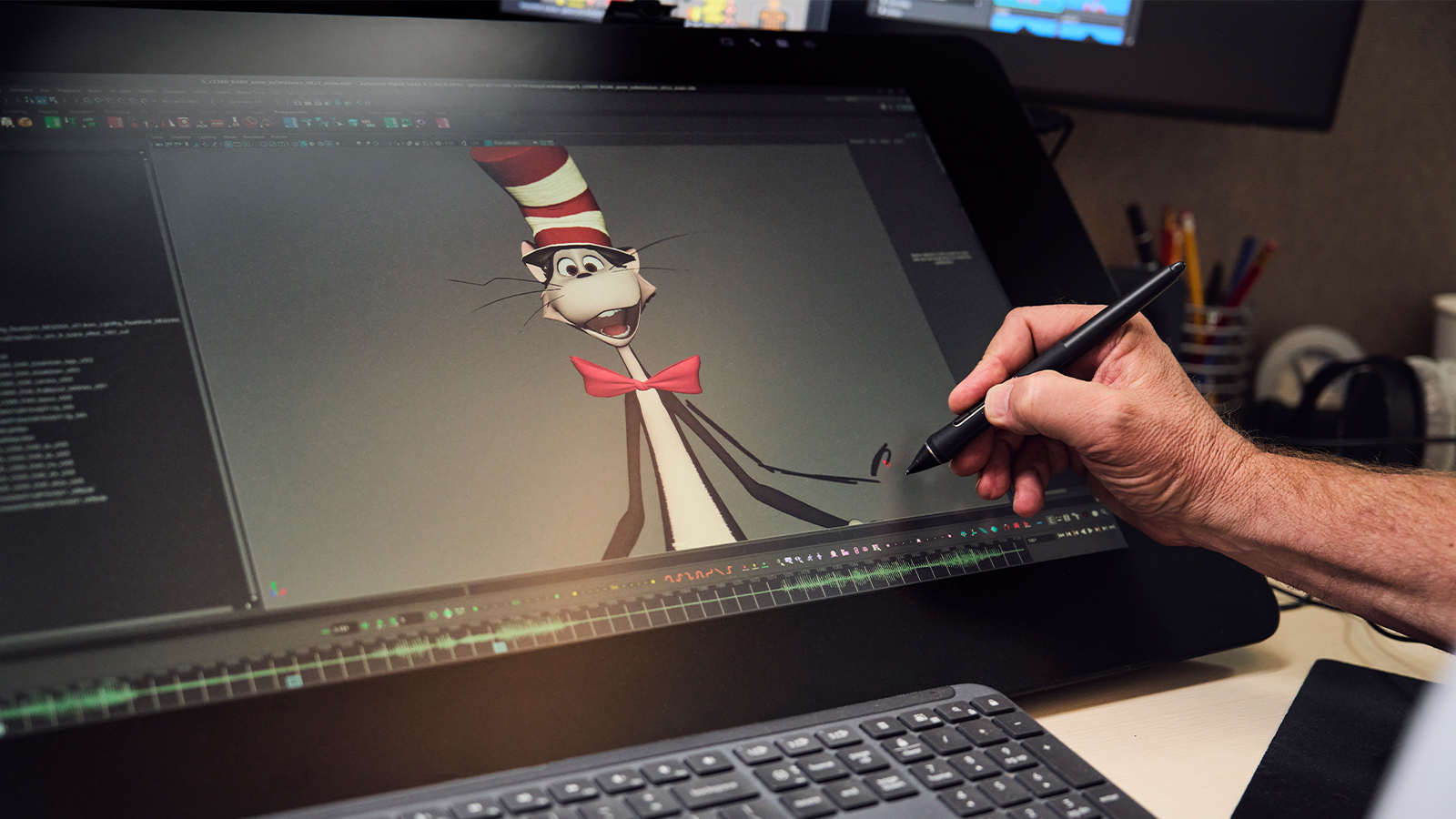
Navigating these starkly different visual aesthetics required a unified digital backbone. The production relied heavily on Autodesk Maya, which served as the primary creative ecosystem for the entire film. From early environmental blocking and architectural modeling to complex character rigging and deeply expressive facial animation, Maya proved to be the indispensable core of the studio’s pipeline.
Bridging Art and Animation
For the animation team, translating 2D Seussian whimsy into fully realized, volumetric 3D spaces presented unique artistic challenges. Characters needed to retain the loose, expressive, and slightly surreal qualities of Theodor Geisel’s original illustrations while moving with physical weight and emotional depth.
Animator Marek Kochout noted that Maya functioned as his primary conduit to the digital performances. For Kochout and his peers, the software served as an essential porthole into the complex "marionettes" of the characters, allowing artists to manipulate complex rigs intuitively and breathe life into iconic creations like the Cat himself.
Supporting Context & Metrics: The Technology Powering the Production
Behind every successful animated feature lies a complex web of logistical oversight and data management. For The Cat in the Hat, keeping hundreds of artists synchronized across multiple continents required enterprise-grade tracking and review systems.
Flow Production Tracking: The Central Nervous System
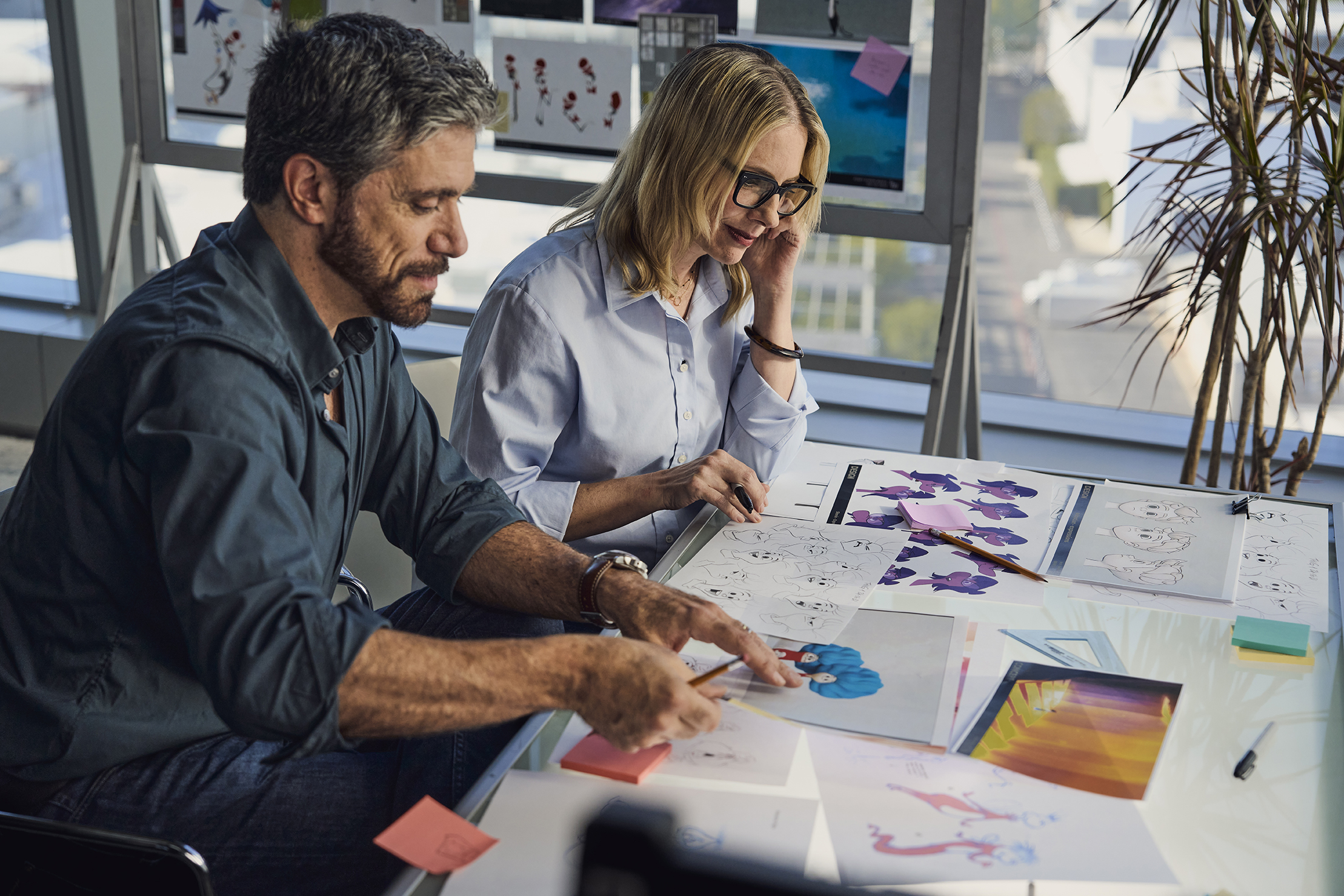
The entire pipeline was orchestrated using Autodesk Flow Production Tracking (formerly ShotGrid). Central supervisor Jessica Killiam emphasized the critical role the platform played in maintaining organizational clarity amidst the chaos of a fast-tracked production.
"We use Flow Production Tracking to track the entire movie, so you can find a variety of different things in here," Killiam explained. "We have our assets, all of the characters, the environments, the props."
By centralizing data management, the production team could instantly monitor the status of every asset, shot, and sequence. If an environment artist in Montreal updated a prop texture or a character designer in Los Angeles adjusted a facial rig, the changes were immediately flagged and tracked across the global pipeline, drastically reducing communication latency and minimizing version-control errors.
Seamless Review Cycles with RV and Flow Capture
Iterative feedback loops can easily stall an animated production if reviews are bogged down by file-transfer delays or incompatible formats. To combat this, the studio integrated RV (part of Flow Production Tracking) directly into its daily review workflow, enabling artists and supervisors across different cities to seamlessly review high-resolution animation passes, compare iterations side-by-side, and make real-time annotations.
Additionally, PIX—now integrated into Autodesk Flow Capture—facilitated secure clip-sharing across distinct departments and external reviewing bodies. This frictionless distribution of media ensured that creative leaders, producers, and studio executives could sign off on sequences rapidly, keeping the frantic two-year production train moving forward without unnecessary derailments.
Official Statements and Industry Insights
The philosophy driving The Cat in the Hat‘s production aligns closely with the core themes of Autodesk’s new Made to Make content series: using robust technology not to replace human creativity, but to remove logistical friction so artists can focus purely on storytelling.
Writer-director Alessandro Carloni neatly summarized this ethos in the documentary’s opening moments:
"In a way, our job is to come up with something absurd, entertaining, and crazy, and then discover: can we make it happen with technology?"
This sentiment is echoed by co-director Erica Rivinoja, who champions the boundless potential of the medium:
"The exciting thing about animation is that it can do so much more than other types of filmmaking."
By leaning into that limitless potential, the filmmakers pushed past the traditional constraints of production timeframes. Rather than compromising on visual fidelity or narrative scale to meet their tight two-year deadline, the team utilized modular software workflows and cloud-connected tracking systems to scale their creative output exponentially.
Future Outlook: Cast, Plot, and Release Roadmap
As the industry catches its breath and looks toward the film’s premiere, anticipation for Warner Bros. Pictures Animation’s inaugural full-length feature is reaching a fever pitch.
Plot and Character Dynamics
The film centers around the Cat taking on arguably his most challenging professional assignment yet for the I.I.I.I. (Institute for the Institution of Imagination and Inspiration, LLC). His mission: to cheer up young siblings Gabby and Sebastian, who are struggling to adjust to life following a stressful family move to a brand-new town. Early trailers have already drawn praise from critics and fans alike for capturing a vibrant, colorful aesthetic that feels both nostalgic to longtime readers and refreshingly modern.
Star-Studded Voice Cast
The production boasts an impressive ensemble cast lending their vocal talents to the Seussian universe:
- Bill Hader stars as the mischievous, top-hat-wearing title character.
- Matt Berry, Quinta Brunson, Xochitl Gomez, Giancarlo Esposito, and America Ferrera round out the primary cast, bringing distinct comedic timing and dramatic weight to the animated inhabitants of the film’s varied worlds.
Release Timeline
Audiences won’t have to wait much longer to see the fruits of this technological and artistic marathon. The Cat in the Hat is officially scheduled to arrive in theatrical cinemas and IMAX screens across North America on November 6, 2026, with international rollout beginning slightly ahead on November 4, 2026.
Meanwhile, animation enthusiasts, aspiring filmmakers, and tech historians looking to dive deeper into the wizardry behind the scenes can stream the premiere episode of Made to Make right now on YouTube. As future episodes roll out, the series promises to peel back the curtain on even more extraordinary feats of modern design, engineering, and digital art.