Executive Overview
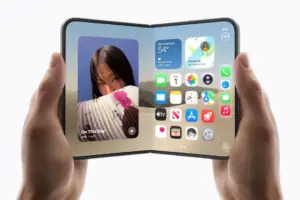
For nearly two decades, the smartphone industry has been defined by the "slab"—the thin, rectangular, monolithic glass-and-metal sandwich that has become an extension of our own hands. Apple, the company that largely pioneered this form factor with the original iPhone, has finally broken its own mold. The iPhone Duo, a $2,000 foldable device, represents a radical departure from the familiar.

After five days of intensive, real-world testing, it is clear that the Duo is not merely a hardware iteration; it is a fundamental shift in how we relate to our digital lives. While it is marred by the friction of a transition period—missing features like Face ID, software optimization growing pains, and a camera system that lags behind the Pro Max line—the device offers something unexpected: a sense of digital intentionality. It is a device that demands presence, challenging the reflexive, mindless scrolling that has come to define the modern mobile experience.

Detailed Chronology: A Five-Day Reckoning
When the loaner unit arrived from Apple, the initial unboxing triggered a rare, forgotten sensation for a seasoned tech reporter: genuine anticipation. The tactile nature of the Duo, its unique geometry, and the sheer audacity of a folding Apple device piqued an interest that years of incremental "Pro" upgrades had long since dulled.

Days 1-2: The Friction of Change
The first 48 hours were defined by cognitive dissonance. As someone deeply integrated into the iOS ecosystem via an iPhone 17 Pro Max, the transition to the Duo felt like learning to type all over again. The device’s "short and squat" form factor felt alien. My primary complaints were immediate: the lack of the expansive, seamless screen real estate I was accustomed to, and the jarring return to Touch ID.

The software, too, struggled to keep pace. Several third-party applications displayed awkward black bars, a clear signal that developers are still scrambling to adapt to the Duo’s unique aspect ratio. The most aggravating issue, however, was the instability of the Google Search app. Frequently, the app would freeze, particularly when triggered into its AI-integrated mode—a frustration that highlights the growing pains of a new hardware category that hasn’t yet been fully embraced by the software ecosystem.

Days 3-5: The Turning Point
By the middle of the week, the frustration began to wane, replaced by a strange realization. The "safety net"—the iPhone 17 Pro Max I had brought along as a backup—began to stay in my bag. I found myself adapting to the Duo’s quirks. I learned to cradle the device for Touch ID authentication and began to appreciate the deliberate, "two-handed" nature of opening the phone to access a larger, tablet-like display.

The durability tests were entirely unintentional but surprisingly reassuring. The phone survived multiple drops on concrete and wood, and, despite my tendency to carry it in my back pocket, it withstood the pressure of being sat upon repeatedly. The "Duo" was not the fragile prototype I feared; it was a rugged, mature piece of engineering.

Supporting Context & Metrics
The market for foldables is no longer nascent, but Apple’s entry marks the "mainstream" tipping point. Data from the first week of availability suggests that while initial adoption is limited by the $2,000 price point, curiosity is at an all-time high.

Camera Performance: A Compromise
For the professional creator, the camera system is the Duo’s Achilles’ heel. Lacking the third telephoto lens and the ProRAW capabilities of the 17 Pro Max, the Duo produces images that are "good enough" for social media but lack the depth and fidelity of Apple’s flagship sensors. My side-by-side tests revealed that the Duo’s image processing often over-smooths fine details like foliage and textures, and struggles in low-light environments compared to the Pro Max’s sophisticated computational photography array.

The Return of Touch ID
Perhaps the most contentious feature is the reliance on Touch ID. In an era where Face ID has made authentication invisible, the need to place a thumb on a physical sensor feels like a step backward. This is particularly noticeable at checkout counters, where the struggle to balance a dog leash, shopping bags, and a phone that requires a thumb-press is undeniably cumbersome. However, it is a necessary compromise for this iteration’s form factor, and early rumors already point toward under-display Face ID in future models.

Official Statements and Industry Impact
While Apple has kept its internal development roadmap under wraps, the company’s push for "Duo-optimized" updates has been aggressive. Developers are receiving tools to adapt their UI to the dual-screen layout, and the reception has been largely positive.

Industry analysts suggest that the Duo serves a dual purpose: it acts as a high-margin "halo" product for early adopters and a R&D laboratory for future Apple hardware. As one developer noted, "Building for the Duo isn’t just about resizing windows; it’s about rethinking the interaction model between the ‘closed’ and ‘open’ states of a mobile device."

Future Outlook: The Death of the Reflexive Scroll?
The most profound takeaway from the iPhone Duo is not its technical specifications, but its behavioral impact.

We have spent years optimizing phones to be as addictive as possible—bigger screens, faster refresh rates, and "infinite" content feeds. The Duo, by its very design, interrupts this cycle. Because the "full" experience requires the intentional act of unfolding, the phone stops being a source of mindless, split-second distraction. It becomes a tool for specific tasks: watching a movie with a kickstand-enabled case, or using split-screen multitasking to cross-reference data.

The "Mindful" Future
We are currently witnessing a broader cultural shift toward "digital minimalism." Users are becoming increasingly weary of the endless, passive scroll. The Duo fits perfectly into this movement. It is a device that forces you to decide, before you open it, what you are trying to accomplish.

While the hardware is not perfect—and at $2,000, it is a significant investment—it is the first device in years that feels truly "new." It does not try to be a better version of the slab phone we have carried for a decade. Instead, it offers a different relationship with our technology.

If the goal of the next decade of mobile computing is to move away from the screen-addiction crisis, the iPhone Duo may well be the accidental pioneer of that change. It is a device that is, ironically, most enjoyable when you are finally able to put it down.

As for me, despite the missing Face ID and the less-than-stellar camera, I am not going back to my slab. The Duo has won me over, not because it is the most powerful phone on the market, but because it is the most human one.

Disclaimer: This article contains affiliate links. When you purchase through these links, we may earn a small commission, which supports our independent, objective reporting.