Executive Overview
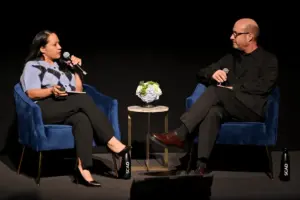
The contemporary cinematic landscape is undergoing a quiet revolution, one driven not solely by the marquee directors or star-studded casts who grace festival red carpets, but by the visionary below-the-line talent who construct the tangible and auditory fabric of storytelling. At the forefront of this movement is Academy Award-winning production designer Patrice Vermette. Fresh off receiving Variety’s prestigious Creative Impact Award at the SCAD Savannah Film Festival, Vermette offered a tantalizing glimpse into the culmination of one of modern sci-fi’s most ambitious endeavors: Dune: Part Three.
Promising a cinematic finale akin to a grand fireworks finale where "they put everything in," Vermette’s insights underscore an industry-wide truth. As highlighted during the festival’s signature 10 Artisans to Watch panel, the movies and television series that capture the global cultural zeitgeist are never born from solo efforts. They are the result of intense, synchronized cross-departmental collaboration. From the rain-soaked trenches of Arrakis to the intricate soundscapes of historical war dramas and the delicate constraints of indie budgets, the heartbeat of Hollywood lies in the hands of its master craftspeople.
This deep dive explores the technical wizardry, collaborative synergy, and relentless creative ambition driving the vanguard of contemporary cinematic art, anchored by Vermette’s groundbreaking work on the Denis Villeneuve-directed sci-fi epic.
Detailed Chronology: From Commercials to Arrakis
The trajectory of Patrice Vermette’s career reads as a masterclass in seizing the right moment through lifelong preparation. Long before he was conceptualizing the austere, brutalist architecture of the Harkonnen home world Giedi Prime or engineering the towering Atreides Castle, Vermette cut his teeth in the high-energy crucible of the music video industry.
The Making of a Visionary
Working alongside ambitious young directors in the early days of his career, Vermette discovered a profound professional comfort zone. The fast-paced, high-stakes environment of music videos provided an immediate adrenaline rush, teaching him to intuitively decode and elevate a director’s core vision. This formative period laid the groundwork for a lifelong philosophy: every physical object, set piece, and environmental texture must be thoroughly grounded in reality, even when existing within the furthest reaches of fantasy.
Vermette’s intersection with Denis Villeneuve was a matter of shared creative circles and cosmic timing. Having worked together on commercial projects in the early 2000s, the two shared a mutual admiration, though their feature film schedules had perpetually misaligned. The turning point arrived when Vermette was slated to design Dallas Buyers Club. When director Jean-Marc Vallée informed him that production was being delayed by a year, Villeneuve seized the opening. A single text message from Villeneuve shifted the trajectory of Vermette’s professional life, leading directly to their first English-language collaboration on the psychological thriller Enemy (2013).
Bringing Herbert’s Universe to Life
When Villeneuve finally proposed tackling Frank Herbert’s seminal sci-fi masterpiece Dune, Vermette understood the deep reverence the director held for the source material. Villeneuve had famously begun storyboarding the universe when he was just 15 years old, carrying a fully formed mental blueprint of the desert planet for decades.
Upon receiving the first 100 pages of the script, Vermette immersed himself once more in Herbert’s novels, taking exhaustive notes. True to their collaborative ethos, every design choice had to serve the narrative. Whether it was Sicario, Arrival, or Dune, Vermette’s sets were never mere backdrops; they were active narrative participants.
This meticulous approach required drawing from unconventional real-world inspirations. For Giedi Prime—the shadowy, oppressive stronghold of the Harkonnens—Vermette looked to industrial septic tanks, translating industrial utilitarianism into oppressive sci-fi dread. When constructing the Imperial Nexus Laboratory on Arrakis, he collaborated extensively with cinematographer Greig Fraser and other department heads to solve logistical nightmares without ever "cheating" natural sunlight. The moral of the masterclass was clear: never abandon an uncompromising vision simply because the execution appears impossible.
Supporting Context & Metrics: The Anatomy of "Dune: Part Three"
As anticipation builds for the December 18 premiere of Dune: Part Three, adapted from Herbert’s Dune Messiah, details regarding the film’s scale and scope are beginning to emerge. Set 17 years after the events of Part Two, the final installment charts the complex, often tragic consequences of Paul Atreides’ (Timothée Chalamet) ascent to absolute imperial power.
Defying Repetition
Under Villeneuve’s primary directive—never repeat sets—Vermette and his team pushed past the boundaries established in the first two films. Maintaining a cohesive visual language while entirely reinventing the architectural and environmental landscape of the universe proved to be their greatest hurdle yet.
The opening sequence of Part Three exemplifies this philosophy of radical reinvention. Described by Vermette as a "crazy idea," the sequence opens on an expansive flat of black sand under relentless, torrential rain, featuring an attack fleet centered around a staggering 55-ton spaceship.
[The Production Pipeline: 55-Ton Spaceship Sequence]
├── Concept: Illustrations of black sand expanses and planetary assault.
├── Engineering: Building a singular, 360-degree accessible ship interior/exterior.
├── Logistics: Deploying heavy-duty cranes every 48 hours for dynamic lifting.
├── Environment: Utilizing advanced spider rigs and touch spinners for perpetual rain.
└── Execution: Integrating a continuous, high-capacity water drainage pump system.
By constructing a single, fully realized ship accessible 360 degrees inside and out, and engineering a complex drainage system to manage the simulated downpour on a massive soundstage, Vermette’s team achieved an opening salvo that sets a new benchmark for cinematic spectacle.
The Variety Artisans to Watch: A Global Footprint
Vermette’s recognition at the SCAD Savannah Film Festival coincided with Variety’s celebration of the industry’s top 10 artisans for the year. Representing a vast cross-section of disciplines—from sound design and animation to costume and casting—these professionals illustrate the sprawling, global network required to bring modern stories to life.
- Anne Jimkes (Supervising Sound Editor, The Mosquito Bowl): Focused on the delicate acoustic balance between deafening combat and profound silence to fully immerse audiences in the lived experience of WWII Marines.
- Aulo Licinio (Animation Supervisor, Project Hail Mary): Looked past purely digital solutions, drawing on Andy Weir’s source material and studying the silent film comedy of Charlie Chaplin and Buster Keaton to give the alien character Rocky a relatable, physical body language.
- Landon Lott (Art Director & Concept Illustrator, Pluribus): Confronted budgetary realities while designing an intricate ice hotel, drawing on real Norwegian architecture and ancient wall-carving murals through heavy cross-departmental teamwork.
- Blair McClendon (Editor, Clarissa): Championed early integration into the filmmaking process, maintaining an open dialogue with directors Arie and Chuko Esiri to ensure the editorial room received precise, purposeful raw material.
- Raúl Refree (Composer, La Bola Negra): Collaborated with directors Javier Calvo and Javier Ambrossi during the scriptwriting phase, allowing the score to actively inspire the narrative and deeply shape Penélope Cruz’s vocal performance.
- Jessica Ronane (Casting Director, Elsinore): Immersed herself in contemporary theater over a two-year span, building an ensemble cast drawn directly from the stage to honor the project’s theatrical roots.
- Allie Shehorn (Make-up & Hair / Special Effects Department Head, Obsession): Managed severe budgetary limits on gore effects, coordinating a seamless multi-departmental workflow where teams had precisely two takes to execute complex, irreversible blood sequences.
- Grace Snell (Costume Designer, Sense and Sensibility): Subverted historical intimidation by introducing contemporary styling elements, allowing modern audiences to visualize themselves within period-accurate attire.
- Danny Vermette (Production Designer, Backrooms): Overcame material shortages—such as running out of a specific rug style—by improvising symbolic set transitions alongside director Kane Parsons.
Official Statements & Industry Insights
The rhetoric shared by the honorees at the SCAD Savannah Film Festival paints a cohesive portrait of modern entertainment as an exercise in collective empathy and technical diplomacy.
Kathleen Radomski, Chair of Production Design at SCAD, captured the overarching ethos during her opening remarks:
"Our favorite films and TV series are not created by soloists. They take a village. Departments and sub-departments, sometimes separated by thousands of miles, are all dedicated to a singular vision. This community is the height of collaboration and the essence of the entertainment industry’s massive global footprint."
This sentiment was mirrored by the craftspeople themselves, who emphasized that technical proficiency must be paired with communication skills that cross departmental borders. Sound editor Anne Jimkes offered vital advice for emerging creators aspiring to navigate industry politics:
"Think like a filmmaker. You need to be able to talk to a producer in their language about budgets and schedules. You need to be able to talk with a director about the story. You need to be able to talk to your coworkers… in their way of speaking. Be a filmmaker, learn about all the aspects."
When addressing the inevitable financial and logistical hurdles of production—such as the material shortages faced by Danny Vermette on Backrooms or Landon Lott’s compromises on Pluribus—the consensus among veterans remained defiant yet practical. Paraphrasing athletic brand mantras and grassroots punk ethics alike, Lott urged up-and-comers to "just do it," while Vermette offered a final, rallying directive:
"Always be making shit. That’s a big part of it. Just keep going. Grab your buddies, go make a film. Just never stop. You don’t get good by sitting around wishing to be good. Just go out and practice, practice, practice."
Future Outlook: The Horizon of Cinematic World-Building
As the industry prepares for the December 18 release of Dune: Part Three, the implications of Vermette and his contemporaries’ work extend far beyond box-office projections. We are witnessing an era where digital effects and practical set design are no longer at war; instead, they exist in a sophisticated symbiosis.
The standard set by Villeneuve and Vermette—refusing creative complacency, maintaining a rigorous adherence to physical plausibility, and fostering deep inter-departmental trust—is shifting audience expectations. Viewers increasingly demand worlds that feel lived-in, tactile, and historically or logically consistent, regardless of how fantastical the premise may be.
Looking forward, the next generation of filmmakers entering the ecosystem are being handed a clear blueprint. As studios grapple with shifting distribution models and evolving audience tastes, the enduring value of tactile craftsmanship and authentic collaboration remains absolute. Whether constructing the sprawling, rain-swept battlefields of an intergalactic empire or carving out the intimate, budget-conscious corners of an indie drama, the future of cinema belongs to those who view filmmaking not as a collection of isolated tasks, but as a unified, collective art form.