Executive Overview
In a strategic move to bridge the gap between complex search infrastructure and the practical needs of webmasters, Google Search Central has officially launched a new video series titled "The Non-Canonical Cabinet." Debuting on October 14, 2024, the series represents a departure from traditional, structured SEO tutorials. Instead of covering the foundational mechanics of crawling, indexing, and ranking, the show focuses on "edge cases"—the nuanced, often bizarre, and highly technical questions that occupy the periphery of standard documentation.
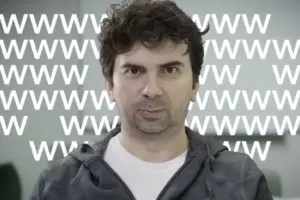
Hosted by Google’s Gary Illyes and Cherry Prommawin, the series adopts a sitcom-style, comedic format to address inquiries that typically fall outside the scope of standard FAQ pages. By inviting the SEO community to submit their most obscure technical dilemmas, Google is signaling a shift toward more transparent, interactive communication regarding how search algorithms interpret non-standard inputs, such as emojis in URLs, keyword stuffing, and character encoding. This initiative not only provides clarity for developers but also serves as a diagnostic tool for SEO professionals looking to avoid common pitfalls in site architecture.
Detailed Chronology: From Concept to Content
The journey toward The Non-Canonical Cabinet began in early October 2024. On October 6, Google released a teaser trailer that teased a more irreverent, personality-driven approach to technical SEO. The trailer established the premise of the show: addressing the "weird" questions that website owners, developers, and SEO practitioners often grapple with but struggle to find definitive answers for in formal Google documentation.
Just eight days later, on October 14, the inaugural episode premiered. The episode dove immediately into the technical feasibility of using non-traditional characters in domain names and URL paths. This timeline reflects Google’s desire to maintain a steady cadence of engagement with the developer community, leveraging the success of previous initiatives like the 2024 "How Search Works" series—which provided a high-level overview of the search lifecycle—to pivot toward this more granular, technical exploration.
Supporting Context: The Physics of URLs and Domains
The first episode provided a masterclass in the technical limitations and possibilities of modern URL structures. To understand the gravity of the advice given by Illyes and Prommawin, one must distinguish between the rules governing domain names and those governing URL paths.
The Strict World of Domain Names
Domain names are governed by rigid international standards established by the Internet Engineering Task Force (IETF), specifically RFC 1035 and RFC 1123. These standards allow for letters, numbers, and hyphens.
Prommawin highlighted the existence of Internationalized Domain Names (IDNs), which allow for native scripts (e.g., Arabic, Chinese). These are technically handled through Punycode, a translation system that converts these scripts into a string starting with "xn--." While browsers typically display these in their native form to the user, Illyes warned of the dangers of homoglyphs—characters from different scripts that look identical to English letters (like the Cyrillic "p" vs. the Latin "p"), which can create security and user experience vulnerabilities.
Perhaps most notably, the episode confirmed that emojis are strictly disallowed in domain names per a 2017 ICANN Board Resolution. While some ccTLDs have allowed for emoji-based registrations at the second level, they remain non-compliant with global technical standards, making them a high-risk choice for any serious brand.
The Flexibility of URL Paths
Conversely, the URL path—the portion following the domain name—operates with significantly more flexibility. Illyes confirmed that Googlebot is fully capable of crawling paths that contain emojis. However, he noted that these are "percent-encoded" by browsers. For instance, a chicken emoji in a URL path is rendered as %F0%9F%90%94. While Google’s systems can process these, the user experience is often suboptimal; many social media platforms and browsers may display these characters as strings of gibberish, potentially harming site credibility.
Official Statements: Keywords and Best Practices
One of the most anticipated segments of the series launch addressed the role of keywords within URLs. For years, the SEO industry has debated whether stuffing keywords into a slug provides a meaningful ranking boost.
Keywords as a "Small Signal"
Gary Illyes provided a definitive, if sobering, answer: keywords in URLs are an "incredibly small signal." He stated that they essentially only matter when Google has "absolutely nothing else to go on." In the context of a brand-new website with no content and no backlinks, a keyword-rich URL might provide a microscopic hint to the crawler about the page’s topic. However, as soon as the page contains meaningful content, the keyword signal from the URL becomes effectively redundant.
This aligns with previous statements from Google’s John Mueller, who in 2016 and 2021 categorized URL keywords as a "very small" or "very, very lightweight" ranking factor. The message from The Non-Canonical Cabinet is clear: stop trying to manipulate search rankings by stuffing keywords into URLs. It is not an effective SEO strategy and adds unnecessary clutter to site architecture.
The Underscore vs. Hyphen Debate
The series also touched upon the persistent debate regarding word separators. Illyes reiterated the industry-standard advice: use hyphens. Google interprets words joined by underscores as a single, concatenated string, which can hinder the algorithm’s ability to parse individual terms. Hyphens, conversely, act as clear delimiters. This guidance is rooted in historical programming conventions where underscores were used to denote variables or functions that should be treated as a single entity.
The Impact on SEO Strategy
The launch of The Non-Canonical Cabinet carries significant implications for digital marketing agencies and site administrators.
- Validation of Documentation: For those who already follow Google’s published guidelines on URL structure, this series provides validation. It confirms that if you are currently using clean, hyphenated URLs without complex or prohibited characters, you are already optimized to the extent that URL structure allows.
- Resource Allocation: By explicitly stating that keyword density in URLs is a negligible ranking factor, Google has given SEOs the authority to push back against clients who demand URLs stuffed with high-volume keywords at the expense of readability and UX.
- Community Engagement: The call for viewer questions is perhaps the most vital aspect of the series. By crowdsourcing edge cases, Google is gaining insight into the specific hurdles faced by webmasters in the wild. This feedback loop could potentially influence future updates to Google’s Search Central documentation.
Future Outlook: What Lies Ahead
The success of the first episode sets a high bar for the series. While Google has not released a formal calendar for upcoming episodes, the teaser trailer and the first release suggest a consistent, albeit flexible, schedule. The next installment is slated to tackle the complexities of the robots.txt file—a core component of SEO that is frequently misunderstood and prone to configuration errors.
As The Non-Canonical Cabinet evolves, it is expected to tackle topics like internationalization, hreflang tags, canonicalization errors, and the impact of generative AI on indexing. For the SEO community, this series is not merely entertainment; it is an authoritative, direct-from-the-source roadmap to navigating the technical intricacies of modern search.
By embracing this conversational, slightly informal format, Google is not only demystifying the search engine but also humanizing its own engineering culture. As the search landscape becomes increasingly automated and AI-driven, the human insight provided by Illyes and Prommawin offers a stabilizing force, reminding practitioners that at the heart of every algorithm is a set of logical, albeit complex, technical rules that, when understood, can be mastered.
For now, the advice remains simple: keep your URLs clean, use hyphens, avoid emoji-based URLs, and focus your SEO efforts on content quality rather than URL-level keyword manipulation. As we look toward future episodes, the industry waits with bated breath to see which other "edge cases" will be brought out of the cabinet and into the light.