By Global Business Desk
Published: October 28, 2026
Executive Overview
In an unprecedented move to combat shifting consumer habits, post-pandemic economic pressures, and widespread fast-food fatigue, McDonald’s has officially launched the largest employee training effort in the company’s storied history. Spanning a global workforce of approximately 2 million restaurant employees across thousands of franchise and corporate-owned locations worldwide, the initiative goes far beyond basic operational guidelines.
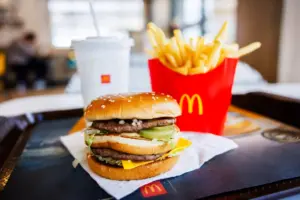
At the core of this multi-million-dollar program is a radical, sensory-driven approach to quality control: workers are being taught to literally taste the difference between a meticulously crafted "gold standard" Big Mac and a subpar product.
This sweeping retraining campaign is a cornerstone of McDonald’s broader "Next" corporate strategy. As inflation-weary consumers increasingly cut back on discretionary dining and fast-food purchases, the fast-food titan is betting heavily on consistency, hospitality, and operational excellence to win them back. Alongside the massive workforce coaching initiative, the "Next" strategy encompasses comprehensive restaurant remodels, the integration of advanced artificial intelligence (AI) across drive-thrus and kitchens, and forward-looking menu adaptations tailored to modern health trends, including accommodations for users of GLP-1 weight-loss medications.
By replacing traditional, punitive inspections with collaborative coaching visits—and linking employee engagement directly to profitability—McDonald’s is attempting a high-stakes cultural pivot. The goal is simple yet formidable: ensure that no matter where a customer buys a Big Mac in the world, the experience, taste, and quality are utterly foolproof.
Detailed Chronology: The Road to the "Next" Strategy
To understand the magnitude of McDonald’s current training pivot, one must examine the compounding pressures that have faced the fast-food industry over recent years.
The Post-Pandemic Landscape and Value Wars
Coming out of the COVID-19 pandemic, fast-food chains experienced an initial surge in demand driven by pent-up consumer spending and drive-thru convenience. However, this boom was swiftly followed by historic inflationary pressures. Food and labor costs skyrocketed, forcing major chains—including McDonald’s—to raise menu prices.
By late 2024 and 2025, consumer pushback reached a boiling point. Social media platforms were flooded with complaints about the fading value proposition of fast food, with many noting that a traditional combo meal now rivaled the cost of casual dining. Budget-conscious consumers began cutting back on fast-food visits entirely, or shifting strictly to value menus.
The Birth of the "Next" Strategy
Recognizing that discounting alone could not solve a deeper erosion of consumer trust, McDonald’s leadership went back to the drawing board. Executives realized that if customers were going to pay premium or even standard prices for fast food, the product and experience had to be uniformly exceptional.
This realization birthed the "Next" strategy, an aggressive, multi-pillared turnaround plan designed to future-proof the brand. The initiative included a massive $8.5 billion financial lifeline and support package for franchisees to help fund store modernizations. But physical remodels and digital kiosks were only part of the equation; leadership recognized that the human element—the frontline workers assembling the food and greeting customers—needed a complete operational reset.
The Pivot from Inspection to Coaching
Historically, fast-food quality assurance relied heavily on "mystery shoppers" and corporate inspectors who would drop by, grade locations against rigid checklists, and penalize managers for non-compliance. While this caught glaring health or safety violations, it did little to inspire pride or continuous improvement among frontline crews.
Beginning in late 2025 and ramping up throughout 2026, McDonald’s leadership executed a seismic shift in the United States, temporarily swapping traditional restaurant inspections for dedicated coaching visits. Scheduled to run through March 2027, these visits flip the script: corporate coaches work alongside local teams, prioritizing taste and product quality first, followed by shift management, speed of service, and hospitality.
The Global Rollout of Sensory Training
By mid-2026, the strategy expanded into the largest training rollout in corporate history. Rather than handing workers a standard training manual or pointing them to an online video module, McDonald’s introduced sensory-based education. Employees are now walked through comparative taste tests designed to calibrate their palates to the corporate "gold standard."
Supporting Context & Metrics: The Business Case for Taste and Engagement
McDonald’s massive investment in its workforce is not rooted in altruism; it is backed by hard financial data demonstrating a direct correlation between employee satisfaction, product quality, and the bottom line.
Quantifying the Human Element
According to data shared by Chief People Officer Tiffanie Boyd, the financial returns of high employee engagement within the McDonald’s system are staggering:
- 15% Higher Sales: Restaurants ranked in the top 25% for employee engagement and retention consistently outperform their peers by generating roughly 15% higher overall sales.
- 20% Greater Cash Flow: These same high-engagement locations yield a 20% increase in store-level cash flow, proving that motivated, well-trained teams create a leaner, more profitable operation.
In an industry traditionally plagued by high turnover rates—often exceeding 100% annually in entry-level food service—retaining staff and investing in their capabilities is the ultimate hedge against labor shortages and execution errors.
Adapting to Evolving Dietary Realities
The training overhaul also arrives at a time of profound cultural shifts regarding nutrition. The rise of GLP-1 receptor agonists (such as Ozempic and Wegovy) has fundamentally altered consumer appetites, leading millions of Americans to reduce their overall caloric intake and curb cravings for high-fat, high-carbohydrate meals.
As part of the "Next" strategy, McDonald’s is actively testing and rolling out new menu options that cater to these health-conscious demographics, ensuring that portion sizes, nutritional transparency, and protein-to-carb ratios appeal to a changing consumer base. However, if a customer does decide to indulge in an iconic treat like a Big Mac, the company wants to ensure that the experience is so flawless that it justifies the caloric and financial expenditure.
Official Statements and Industry Insights
The philosophy behind the new training initiative marks a departure from traditional corporate speak, leaning heavily on experiential learning and sensory awareness.
"If you taste a Big Mac that’s made to the standard, you can tell the difference between that and one that’s not quite to standard," explained Tiffanie Boyd, Chief People Officer at McDonald’s, in an interview with Restaurant Business. "It’s different if you actually experience that."
Boyd emphasized that theoretical knowledge—such as reading a recipe card or watching a video on how much Special Sauce to apply or how long to toast a sesame-seed bun—fails to create lasting behavioral change. By allowing workers to taste, compare, and critique side-by-side products, McDonald’s is transforming its crew members from passive order-takers into active culinary quality controllers.
Industry analysts have largely praised the move. For decades, fast-food standardization relied on automation and idiot-proofing kitchens. While technology like automated grills and touch-screen kiosks has improved speed, it has occasionally stripped away the artisan touch necessary to maintain food quality. A poorly proportioned burger, lettuce that has begun to brown, or cheese that hasn’t melted properly can ruin the brand experience instantly.
By empowering the entire 2-million-person workforce to recognize these flaws, McDonald’s is effectively decentralizing quality control, putting the power directly into the hands of the line cooks and cashiers.
Future Outlook: Can the Golden Arches Win Back America?
As McDonald’s rolls out its coaching visits through March 2027 and continues to integrate AI-driven kitchen management and digital ordering enhancements, the ultimate test of the "Next" strategy will be consumer perception.
The Challenge of Consistency at Scale
Operating over 40,000 restaurants globally means that maintaining brand consistency is one of the most complex logistical challenges in corporate history. Franchisees retain a high degree of operational independence, meaning that corporate initiatives must be compelling enough for independent owners to embrace wholeheartedly.
By tying the training directly to financial metrics—showing owners that engaged employees yield higher cash flow—McDonald’s has made a compelling business argument for compliance.
The Path Forward
The fast-food wars of the late 2020s will not be won on advertising alone. With consumers cutting back and scrutinizing every dollar spent on dining out, brands must deliver uncompromising value. For McDonald’s, that value is no longer just about low prices; it is about delivering a reliable, nostalgic, and flawlessly executed product every single time a customer pulls into the drive-thru.
By teaching its 2 million workers what a truly bad Big Mac tastes like, McDonald’s is ultimately ensuring that customers across the globe will rarely, if ever, have to experience one again.