Federal law enforcement agencies in the United States, alongside international counterparts, are aggressively expanding a high-stakes investigation into the global cybercrime syndicate known as ShinyHunters. The probe has taken a dramatic and unprecedented turn, piercing the veil of the multi-billion-dollar cyber-incident response and ransomware negotiation sector. Investigators have identified high-ranking executives at two distinct ransomware negotiation firms who allegedly maintained unusually close, illicit relationships with the extortion collective. According to confidential sources close to the inquiry, one U.S.-based executive went so far as to actively help operate a public pressure website designed to coerce hacked organizations into paying extortion demands.
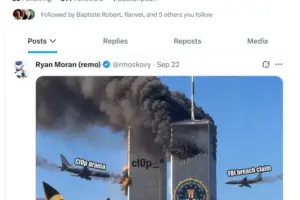
The ongoing dragnet follows a brazen cyberattack in late September, during which ShinyHunters infiltrated the official FBI recruitment portal, fbijobs.gov, taunting federal authorities with threats to publish deeply sensitive personnel files. This included medical and psychological records, home addresses, Social Security numbers, and specialized unit details. In response, federal investigators have moved with blistering speed, arresting suspects globally, including the alleged teenage mastermind known as “Rey” in Jordan, and Dutch hacker Pepijn van der Stap.
The unraveling of encrypted communications seized during these arrests has exposed an uncomfortable truth about the modern cyber-extortion ecosystem: a dark nexus where the very consultants hired to help corporate victims navigate crises may instead be operating as double agents, capitalizing on misaligned financial incentives, internal corporate feuds, and direct collusion with threat actors.
Detailed Chronology: From the Netherlands to the FBI Breach
The Fall of Pepijn van der Stap and the Seizure of Signal Chats
The collapse of the current iteration of ShinyHunters began in earnest on the evening of September 15, 2026. Law enforcement authorities in the Netherlands executed a high-risk raid—reportedly deploying flash-bang grenades to stun and apprehend convicted hacker and prime ShinyHunters suspect Pepijn van der Stap. At the moment of his arrest, Van der Stap was actively logged into his accounts, most critically his Signal instant messaging application.
The live seizure of Van der Stap’s device provided investigators with an unencrypted, real-time archive of communications between the Dutch hacker and his most frequent contacts. These contacts included prominent ransomware negotiators based in Canada and the United States. Furthermore, sources indicate that these Signal logs contained the critical breadcrumbs that led investigators to uncover a nascent murder-for-hire plot targeting international rivals, allegedly ordered by Van der Stap (though authorities emphasize there is no indication those physical attacks were ultimately carried out).
The Arrest of Edward Dubrovsky
Armed with the intelligence gathered from Van der Stap’s messaging archive, the Federal Bureau of Investigation executed a high-profile arrest on October 9, 2026. Federal agents apprehended Edward Dubrovsky, a 54-year-old Canadian cybersecurity executive and co-founder of CyberSteward. Dubrovsky—who had coincidentally published a book on cyber extortion management just prior to his arrest—was formally charged in U.S. federal court with threatening to disclose hacked data and interfering with interstate commerce through extortion.
Prosecutors promptly requested that Dubrovsky remain in custody pending trial, sealing the accompanying court records. According to investigative sources, Van der Stap’s chat logs revealed that Dubrovsky was in frequent communication with the Dutch hacker, often possessing insider knowledge regarding fresh ShinyHunters victims before the victim organizations themselves were even aware of the breach. Most damningly, investigators discovered that Dubrovsky knew ShinyHunters had successfully compromised deeply sensitive FBI data servers but chose to withhold this information from the bureau, remaining silent right up until the group publicly threatened to leak the agency’s personnel records on social media.
The "Rey" Detonation and the FBI Jobs Hack
Control over the ShinyHunters brand had transitioned to “Rey”—subsequently identified as a teenage hacker residing in Amman, Jordan—following the steady elimination of the group’s original French founders. Under Rey’s operational direction, ShinyHunters claimed responsibility for over $70 million in extortion proceeds throughout the year.
The peak of their audacity occurred in late September 2026 with the hack of fbijobs.gov. The humiliation of a federal law enforcement agency prompted an immediate, global manhunt and interrogation sweep of anyone who had communicated with Rey. On October 3, 2026, Reuters reported that Rey had been detained by Jordanian authorities and was actively cooperating with the FBI, accelerating the domino-effect collapse of the network’s trusted confidants.
Supporting Context & Metrics: The Mechanics of Modern Extortion
The Rise and Fall of Shinywire[.]com
Federal investigators examining the digital infrastructure of ShinyHunters have uncovered a crucial operational hub: a now-defunct victim extortion portal tracked as shinywire[.]com. Operating openly from May 3 until October 16, 2026, the website hosted profiles for nearly 100 corporate and institutional organizations breached by the syndicate.
Each entry on shinywire[.]com functioned as a public shaming and pressure tactic. The pages featured samples of stolen proprietary files, a countdown timer, and direct instructions urging victims to engage with the cybercrime group to negotiate payout terms. If an organization ignored the demands for seven days, their complete cache of stolen data was dumped onto the dark-web Tor shaming blog maintained by ShinyHunters.
Among the high-profile entities listed on the portal was Intuitive Surgical, an American medical technology giant breached in March 2026 via a sophisticated targeted phishing attack that compromised employee credentials. Crucially, sources close to the probe reveal that intelligence points to at least one executive at a prestigious U.S.-based consulting firm—an entity boasting over 1,000 associates—playing an active, hands-on role in operating and maintaining the shinywire[.]com extortion engine.
Corporate Feuds and the Ghostbyte Legacy
The legal fallout has also exposed vicious internal warfare within the upper echelons of the cybersecurity industry. Earlier this year, Edward Dubrovsky filed a multi-million-dollar lawsuit in Ontario against Daniel Tobok, the former CEO of Cypfer, a major global incident response firm. Dubrovsky alleged he was pushed out by capricious business decisions after the two founded the firm together in 2017, serving as business partners before their relationship fractured in 2024. Tobok denied the allegations, launching a counter-suit accusing Dubrovsky of unfair competition through his work at CyberSteward.
Adding a bizarre historical layer to the saga, interviews with Tobok’s former colleagues revealed that years prior, he was known among early ransomware purveyors by the moniker “Ghostbyte.” Investigative tracing via threat intelligence platforms such as Constella Intelligence linked email addresses historically used by Tobok to online accounts operating under the username "ghostbyte."
Furthermore, historical forensic records revealed a 2018 incident involving the Dharma ransomware affiliate program—a prolific Russian-language cybercriminal operation. When a Canadian victim hesitated to pay a ransom over unrecoverable files, the Dharma representative directly referred them to an IT contact operating under the email address [email protected], telling the victim that this specific Canadian entity frequently resolved such problems locally. While no direct formal link has been adjudicated, the convergence of historical monikers underscores how porous the boundary between legitimate IT remediation and illicit facilitation has historically been.
Official Statements and Industry Disclosures
The fallout has forced major stakeholders in the cybersecurity, cyber-insurance, and incident-response arenas to issue defensive clarifications.
In a public statement released on October 14, Cypfer categorically distanced itself from the unfolding criminal proceedings against Dubrovsky:
"We had no prior knowledge of Mr. Dubrovsky’s arrest. CYPFER has not received any outreach from law enforcement and, to our knowledge, is not the target of any law enforcement investigation."
Cypfer further clarified that it operates entirely independently of CyberSteward, noting that it was recently acquired by the Apros Group, a holding company led by Jason Hogg, a former FBI special agent and former CEO of Aon Cyber Solutions Group. Aon previously acquired Cytelligence, a security firm founded by Daniel Tobok where Dubrovsky also served as managing partner.
Meanwhile, industry experts have spoken out regarding the inherent financial conflicts plaguing the incident response ecosystem. Mark Camillo, CEO of CyberAcuView—an industry consortium established by major cyber insurance carriers—highlighted the dangerous pricing structures utilized by some remediation firms:
"It has come to the industry’s attention that many of the ransomware payers charge a percentage of the final payment, which may or may not be disclosed. This makes no sense if they are also the negotiator. There needs to be more transparency in the process, as no one in the ecosystem should be profiting purely on the size of the ransomware transaction or payment itself."
Camillo emphasized that while negotiating firms defend these percentage-based retainers by citing the escalating risks of cryptocurrency handling and exchange fees, the fee structure creates a perverse incentive to maximize ransom payouts rather than defuse them.
Future Outlook: Cracking Down on Double Agents
The federal crackdown on Edward Dubrovsky and the ongoing scrutiny of U.2. consulting executives mark a watershed moment for the cybersecurity industry. For years, federal agencies cautioned against the perils of paying cyber extortionists, warning that ransom payments merely bankroll future attacks and offer no cryptographic guarantee that stolen data has actually been destroyed.
The reality of this warning was starkly demonstrated during the December 2024 breach of education technology titan PowerSchool, where ShinyHunters stole the private records of 62 million students and 9.5 million teachers. Despite a reported $2.85 million ransom payment facilitated by incident response advisors, individual school districts were subsequently hit with secondary extortion demands using identical, leaked data samples.
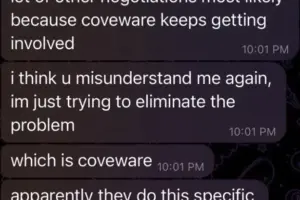
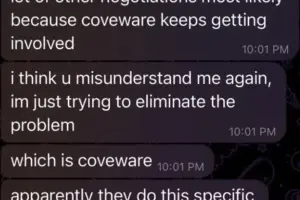
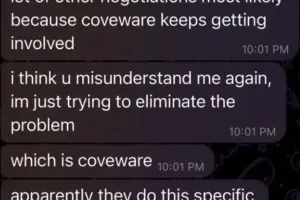
Frustrated by reputable response firms like Coveware and Unit 221B actively advising clients not to pay, leaked Telegram chats reveal that ShinyHunters leadership actively plotted to "eliminate the problem" posed by Coveware, complaining that the firm’s anti-extortion guidance was severely damaging their profit margins.
As the U.S. Department of Justice ramps up prosecutions against compromised insiders—evidenced by the October 2026 indictment of MonsterCloud CEO Zohar Pinhasi for secretly paying hackers behind his clients’ backs, and the July sentencing of Florida negotiator Angelo Martino to 70 months in prison for conspiring with BlackCat/ALPHV—the message to the industry is unequivocal.
The era of unchecked, unregulated ransom mediation in the shadows is rapidly drawing to a close. Federal investigators have signaled that the courtroom door is now swinging open for the white-collar intermediaries who chose to sit on both sides of the negotiating table, transforming corporate cyber defense into a criminal enterprise.