
Executive Overview
For creative professionals, video editors, 3D artists, and software developers relying on high-performance mobile workstations, 2025 has proved to be an exceptionally punishing year. The relentless global expansion of artificial intelligence infrastructure has triggered a severe, industry-wide supply squeeze on high-speed dynamic random-access memory (DRAM) and unified memory architectures. This component scarcity has forced major technology manufacturers to implement steep price hikes across their professional lineups. Apple, a titan in the creative hardware ecosystem, shocked consumers in June by applying a hefty $300 baseline price increase to its higher-end MacBook Pro configurations, compounding the financial strain on independent creators and enterprise studios alike.
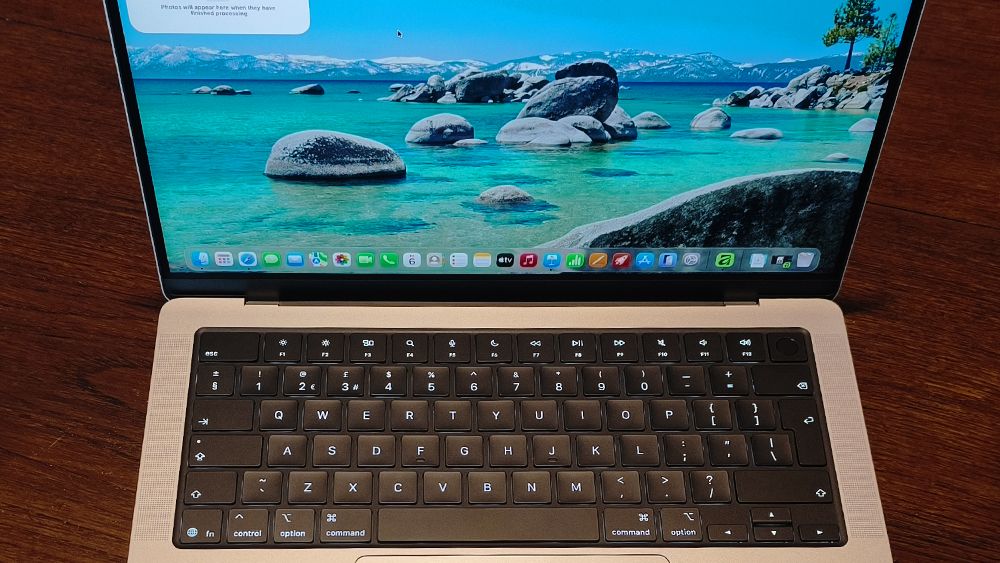
However, a massive corrective shift has finally arrived in the retail space. In what is arguably the most significant workstation discount of the season, Amazon has slashed the price of the latest 14-inch MacBook Pro (featuring the M5 Pro chip, 24GB of unified memory, and a spacious 1TB SSD) from its retail price of $2,499 down to just $2,049. This rare, limited-time promotion wipes out Apple’s summer price inflation entirely and delivers an unprecedented $430 total savings. For professionals whose workflows demand desktop-class performance on the go, this deal represents a critical window to upgrade aging hardware without absorbing the full weight of the current silicon crisis.
Detailed Chronology: How the AI Hardware Boom Inflated Laptop Prices
To understand why a $430 discount on a 14-inch MacBook Pro is making waves across the tech and creative industries, one must examine the cascading macroeconomic events that disrupted the semiconductor market over the past twenty-four months.
Late 2023 to Mid-2024: The Infrastructure Gold Rush
As generative artificial intelligence transitioned from an experimental novelty into an enterprise standard, tech giants raced to build out massive data center clusters capable of training and running complex large language models (LLMs). This unprecedented demand hyper-focused semiconductor foundries—most notably TSMC, SK Hynix, and Samsung—toward the production of High Bandwidth Memory (HBM) and enterprise-grade AI accelerators. Consumer-facing silicon lines, including the advanced nodes required for high-end client laptops, were systematically deprioritized as fab capacity was reallocated to maximize margins on AI server components.
Early 2025: The Consumer Memory Squeeze
By the dawn of 2025, the ripple effects hit the consumer hardware market. Memory manufacturers reported tight inventories, leading to steep quarterly increases in DRAM and NAND flash contract pricing. PC and laptop makers absorbed these surging input costs for several months, attempting to maintain competitive entry-level pricing while quietly bleeding profit margins. Yet, this strategy was unsustainable for long-term operations.
June 2025: Apple’s Shock Price Revision
The tipping point arrived in mid-June. Unable to continue absorbing the hyper-inflated costs of high-capacity unified memory modules, Apple instituted a sweeping pricing restructure for its professional notebook portfolio. High-end MacBook Pro variants equipped with advanced Pro and Max chips saw immediate baseline price bumps averaging around $300. For digital creators who view large memory pools—such as 24GB, 32GB, or 48GB configurations—as non-negotiable requirements for heavy multitasking and asset caching, the price increase felt like a severe penalty for working within demanding visual fields.
Late 2025: Retail Correction and the Amazon Breakthrough
Fast forward to the present: retail giants are stepping in to stimulate sluggish consumer upgrading cycles. Third-party platforms like Amazon have begun deploying aggressive promotional strategies, utilizing bulk-purchasing leverage and seasonal inventory clearance to slash prices far below Apple’s official MSRP. The drop of the M5 Pro 14-inch model to $2,049 marks the first major instance where the market price has swung dramatically back in favor of the consumer, completely neutralizing the mid-year price hike and offering a rare breather for budget-conscious studios.
Supporting Context & Metrics: The Real Cost of Creative Workflows
The current hardware crunch is more than just a supply chain footnote; it directly impacts the bottom line of creative businesses. Modern creative workflows have evolved far beyond simple text editing or standard-definition playback. Today’s professionals routinely juggle complex, resource-intensive operations that strain even the most capable machines.
The Demands of Modern Creative Suites
- High-Resolution Video Production: Editing multi-stream 4K and 8K ProRes footage in applications like Adobe Premiere Pro, DaVinci Resolve, and Final Cut Pro requires massive memory bandwidth. Video editors cannot afford stuttering timelines or prolonged rendering bottlenecks when client deadlines loom.
- 3D Modeling and Rendering: Software suites such as Blender, Cinema 4D, Autodesk Maya, and Unreal Engine place immense pressure on both GPU rendering cores and system memory. As scene geometry grows more complex and real-time ray tracing becomes standard, memory capacity directly dictates the scale of projects a mobile workstation can handle.
- Generative AI on the Edge: Ironically, many creative professionals are now running localized AI models—such as Stable Diffusion for concept art or local LLMs for scriptwriting and coding assistance—directly on their laptops. Running these models locally requires robust Neural Engine performance paired with high-capacity unified memory pools to store weights and parameters without offloading to slower swap drives.
Analyzing the M5 Pro Configuration Deal
The discounted 14-inch configuration at the center of the current Amazon promotion hits a historical sweet spot for price-to-performance ratios:
- Processor (M5 Pro): Delivers a robust core count designed to chew through CPU-bound tasks while maintaining remarkable power efficiency, keeping fan noise and thermal throttling to a minimum during intensive export jobs.
- Unified Memory (24GB): A vital upgrade over base 16GB models, providing enough headroom for seamless multitasking between heavy creative applications (e.g., running Photoshop, Illustrator, and After Effects simultaneously).
- Storage (1TB SSD): Offers blazing-fast read and write speeds, essential for scratch disks and rapid project file loading, while providing enough native space to store active project libraries before offloading to archive drives.
By reducing this specific build from $2,499 to $2,049, Amazon has effectively erased the memory tax imposed by the broader semiconductor shortage, making a professional-grade machine accessible to freelancers and small agencies who had delayed their hardware refreshes throughout the year.
Official Industry Perspectives and Market Analysis
Industry analysts and hardware economists have closely monitored the tense standoff between rising component costs and consumer price resistance. While device manufacturers argue that inflationary pressures and silicon scarcity leave them no choice but to adjust MSRPs upward, retail economists point out that prolonged high pricing threatens to freeze the upgrade cycle entirely.
The Manufacturer Dilemma
Speaking anonymously on supply chain dynamics, a leading consumer electronics logistics consultant noted:
"Manufacturers are caught between a rock and a hard place. The cost of securing advanced packaging and high-density memory modules has structurally shifted upwards due to AI data center dominance. When brands like Apple raise prices by $300, it isn’t an arbitrary cash grab—it’s a defensive maneuver to protect operating margins against multi-billion-dollar component contracts. However, consumer demand is elastic; when prices cross psychological thresholds, buyers simply hold onto their hardware longer."
The Retail Intervention
Because hardware vendors maintain strict control over their direct-to-consumer pricing on official storefronts, major online retailers have become the primary battleground for driving sales volume. By absorbing lower margins or leveraging cooperative marketing funds, platforms like Amazon can reset market expectations.
Creative industry veterans have welcomed the relief. Many studio directors note that hardware investment is foundational to business growth; every dollar saved on workstation procurement can be reinvested into software subscriptions, talent acquisition, or studio infrastructure. The current $430 discount serves as a much-needed correction in a year characterized by escalating overhead costs.
Future Outlook: What Lies Ahead for Laptop Buyers?
As the industry looks toward the horizon, questions remain regarding whether prices will stabilize permanently or if the current discount is merely an isolated holiday-season anomaly.
Will Memory Prices Drop in 2026?
Semiconductor foundry expansions are currently underway globally, with multibillion-dollar fabrication plants breaking ground in the United States, Europe, and East Asia. However, semiconductor manufacturing is notoriously sluggish to scale. Analysts project that while enterprise HBM demand will continue to command primary foundry output throughout the coming year, mature consumer memory nodes may begin to see stabilized pricing by late 2026. Until that supply-demand equilibrium is fully achieved, official baseline prices from major tech manufacturers are unlikely to see widespread, permanent reductions.
Strategic Advice for Upgraders
For creative professionals currently navigating aging hardware—such as Intel-based MacBooks or early Apple Silicon M1 machines—waiting for official price drops from manufacturers may prove counterproductive. The hidden cost of lost productivity, slower render times, and potential hardware failure often outweighs the savings of waiting for a speculative market shift.
Deals like the current $430 markdown on the M5 Pro MacBook Pro provide a rare tactical opportunity. By capitalizing on aggressive retail promotions that completely bypass manufacturer price hikes, buyers can future-proof their workflows with cutting-edge unified memory and processing power at a highly competitive valuation.
As the tech landscape continues to adapt to the realities of the artificial intelligence era, savvy consumers must remain vigilant, leveraging third-party retail discounts to secure essential tools while navigating the ongoing component crunch.