
Executive Overview
In the contemporary digital landscape, attention is the ultimate scarce resource. While countless creators and businesses chase algorithmic fleeting trends, likes, and vanity metrics, a quiet group of revenue-focused operators generates millions of dollars purely through the strategic deployment of the written word. Copywriting—far from being a mere creative writing exercise—is the foundational engine of modern customer acquisition, scaling businesses through targeted blog posts, high-converting social media distribution, and persuasive email newsletters.
Drawing from over a decade of firsthand experience building, scaling, and exiting digital marketing agencies, and operating as a partner in major educational ecosystems like Copyblogger, the reality of high-level digital commerce becomes clear: greatness in writing is not measured by eloquence, but by clear, concise ROI. This report synthesizes ten foundational strategies, actionable workflows, and advanced frameworks that transform standard content into a predictable, revenue-generating asset.

Detailed Chronology and Methodological Evolution
The path to mastering high-stakes copywriting is rarely linear. Historically, the discipline relied on intuition, long-form direct mail packages, and exhaustive print testing. Today, the evolution of digital platforms has accelerated this cycle, transforming copywriting into a data-driven, iterative science.
Phase 1: Moving From Eloquence to Economics
Early-stage writers frequently fall into the trap of prioritizing literary flair over commercial utility. The evolution of a high-earning copywriter begins the moment they shift their focus from how a sentence sounds to how much revenue a passage generates. By proving a higher return on investment (ROI) than market averages, copywriters transition from commoditized vendors to indispensable business partners.

Phase 2: Systematic Research and Customer Empathy
The modern writing process breaks down into distinct chronological steps: deep customer discovery, competitor reverse-engineering, structural outlining, drafting, and AI-assisted refinement. Rather than facing the psychological barrier of a blank page, elite operators follow rigid frameworks designed to isolate customer pain points, systematically address objections, and drive high-intent calls to action (CTAs).
Supporting Context, Frameworks, and Core Metrics
Building a predictable copywriting machine requires mastering ten core principles. Below is an exhaustive breakdown of the methodologies required to scale from a beginner wordsmith to a high-earning commercial writer.
1. Talk to Customers (Or Reverse-Engineer Their Reality)
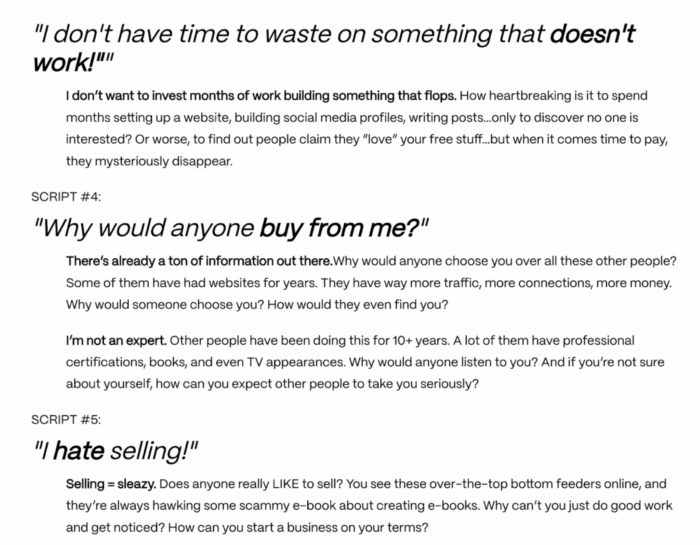
Your core mandate as a copywriter is to capture attention, build foundational trust, introduce a viable solution, dismantle objections, and convert prospects. To achieve this, you must deeply understand your target audience’s daily frustrations, emotional triggers, and spoken language.
When examining elite landing pages—such as Ramit Sethi’s course Earnable—the strategy is clear: rather than offering generic value propositions like "how to make more money," top copywriters mirror the precise, lived reality of the prospect (e.g., the 9-to-5 grind, evening Netflix binges, and weekend errands). This psychological mirroring proves that the author understands the prospect’s pain.

Tactical Research Execution:
- Sales Call Analysis: Download transcripts from client sales calls and input them into large language models (LLMs) like ChatGPT to extract recurring objections and pain points.
- Community Mining: Dive into niche Reddit threads and online forums to harvest authentic customer language, tone, and emotional vocabulary.
2. Learn From Your Competitors’ Ad Libraries
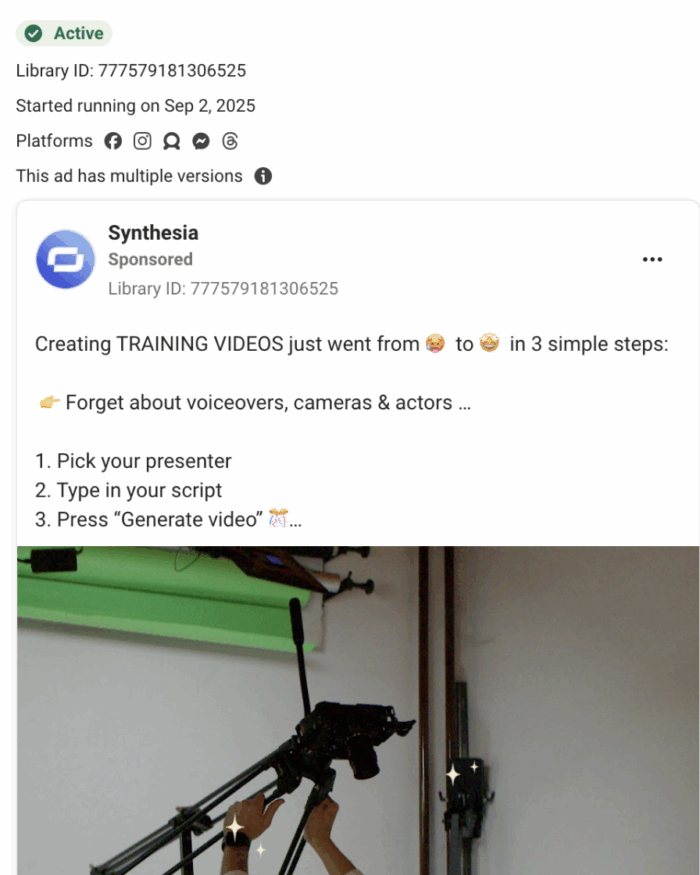
Market leaders have already absorbed the financial burden of testing ad copy. Leverage platforms like the LinkedIn and Facebook Ad Libraries to study competitor messaging.

- The Longevity Rule: Ads that run continuously over extended periods (e.g., months rather than days) generally indicate a winning, validated pain point.
- Analyze these enduring campaigns to extract underlying market anxieties—such as the operational chaos of coordinating training video shoots or the revenue loss caused by messy CRM data.
3. Build and Maintain a Strategic Swipe File
Collecting high-performing headlines, sales pages, and ad creatives builds an intuitive mental database of what works. In addition to curating your own repository, leverage established industry resources like SwipeFile.com (curated by Neville Medhora) to study materials vetted by veteran operators who possess a sharper eye for conversion optimization than industry novices.
4. Establish a Repeatable Writing Process
To eliminate writer’s block and ensure consistency, construct a modular writing framework. A reliable blog post workflow, for instance, should look like this:

- Outline Creation: Map out headers based on primary search intent and audience pain points.
- Drafting: Write fluidly without self-editing, ensuring all core objections are systematically addressed.
- Refinement: Polish phrasing, integrate expert quotes, and ensure seamless transitions into the final Call to Action (CTA).
5. Practice Writing with Commercial Intent
True skill acquisition requires deliberate practice. However, rather than writing in a vacuum, align your practice with commercial outcomes:
- Build personal brands on platforms like LinkedIn to understand what content drives client inquiries.
- Launch affiliate marketing websites or small software tools to study search engine optimization (SEO) and conversion mechanics.
- The Dropshipping Case Study: Many six-figure copywriters began by launching niche e-commerce stores—such as selling and repairing cuckoo clocks—which forced them to write content optimized for purchase intent rather than hollow traffic metrics.
6. Embrace AI for the Right Use Cases
Artificial intelligence should serve as a strategic partner, not a wholesale replacement for human thought. Keep your original ideas intact while utilizing AI for specific operational tasks:

- Pain Point Extraction: Prompt AI to generate exhaustive lists of target audience frustrations based on niche parameters.
- Sentence Refinement: Use prompts such as "Can you rewrite this passage with more clarity?" to unlock fresh phrasing options.
- Expert Sourcing: Ask AI to locate real-world case studies, quotes, and discussions from industry practitioners on platforms like LinkedIn to back up your claims with authoritative proof.
7. Master One Platform Deeply
Different distribution channels require distinct stylistic approaches. LinkedIn rewards thought leadership and nuanced personal narratives, while traditional blogs demand structured, searchable, how-to formats. By mastering a single platform’s algorithmic nuances and monetization pathways, you can dramatically increase the ROI of your work and command higher fees.
8. Measure the ROI of Your Work
Subjective feedback from peers is unreliable. Instead, tie your copywriting directly to financial metrics:
- For Social Ghostwriting: Track the quality of engagement. Are high-level decision-makers and target executives commenting, or are you attracting low-value traffic? Utilize custom conversion fields on signup forms asking, "How did you hear about us?"
- For Blog Content: Implement conversion tracking in Google Analytics to measure whether organic search traffic converts into qualified leads, rather than merely tracking vanity pageviews.
- For Sales Pages: Analyze direct conversion rates and transaction volume linked directly to specific landing page iterations.
9. Join a Community and Seek Relentless Feedback
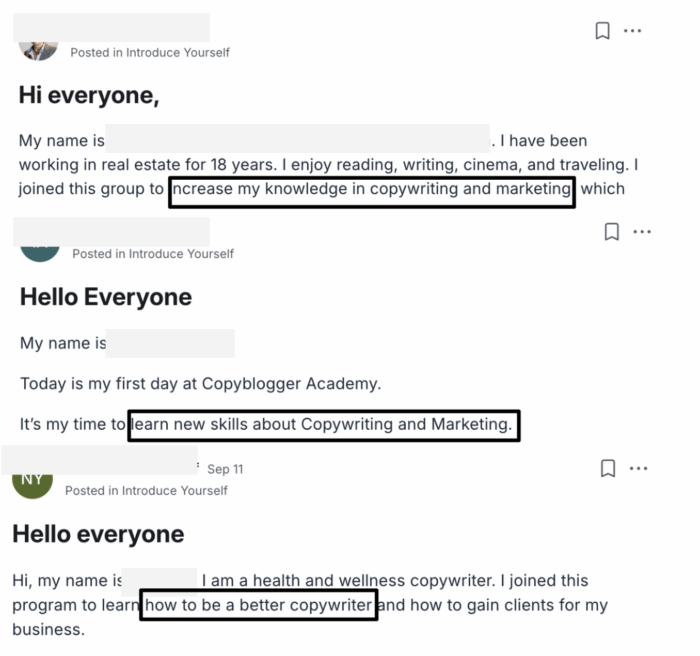
Copywriting can be an isolating discipline. Accelerate your growth by embedding yourself within communities of accomplished practitioners. Exposing your drafts to critique from six- and seven-figure operators helps you identify blind spots, swap client referrals, and build a sustainable professional network.
10. Be Impatient With Action and Patient With Results
Borrowing the philosophy of investor Naval Ravikant: push yourself relentlessly to write, test, and ship work every single day, but maintain a long-term horizon for financial and professional returns. Consistency compound over time, transforming early friction into compounding momentum.

Official Statements and Industry Insights
Top-tier digital marketers and agency founders consistently emphasize that the friction point for modern businesses is rarely product quality—it is communication.
Industry veterans note:

"Great copywriters are clear, concise, and ultimately convert readers into customers. If you can prove that your copywriting can generate a higher ROI than the market average, you’ll have a much more successful career."
Furthermore, experts emphasize that separating vanity metrics from revenue-driven metrics is the defining characteristic of elite marketers. Whether evaluating social media engagement or organic search traffic, the ultimate metric of success remains commercial conversion.
Future Outlook
As artificial intelligence continues to lower the barrier to entry for generating basic text, the value of human copywriting is shifting away from mere output volume and toward strategic empathy, deep customer research, and conversion architecture.
In the coming years, businesses will not struggle to generate words; they will struggle to capture authentic human trust in an increasingly saturated digital environment. Copywriters who master the intersection of data-driven ROI, deep psychological research, and systematic multi-channel distribution will command unprecedented leverage. By maintaining an aggressive commitment to execution balanced with a long-term vision, new and seasoned operators alike can build resilient, highly lucrative digital publishing and marketing enterprises.