Executive Overview: A Paradigm Shift for WordPress Developers
For the better part of a decade, the WordPress development ecosystem has been defined by a clear, often intimidating, dichotomy: the simplicity of server-side PHP versus the complex, high-velocity world of React-based JavaScript. Since the inception of the Gutenberg block editor seven and a half years ago, developers have been forced to navigate a rigorous "dual-registration" requirement—a process that mandated both PHP configuration and JavaScript logic, coupled with the management of NPM packages and complex build pipelines.
With the release of WordPress 7.0, the platform has finally introduced a long-awaited bridge for the traditional developer: the ability to register and build blocks using exclusively PHP. This feature, anchored by the autoRegister flag, represents a strategic pivot in the platform’s philosophy. By automating the generation of client-side requirements, WordPress is effectively lowering the barrier to entry for the massive cohort of PHP-centric developers who have felt marginalized by the shift toward modern JavaScript tooling. However, while this development marks a significant milestone, it is not a "magic bullet." This article investigates whether this simplified path is a replacement for modern block development or a surgical tool designed for a specific, critical purpose: the migration of legacy architecture into the modern block-based era.
A Detailed Chronology: From Resistance to Integration
The journey to PHP-only blocks has been one of the most debated topics in the WordPress developer community. When Gutenberg first debuted in 2017, the promise was a unified editing experience. However, the architectural requirement to register blocks in both PHP (for server-side rendering) and JavaScript (for the client-side editor interface) created a "steep learning curve" wall.
- 2017–2019: The "Gutenberg Resistance" period, where many long-time theme developers opted to stick with classic themes, citing the excessive boilerplate code required for simple blocks.
- 2020–2023: The rise of hybrid themes and the "Block Themes" revolution. Developers were forced to choose between adopting heavy React workflows or staying tethered to legacy architecture.
- 2024–2025: The development of the
autoRegisterinitiative. Core contributors recognized that the complexity of block creation was hindering the adoption of Full Site Editing (FSE). - 2026 (WordPress 7.0): The official launch of PHP-only block registration. By allowing
register_block_typeto handle the heavy lifting, the system now auto-generates the necessary JavaScript wrappers, essentially creating a "headless" link between the database and the editor.
Supporting Context: The Architecture of PHP-Only Blocks
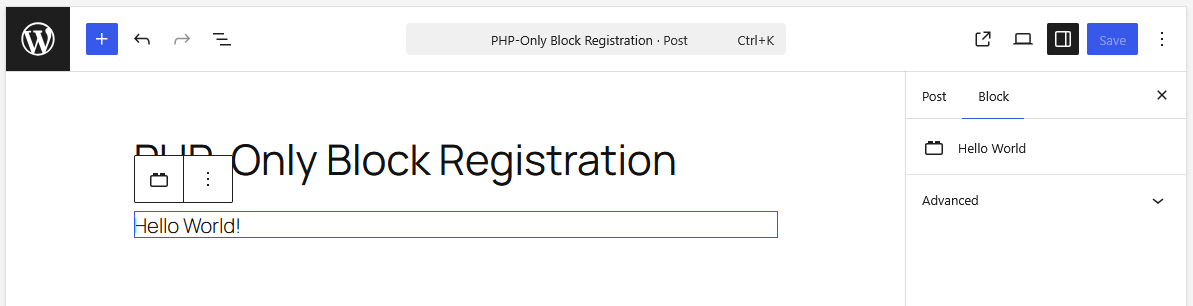
The core of this new functionality lies in the autoRegister => true support flag. When implemented, WordPress intercepts the request for the block and automatically generates the necessary client-side registration.
The Mechanics of Simplicity
In a traditional block, a developer must manage index.js, edit.js, and save.js. With the new PHP-only approach, the render_callback function handles the output, and the attributes definition handles the state management.
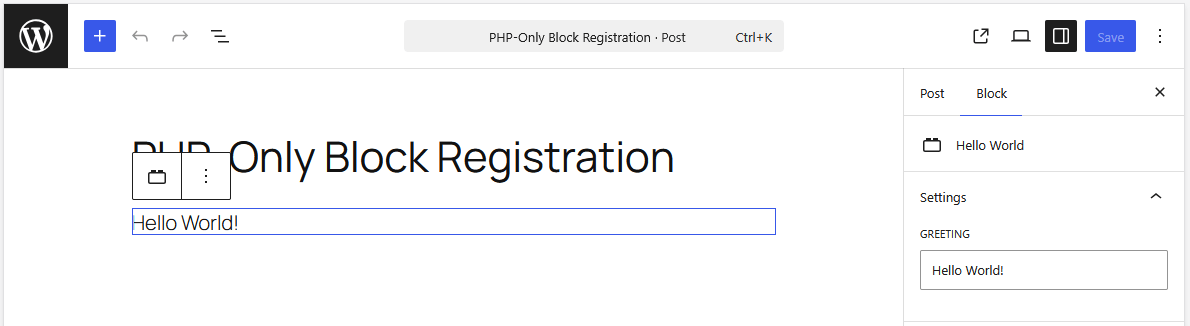
Consider the simplicity of a "Hello World" block:
function register_simple_block()
  register_block_type('custom/hello-world', [
    'title' => 'Hello World',
    'render_callback' => function ()
      return sprintf('<div %s>Hello World!</div>', get_block_wrapper_attributes());
    ,
    'supports' => ['autoRegister' => true],
  ]);

add_action('init', 'register_simple_block');
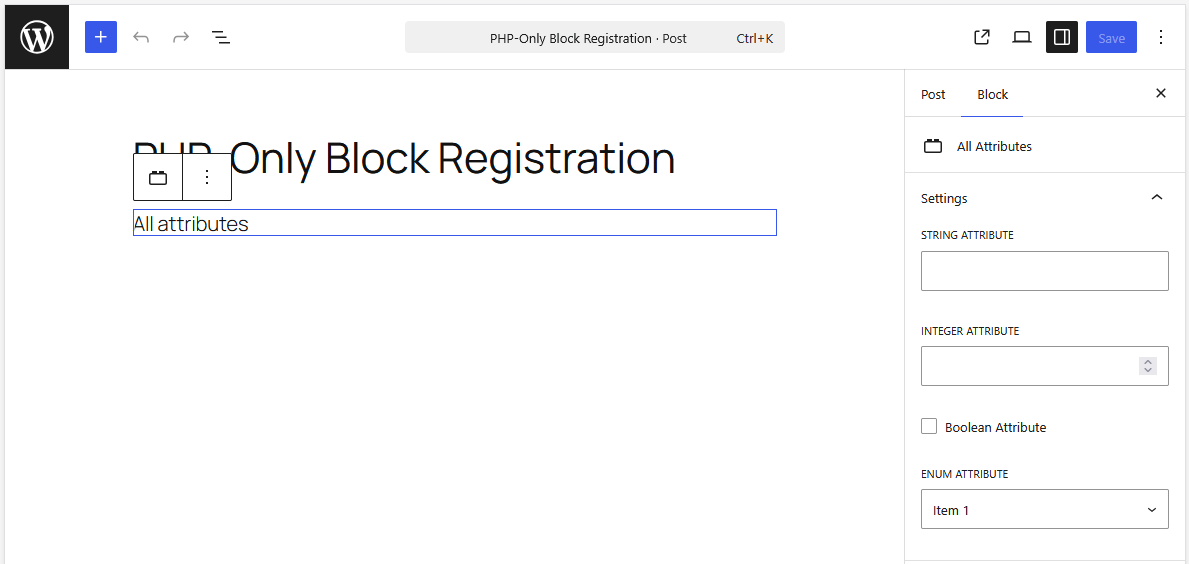
This snippet eliminates the need for npm build processes. The editor interprets the attributes definition and automatically constructs a sidebar UI for the block, mapping basic types—strings, integers, and booleans—to standard input fields.
Critical Limitations: Why JavaScript Remains King
While the simplicity is intoxicating for PHP purists, it is crucial to understand the inherent trade-offs. The architecture of PHP-only blocks is essentially a "remote-controlled" experience.
1. The Interactivity Gap
Because the editor renders these blocks by fetching HTML from a REST API endpoint, they exist outside the main React state of the editor. This leads to two major issues:
- Lack of In-Place Editing: You cannot have "what you see is what you get" (WYSIWYG) editing within the block canvas. All editing must occur in the sidebar.
- DOM Disconnection: Because the block markup is refreshed asynchronously from the server, any attempt to attach custom JavaScript (e.g., initializing a third-party slider or a custom chart) will fail because the DOM nodes are constantly being destroyed and re-rendered by the editor.
2. Data Stale-ness and Context
PHP-only blocks are stateless. They query the database directly, often bypassing the client-side store that tracks real-time changes in the editor. Furthermore, because these blocks render via the REST API, they lack access to the global $post variable that developers have relied on for decades. This makes building context-aware blocks (like those displaying post meta or related content) difficult, as the developer must manually pass the post ID or rely on fragile workarounds.
Official Perspective and Metrics
The WordPress core team has been transparent: this feature is not intended to replace JavaScript blocks for high-performance, interactive components. Rather, it is a migration tool. Internal metrics suggest that the primary barrier to "Block Theme" adoption is the sheer volume of legacy shortcodes and widgets that would need to be rewritten in React.
By enabling a path where these components can be wrapped in a PHP block, developers can transition their sites to the modern block-based editor without rewriting their entire codebase. This is a business-driven decision designed to accelerate the decommissioning of the classic editor ecosystem.
Practical Implementation: Tips for the Transition
For those tasked with migrating legacy code, the following best practices are essential to avoid common pitfalls:
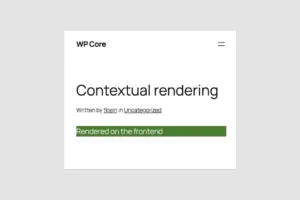
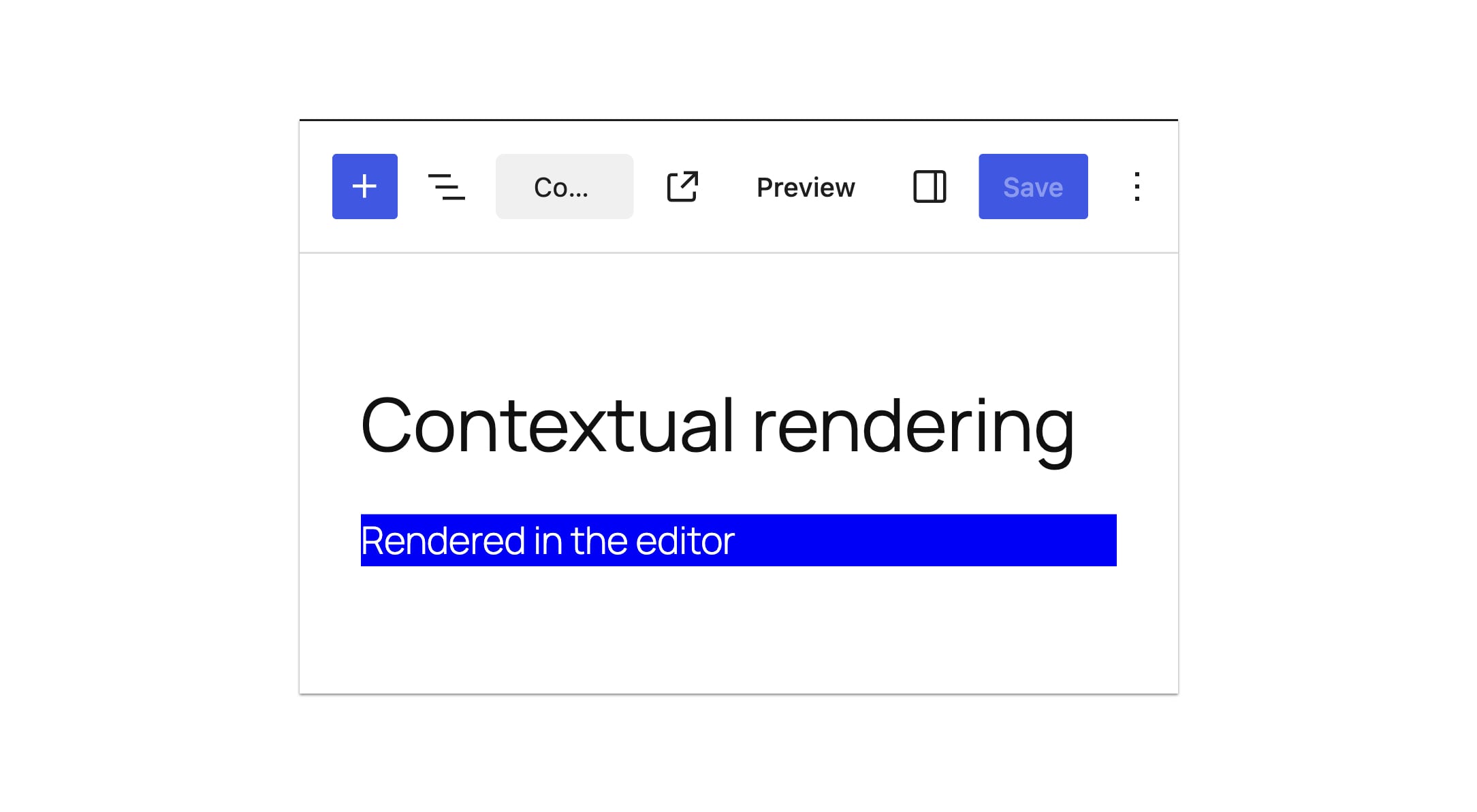
- Contextual Rendering: Use
wp_is_rest_endpoint()to detect whether your code is running in the editor or on the front end. This allows you to serve a simplified "placeholder" view in the editor while keeping the full-featured, interactive version for your site visitors. - Post ID Workarounds: Since the REST API doesn’t natively pass the current post ID, injecting the ID into a
localattribute via$_GET['post']during theinithook provides a temporary, albeit imperfect, way to access post data. - Leveraging Block Supports: Don’t reinvent the wheel. Utilize built-in
supportssuch ascolor,align, andspacing. WordPress will automatically generate the UI and the CSS classes, ensuring your block feels native to the editor. - The Iframe Advantage: As WordPress moves toward an iframe-based editor, ensure your blocks use Block API Version 3. This ensures that your styles remain isolated and that your block preview in the editor matches your front-end design as closely as possible.
Future Outlook: A Hybrid Ecosystem
Looking ahead, the introduction of PHP-only block registration is a signal that WordPress is evolving into a more pragmatic, developer-friendly platform. It acknowledges that not every developer is—or needs to be—a JavaScript expert.
While the current version of this feature has limitations regarding complex UI and real-time data, it effectively solves the "migration anxiety" that has paralyzed many agencies. The future of WordPress development will likely be a hybrid one: complex, highly interactive features will be built with modern React-based blocks, while site-wide structural elements and legacy features will be ported to the block system via PHP-only registration.
The "seven-year wait" may have felt long, but it resulted in a mature, albeit limited, solution that prioritizes developer accessibility. For the thousands of developers managing legacy classic themes, the path to the future has finally been cleared. It is time to start the migration.