Executive Overview: A Season of Unprecedented CSS Evolution
As the web development ecosystem transitions into the latter half of the year, we find ourselves in a period of rapid, almost relentless innovation. The boundaries of what is possible within the browser are shifting, driven by a surge in new CSS specifications and API capabilities. From the granular control offered by the Custom Highlight API to the architectural implications of the proposed class prefix selector, the landscape for front-end engineers is undergoing a significant transformation.
This edition of What’s !important—our 18th installment—serves as a comprehensive audit of the most impactful developments over the past few weeks. We are seeing a distinct movement toward "progressive enhancement as a standard," where developers are no longer waiting for universal browser support to build robust, modern interfaces. Instead, the community is adopting sophisticated fallback patterns, polyfills, and logical branching to leverage cutting-edge features while maintaining baseline functionality. This report synthesizes the latest technical discourse, detailing how these advancements—ranging from advanced tooltip UX to the evolution of grid-based layout logic—are set to redefine the next generation of web applications.
Detailed Chronology: Key Developments in Web UI
The Tooltip Paradigm: Precision Over Presence
The debate regarding tooltip UX has intensified, centering on the balance between user intent and accidental trigger. Abhishek Jakhar recently spearheaded a technical exploration into the "delayed-then-instant" tooltip model. By introducing a mandatory delay before a tooltip appears, developers can prevent "jitter" caused by accidental mouse-overs. Conversely, once the user is engaged, the tooltip should vanish instantly upon departure.
However, Chris Coyier has elevated this discussion by introducing "Interest Invokers." By utilizing the interest-delay-start and interest-delay-end CSS properties, developers can offload the heavy lifting of state management to the browser engine. While currently restricted to Chromium-based browsers, the implementation offers a glimpse into a future where browser-native interactions replace custom JavaScript timers, reducing main-thread load and improving overall performance.
The <geolocation> Element: Democratizing Location Access
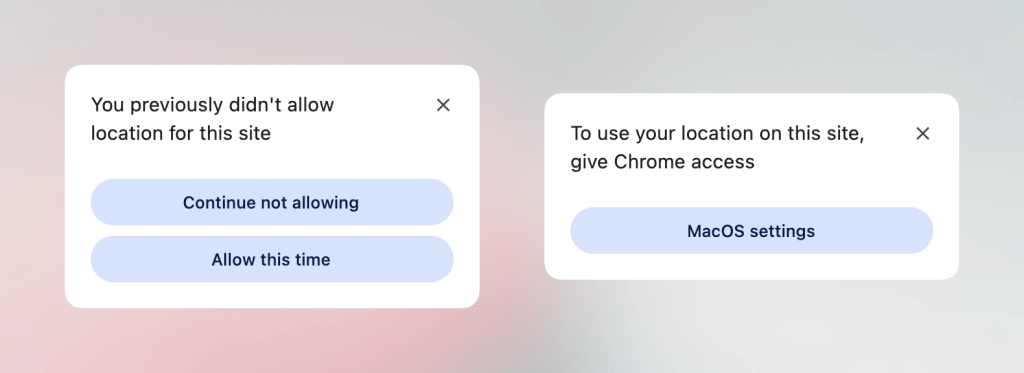
The Geolocation API has historically been a source of frustration, plagued by dependency on complex hardware states and inconsistent permission handling. The introduction of the <geolocation> element attempts to standardize this. While it simplifies the developer experience, it introduces new styling constraints that require careful consideration. As highlighted in recent technical documentation, the most effective strategy for deployment today involves a dual-layered approach: utilizing the <geolocation> element where supported, while falling back to the legacy Geolocation API to ensure parity across non-compliant environments.
MicroLighter and the Custom Highlight API
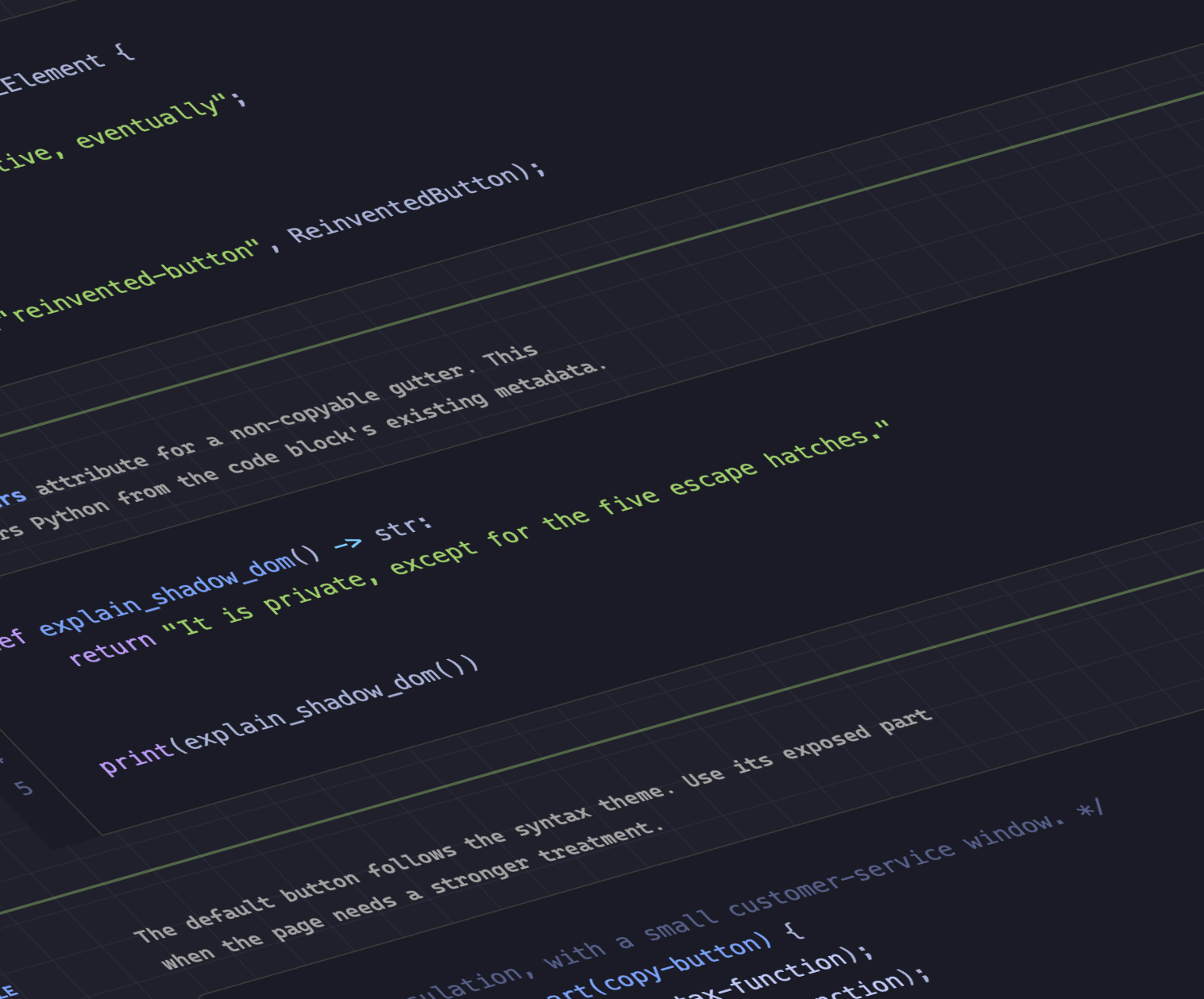
Dave Rupert’s release of MicroLighter marks a pivotal moment for syntax highlighting. By moving away from heavy, DOM-node-heavy libraries and leveraging the native ::highlight() pseudo-element, MicroLighter offers a performant alternative for rendering code snippets. This approach reduces the complexity of the underlying HTML tree, as the browser handles the styling of arbitrary ranges directly, rather than wrapping tokens in thousands of <span> elements.
Supporting Context & Metrics: Grid Data and Hover Logic
Bridging the Gap: Grid to Custom Properties
Temani Afif has unlocked a powerful capability for CSS layout engineers: the ability to extract grid coordinates into custom properties. By mapping row and column indices to variables, developers can now create reactive, grid-aware UI components. This is particularly transformative for hover-proximity effects, where an element’s reaction can be calculated based on its distance from the cursor relative to its grid index. While the current implementation requires uniform column widths, the implications for complex dashboard layouts—where data points need to "know" their position in a grid—are profound.
The Dark Mode Dilemma: Two-State vs. Tri-State
The industry remains split on the optimal implementation of theme toggles. Lea Verou advocates for a strict two-state toggle, while Bramus proposes a tri-state approach (Light, Dark, and System-Default). The consensus emerging from the community suggests that the "Auto-until-overridden" two-state model—championed by Vale.Rocks—provides the best user experience. It respects the user’s OS preference by default but persists their choice once an explicit interaction occurs, balancing autonomy with user control.
Official Perspectives: The Future of Selectors and Feature Detection
The Class Prefix Selector: A Performance Shift
Bramus’s proposal for the .something-* class prefix selector represents a potential "holy grail" for CSS performance. Currently, developers rely on attribute selectors like [class^="something-"], which can be computationally expensive for the browser to match during style recalculation. A dedicated prefix selector would provide a direct, optimized path for browser engines to identify classes, potentially reducing the time spent in the style matching phase of the rendering pipeline. Though currently in the proposal stage, the industry’s reception indicates a strong appetite for its standardization.
named-feature(): Solving the "Undetectable" Problem
The introduction of @supports named-feature() addresses a long-standing pain point: the inability to detect browser behavior for complex features that lack a unique property name. For example, querying whether a browser correctly applies transforms within the context of anchor positioning has historically been impossible. The named-feature() function allows developers to query specific, granular browser capabilities. This is a significant step toward a more transparent and debuggable CSS spec, allowing for more robust feature detection without resorting to user-agent sniffing.
Future Outlook: Navigating the Autumn of 2026
As we look toward the remainder of the year, the trend is clear: the browser is becoming a more powerful application environment, but it is also becoming more fragmented. The introduction of flex-wrap: balance (as detailed by Ahmad Shadeed) mirrors the success of text-wrap: balance, offering developers the ability to achieve aesthetic perfection in layout without manual breakpoints.
Strategic Recommendations for Engineering Teams
- Embrace Progressive Enhancement: Do not gate your user experience behind browser-specific features. Use
@supportsand feature detection to provide a premium experience in Chrome, while maintaining a robust, functional baseline for Firefox and Safari. - Performance Auditing: As we move toward more native CSS-based logic (like
::highlight()orinterest-invokers), ensure your teams are monitoring layout performance. Native features are generally faster, but they can introduce unexpected repaints if not managed correctly. - Monitor the Spec: The speed at which proposals like the "class prefix selector" are gaining traction means that your codebase should be modular enough to swap out legacy attribute-based CSS for newer, more efficient native alternatives as they land.
The "Autumn of 2026" promises to be a season of refinement. We are moving past the era of simply building "what works" and into an era of building "what is efficient and semantically sound." By leveraging these new tools—and the community’s shared knowledge—developers can create interfaces that are not only visually stunning but also technically resilient against the inevitable changes in the web platform. The transition from monolithic, JavaScript-heavy UI logic to a native, CSS-driven architectural model is well underway. Those who align their workflows with these emerging standards today will be the ones defining the user experience of tomorrow.