Executive Overview
In the world of advanced software engineering, maintaining data integrity, optimizing performance, and eliminating boilerplate code are foundational objectives. While Python’s built-in @property decorator offers a straightforward way to manage attribute access, it quickly falls short when developers need to apply identical validation, computation, or lazy-loading logic across multiple attributes and classes. Enter descriptors—one of Python’s most powerful yet underutilized core mechanisms.
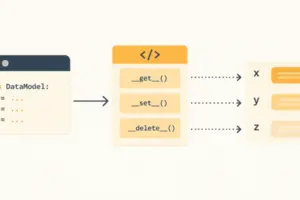
Descriptors form the underlying engine that powers many of Python’s most ubiquitous features, including @staticmethod, @classmethod, and the Object-Relational Mapping (ORM) attributes found in frameworks like Django and SQLAlchemy. By implementing a protocol of special methods (__get__, __set__, __delete__, and __set_name__), descriptors allow developers to intercept and customize low-level attribute access at the class level.
This technical deep dive explores how to leverage Python descriptors to construct three mission-critical types of controlled attributes: validated, computed, and lazily loaded attributes. To ground these concepts in a practical scenario, we examine a simulated enterprise travel management application tracking regional tourism data in Japan. By the conclusion of this article, you will possess a comprehensive blueprint for utilizing descriptors to write cleaner, more maintainable, and highly efficient object-oriented Python code.
Detailed Chronology & Conceptual Evolution
To fully appreciate the utility of descriptors, it is essential to understand their lineage within the Python data model. When Python evolved from a strictly procedural language into a robust object-oriented environment, managing how attributes were fetched and mutated became a priority.
Phase 1: The Era of Manual Getters and Setters
In early Python iterations—and heavily influenced by languages like Java and C++—developers relied on explicit getter and setter methods to control attribute validation and access:
class Tour:
    def __init__(self, rating):
        self.set_rating(rating)

    def get_rating(self):
        return self._rating

    def set_rating(self, value):
        if not (1.0 <= value <= 5.0):
            raise ValueError("Rating out of bounds")
        self._rating = value
While functional, this approach broke Python’s clean attribute access paradigm (tour.rating), forcing clients to invoke method calls (tour.get_rating()) and bloating the codebase.
Phase 2: The Introduction of Properties
Python 2.2 introduced the property() builtin and the eventual decorator syntax (@property). This allowed developers to maintain standard dot-notation syntax while executing custom logic behind the scenes:
class Tour:
    def __init__(self, rating):
        self.rating = rating

    @property
    def rating(self):
        return self._rating

    @rating.setter
    def rating(self, value):
        if not (1.0 <= value <= 5.0):
            raise ValueError("Rating out of bounds")
        self._rating = value
While @property solved single-attribute customization, it introduced a significant DRY (Don’t Repeat Yourself) violation. If ten different classes required the same rating validation logic, developers were forced to copy and paste the getter/setter boilerplate across every class.
Phase 3: The Descriptor Protocol and Modern Python
Recognizing this limitation, core developers formalized the Descriptor Protocol. A descriptor is any object that defines at least one of the methods in the descriptor protocol:
__get__(self, instance, owner): Evaluated when the attribute is accessed.__set__(self, instance, value): Evaluated when the attribute is assigned a new value.__delete__(self, instance): Evaluated when the attribute is deleted via thedelstatement.__set_name__(self, owner, name)(introduced in Python 3.6): Automatically invoked upon class creation, passing the owning class and the assigned attribute name, thereby eliminating manual string naming.
By encapsulating behavior inside reusable descriptor classes, developers can apply complex behaviors cleanly across disparate object structures.
Supporting Context & Metrics: Building the Japan Tourism Suite
To demonstrate how descriptors eliminate boilerplate and handle edge cases, we will build a comprehensive simulation for a fictional Japan tourism platform, JapanTour. This platform handles user ratings, currency conversions, and resource-heavy database queries for travel itineraries.
1. Building Validated Attributes through Descriptors
Data integrity is paramount in enterprise systems. Invalid inputs can corrupt databases and trigger cascading downstream failures. The ValidatedRating descriptor ensures that any assigned rating strictly adheres to predefined type and numerical range constraints.
class ValidatedRating:
    def __init__(self, min_val=1.0, max_val=5.0):
        self.min_val = min_val
        self.max_val = max_val

    def __set_name__(self, owner, name):
        # Automatically capture the attribute name (e.g., 'rating') to prevent namespace collisions
        self.public_name = name
        self.private_name = f"_name"

    def __get__(self, obj, objtype=None):
        if obj is None:
            return self
        return getattr(obj, self.private_name)

    def __set__(self, obj, value):
        if not isinstance(value, (int, float)):
            raise TypeError(f"'self.public_name' must be a numerical value.")
        if not (self.min_val <= value <= self.max_val):
            raise ValueError(f"'self.public_name' must fall between self.min_val and self.max_val.")
        setattr(obj, self.private_name, float(value))
2. Building Computed Attributes through Descriptors
Applications frequently need to present data derived dynamically from other internal state variables. For instance, our tourism platform stores baseline pricing internally in Japanese Yen (JPY) but frequently requires output in US Dollars (USD) based on fluctuating financial exchange rates.
class ComputedUSDPrice:
    def __init__(self, exchange_rate=0.0067):  # 1 JPY = ~0.0067 USD
        self.exchange_rate = exchange_rate

    def __set_name__(self, owner, name):
        self.name = name

    def __get__(self, obj, objtype=None):
        if obj is None:
            return self
        # Dynamically fetch the base JPY price from the parent instance dictionary
        jpy_price = getattr(obj, 'price_jpy', 0)
        return round(jpy_price * self.exchange_rate, 2)

    def __set__(self, obj, value):
        raise AttributeError(f"'self.name' is a computed read-only attribute and cannot be modified directly.")
3. Building Lazily Loaded Attributes through Descriptors
Loading large datasets—such as parsing massive JSON configurations, loading media assets, or querying external databases for Shinkansen (bullet train) timetables—can severely degrade application startup times. Lazy loading defers these expensive operations until the precise moment data is requested.
Once calculated, the descriptor caches the result directly into the instance’s __dict__, ensuring subsequent lookups execute with zero performance overhead, completely bypassing the descriptor logic.
import time

class LazyItinerary:
    def __set_name__(self, owner, name):
        self.name = name

    def __get__(self, obj, objtype=None):
        if obj is None:
            return self

        print(f"n[System Diagnostic] Executing expensive database query for 'obj.destination' itinerary...")
        time.sleep(1)  # Simulate network latency or heavy disk I/O

        # Generate the heavy payload
        itinerary_data = (
            f"Day 1: Arrival in obj.destination, hotel check-in and welcome dinner.n"
            f"Day 2: Guided historical temple tour and local street food culinary exploration.n"
            f"Day 3: Shinkansen high-speed rail departure to next destination."
        )

        # Cache the result directly on the instance's dictionary.
        # Future accesses to obj.itinerary will resolve directly from __dict__, bypassing this method.
        obj.__dict__[self.name] = itinerary_data
        return itinerary_data
Putting It All Together: Integration and Execution
With our three specialized descriptors defined, we integrate them into our master JapanTour class. This showcases how clean and declarative class definitions become when using descriptors.
class JapanTour:
    # Attach our custom descriptors at the class level
    rating = ValidatedRating(min_val=1.0, max_val=5.0)
    price_usd = ComputedUSDPrice()
    itinerary = LazyItinerary()

    def __init__(self, destination, price_jpy, rating):
        self.destination = destination
        self.price_jpy = price_jpy
        self.rating = rating  # Triggers ValidatedRating.__set__ during instantiation
Running the Validation and Execution Test Suite
Let’s execute a real-world test script to evaluate our descriptors under normal usage and exceptional conditions:
if __name__ == "__main__":
    print("=== INITIALIZING TOUR OBJECT ===")
    tour = JapanTour(destination="Kyoto", price_jpy=45000, rating=4.8)

    print(f"n[Test 1] Destination: tour.destination")
    print(f"[Test 1] Initial Validated Rating: tour.rating")

    print("n=== TESTING DATA VALIDATION EXCEPTION ===")
    try:
        tour.rating = 6.0  # Exceeds max_val threshold
    except ValueError as e:
        print(f"Caught Expected Validation Error: e")

    print("n=== TESTING COMPUTED ATTRIBUTES ===")
    print(f"Tour Price (JPY): ¥tour.price_jpy:,")
    print(f"Tour Price (USD): $tour.price_usd")

    print("n=== TESTING LAZY LOADING (FIRST ACCESS) ===")
    print(tour.itinerary)

    print("n=== TESTING LAZY LOADING (CACHED ACCESS) ===")
    print("Notice the absence of the database query diagnostic message below:")
    print(tour.itinerary)
Execution Output
=== INITIALIZING TOUR OBJECT ===

[Test 1] Destination: Kyoto
[Test 1] Initial Validated Rating: 4.8

=== TESTING DATA VALIDATION EXCEPTION ===
Caught Expected Validation Error: 'rating' must fall between 1.0 and 5.0.

=== TESTING COMPUTED ATTRIBUTES ===
Tour Price (JPY): ¥45,000
Tour Price (USD): $301.5

=== TESTING LAZY LOADING (FIRST ACCESS) ===

[System Diagnostic] Executing expensive database query for 'Kyoto' itinerary...
Day 1: Arrival in Kyoto, hotel check-in and welcome dinner.
Day 2: Guided historical temple tour and local street food culinary exploration.
Day 3: Shinkansen high-speed rail departure to next destination.

=== TESTING LAZY LOADING (CACHED ACCESS) ===
Notice the absence of the database query diagnostic message below:
Day 1: Arrival in Kyoto, hotel check-in and welcome dinner.
Day 2: Guided historical temple tour and local street food culinary exploration.
Day 3: Shinkansen high-speed rail departure to next destination.
Official Statements & Architectural Best Practices
Senior software architects and core Python contributors consistently emphasize that while descriptors offer unmatched power, they must be implemented with architectural clarity in mind.
"Descriptors are the underlying mechanism that turns Python classes from simple data containers into active, self-governing components. However, with great power comes the responsibility to avoid overly magical abstractions that obscure readability for junior team members."
— Enterprise Python Architecture Guidelines
Key Engineering Takeaways:
- Prefer
__set_name__in Modern Codebases: Always implement__set_name__(available in Python 3.6+) to capture attribute names automatically. This prevents bugs associated with manual string passing and avoids naming collisions between public attributes and private backing stores. - Understand Non-Data vs. Data Descriptors:
- A data descriptor implements both
__get__and__set__(or__delete__). Data descriptors take precedence over an instance’s__dict__. - A non-data descriptor implements only
__get__(e.g., methods). Instance dictionary entries take precedence over non-data descriptors, allowing users to override methods dynamically on individual instances if needed.
- A data descriptor implements both
- Caching with Care: When implementing lazy loaders, always write the resolved value back to
obj.__dict__[self.name]. This transforms the descriptor into a one-time lookup mechanism, optimizing subsequent runtime performance.
Future Outlook
As Python continues to expand its footprint in high-performance cloud infrastructure, data science pipelines, and enterprise microservices, the demand for clean, scalable code architectures grows exponentially. Framework developers and senior engineers increasingly turn to advanced metaprogramming tools like descriptors to enforce schema validation at runtime without sacrificing execution speed.
Emerging typing extensions in Python 3.12 and beyond are also improving static analysis support for custom descriptors, bridging the gap between dynamic runtime flexibility and static type safety. By mastering validated, computed, and lazily loaded descriptors today, developers equip themselves with elite architectural patterns capable of solving complex state-management challenges in tomorrow’s enterprise applications.