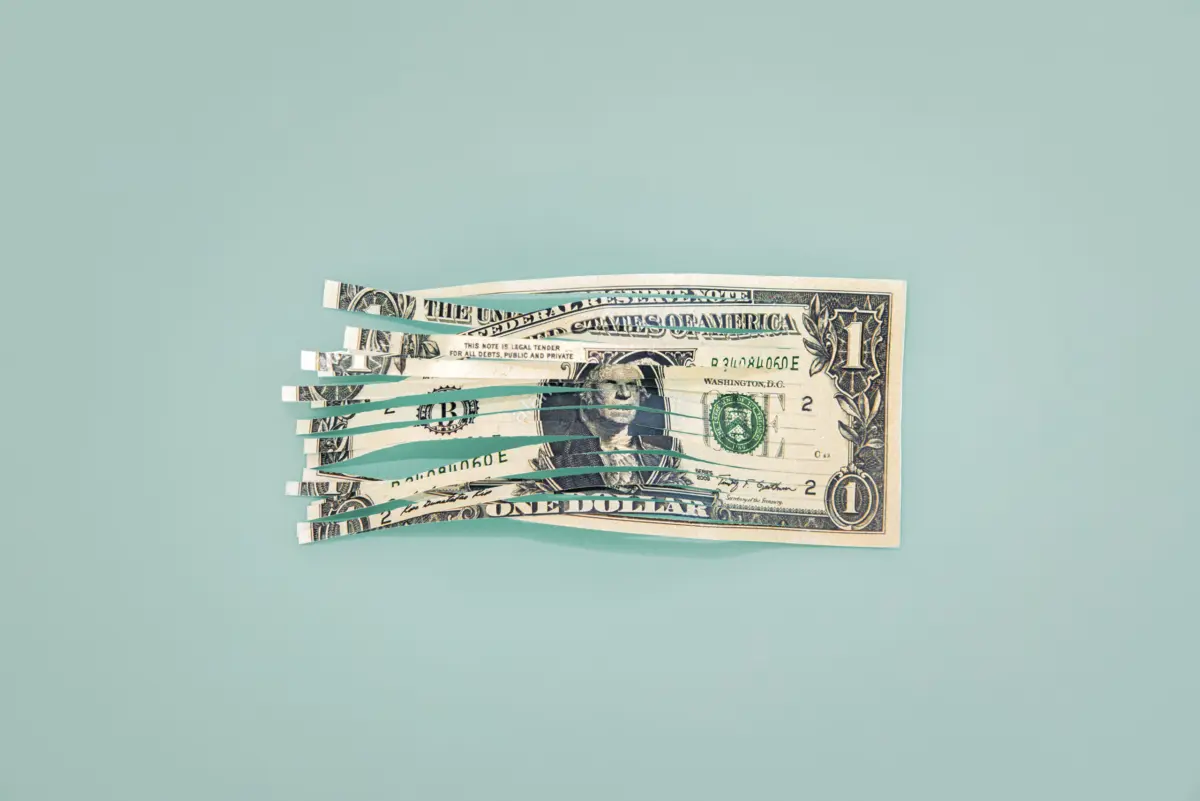
Executive Overview: A Media Giant Under Pressure
Condé Nast, the storied publishing titan behind Vogue, GQ, and The New Yorker, is currently navigating a period of significant fiscal instability. According to internal financial documentation reviewed by ADWEEK, the company is facing a mounting deficit in its advertising revenue, falling more than $40 million short of its projections for the second half of 2024.
This financial gap arrives at a precarious juncture for the organization. With long-time CEO Roger Lynch set to depart for a leadership role at Mattel and a suite of high-profile executive departures depleting the company’s commercial brain trust, the publisher finds itself struggling to reconcile ambitious internal targets with the harsh realities of a cooling digital advertising market. While the company maintains that its full-year projections remain within reach, the scale of the current shortfall has sparked internal debate regarding the accuracy of its forecasting models and the stability of its long-term revenue strategy.
Detailed Chronology: The Erosion of Q3 and Q4
The fiscal strain on Condé Nast has been incremental but persistent. During the third quarter, the publisher generated nearly $110 million in U.S. advertising revenue—a figure that, while reflecting a 5% year-over-year increase, fell roughly $6 million short of its internal quarterly goal.
However, the outlook for the fourth quarter—traditionally the most lucrative period for media companies as brands surge spending to capture holiday retail momentum—appears far more concerning. Internal forecasts currently project approximately $130 million in U.S. ad bookings, a figure tracking more than $35 million below the company’s internal target.
When combined, these two quarters place the publisher in a $40 million hole relative to its mid-year projections. For a legacy publisher of this stature, such a discrepancy is atypical. Sources familiar with the company’s operations suggest that the fourth-quarter budget was formulated based on the prior year’s strong performance, raising questions about whether management failed to account for market headwinds or whether the company’s internal forecasting metrics are fundamentally flawed.
"How were your expectations so off?" one source remarked. "Either you mismanaged the business or you can’t forecast. Both are bad."
Supporting Context & Metrics: The "Vogue World" Effect
A critical component of Condé Nast’s modern revenue strategy has been its reliance on "tentpole" events, most notably Vogue World. Designed as experiential spectacles to attract premium advertisers, these events are meant to anchor larger media packages.
The 2025 Hollywood edition of Vogue World was widely considered a success, bringing in just under $30 million. However, the most recent edition, held last month in Milan, has faced significant headwinds. According to individuals familiar with the event’s finances, it was pacing to bring in less than $20 million. Observers suggest that the geographic shift played a major role; U.S.-based advertisers, who form the backbone of Condé Nast’s revenue, have shown reluctance to sponsor events staged in Europe.
The decline of a tentpole event has a ripple effect that extends beyond a single line item. When a marquee event fails to meet expectations, it loses its utility as a "hook" to draw advertisers into comprehensive, multi-platform media deals. Without these experiential anchors, the incentive for major brands to commit to the company’s broader inventory diminishes, creating a compounding negative impact on total revenue.
Leadership Vacuum and Executive Turnover
The financial shortfall is inseparable from the state of the company’s leadership. The departure of CEO Roger Lynch, who oversaw the company for seven-and-a-half years, has created a period of transition, with board member Mike Perlis stepping in as interim leader.
The instability is further exacerbated by a "brain drain" within the revenue organization. The exit of key executives—most notably Doug Grinspan, who served as chief business officer for U.S. sales and global key accounts, and head of marketing Sophia Zhang—has left the sales division in a state of flux.
Sources describe a demoralized sales force lacking a coherent commercial direction. In a widely discussed incident earlier this year, CEO Roger Lynch reportedly presented the company’s future strategy to staff using a series of blank slides—a gesture that, while intended to be provocative, was interpreted by many as an admission of a lack of clear vision.
"Everyone who is a leader is gone," one insider stated. "And everyone who is a leader by title right now is just counting down until their severance comes up."
This atmosphere of uncertainty has, according to some, led to the setting of "unrealistic" revenue targets, purportedly designed to accommodate the ambitions of global chief content officer Anna Wintour. When revenue targets are set in a vacuum, detached from market reality, the gap between expectation and execution inevitably widens.
Official Statements: Contradiction and Defense
Condé Nast has officially and vigorously disputed the reports of a $40 million deficit. Danielle Carrig, the company’s chief corporate affairs and communications officer, characterized the internal figures and the resulting variance as "materially inaccurate."
"While we do not disclose detailed financial information as a privately held company, the figures cited and the resulting percentage variance are materially inaccurate," Carrig stated. "U.S. advertising revenue surpassed our targets in the first half. We are projecting U.S. advertising revenue to be very close to target for the full year."
Regarding the performance of Vogue World in Milan, Carrig provided a specific rebuttal: "Vogue World Milan brought in $26 million, and Vogue donated a record $3 million to the redevelopment of the Quarto Oggiaro Library as part of the event."
Despite these assurances, the discrepancy between the company’s official stance and the reports from insiders suggests a significant divergence in how success is measured within the halls of the World Trade Center headquarters versus how it is perceived by those tasked with executing the sales strategy.
Future Outlook: Navigating the "Open Web" Decline
The challenges at Condé Nast are not occurring in a vacuum. The entire publishing industry is currently grappling with a secular decline in search-driven traffic, as AI-powered search engines and shifts in social media algorithms continue to erode the traditional "open web" model.
As publishers like Vox and The Atlantic double down on mobile app development to retain direct relationships with their audiences, Condé Nast must also find a way to pivot its digital strategy. The industry is witnessing a clear shift toward "creator-led" media and serialized content—a model that platforms like Instagram are actively incentivizing with new long-form video hubs.
For Condé Nast, the path forward requires more than just meeting quarterly ad targets. It requires a fundamental rethinking of its intellectual property. The success of serialized social content, such as InStyle’s "The Intern," demonstrates that audiences are hungry for original, character-driven IP that creates habits and repeat viewership.
However, transitioning from a legacy publisher into a nimble, creator-centric entity requires a stable leadership team and a realistic understanding of current market dynamics. As the company searches for a permanent successor to Roger Lynch, the new CEO will inherit a difficult mandate: reconcile the prestige of the Condé Nast brand with the harsh, low-margin realities of the modern attention economy.
If the company fails to bridge this gap, the recent revenue shortfalls may be viewed not as a temporary hiccup, but as a symptom of a broader, structural struggle to remain relevant in an era where the traditional media playbook is rapidly being rewritten. The coming months will be a test of whether the publisher can stabilize its revenue, retain its remaining talent, and successfully navigate the most significant existential challenge in its modern history.