Executive Overview
In a decisive escalation against illicit digital asset networks, the United Kingdom has imposed sweeping economic sanctions on Cryptomus, a chameleonic cryptocurrency payment processor. According to international cybersecurity experts and blockchain intelligence firms, Cryptomus has long operated as a critical financial highway for ransomware syndicates, narcotics traffickers, darknet markets, and cybercrime-as-a-service providers. More critically, the platform has emerged as an indispensable tool for the Russian state, helping Moscow systematically bypass international financial restrictions and bank sanctions following its invasion of Ukraine.
Announced on October 8, the U.K. Treasury’s sanctions freeze all domestic assets tied to Cryptomus and prohibit British individuals, corporations, and financial institutions from conducting any business—virtual or otherwise—with the platform. The UK’s restrictive measures also caught several allied virtual payment entities in their dragnet, including VexPay, TokenSpot, and the Tsunami Payments service.
While previous actions by international regulators—such as a record-shattering Canadian civil penalty—largely stalled out due to jurisdictional limitations and enforcement hurdles, London’s sanctions strike at the structural heart of the enterprise. Blockchain analysts have hailed the move as a watershed moment in financial counter-intelligence, marking the first time a "Five Eyes" nation (comprising Australia, Canada, New Zealand, the United Kingdom, and the United States) has formally sanctioned a cryptocurrency operation rooted within the borders of another Five Eyes jurisdiction.
Detailed Chronology of an Illicit Empire
Emergence and Early Evolution (2022–2024)
Cryptomus burst onto the decentralized finance landscape in 2022, quietly establishing itself as a preferred checkout gateway for dozens of Russian-facing cryptocurrency exchanges and dark-web portals hawking cybercrime tools. Operating through a web of corporate aliases—including Certa Payments and Xeltox Enterprises—the platform offered instant crypto-to-fiat off-ramps that shielded high-risk actors from traditional banking scrutiny.
Investigators quickly noticed structural anomalies behind the platform’s facade. A foundational December 2024 investigation by cybersecurity journalist Brian Krebs revealed that Cryptomus shared a physical corporate address in Vancouver, Canada, with dozens of other foreign currency dealers and money transfer agencies. None of these entities maintained an active physical presence at the location, signaling a classic shell-company framework.
Behind this paper trail lay an astonishing volume of illicit transactions. By April 2026, blockchain analytics firm TRM Labs reported that Cryptomus had processed upwards of $7 billion in cumulative transactions since its inception. This staggering volume included significant flows tied to child sexual abuse material (CSAM) vendors, international terrorist financing networks, and human trafficking operations.
The Canadian Fine and the Birth of "Heleket"
As regulatory scrutiny tightened, Cryptomus briefly attempted to institute formal "Know Your Customer" (KYC) protocols, which immediately caused its core transaction volumes to crater. Rather than complying fully with international anti-money laundering (AML) standards, the platform pivoted to evasion.
In October 2025, Canada’s financial intelligence authorities levied a historic CAD $176 million fine against Cryptomus for severe AML violations. Rather than paying the penalty or shutting its doors, Cryptomus launched a direct appeal while simultaneously spinning up a parallel, no-KYC operation dubbed "Heleket."
Heleket essentially functioned as Cryptomus under a different banner, ensuring that sanctioned oligarchs, ransomware gangs, and Russian state-linked actors could continue moving funds without interruption. Telegram support agents for Heleket actively denied any corporate affiliation with Cryptomus, even as investigators mapped identical infrastructure, wallet clusters, and administrative controls linking the two entities.

The U.K. Hammer Drops (October 2026)
The turning point arrived on October 8, 2026, when the British government officially designated Cryptomus and its spin-offs under Russia-related sanctions regimes.
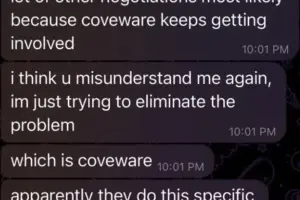
Within hours of the U.K. announcement, automated systems across the network began to fail. Telegram bots deployed by Cryptomus and Heleket responded to user inquiries with error logs, confirming that the platforms were suddenly and globally unable to process outgoing transactions. Chainalysis telemetry later confirmed that traffic and liquidity pools had dried up as major international nodes severed ties to avoid secondary sanctions exposure.
Supporting Context & Metrics: The Scale of the Threat
The illicit financial footprint left by Cryptomus and its derivatives is vast, spanning multiple tiers of organized crime and geopolitical statecraft. Industry-standard blockchain data analytics shed light on the sheer scale of the operation:
- $7 Billion in Inception-to-Date Volume: As tracked by TRM Labs through early 2026, the platform moved billions of dollars with minimal regulatory friction.
- Surging Illicit Counterparties: According to Chainalysis, Cryptomus and Heleket quickly surpassed traditional crypto "mixers" in total illicit funds received across tracked categories. At its peak in late 2025, the number of distinct illicit counterparties interacting with the platform surged to more than 900 in a single month.
- The Russian Wartime Economy: The U.K. Foreign, Commonwealth & Development Office (FCDO) emphasized that these platforms were not merely serving opportunistic cybercriminals; they were actively functioning as conduits for the Russian state to evade Western banking blockades, procuring dual-use technologies and funding foreign influence operations.
The Anatomy of a Phony Regulator
One of the most bizarre and illuminating aspects of the Cryptomus investigation is how the company derived its pseudo-legitimacy. Entities operating in the shadowy world of high-risk payments often require nominal licenses to fool automated merchant-acquiring banks and payment aggregators.
According to corporate registry records uncovered during the 2024 investigations, the sole shareholder of Cryptomus’s parent company, Certa Payments, was a 25-year-old Ukrainian national. This individual also controlled several other corporate bodies, most notably the WS Management and Advisory Corporation.
WS Management and Advisory Corporation aggressively marketed itself as an official regulatory body exclusively authorized to issue licenses for cryptocurrency exchanges, foreign exchange brokers, and online gaming houses in the Western Sahara—a disputed territory in Northwest Africa that lacks widespread international recognition as a sovereign state.
The regulator’s primary portal (crasadr.com) offered streamlined packages for corporate formation and offshore bank account setup. Technical analysis further revealed that Certa Payments’ former web infrastructure (certa.website) shared a server with 12 distinct domains, including rasd-state.ws, the purported digital home of the "Central Reserve Authority of the Western Sahara." By fabricating compliance documents through a nonexistent regulatory authority in a politically contested zone, Cryptomus successfully hoodwinked various legacy financial intermediaries into processing its high-risk transaction flows.
Official Statements and Expert Analysis
The international cybersecurity and blockchain intelligence community has overwhelmingly praised the U.K.’s decisive action, contrasting it with the limitations of previous civil penalties.
Richard Sanders, a veteran blockchain analyst and investigator who spent months dissecting Cryptomus’s operational infrastructure and tracking transactional flows on behalf of victims, drew a sharp distinction between fines and sanctions:

"A fine doesn’t stop a cryptocurrency payment processor from processing payments," Sanders wrote in a public industry breakdown. "Sanctions kill the operation. The distinction matters."
Sanders underscored the unique diplomatic and legal significance of the U.K.’s move, noting that it represents the first known instance of one "Five Eyes" intelligence-sharing nation directly sanctioning a commercial entity incorporated within the territory of a peer Five Eyes partner (Canada).
Meanwhile, Chainalysis released an analytical statement contextualizing the takedown within a broader campaign to degrade Russia’s illicit financial apparatus:
"Cryptomus and Heleket have emerged as major payment hubs for illicit activity," Chainalysis noted in their official post-sanction assessment. "By cutting off their access to regulated fiat gateways and international financial systems, allied governments are dismantling the plumbing that sustains modern ransomware economies and Russian sanctions-evasion networks."
Future Outlook: Whack-a-Mole or Permanent Disruption?
The sanctioning of Cryptomus, Heleket, VexPay, TokenSpot, and Tsunami Payments marks a major victory for international law enforcement, but it also highlights the enduring resilience of the cybercrime underground.
For years, high-risk cryptocurrency processors have relied on a "whack-a-mole" strategy: when one corporate identity (such as Certa Payments) becomes too toxic or faces insurmountable regulatory fines, the operators simply rebrand, launch parallel services (like Heleket), move their server infrastructure to friendly or uncooperative jurisdictions, and resume business under a fresh coat of paint.
However, industry experts believe that the U.K.’s targeted sanctions—backed by synchronized blockchain intelligence from firms like Chainalysis and TRM Labs—raise the cost of doing business significantly. When payment processors are blacklisted under strict counter-terrorism and national security sanctions, downstream liquidity providers, centralized exchanges, and peer-to-peer liquidity networks face severe criminal liability if they interact with the tainted wallet addresses.
As global financial intelligence units tighten the net, platforms attempting to masquerade behind fraudulent regulators in disputed territories will find it increasingly difficult to cash out digital assets into fiat currency. For Cryptomus and its iterations, the era of unbridled, state-backed cybercrime processing has finally hit a brick wall.