Executive Overview
The rapid, relentless expansion of generative artificial intelligence has catalyzed a massive industrial pivot across the global technology sector. As tech giants race to secure the immense computational power required to train and deploy frontier AI models, they are increasingly running up against the hard physical limits of legacy electrical grids.
In response, companies like Amazon are bypassing public utilities altogether, taking matters into their own hands by investing directly in behind-the-meter, on-site power generation. But this strategy carries a staggering ecological cost.
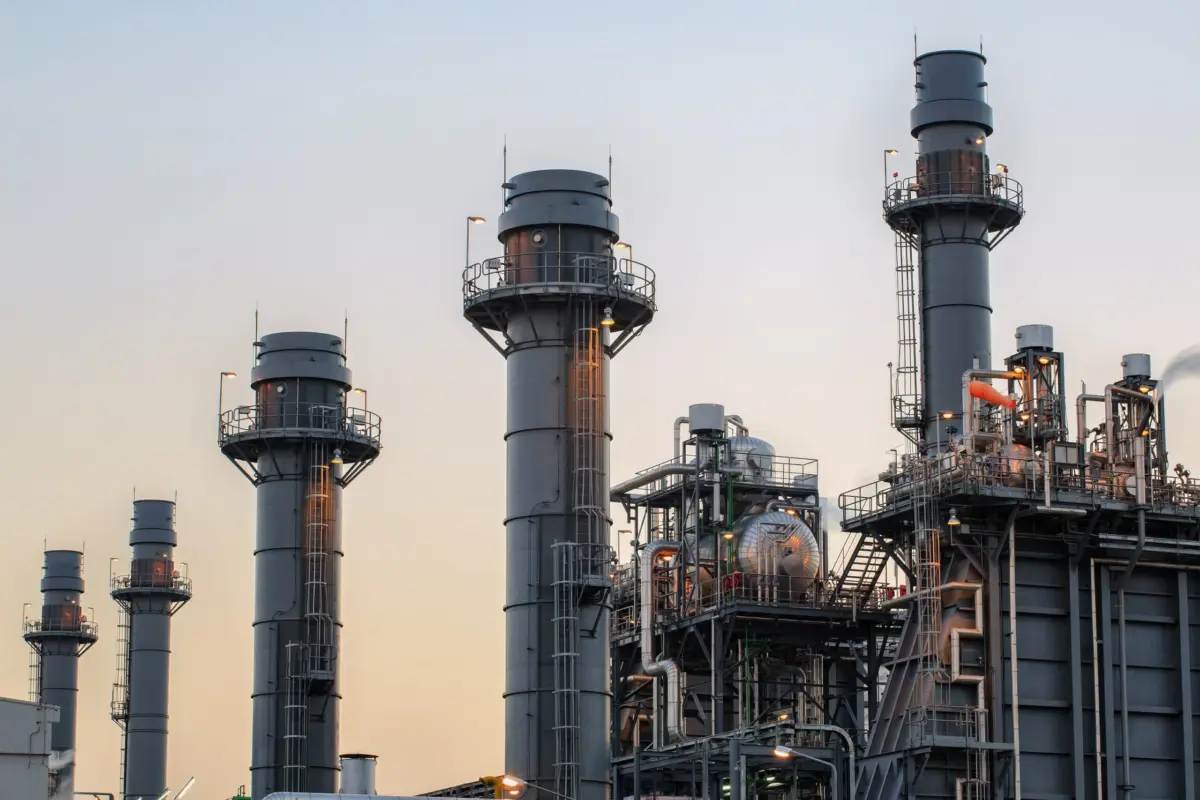
According to a recent investigation by The New York Times, Amazon is constructing a massive data center complex in remote Pecos County, Texas, that will be powered by a dedicated, on-site natural gas-fired power plant. Environmental permits reviewed as part of the report indicate that this single facility is authorized to release an astounding 33 million tons of carbon dioxide equivalent per year. Should the plant operate at its maximum permitted capacity, it will instantly become the single largest source of greenhouse gas emissions from a power plant anywhere in the United States.
This revelation highlights a severe, escalating tension at the heart of the modern tech economy: the existential conflict between corporate net-zero pledges and the insatiable energy demands of the artificial intelligence boom. For Amazon—a founding architect of the Climate Pledge, which commits the company to achieving net-zero carbon emissions across its operations by 2040—the Pecos County project represents both a tactical necessity and a profound strategic contradiction.
As tech companies scramble to lock down power in an era of grid congestion, their reliance on fossil fuels is sending corporate carbon footprints in the wrong direction, threatening to undermine decades of climate progress.
Detailed Chronology
To understand how Amazon arrived at a point where it is backing the construction of the nation’s most polluting power plant, it is necessary to examine the rapid evolution of the company’s infrastructure strategy and climate commitments over the past several years.
2019–2020: The Genesis of the Climate Pledge
In September 2019, Amazon co-founded The Climate Pledge alongside Global Optimism, committing to meet the targets of the Paris Agreement 10 years early—achieving net-zero carbon emissions by 2040. At the time, Amazon was aggressively scaling its renewable energy procurement, primarily through large-scale wind and solar power purchase agreements (PPAs) to support its sprawling Amazon Web Services (AWS) cloud infrastructure and global logistics network. Company leadership frequently touted these green investments as proof that corporate growth and environmental stewardship could run on parallel tracks.
2022–2023: The Generative AI Explosion
The launch of OpenAI’s ChatGPT in late 2022 fundamentally altered the technological landscape. Across the industry, leadership teams realized that generative AI would require unprecedented amounts of computational horsepower. Data centers transformed from relatively passive server warehouses into hyper-dense, power-hungry industrial facilities. AWS, alongside competitors Microsoft and Google, began aggressively expanding its infrastructure footprint to accommodate training clusters for large language models.
2024–2025: Grid Bottlenecks and the Pivot to Fossil Fuels
By 2024, the sheer scale of demand began to overwhelm regional electrical grids. Utilities across the United States warned of rolling brownouts, capacity shortfalls, and multi-year interconnection queues for new data centers. In response, tech companies began exploring alternative strategies to secure reliable, 24/7 baseload power. While some firms looked toward nuclear energy, the immediate speed-to-market advantage of natural gas led tech giants and independent power producers to back the development of massive, dedicated fossil-fuel facilities.
During this period, Amazon began laying the groundwork for its massive infrastructure play in Pecos County, Texas—a region already rich in oil and gas infrastructure, making it an appealing logistical hub for independent energy generation.
Mid-2026: Public Revelations and Regulatory Fallout
By the summer of 2026, the real-world climate impacts of the AI boom came to a head. In July 2026, corporate emissions reports revealed that Amazon’s carbon emissions had surged by 16% over the previous year, driven almost entirely by data center expansion. Shortly thereafter, state and local regulatory pushback intensified nationwide; for instance, New York State halted construction on all new data centers amid mounting concerns over soaring residential electricity rates and grid stability.
In August 2026, The New York Times published its explosive report detailing the Pecos County data center project and its accompanying 33-million-ton carbon footprint, bringing the hidden environmental toll of corporate AI infrastructure squarely into the public eye.
Supporting Context & Metrics
The decision by Amazon to anchor a Texas data center with a massive natural gas plant must be analyzed within the broader quantitative context of the corporate sustainability crisis and the unique dynamics of the Texan energy market.
The Scale of the Emissions
To contextualize a facility permitted to emit 33 million tons of carbon dioxide annually, one must look at the upper echelons of American industrial pollution. Traditionally, the largest single sources of carbon emissions in the U.S. have been massive, multi-unit coal-fired power plants that have operated for decades. A single natural gas plant operating at a 33-million-ton annual clip rivals—and in many cases surpasses—the lifetime emissions profile of entire municipal grids.
To absorb 33 million metric tons of carbon dioxide in a single year, forests would need to sequester carbon across an area larger than the state of Vermont, demonstrating the sheer impossibility of relying on standard offsets to mitigate such localized industrial output.
Surging Corporate Emissions
Amazon’s most recent environmental disclosures paint a stark picture of a company losing ground in its battle against climate change. A 16% year-over-year surge in greenhouse gas emissions is not a minor statistical variance; it represents millions of additional tons of carbon pumped into the atmosphere.
While Amazon continues to invest heavily in renewable energy projects globally, the sheer velocity at which data centers consume electricity has completely outpaced the deployment rate of new wind, solar, and battery storage projects. Because generative AI models require continuous, uninterrupted "baseload" power—which wind and solar cannot provide on their own without massive, still-developing storage arrays—tech companies have defaulted to fossil fuels to guarantee uptime.
The Texas Energy Market Ecosystem
Pecos County, situated in the heart of the Permian Basin, offers a unique regulatory and logistical environment for large-scale energy projects. Operating largely within the Electric Reliability Council of Texas (ERCOT) grid, West Texas is an epicenter of oil and gas production. By building on-site gas generation, Amazon avoids the lengthy interconnection queues that plague traditional grid connections. Furthermore, this approach shields the company from local transmission congestion charges.
However, it places the heavy environmental externalities—air pollution, water usage, and carbon emissions—directly into a region already burdened by heavy fossil fuel extraction.
Official Statements & Corporate Rationales
Faced with mounting scrutiny from environmental advocates, shareholders, and investigative journalists, Amazon representatives have defended the company’s trajectory while acknowledging the stark realities of the modern energy landscape.
In an official statement addressing the Pecos County project, an Amazon spokesperson defended the technical architecture of the data center, emphasizing consumer protection:
"The data center will be powered by new on-site generation that won’t raise electricity costs for Texas families."
This argument touches upon a growing political vulnerability for the tech sector. Across the United States, everyday consumers are increasingly pushing back against data centers, blaming them for driving up residential utility bills as massive industrial loads strain local generation capacity. By building dedicated, on-site generation, Amazon seeks to immunize itself against populist anger over energy pricing—even as it trades away its climate credentials.
When pressed on how a 33-million-ton carbon emitter reconciles with the company’s foundational Climate Pledge to hit net-zero by 2040, the Amazon spokesperson offered a candid assessment of changing global conditions:
"The world looks different now than when we co-founded the climate pledge. Our commitment hasn’t changed."
This rhetorical tightrope—acknowledging that geopolitical, economic, and technological realities have shifted while insisting that ultimate goals remain intact—encapsulates the corporate dilemma. Amazon argues that the transformative economic and scientific potential of artificial intelligence justifies a temporary or managed detour from its strict decarbonization timeline. Yet, critics and environmental scientists argue that permitting a facility of this magnitude locks in decades of fossil-fuel dependence at the exact moment global science dictates emissions must rapidly decline.
Future Outlook
The fallout from the Pecos County revelations extends far beyond a single data center in West Texas; it establishes a dangerous precedent for the entire technology industry as it races to build out the infrastructure of the AI era.
1. Regulatory Scrutiny and Permitting Battles
Environmental law organizations and state regulators are taking a much closer look at behind-the-meter, on-site generation projects. Historically, power plants built to serve specific industrial clients faced different regulatory pathways than utilities serving the public grid. As tech companies increasingly turn to private natural gas, nuclear, and geothermal installations to power AI clusters, lawmakers are expected to introduce stricter emissions caps and environmental review requirements for private microgrids.
2. The Credibility Crisis of Corporate Pledges
The reliance on fossil-fuel power plants to fuel "green" cloud computing poses a severe threat to the credibility of voluntary corporate sustainability commitments. When tech giants can post double-digit percentage increases in carbon emissions while simultaneously claiming leadership in the fight against climate change, consumers and investors risk falling into a state of climate cynicism. Institutional investors are beginning to demand greater transparency, asking whether net-zero targets by 2040 are mathematically feasible if data center demand continues its current parabolic trajectory.
3. The Race for Clean Baseload Solutions
Ultimately, the long-term solution to the tech industry’s energy crisis does not lie in burning more natural gas, but in scaling genuine clean baseload power. Tech companies are already pouring billions of dollars into next-generation nuclear energy—including Small Modular Reactors (SMRs)—as well as advanced geothermal systems and long-duration energy storage.
However, these technologies are years, if not decades, away from commercial deployment at the scale required to feed millions of AI servers. Until clean baseload power becomes universally accessible and economically viable, projects like the Pecos County data center demonstrate that the artificial intelligence revolution will demand a devastating ecological toll—one paid in millions of tons of atmospheric carbon.