Executive Overview
For the uninitiated, stepping into a modern connected vehicle can feel like walking into a localized Silicon Valley showroom. As automakers increasingly pivot toward digital-first cabins, the automotive nomenclature has become a thicket of confusingly similar terms. Chief among these linguistic hurdles are Android Auto and Android Automotive OS (AAOS).
To the casual consumer, the names sound interchangeable—minor variations of a single software suite designed to put Google’s ecosystem on a dashboard. In reality, they represent two fundamentally different architectural philosophies.
Put simply: One connects to your phone to project an interface, while the other lives directly inside the car’s hardware as its native operating system.
Understanding this distinction is no longer just for tech enthusiasts; it is a vital consideration for modern car buyers. As automakers like Rivian ditch phone-projection software entirely in favor of deeply integrated, native platforms, while brands like Polestar embrace both native operating systems and phone mirroring, the stakes for in-car software have never been higher. This report breaks down the mechanics, market strategies, and future implications of Google’s dual automotive strategies.
Detailed Chronology: The Evolution of Google in the Cabin
To understand where we are today, it is helpful to trace how Google expanded from pockets to dashboards over the past decade.
- June 2014: Google announces the Open Automotive Alliance (OAA), a coalition of technology companies and automakers committed to bringing the Android platform to cars. This leads directly to the development of Android Auto.
- March 2015: Android Auto officially launches, allowing compatible Android smartphones to mirror a driver-friendly, simplified interface onto a vehicle’s aftermarket or factory-installed dashboard display via a USB cable.
- May 2017: Google pivots toward a deeper vehicle integration strategy, previewing Android Automotive OS at Google I/O. Unlike its predecessor, this is designed to be the foundational operating system of the car itself, controlling infotainment and vehicle hardware without requiring a smartphone.
- July 2020: The automotive industry hits a milestone when the Polestar 2 launches as the first production vehicle powered natively by Android Automotive OS, featuring deep integrations with Google Maps and Google Assistant built right into the vehicle’s computer.
- 2021–2023: Major legacy automakers (including Ford, General Motors, and Renault-Nissan-Mitsubishi) announce broad partnerships with Google to build AAOS into their upcoming vehicle lineups, though some high-profile EV startups, notably Rivian, choose to heavily customize the open-source base without bundling Google’s proprietary services.
- Present Day: The market reaches a crossroads. Consumers navigate a fragmented landscape where cars may feature Android Auto, Android Automotive OS with Google built-in, native OS systems devoid of phone projection, or Apple’s competing ecosystem—including the nascent, deeply integrated CarPlay Ultra.
Android Auto: The Smartphone-Powered Copilot
The software experience that the vast majority of drivers are familiar with today is Android Auto.
The Brain is in Your Pocket
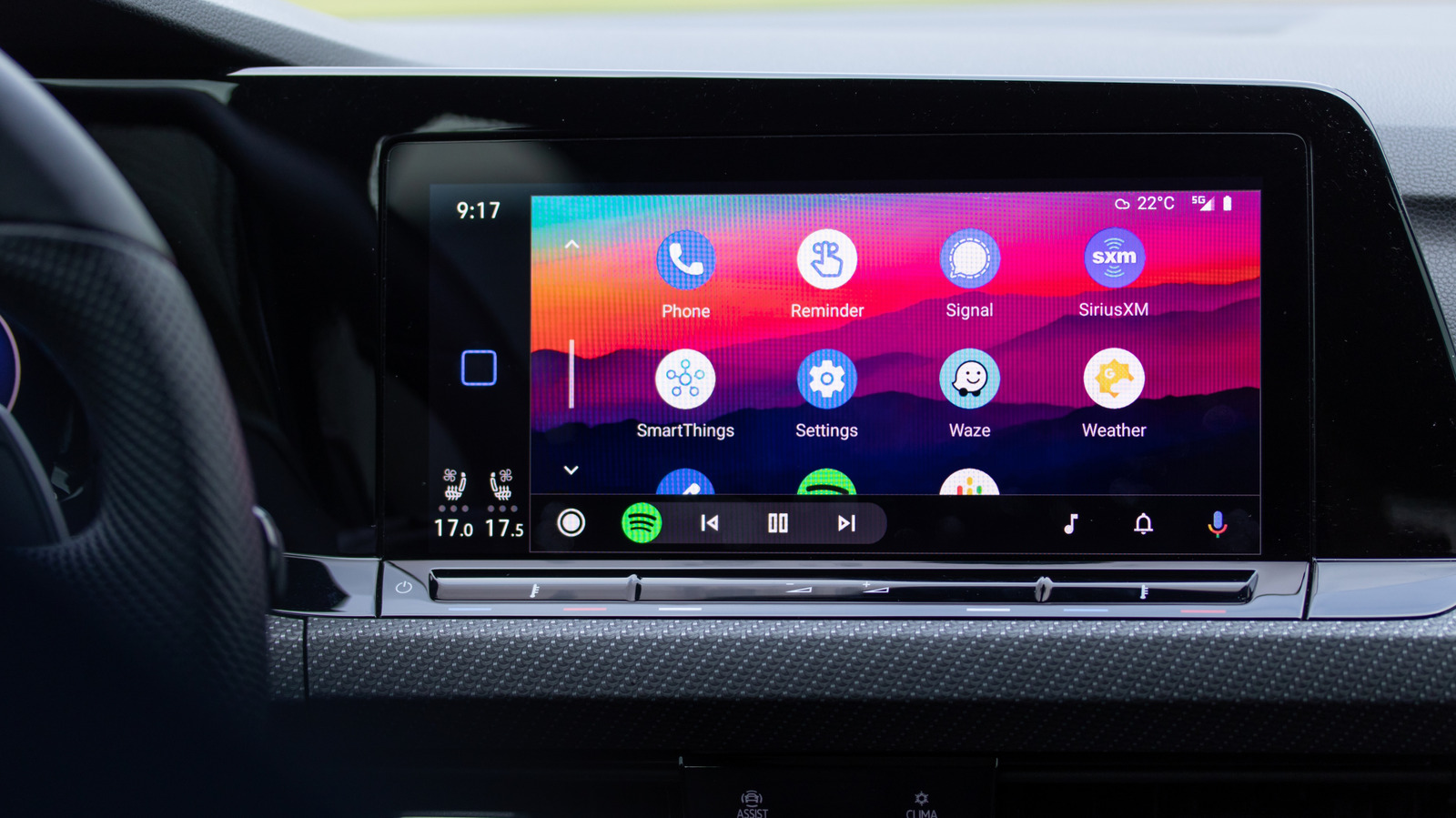
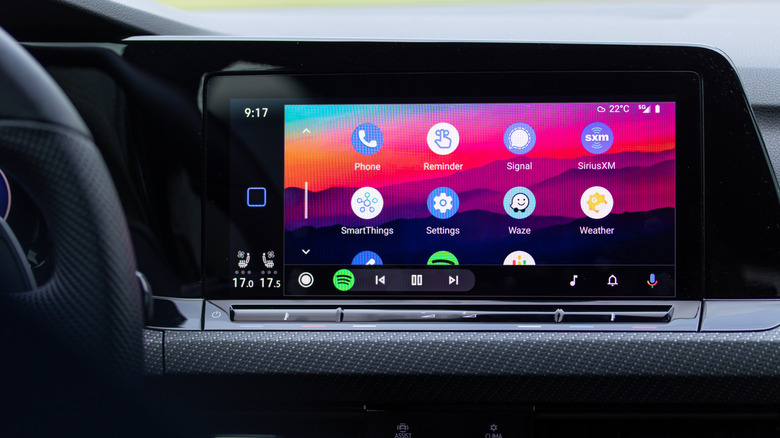
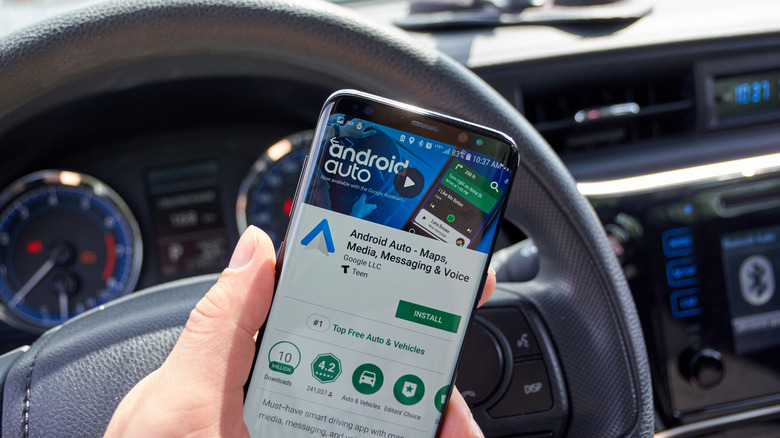
Think of your smartphone as the brain and the dashboard display as a larger, safer, and less distracting monitor for your drive. Android Auto is not an operating system for your vehicle; it is a specialized projection interface.
When you plug your phone into a compatible car—or connect wirelessly via Wi-Fi and Bluetooth—your Android device renders a streamlined UI optimized for the road. It safely surfaces applications you already use on your phone, such as Google Maps, Waze, Spotify, Audible, and various messaging platforms, allowing you to control them via touch or voice commands (Google Assistant) without ever physically handling your handset.
Portability and Flexibility
This phone dependency is precisely what makes Android Auto attractive to millions of motorists. Because your apps, personal preferences, playlists, and destination history live on your phone, you can step into a rental car, a friend’s vehicle, or a new purchase, plug in, and immediately feel at home.
Furthermore, Android Auto functions as hardware-agnostic software from the car’s perspective. Whether the vehicle’s native infotainment system runs a proprietary manufacturer UI, a basic Linux build, or even an entirely different underlying OS, it simply acts as a display receiver for the phone’s processing power.
Apple users will recognize this concept instantly: Apple CarPlay operates on the exact same premise. Even Apple’s more ambitious next-generation software, such as CarPlay Ultra—which expands across multiple instrument clusters and pulls in vehicle-specific metrics like fuel levels and climate control—still fundamentally relies on an iPhone being present in the cabin.
Data Access and Limitations
While Android Auto is primarily a projection tool, it isn’t completely blind to the car it’s plugged into. Depending on what the automotive manufacturer allows, Android Auto apps can pull basic vehicle data—such as battery state-of-charge, remaining EV range, or fuel levels—to enhance navigation routing, such as automatically suggesting charging stops along a long-distance route.
Android Automotive OS: The Native Machine
If Android Auto is a guest living in your car for the duration of your trip, Android Automotive OS (AAOS) is the landlord who owns the building.
Built Into the Hardware
Android Automotive OS is an entirely different animal. It is a complete, standalone software platform installed directly onto the vehicle’s head unit and computer hardware. It does not require a smartphone to function; in fact, you can leave your phone at home, and the car’s core systems will still operate seamlessly.
AAOS is designed to manage far more than just media playback and navigation. Because it is embedded at the architectural level, automakers can use it to power:
- The primary central infotainment touchscreen.
- Digital instrument clusters behind the steering wheel.
- Climate control systems.
- EV battery management and thermal controls.
- Advanced driver-assistance systems (ADAS) and vehicle settings.
Decoding "Google built-in"
Because naming conventions in the tech and automotive sectors are rarely straightforward, consumers frequently encounter the term "Google built-in" alongside Android Automotive OS. It is vital to separate the two.
- Android Automotive OS (AAOS): This is an open-source software platform released by Google. Any automaker can take the core code of AAOS, strip it down, and build their own custom user interface and software ecosystem on top of it—completely independent of Google’s proprietary services.
- Google built-in: This refers to a separately licensed collection of software known as Google Automotive Services (GAS). When a car has "Google built-in," it means the automaker has licensed GAS to include native versions of Google Maps, the Google Play Store, and Google Assistant directly in the dashboard, operating without a connected phone.
Google treats GAS as an optional, commercial package rather than an inherent requirement of the base open-source AAOS software.
Real-World Implementations: Polestar and Rivian
To see how this plays out in the wild, look at two prominent electric vehicle brands:
- Polestar: Pioneering the space with the 2020 launch of the Polestar 2, the brand embraced Android Automotive OS with Google built-in. However, Polestar engineers also ensured that these vehicles remained fully compatible with Android Auto and Apple CarPlay. For Polestar drivers, it is an inclusive "both/and" ecosystem.
- Rivian: Taking a radically different approach, Rivian builds its entire proprietary software experience on top of the open-source foundations of AAOS. However, Rivian deliberately chose not to license Google Automotive Services and not to support phone-projection protocols like Android Auto or CarPlay. Rivian owners must rely entirely on the automaker’s native software suite.
Supporting Context & Metrics: The Shift Toward Native Cockpits
The race for dashboard dominance is reshaping the automotive supply chain. According to industry analyses by firms like Counterpoint Research and S&P Global Mobility, the adoption rate of native Android-based automotive systems is accelerating rapidly.
- Market Share Projections: Analysts estimate that by the end of the decade, a significant majority of new connected vehicles will run either a native Linux or Android Automotive OS backend, replacing legacy, highly criticized proprietary automotive software developed independently by traditional car manufacturers.
- The Cost of In-House Software: Historically, automakers tried to build infotainment operating systems from scratch, resulting in notoriously buggy, sluggish interfaces that aged poorly. By adopting AAOS, legacy brands save billions in research and development while instantly offering consumers interfaces (like Google Maps) that they already know and trust.
- App Ecosystem Expansion: The integration of the Google Play Store into native AAOS vehicles means developers can build apps specifically tailored for stationary or parked cars—including streaming services like Netflix and YouTube, and gaming apps designed to pass the time while an electric vehicle charges.
Future Outlook: A Fragmented or Unified Horizon?
As we look toward the future of connected mobility, the tension between phone-mirroring and native vehicle operating systems will only intensify.
Automakers are locked in a fierce battle for ownership of the "dashboard real estate" and the lucrative recurring revenue streams attached to it—ranging from software-as-a-service (SaaS) feature unlocks to in-car digital payments for tolls, parking, and charging.
For consumers, this means the car-buying experience will increasingly require a software evaluation alongside traditional metrics like horsepower, cargo space, and fuel economy. Will you prefer a vehicle that mirrors your smartphone seamlessly via Android Auto or Apple CarPlay, ensuring your digital life travels effortlessly from car to car? Or will you opt for a vehicle powered by Android Automotive OS with native cloud connectivity, deep vehicle hardware integration, and an independent app store?
Ultimately, while the naming convention remains a linguistic maze, the underlying engineering choice is clear. The smartphone in your pocket and the computer in your dashboard are carving out distinct roles—and the modern vehicle is rapidly evolving from a mechanical machine into a computer on four wheels.