Executive Overview
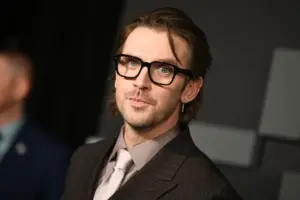
In a major casting coup that signals a bold new chapter for one of science fiction’s most enduring properties, Dan Stevens has officially been tapped to star as the title character in Amazon Prime Video’s highly anticipated live-action RoboCop television series. Confirmed exclusively by Variety, the project has been given a straight-to-series, eight-episode order, cementing it as a top-tier priority for the streamer.
This high-profile adaptation marks a critical milestone in Amazon’s ongoing strategy to mine and revitalize the vast intellectual property library acquired through its landmark $8.45 billion purchase of Metro-Goldwyn-Mayer (MGM) in 2022. By pairing an internationally celebrated prestige actor with a gritty, satirical sci-fi premise, Amazon MGM Studios is clearly signaling its intent to elevate the RoboCop franchise far beyond its B-movie roots, framing it as a prestige television event for the streaming era.
The creative DNA behind the project is equally formidable. Peter Ocko—renowned for his work on critically acclaimed dramas—serves as the writer, executive producer, and showrunner. Meanwhile, the powerhouse horror-and-genre banner Blumhouse Atomic Monster brings its blockbuster pedigree to the table, with James Wan, Michael Clear, and Rob Hackett executive producing alongside Danielle Bozzone, who is co-executive producing and overseeing the project. Crucially, the series maintains a vital link to its cinematic heritage: Michael Miner and Ed Neumeier, the original co-creators and co-writers of Paul Verhoeven’s 1987 cinematic masterpiece, are attached as executive producers, ensuring the satirical bite and thematic resonance of the original material remain intact.
According to the official series logline released by Amazon, the narrative returns to the core philosophical and visceral dread of the original film: "A giant tech conglomerate convinces the city to place a powerful robot on its police force — a robot implanted with the consciousness of a beloved, fallen officer (Stevens)."
With Stevens leading an all-star creative team, the eight-episode series aims to dissect the dangerous intersections of late-stage capitalism, corporate municipal privatization, and the erosion of human identity in an increasingly automated world.
Detailed Chronology: From MGM Acquisition to Streaming Greenlight
The path to bringing RoboCop back to the screen has been a meticulous, multi-year journey defined by corporate restructuring, shifting executive visions, and careful brand stewardship.
The Genesis: The Amazon-MGM Merger (2022)
The genesis of this series traces back to March 2022, when Amazon officially closed its acquisition of legendary Hollywood studio MGM. Overnight, the tech giant gained control of a glittering, century-old vault containing over 4,000 film titles and 17,000 television episodes, including crown jewels like James Bond, Rocky, Stargate, Legally Blonde, and RoboCop.
Almost immediately, industry insiders anticipated that Amazon would leverage these legacy brands to fuel Prime Video’s original content pipeline. While properties like James Bond required a delicate, long-term theatrical stewardship under Barbara Broccoli and Michael G. Wilson, sci-fi and action properties with cult followings—such as RoboCop—were viewed as prime candidates for serialized television adaptations. Development quietly commenced within Amazon’s television division, with executives searching for a showrunner capable of translating the dense socio-political satire and high-octane action of the cinematic universe into a serialized, multi-episode format.
The Official Announcement (July 2026)
Following years of behind-the-scenes conceptualization, script development, and logistical planning, Amazon officially announced the RoboCop series in July 2026 during a corporate showcase. The streamer confirmed that the project had graduated from development hell into an active production pipeline, backed by an ambitious eight-episode order.
The announcement sent waves of excitement through the science fiction fandom. Unlike previous attempts to reboot or spin off the franchise—which frequently struggled to capture the lightning-in-a-bottle alchemy of the 1987 original—this iteration was positioned from day one as a flagship prestige series. The inclusion of Peter Ocko as showrunner and the involvement of original creators Michael Miner and Ed Neumeier signaled to skeptical fans that Amazon was not merely looking to slap a recognizable brand name on a generic sci-fi procedural, but rather aiming to honor the property’s subversive roots.
The Casting of Dan Stevens (Late 2026 / Early 2027)
The puzzle pieces fell into place with the securing of Dan Stevens for the grueling, psychologically complex title role. For Amazon, casting an actor of Stevens’ caliber—known equally for his brooding intensity, physical transformation capabilities, and magnetic screen presence—was paramount. Playing Alex Murphy and his cybernetic alter-ego requires an actor capable of conveying profound vulnerability, tragic humanity, and terrifying robotic efficiency, often underneath layers of heavy prosthetic design or digital rendering. With Stevens now officially locked in, pre-production has accelerated rapidly, setting the stage for principal photography to commence later this year.
Supporting Context & Metrics: The Franchise Legacy and Stevens’ Meteoric Rise
To fully appreciate the weight of this new series, one must examine both the storied history of the RoboCop franchise and the impressive career trajectory of its new leading man.
The Cinematic and Televisual History of RoboCop
The RoboCop universe is nearly four decades old, originating with Orion Pictures’ 1987 dystopian masterpiece directed by Dutch visionary Paul Verhoeven.
- RoboCop (1987): Starring Peter Weller as Officer Alex Murphy, the film was a critical and commercial sensation. Operating as a hyper-violent, pitch-black satire of Reagan-era economics, corporate greed, and media saturation, it grossed over $53 million worldwide against a modest budget and earned multiple Academy Award nominations (winning for Best Sound Effects Editing). Weller’s iconic performance defined the character for generations.
- RoboCop 2 (1990) & RoboCop 3 (1993): Weller returned for the Kershner-directed sequel, which leaned further into comic-book action and body horror. By the third installment, Robert Burke stepped into the metallic suit, though the franchise’s cultural momentum began to cool.
- The Television Adaptations: The property has previously made the jump to the small screen on several occasions. These include the 1988 Ruby-Spears animated series, the short-lived 1994 live-action syndicated series starring Richard Eden, and a 2001 Canadian-miniseries revival titled RoboCop: Prime Directives.
- The 2014 Cinematic Reboot: Directed by José Padilha and starring Joel Kinnaman as Murphy, this $100 million studio tentpole attempted to modernize the mythos with sleek designs and updated sociopolitical themes regarding drone warfare, ultimately pulling in $242 million globally.
Beyond film and television, the IP has spawned numerous video game adaptations (most notably the critically acclaimed 2023 shooter RoboCop: Rogue City), comic book runs by Dark Horse and Boom! Studios, and extensive merchandise lines.
Dan Stevens: The Chameleon of Modern Prestige TV and Film
Dan Stevens has cultivated one of the most eclectic and respected CVs in contemporary entertainment, effortlessly transitioning from period melodrama to high-concept sci-fi, horror, and blockbusters.
- The Breakout: Stevens first captured global attention as Matthew Crawley in Julian Fellowes’ mega-hit British period drama Downton Abbey, a role he famously departed in 2012 to pursue international film opportunities.
- The Sci-Fi Masterpiece: He cemented his status as a premier genre actor starring as David Haller in Noah Hawley’s mind-bending FX/Marvel series Legion. His performance as a powerful mutant struggling with severe schizophrenia was lauded by critics as a masterclass in psychological acting.
- Recent and Upcoming Projects: Stevens’ recent credits read like a checklist of high-profile franchises. He starred in Warner Bros.’ global box office smash Godzilla x Kong: The New Empire, played the Beast in Disney’s live-action blockbuster Beauty and the Beast, and delivered a hilariously unhinged performance in Neon’s cult horror-comedy Cuckoo. On television, his recent and upcoming work includes roles in Apple TV+’s Zero Day, Hulu’s animated hit Solar Opposites, the upcoming third season of AMC’s The Terror, and a high-profile series regular role in the eagerly awaited second season of Showtime’s Dexter: Resurrection.
Official Statements and Industry Perspectives
While formal press releases from Amazon MGM Studios have focused primarily on the strategic importance of expanding the IP library, industry insiders and creative stakeholders have offered glowing insights into the vision driving the series.
Showrunner Peter Ocko, whose writing and executive-producing credits include critically praised television dramas, is understood to be leaning heavily into the biting satirical elements that made the original 1987 film a timeless classic. Rather than presenting a straightforward, action-figure-driven police procedural, the creative team aims to explore the chilling realities of predictive policing, corporate-owned municipal infrastructure, and the commodification of human consciousness.
The involvement of original creators Michael Miner and Ed Neumeier as executive producers acts as a crucial seal of approval for longtime fans. In past interviews discussing the enduring appeal of their creation, Neumeier and Miner have emphasized that RoboCop was never merely about a man in a metal suit punching criminals; it was an exploration of what remains of the human soul when a person is legally, physically, and economically stripped of their autonomy by corporate monoliths like Omni Consumer Products (OCP).
Blumhouse Atomic Monster—headed by James Wan and Jason Blum’s producing apparatus—brings a distinct mastery of suspense, world-building, and high-stakes genre execution to the production. Having Wan and his team oversee the physical production and tonal consistency ensures that the series will possess the cinematic polish, atmospheric dread, and visceral action sequences demanded by modern streaming audiences.
Future Outlook: What to Expect Next from Amazon’s RoboCop Universe
With Danens Stevens officially cast and an eight-episode order locked in, the immediate future of Amazon’s RoboCop initiative points toward rapid pre-production acceleration.
Production Timeline and Casting Additions
With principal photography slated to begin later this year, casting directors are currently scouring international talent pools to fill out the supporting ensemble. Key roles that must be cast include the corporate executives of the fictional tech conglomerate (the modern successor to OCP), the corrupt municipal leaders pushing privatization, and the human police officers who must navigate a landscape where their jobs are being usurped by an unfeeling, algorithm-driven machine.
Tone, Style, and World-Building
As television audiences grow increasingly sophisticated regarding dystopian narratives—following in the footsteps of shows like Severance, Black Mirror, and The Boys—Amazon’s RoboCop enters a cultural ecosystem primed for biting corporate satire. By focusing the narrative lens on Stevens’ tragic, conflicted protagonist, the series has the unique opportunity to blend high-octane cyberpunk action with profound existential drama.
If the creative team can successfully balance the explosive kinetic energy of Verhoeven’s original vision with the deep, serialized character development afforded by prestige television, Amazon Prime Video may well have found its next defining sci-fi cornerstone. As production gears up, all eyes will be on Dan Stevens as he prepares to step into the gleaming armor of Detroit’s most legendary law enforcement officer.