Executive Overview
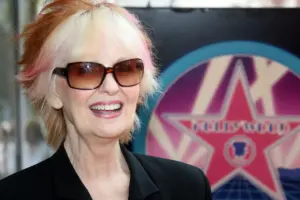
Shelley Fabares, an enduring fixture of American television whose career spanned the transition of the medium from its golden studio era to the sophisticated ensemble sitcoms of the late 20th century, passed away on Saturday in Los Angeles at the age of 82. Across a prolific career that bridged acting, chart-topping pop music, and impassioned industry and political activism, Fabares left an indelible mark on popular culture.
Best remembered by millions for her defining roles as Mary Stone in the ABC classic The Donna Reed Show and as the sharp-witted television news anchor Christine Armstrong in the long-running sitcom Coach, Fabares mastered the art of the relatable, grounded screen presence. Her talent extended far beyond situational comedy. In 1961, she captured the zeitgeist of American youth culture with her Billboard No. 1 hit single, "Johnny Angel," cementing her status as a teenage idol. Later in her career, she proved her dramatic chops in the critically acclaimed television film Brian’s Song and earned consecutive Emmy nominations for her standout work alongside Craig T. Nelson on Coach.
Beyond her work on screen and in the recording studio, Fabares was a tireless advocate for social change and labor rights within her industry. Alongside her husband, actor Mike Farrell, she was deeply committed to progressive political causes, environmental activism, and the betterment of her fellow performers through long-standing leadership within the Screen Actors Guild (SAG). As family, friends, and fans mourn her passing, her legacy endures as a masterclass in longevity, grace, and adaptability within a notoriously fickle entertainment industry.
Detailed Chronology: From Hollywood Child Star to Sitcom Royalty
Early Roots and the Path to Stardom
Born Michele Ann Fabares in Santa Monica, California, in January 1944, Fabares was immersed in the entertainment industry from the earliest days of her life. Growing up in a household attuned to the rhythms of Hollywood, her mother, Elsa Fabares, steered her toward modeling at a tender age, a trajectory that quickly opened doors to television commercials and minor acting roles. Furthermore, show business ran deep in her lineage; her aunt was the celebrated Broadway star and film actress Nanette Fabray, providing young Shelley with a formidable family blueprint for a career in the performing arts.
Fabares’ early television breaks included a notable two-episode guest appearance on The Loretta Young Show in 1954, showcasing a poise uncommon for a child actor. Her transition to feature films soon followed, highlighted by a supporting role in the 1956 Universal International drama Never Say Goodbye, starring legendary leading man Rock Hudson. These foundational years built a technical proficiency in front of the camera that would serve her well as television entered its rapid expansion phase in the late 1950s.
The Donna Reed Era and the Phenomenon of "Johnny Angel"
In 1958, Fabares stepped into the role that would make her a household name: Mary Stone, the eldest daughter of wholesome American parents on ABC’s The Donna Reed Show. The series became an anchor of family-oriented television, running for 275 episodes until 1966. Fabares appeared in 192 episodes before departing the series in 1965. Her portrayal of Mary captured the idealistic, breezy optimism of mid-century American youth, turning her into a massive teen icon.
Capitalizing on her immense visibility, Fabares launched a brief yet extraordinarily successful recording career. In 1961, she released the single "Johnny Angel," a breezy, emotionally resonant pop tune that soared to the top of the Billboard charts, securing the No. 1 spot. The song became an anthem of the era and permanently linked her name to the golden age of early-1960s pop music.
This dual threat of television stardom and musical success naturally propelled her onto the silver screen. During the mid-1960s, she transitioned into a series of youth-oriented, sun-drenched romps. She starred opposite teen idol Fabian in 1964’s Ride the Wild Surf and shared screen space with the King of Rock ‘n’ Roll, Elvis Presley, in two notable films: 1965’s Girl Happy and 1967’s Clambake.
Venturing into Drama and Diverse Television Roles
As the 1960s gave way to the 1970s, Fabares successfully navigated the treacherous transition from child star to adult actress. Her television credits during this period spanned a remarkable variety of genres, including appearances in The Little People, Forever Fernwood, The Practice, Hello, Larry, Highcliffe Manor, Fantasy Island, One Day at a Time, and The Love Boat.
Her most celebrated dramatic achievement of this era arrived in 1971 with ABC’s landmark television movie Brian’s Song. Based on the tragic, true-life friendship between Chicago Bears football players Brian Piccolo and Gale Sayers, the film starred James Caan and Billy Dee Williams and became one of the most widely watched and critically lauded telefilms in television history. Fabares delivered a profoundly moving performance as Joy Piccolo, the devoted wife standing by Brian as he fought terminal cancer. Her poignant, grounded portrayal added emotional depth to a film that reduced a nation of viewers to tears and remains a gold standard for sports-drama storytelling.
Prime-Time Renaissance with Coach
By the late 1980s, Fabares returned to the pinnacle of prime-time television. In 1989, she joined the cast of the ABC sitcom Coach, created by Barry Kemp. The series starred Craig T. Nelson as Hayden Fox, the blustery, lovable head coach of a fictional university football team. Fabares played Christine Armstrong, a sophisticated, sharp-witted television news anchor and Hayden’s romantic interest (and eventual wife).
The chemistry between Nelson and Fabares was a primary engine of the show’s success, anchoring the comedy with genuine heart and sharp comedic timing. Coach ran for 199 episodes through 1997, solidifying Fabares’ status as television royalty for a whole new generation of viewers. Her critically acclaimed work on the series was recognized by her peers with back-to-back Primetime Emmy Award nominations for Outstanding Supporting Actress in a Comedy Series in 1993 and 1994.
Supporting Context & Metrics: Cultural Footprint and Industry Legacy
| Metric / Milestone | Detail / Value |
|---|---|
| Birth Date & Place | January 1944, Santa Monica, California |
| Passing | Saturday (Age 82), Los Angeles |
| Major Sitcoms | The Donna Reed Show (1958–1965), Coach (1989–1997) |
| Total Episodes (The Donna Reed Show) | 275 total series episodes; Fabares appeared in 192 |
| Total Episodes (Coach) | 199 episodes |
| Music Milestone | No. 1 Billboard hit single with "Johnny Angel" (1961) |
| Emmy Nominations | Two consecutive Primetime Emmy nominations for Coach (1993, 1994) |
| Notable Film Work | Brian’s Song (1971), Girl Happy (1965), Clambake (1967) |
| Marriages | Lou Adler (mid-1960s), Mike Farrell (1984–present) |
Advocacy, Labor Leadership, and Personal Life
Away from the soundstages, Fabares lived a life deeply committed to advocacy and community engagement. Following a brief marriage to influential music and movie producer Lou Adler in the mid-1960s, she found lasting personal and professional partnership when she married actor Mike Farrell—best known for his role as Captain B.J. Hunnicutt on the legendary CBS comedy MASH—in 1984.
Throughout the 1980s and 1990s, Fabares and Farrell emerged as a prominent Hollywood power couple dedicated to progressive social and political movements. They were vocal participants in protests against U.S. military interventions in Central America and lent their voices and resources to the burgeoning anti-nuclear movement that gained momentum in Southern California during the late 1970s and 1980s. Their activism was fueled by a shared conviction that public figures had a moral obligation to use their platforms to spotlight injustice and advocate for peace.
Within the entertainment industry, Fabares was equally dedicated to the welfare of her fellow artists. As a longtime, active member of the Screen Actors Guild (SAG), she invested significant time in guild governance. She played a pivotal behind-the-scenes role in helping to steer the early years of the SAG Awards ceremonies, ensuring that actors honored their own with dignity and professional pride. Furthermore, in 1998, she threw her support behind early initiatives aimed at merging SAG with the American Federation of Television and Radio Artists (AFTRA), reflecting a forward-thinking commitment to strengthening labor solidarity across the entertainment sector.
Official Statements and Tributes
In the wake of her passing, Fabares’ family released a poignant statement celebrating her rich life, deep compassion, and lasting artistic footprint:
"We will miss her deeply — not only as a celebrated performer, but as the loving and extraordinary person she was in our everyday lives. We are heartbroken by her loss, yet profoundly grateful for the years we shared with her and for the joy, compassion, and love she brought to so many. We ask that our family’s privacy be respected as we grieve. We take comfort in knowing that Shelley’s work and the memories she created with those who loved her will continue to live on."
Tributes from across the entertainment community immediately began pouring in, with former co-stars, directors, and fans highlighting her rare combination of professionalism, warmth, and humility. Colleagues from Coach and The Donna Reed Show remembered her not merely as a talented professional who elevated every scene she was in, but as a stabilizing, gracious presence behind the scenes who treated crew members, guest actors, and lead stars with equal measures of kindness and respect.
Future Outlook: Preserving a Television Legacy
As the entertainment industry reflects on the passing of Shelley Fabares, her legacy serves as a testament to the enduring power of classic television and the timeless appeal of genuine warmth on screen. In an era where television landscapes shift at a dizzying pace, bodies of work like hers—spanning decades of consistent, high-quality performances—stand as monuments to a different era of production.
Her recordings, particularly "Johnny Angel," remain touchstones of early-1960s pop history, while her television work on both The Donna Reed Show and Coach continues to find new audiences through syndication, digital streaming platforms, and home video releases. Film historians and pop culture scholars will undoubtedly continue to study her career as a textbook example of how to successfully transition from a juvenile starlet to a respected, award-nominated dramatic and comedic actress.
Ultimately, Shelley Fabares’ story is one of grace under pressure, artistic versatility, and a quiet, steadfast dedication to making both her industry and her world a better place. Though she has left us, the joy, compassion, and unforgettable characters she brought to television screens around the globe will continue to resonate for generations to come.