Executive Overview
In an era where organic search traffic is increasingly volatile, digital marketers are being forced to rethink their long-term visibility strategies. As traditional web search traffic becomes harder to capture, businesses are leaning more heavily into social media as a primary engine for brand discovery and revenue generation. However, a significant "data silo" has long hindered these efforts: while social platforms provide excellent internal engagement metrics, they fail to report on how that content performs within the broader ecosystem of Google Search.
Google has finally addressed this disparity. In a landmark update to Google Search Console (GSC), the search giant has begun treating social media profiles—specifically YouTube, TikTok, X (formerly Twitter), and Instagram—as “platform properties.” This allows account holders to track organic search activity, query performance, and Discover visibility for their social assets with the same granular detail previously reserved for websites. This development marks a paradigm shift in cross-channel marketing, enabling brands to treat their social presence as a fundamental component of their organic search footprint.
Detailed Chronology: The Evolution of Social Integration
The rollout of this feature was far from abrupt; it followed a period of quiet experimentation and iterative testing.
The Slow Rollout
Industry observers first noted whispers of "social property" verification in GSC several months ago. Initially, the feature was restricted to a small cohort of verified business accounts. Google’s strategy was clearly to ensure that the complex authentication protocols—which require verifying ownership across third-party platforms—were robust before a wide release.
The Full Deployment
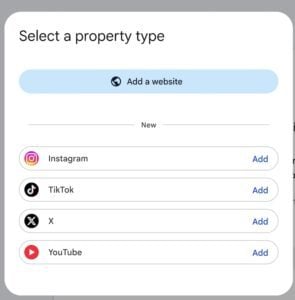
After a cautious testing phase, the option is now available to all GSC users. By classifying social profiles as distinct properties, Google has bypassed the need for complex API integrations for most users, instead opting for a streamlined, property-based management system. Users can now navigate to the top-left drop-down menu in the Search Console dashboard, select "Add property," and follow the authentication steps to link their professional accounts. Once verified, the platform begins ingesting data, with performance metrics typically populating the dashboard within 36 hours.
Supporting Context & Metrics: Unlocking the "Black Box"
For years, social media managers operated in the dark regarding Google Search. They could see how many "likes" a video received on YouTube, but they had no visibility into how that video was surfacing in a user’s Google search results or whether it was appearing in AI Overviews.
The Power of the Performance Dashboard
The new social dashboard in Search Console is intentionally minimalist, focusing on the two areas that matter most to SEOs: the Insights tab and the Performance section.
- Search Metrics: This includes data on text-based web searches, multimodal (visual and text) search, image search, and news visibility.
- Discover Visibility: A critical addition, this allows creators to track how often their social content is surfaced in Google Discover, the personalized content feed that drives significant, intent-based traffic.
The YouTube Advantage
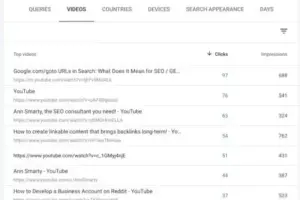
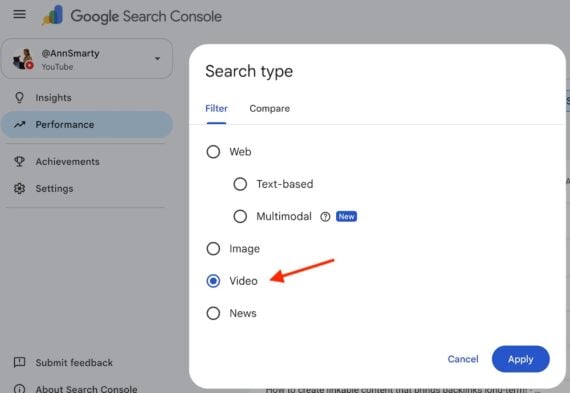
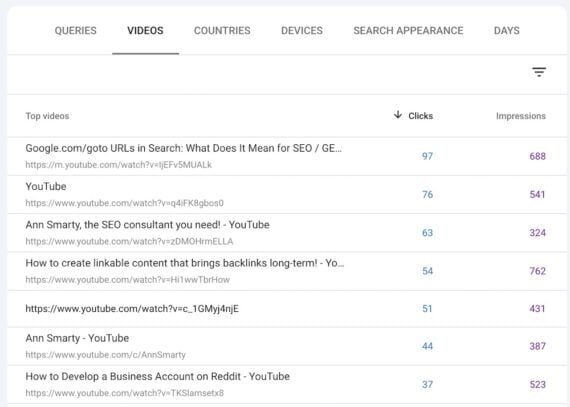
The inclusion of YouTube is arguably the most transformative aspect of this update. As Google increasingly integrates video content into its AI-driven search experiences—such as Gemini and AI Overviews—YouTube videos have become high-value real estate. Previously, tracking the search performance of an individual video was a manual, tedious task. Now, by selecting the "Video" search type in the performance filter, creators can see exactly which queries trigger their videos to appear in search results.
This level of transparency changes the SEO playbook for video production. Creators can now identify high-impression, low-click-through rate (CTR) videos, analyze the search queries associated with them, and iterate on titles and descriptions to capture higher rankings.
Strategic Implications for E-commerce
For e-commerce brands, this integration is not merely a tracking update—it is an optimization goldmine.
Multimodal Search and Visual Discovery
Retailers relying on Instagram for product discovery can now leverage the "Multimodal search" filter within GSC. By tracking whether product imagery is appearing in Google’s Image Search, brands can determine if their social media photography is effectively acting as a top-of-funnel lead generator.
Refining the SEO Workflow
The integration allows for a unified "cross-channel" strategy. Consider a typical product launch: a merchant publishes a blog post, a long-form YouTube video, and a series of Instagram product shots. Previously, these were tracked in fragmented dashboards. With the new GSC integration, the merchant can now annotate their performance timeline to see how each asset interacts with the others. If a spike in search traffic to the blog correlates with increased visibility for the YouTube video, the business can empirically prove the efficacy of their multi-platform content strategy.
Keyword Discovery
One of the most promising features is the ability to discover new "target keywords." By analyzing the query data from YouTube, brands can uncover long-tail search terms they may have missed. These insights can then be fed back into the content creation process, ensuring that future social content is pre-optimized for the terms that are actually driving search intent.
Official Perspective and Implementation Best Practices
While Google has not released a singular, sweeping announcement, the documentation within the Search Console Help Center confirms that these properties are treated with the same weight as domain-based properties.
How to Get Started
- Verify Ownership: Access the "Add property" menu. You will need to authenticate via the specific platform’s business login.
- Wait for Indexing: Data ingestion takes approximately 36 hours. Do not expect real-time results immediately upon verification.
- Leverage Filters: Utilize the search type filters (Video, Image, Web) to isolate the data.
- Monitor Brand Queries: While the dedicated "Branded Search" filter is not explicitly included in the initial social dashboard, users can perform a manual filter on their query reports to identify how their social profiles rank for their specific brand name and its common misspellings or variations.
Optimizing for Performance
To capitalize on this data, marketers should focus on "The Rule of 4." If a video is ranking with an average position lower than 4 (i.e., it is appearing below the fold or further down the search results), analyze the queries that led to that ranking. If the current title doesn’t match those queries, adjust it. By aligning the metadata of the social property with the actual search behavior of the audience, creators can significantly boost organic CTR.
Future Outlook: A Unified Search Ecosystem
The decision to bring social platforms under the Search Console umbrella suggests that Google is moving toward a more holistic view of the "open web." In this view, a brand’s website, its YouTube channel, and its TikTok presence are all interconnected nodes of a single entity.
What’s Next?
Industry experts predict that this is only the beginning. As AI continues to dominate search, the line between "social media" and "search engine" will continue to blur. We can anticipate future updates to include:
- Deeper integration with AI Overviews: Insights into how social content is being synthesized by LLMs.
- Enhanced Competitor Benchmarking: Potential tools to compare social search performance against competitors within the same category.
- Direct Actionability: Tools that might allow for "Search-First" content creation within the GSC interface.
Final Thoughts
For the modern marketer, the "search" vs. "social" debate is officially over. The two are now inextricably linked through the lens of Google’s data. By adopting these new Search Console features, brands can stop guessing which social posts are driving search intent and start using hard, empirical data to drive their content strategy. In a digital landscape where attention is the most valuable currency, this integration provides the visibility necessary to ensure that every post, video, and image is working as hard as possible to capture the interest of the modern searcher.