In a significant push to capture the burgeoning market for local machine learning hardware, Microsoft has officially opened pre-orders for the Surface RTX Spark Dev Box, a specialized desktop powerhouse built specifically for the demands of modern artificial intelligence engineering. First teased during a high-profile hardware showcase in June alongside the consumer-focused Surface Laptop Ultra, the machine has now cleared its final regulatory and manufacturing hurdles. It is scheduled to land on the desks of engineers, data scientists, and enterprise developers this coming November.
However, the hardware milestone comes with a stark reality check: an eye-watering retail price tag of $6,000.
Positioned at the bleeding edge of the company’s "Project Zenith" initiative—a concerted effort to deeply integrate specialized local silicon with enterprise-grade Windows workflows—the Surface RTX Spark Dev Box is not designed for the casual consumer or the typical office worker. Instead, it is an unapologetic, high-performance workstation engineered to tackle complex, resource-heavy local AI workflows without relying on cloud-based infrastructure.
At its core, the desktop houses NVIDIA’s formidable RTX Spark N1X chip, paired with an astonishing 128GB of unified memory and 2TB of high-speed, removable storage. Microsoft’s marketing materials promise that this configuration is capable of running massive AI models exceeding 120 billion parameters locally. Yet, the hefty price point immediately positions the Dev Box as a luxury tier product, likely pricing out independent developers, boutique studios, and academic researchers. It firmly cements the device as an exclusive tool for well-capitalized enterprise environments.
As the industry grapples with the financial and logistical sustainability of running generative AI workloads entirely in the cloud versus the edge, Microsoft and its silicon partner NVIDIA are betting heavily that developers will pay a massive premium for local autonomy, low latency, and data privacy. Whether the market agrees remains one of the most compelling questions heading into the final quarter of the year.
Detailed Chronology
The Genesis: Project Zenith and the June Reveal
The journey of the Surface RTX Spark Dev Box began in earnest during Microsoft’s mid-summer hardware showcase in June. Alongside consumer devices like the Surface Laptop Ultra, Microsoft executives pulled back the curtain on a secretive hardware initiative internally dubbed "Project Zenith." The goal of Project Zenith was clear: to design hardware specifically optimized for the post-cloud-dominant era of computing, where hybrid AI workflows—split seamlessly between local client silicon and remote data centers—would dictate the productivity of software engineering teams.
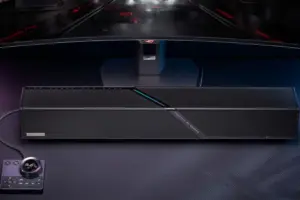
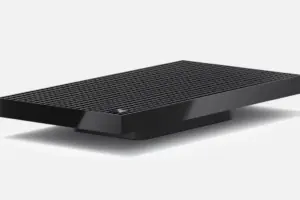
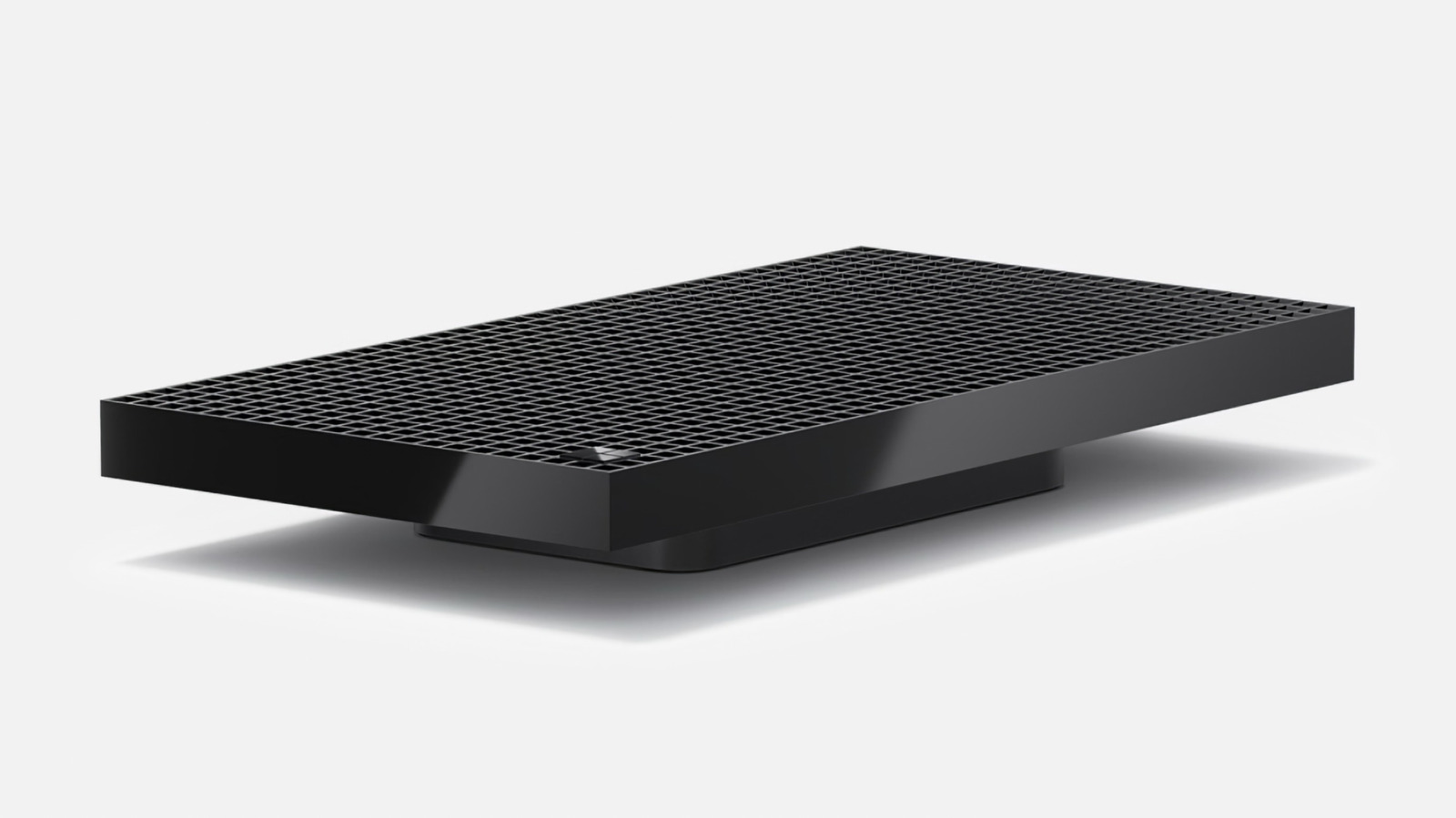
During this initial unveiling, Microsoft showcased the physical industrial design of the Dev Box, highlighting its minimalist, anodized aluminum chassis and austere cooling grille. While exact technical specifications were teased, the high-level narrative focused on bridging the gap between massive server-grade AI capabilities and a form factor that could sit comfortably on or under a professional developer’s desk. However, the June event omitted two critical details: exact release timelines and the final retail cost.
The October Pre-Order Window and November Shipping Target
Following months of industry speculation and anticipation within enterprise software development circles, Microsoft updated its developer blogs and Surface hardware portal on October 7. The company officially opened global pre-orders for the Surface RTX Spark Dev Box, attaching a definitive $6,000 price tag to the hardware.
Concurrently, Microsoft confirmed the logistics pipeline: the machine would immediately transition from manufacturing assembly lines to distribution centers, with the first wave of customer shipments scheduled to roll out in November. This announcement transformed the Dev Box from an ambitious conceptual workstation into a tangible, albeit exorbitantly expensive, commercial reality.
The Evolution of the Personal AI Supercomputer Market
To fully understand the current timeline, one must look back at the trajectory paved by NVIDIA with the launch of its DGX Spark AI computer. Initially introduced at a baseline of $3,999, the DGX Spark sought to establish a new category of "personal AI supercomputers." However, market demand, component scarcity, and tiered memory configurations quickly drove prices upward. Today, configurations matching the capabilities of Microsoft’s new offering—such as a 128GB model—command prices nearing $7,000 on enterprise marketplaces.
Microsoft’s entry into this space with the Surface RTX Spark Dev Box represents a maturation of this niche product category. By taking NVIDIA’s foundational architecture and wrapping it in Microsoft’s proprietary Project Zenith software ecosystem, the companies are attempting to standardize the developer experience for local AI model training, fine-tuning, and inference.
Supporting Context & Metrics
Architectural Breakdown and Hardware Specifications
The engineering marvel—and the primary driver of the Dev Box’s $6,000 price tag—lies beneath its austere, anodized aluminum chassis.
- Processor: The desktop is powered by NVIDIA’s specialized RTX Spark N1X chip, an architecture explicitly designed to handle parallel matrix math, tensor operations, and neural network compilation far more efficiently than standard x86 CPUs or traditional discrete consumer GPUs.
- Memory & Storage: The system ships with a massive 128GB of unified memory and a 2TB solid-state drive. According to Microsoft’s product configuration pages, the storage is removable for security and maintenance purposes, but the rest of the internal architecture is completely non-customizable. Users cannot upgrade the RAM or swap out the core processing modules after purchase.
- Connectivity & I/O: The rear panel of the Dev Box is tailored for professional engineering environments, offering a robust selection of ports including two USB-C ports, one USB-A port, a high-speed Ethernet jack, DisplayPort 2.1, and HDMI 2.1b, ensuring compatibility with multi-monitor ultra-wide setups and high-bandwidth peripherals.
Software Ecosystem and Project Zenith Integration
Hardware alone does not make a developer workstation; the software environment must be frictionless. As part of Microsoft’s Project Zenith initiative, the Surface RTX Spark Dev Box comes pre-configured out of the box with Windows 11 Pro.
More importantly, it arrives pre-loaded with an extensive suite of developer tools, runtimes, and integrations designed to eliminate hours of environment setup:
- Visual Studio Code: Fully optimized with extensions for local AI compilation.
- Git and GitHub CLI: Streamlining repository management directly from the command line.
- GitHub Copilot: Deeply integrated to leverage the local N1X chip for accelerated coding assistance and contextual code generation.
- Python Environments: Pre-packaged with essential libraries, frameworks (such as PyTorch and TensorFlow), and runtime environments tailored for machine learning model development.
The Model Capacity Metric: Handling 120B+ Parameters
The most compelling technical metric cited by Microsoft is the Dev Box’s ability to run and fine-tune large language models (LLMs) exceeding 120 billion parameters locally.
Historically, testing or fine-tuning models of this scale required access to enterprise cloud clusters, multi-GPU server racks, or expensive cloud API subscriptions. By packing sufficient unified memory and tensor processing power into a desktop form factor, Microsoft and NVIDIA are offering developers the ability to conduct iterative testing, prompt engineering, and localized privacy-compliant fine-tuning offline. This capability protects proprietary corporate codebases and sensitive training data from leaving the local machine.
Official Statements
While Microsoft has maintained a tightly controlled narrative through its official Windows blogs and hardware support pages, company executives and engineering leads have emphasized the strategic necessity of local AI hardware.
In the official pre-order announcement published on the Windows Blogs, Microsoft framed the Surface RTX Spark Dev Box as a cornerstone for the next generation of software engineering:
"As developers push the boundaries of what is possible with artificial intelligence, the need for high-performance, low-latency, and private local computing has never been more critical. The Surface RTX Spark Dev Box represents our most powerful developer machine ever built, designed to bring enterprise-grade AI workflows directly to the desktop without compromising on security or capability."
Industry analysts and hardware observers, however, have been quick to point out the economic hurdles introduced by the pricing strategy. When the device was initially detailed, tech commentators highlighted the steep financial barrier of entry. In discussions surrounding the evolution of NVIDIA’s personal AI hardware ecosystem, market analysts noted:
"While Microsoft and NVIDIA are championing a future where AI computation flows seamlessly between the cloud and local hardware, the sheer cost of these units acts as a massive gatekeeper. At $6,000 for the Dev Box—mirroring the upward price trajectory of NVIDIA’s own DGX Spark line—this hardware is strictly quarantined to well-funded corporate IT budgets, leaving independent developers and smaller studios structurally disadvantaged."
Future Outlook
The launch of the Surface RTX Spark Dev Box in November marks a critical litmus test for the desktop workstation market. As the enterprise software landscape transitions deeper into the generative AI era, hardware manufacturers are eager to prove that developers are willing to invest heavily in specialized local infrastructure.
However, the future of devices like the Dev Box hinges on two major variables: price democratization and software standardization.
The Accessibility Crisis
At a staggering $6,000, the Dev Box runs the risk of becoming an isolated novelty rather than a standard industry tool. If prices for personal AI supercomputers continue to climb—as evidenced by NVIDIA’s DGX Spark models shifting from $3,999 to nearly $7,000 for high-memory configurations—the hardware divide between massive tech conglomerates and independent developers will widen. For the vision of ubiquitous local AI to succeed, component costs must eventually decrease, or subsidized financing and cloud-hardware hybrid leasing models must emerge.
The Promise of Hybrid AI Workflows
Despite the financial hurdles, the technological achievement of running a 120B-parameter model on a desktop chassis cannot be overstated. If developers successfully build, test, and deploy complex AI agents locally using the pre-installed Project Zenith software suite, the productivity gains could justify the upfront capital expenditure for enterprise CFOs.
Over the next year, the adoption rate of the Surface RTX Spark Dev Box will serve as a bellwether. It will reveal whether engineers truly prefer the autonomy and security of local multi-billion-parameter model manipulation over increasingly efficient, albeit privacy-sensitive, cloud APIs. Should Microsoft and NVIDIA succeed in proving the return on investment for this $6,000 machine, the modern developer’s desk may never look the same again.