Executive Overview
For decades, mainstream AAA game development has tiptoed around the truly transgressive. While cinematic horror has found a comfortable home in survival tropes—zombies, masked slashers, and psychological hauntings—the visceral, transgressive intersection of extreme physical pleasure and profound agony has largely remained untouched by major publishers. Too prudish, too stylized, or perhaps simply too risky, the thematic weight of Clive Barker’s seminal work has rarely been captured in interactive media without sanitization.
Enter Hellraiser: Revival.
Developed by Boss Team Games and published by Saber Interactive, this Unreal Engine 5-powered descent into the mythos of The Hellbound Heart and the foundational films changes the landscape. Releasing on October 8 for PlayStation 5 (reviewed), Xbox Series X/S, Nintendo Switch 2, and PC, Revival does not attempt to reinvent the immersive sim template it borrows. Instead, it weaponizes it. Marrying the structural philosophy of BioShock with the brutal, tactile melee combat and grimy aesthetic of Condemned, the game delivers an authentic, unapologetically extreme horror experience.

It is a title that hides its most depraved, adult concepts inside accessible, familiar mechanics. By the time players realize what they are wading through—literal oceans of flesh, muscle, and body horror rendered in staggering detail—they are already helplessly hooked. Yet, beneath the viscera lies a remarkably structured, fast-paced descent into obsession, grief, and architectural madness that proves horror can still shock, disorient, and fascinate in equal measure.
Detailed Chronology & Narrative Framework
Love in the Time of Cenobites
The narrative of Hellraiser: Revival strikes an impressive balance: it is entirely original while maintaining total fidelity to Clive Barker’s foundational novella. Set twenty years after the events of the original film in the bleak, industrial town of Clairport, north of Detroit, the plot kicks off with a catastrophic mistake.
Protagonist Sunny opens the infamous Genesis Configuration—the puzzle box that acts as a gateway to Hell—summoning the Cenobites and meeting a famously gruesome end. Her partner, Aidan Lynch, witnesses the entire tragedy while they were otherwise occupied. Striking a desperate deal with the Hell Priest himself (affectionately and traditionally known as Pinhead), Aidan plunges headfirst into the Labyrinth to free Sunny’s soul and laboriously rebuild her shattered body, piece by bloody piece.

This sets up a classic, deeply video-game-centric tragedy. Aidan is tasked with tracking down and harvesting the hearts of three individuals specifically "marked" by the box:
- Charlotte Strauss, an ex-dominatrix widely feared as the Sister of Mercy.
- Colin Marlowe, the charismatic and unhinged leader of the Scarlet Church, a cult of Leviathan worshippers hell-bent on manufacturing new Cenobites on Earth.
It is a narrative of obsession, perverse bargains, and toxic devotion that feels entirely at home beside Barker’s literary works. The game is utterly unapologetic in its presentation: sexual, risqué, bloody, and grotesque. Machete swings systematically dissect bodies; disembodied torsos lie sickeningly on tables or hang like ghoulish wall art; and a late-game ability introduces Hellchains that hook, lash, and pull enemies apart from every direction. It is a spectacle that forces players to look, recoil, and then look again.
Welcome to the Labyrinth
One of the most striking design choices in Hellraiser: Revival is its environmental dichotomy. The game’s "real" world—the sex clubs, cult mansions, and decayed cemeteries—is bold, garish, caricatured, and dripping with perverse violence. Yet it constantly reminds the player that they are interacting with a video game.
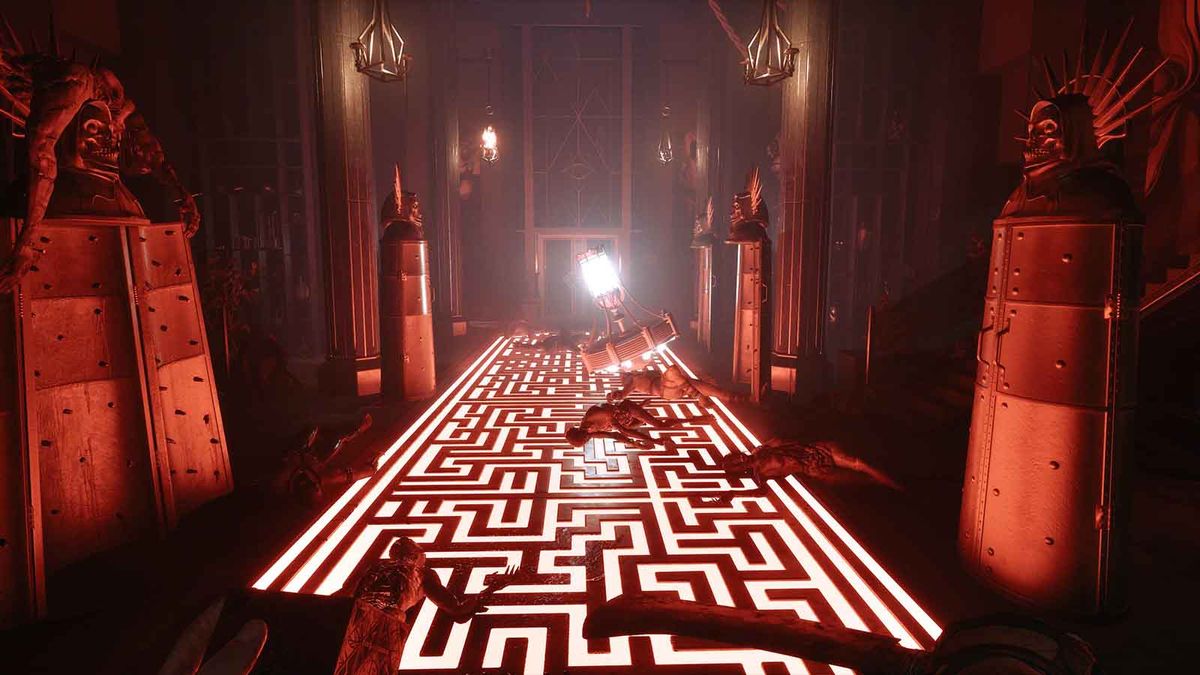
However, when Aidan steps through a glowing, teasing fissure in a wall directly into Leviathan’s domain, Unreal Engine 5 completely pivots, dropping the stylized cartoonishness for stark, uncompromising photorealism. This jarring transition is deployed brilliantly: the dimension of the Cenobites looks and feels terrifyingly real, while the waking world feels like a game space.
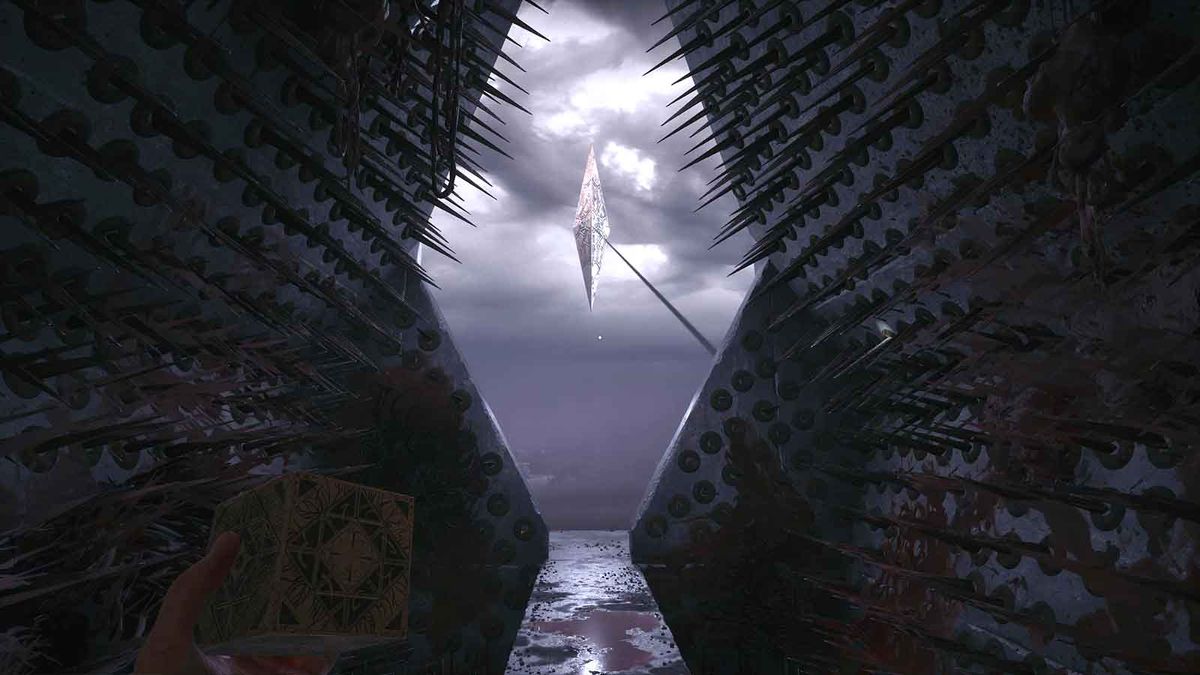
Within the Labyrinth, players encounter the true horror of Barker’s imagination. Puzzling, disorienting, and claustrophobic, these sequences—particularly when being hunted by the Chatterer (fondly known to fans as the Child)—elevate the experience into some of the finest horror gaming in recent memory. Racing down narrow Brutalist concrete canyons, dodging spinning spiked traps, and ducking sprouting chains makes Aidan intensely vulnerable. These escape-and-exploration segments provide necessary texture, forcing players to think critically while genuinely inducing panic.
Supporting Context & Mechanics
Immersive Sim Mechanics and the Genesis Configuration
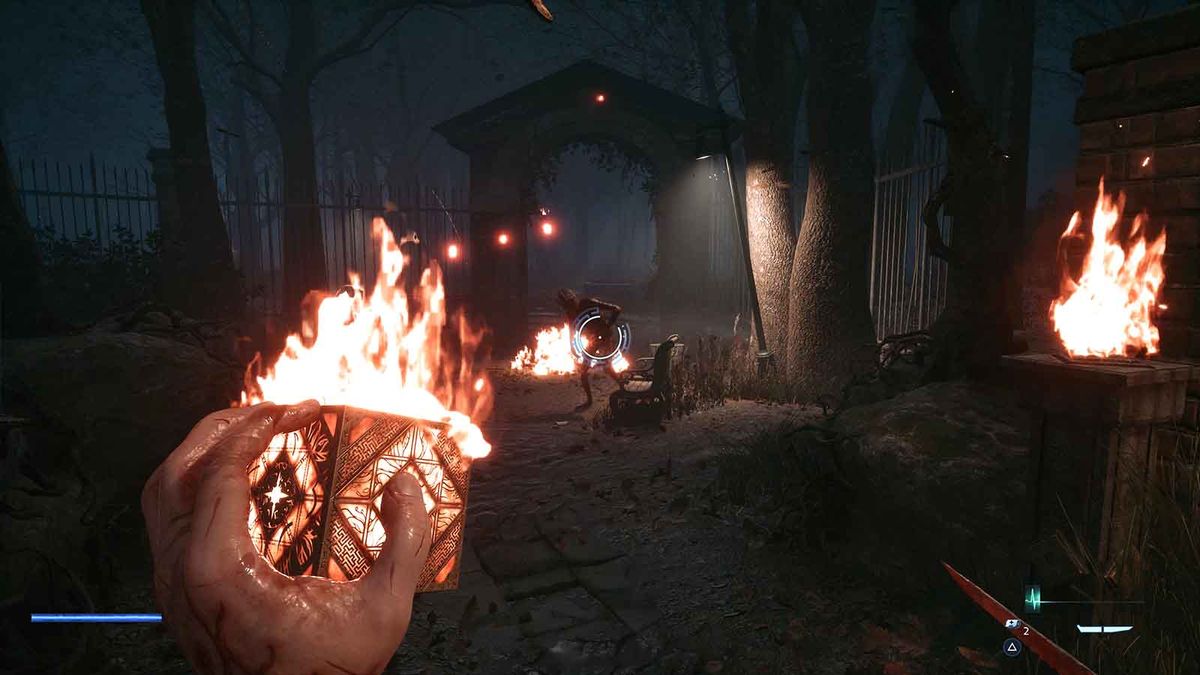
When players step back outside into the corrupted human world, Hellraiser: Revival adopts the guise of a light immersive sim. Combat flows with an organic volatility: a shotgun blast ignites a leaking environmental barrel, fire leaps dynamically from one cultist to the next, and an unwary enemy steps directly into a strategically placed bear trap.
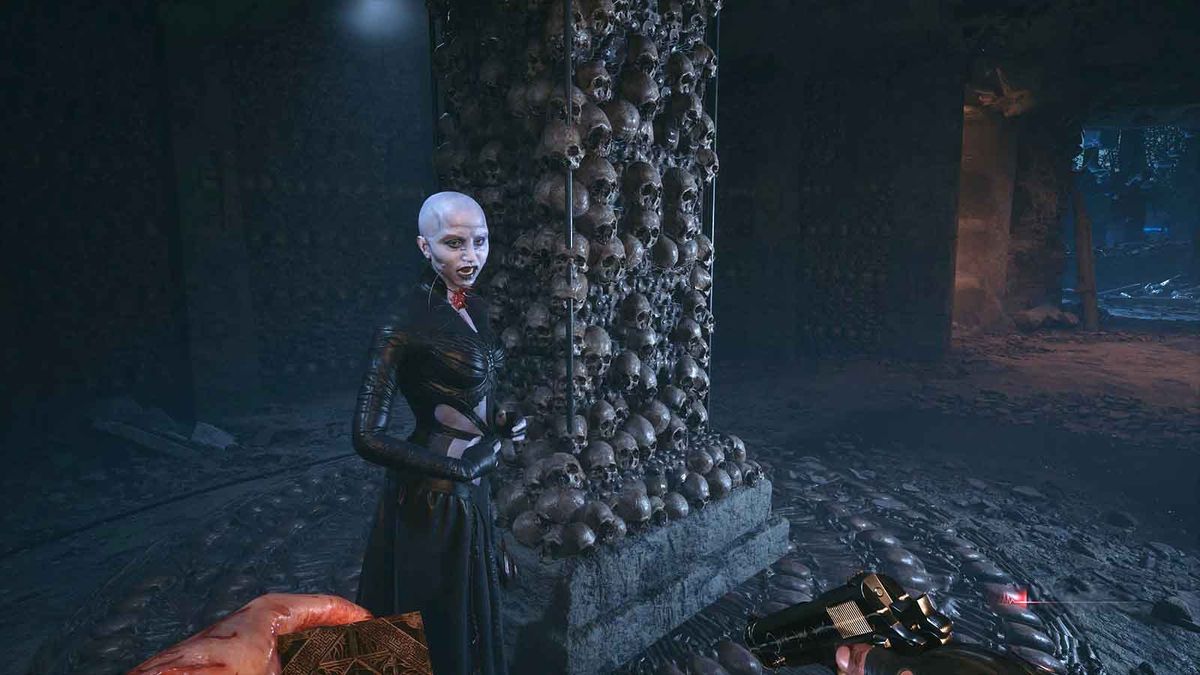
Layered over this traditional gun-and-melee combat is the Genesis Configuration. Banishing an enemy using a cinematic finisher sends their soul directly back to the Labyrinth, rewarding the player with "Suffering"—a currency spent on unlocking and upgrading the box’s supernatural powers:
- Telekinesis: Allows players to rip sawblades, jagged steel pins, and environmental hazards out of the world and hurl them at leather-clad cultists.
- Pyrokinesis: Empowers Aidan to siphon flame directly from lamps and cast searing bursts of fire.
An earthly arsenal—including a revolver, pistol, SMG, assault rifle, and breakable melee implements like knives and bats—complements these powers, supported by a crafting system that turns scavenged junk into essential ammo and health reserves.
Pacing and Structural Variety
What truly elevates Hellraiser: Revival above standard horror pastiche is its pacing. The game resolutely refuses to let the player settle into a predictable routine.
Consider how unique encounters are introduced and discarded:
- A tense stealth sequence where players scurry around a collapsing nightclub while the wraith-like Sister of Mercy stalks them, never to be repeated in the exact same way again.
- A mind-bending Labyrinth puzzle sequence requiring real-time environmental manipulation—pushing and pulling brutalist architecture to align shifting stairs and pathways.
- A literal cabin-in-the-woods survival challenge swarming with mutated horrors.
- A breathless set-piece where players must manually prop up crumbling columns to shield themselves from Leviathan’s Gaze—a searing beam that exposes victims to the darkest recesses of their own psyches.
These one-off ideas arrive with bold confidence, get executed with precision, and vanish before they can overstay their welcome.
Official Statements & Production Insights
While publisher Saber Interactive and developer Boss Team Games have kept promotional press cycles tightly focused on the visceral fidelity of the source material, supplemental materials shed light on the creative vision. Included within the game’s digital art book, development diaries emphasize the studio’s mandate to honor Clive Barker’s original aesthetic without watering it down for mass-market appeal.
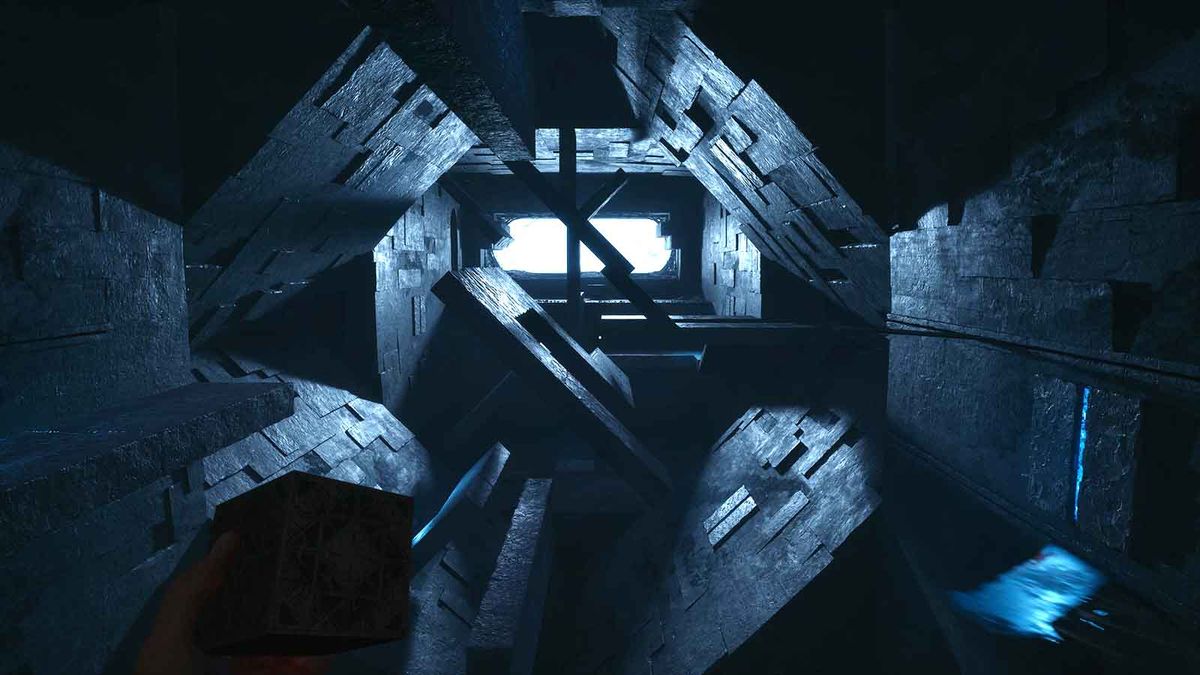
Lead design directors noted during early promotional rollouts that capturing the essence of Hellraiser required stepping away from standard zombie survival tropes. Instead, they aimed to construct a world where pain and pleasure are inextricably linked—not just philosophically, but mechanically. By utilizing Unreal Engine 5’s advanced rendering capabilities, the team sought to translate the suffocating architecture of Leviathan’s realm directly into modern hardware, ensuring that the transition between the mundane horrors of humanity and the divine agony of the Cenobites felt jarring, authentic, and emotionally resonant.
Future Outlook & Critical Verdict
Hellraiser: Revival is not without its flaws. Combat occasionally stumbles when the game demands subtlety, and controlling Aidan under intense pressure can occasionally feel stiff and unresponsive. Furthermore, boss fights can occasionally drag, and the Genesis Configuration, while fun, misses an opportunity to delve as deeply into tactical buffs and debuffs as classic immersive sims like BioShock or Prey.
Yet, these minor mechanical grievances pale in comparison to what the game achieves structurally and atmospherically. By weaving seamlessly between Aiden’s brutal reality and the magnificent, haunting geometry of the Labyrinth, Boss Team Games has delivered an experience that respects its lineage.
Final Breakdown
- For: A visually arresting, Brutalist-inspired Labyrinth design; a narrative that deeply respects Clive Barker’s original vision; a relentless barrage of creative, one-off gameplay ideas; and an authentic, unapologetically extreme horror tone.
- Against: Stiff controls during high-pressure combat; occasional pacing drags during boss encounters; and a shallow upgrade tree for the Genesis Configuration that underutilizes its immersive sim potential.
The Verdict: Hellraiser: Revival doesn’t completely reinvent the immersive sim template it borrows, but through sheer commitment to its grotesque aesthetic, intelligent structural pacing, and fearless embrace of body horror, it stands proudly as one of the most memorable horror experiences of the year.