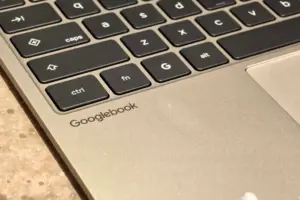
Executive Overview: A Necessary Pivot
Google’s foray into the premium laptop market with the Googlebook was positioned as the ultimate bridge between the mobile Android experience and desktop productivity. By leveraging the "Better Together" suite—a collection of features designed to unify the user’s digital ecosystem—Google promised a seamless transition between phone and laptop. However, the launch was marred by a glaring omission: the exclusion of Samsung Galaxy devices, the most prominent and popular segment of the Android market.
This oversight created a significant friction point for early adopters, casting doubt on the "universal" appeal of the Googlebook. After weeks of consumer frustration and speculation, Google has finally begun rolling out a corrective update. This patch not only addresses a critical pairing bug that prevented successful device handshakes but also officially extends support to Samsung devices running One UI 9.0 (based on Android 17). While this is a clear win for the user experience, it raises broader questions about the readiness of Google’s cross-device strategy at the time of the product’s initial debut.
Detailed Chronology: From Launch to Correction
The launch of the Googlebook was marketed on the strength of its deep integration: the ability to stream mobile applications directly to the laptop display, synchronize real-time notifications, access cloud-synced phone files, and utilize the "Continue On" feature to pick up workflows precisely where they left off on a mobile device.
The Initial Stumble
When the Googlebook hit the shelves, users were greeted with a "Better Together" suite that promised high-level synergy. However, the reality for the vast majority of Android users—specifically those carrying Samsung Galaxy hardware—was a bricked feature set. Despite Samsung’s massive market share, the devices were effectively incompatible with the core software ecosystem Google had built for the laptop.
For weeks, the Googlebook community on platforms like Reddit was filled with reports of failed pairings, unresponsive QR codes, and persistent synchronization errors. The silence from Google during the initial rollout led many to believe that Samsung integration might be delayed by months, rather than weeks.
The Turning Point
The situation shifted when Google’s own Mishaal Rahman took to Reddit to provide clarity on the rollout. The update, which is currently propagating through Google Play Services, is framed as a twofold solution. First, it addresses a fundamental pairing bug that hindered the initial handshake between devices. Second, it provides the necessary software hooks for One UI 9.0 devices to recognize the Googlebook as a trusted peripheral.
Current reports from early adopters, including users of the Samsung Galaxy S26 Ultra, confirm that the "Cast My Apps" feature is finally operational, marking a significant milestone in the product’s maturation.
Supporting Context: The Ecosystem Challenge
The difficulty of achieving seamless cross-device interoperability cannot be overstated. Unlike the "walled garden" approach favored by Apple—where hardware and software are developed in tandem under a single roof—Google’s Android ecosystem is inherently fragmented.
The One UI Variable
Samsung’s One UI is arguably the most sophisticated skin in the Android landscape, but its complexity often creates friction when communicating with stock or near-stock Google services. The requirement for One UI 9.0 suggests that Google and Samsung had to engage in deep-level firmware collaboration to ensure that "Continue On" and "Notification Sync" protocols could handshake correctly without compromising the security or stability of the Galaxy OS.
Network Nuances
Google’s technical documentation accompanying this update highlights a significant hurdle in the modern connected home: network architecture. The reliance on specific Wi-Fi protocols for device discovery means that many users in corporate or public environments have been unable to utilize these features. Google’s recommendation to use private, secure home networks—and to temporarily disable VPNs or DNS blockers—serves as a reminder that "Better Together" is not just a software feature, but a complex networking task that demands high-performance, unrestricted connectivity.
The Technical Requirements
For users looking to verify their status, the following versions are currently required to achieve compatibility:
- Google Play Services: Version 26.37 or newer.
- Cross-Device Services: Version 1.0.1346 or newer.
- Operating System: Samsung One UI 9.0 (Android 17).
Official Statements and Industry Impact
While Google has not released a formal press release detailing the "why" behind the delay, the company has characterized the update as a routine optimization for its "Better Together" framework. However, industry analysts view this as a damage-control maneuver.
"The Googlebook was sold as a premium, seamless device," says a leading mobile industry analyst. "Launching without support for the most popular Android phone in the world was a strategic error. By fixing this, Google is essentially admitting that the product was launched in a ‘beta’ state for the most important segment of its user base."
The frustration from the community has been palpable. The persistence of the pairing QR code—which would remain on the screen even after a connection was allegedly established—became a symbol of the product’s unfinished nature. By pushing this update, Google is attempting to pivot the narrative from "incompatible" to "integrated."
Future Outlook: Can Google Compete?
The path forward for the Googlebook depends entirely on the reliability of these cross-device features. If the user experience remains buggy or requires constant re-pairing, the "Better Together" branding will quickly lose its luster.
The Bar for Success
To truly compete with the likes of the MacBook and its integration with the iPhone, Google must ensure that the "hand-off" experience is invisible to the user. This means:
- Low Latency: App streaming must feel as though it is running natively on the device, not over a wireless protocol.
- Reliability: The handshake must occur in the background without the need for manual intervention or QR code scanning.
- Broadening Compatibility: Beyond Samsung, Google must ensure that other major OEMs (such as OnePlus, Pixel, and Motorola) receive similar levels of optimization to maintain the "Android" promise of choice.
Lessons Learned
The Googlebook saga serves as a cautionary tale for tech giants attempting to bridge the gap between desktop and mobile. A product is only as good as its weakest link, and when that link is the primary phone of the target consumer, the entire value proposition collapses.
Moving forward, Google’s priority must be the consistency of the experience. If they can successfully roll out these updates without further technical regressions, the Googlebook may still recover its reputation as a flagship productivity tool. However, if this is merely the first in a long line of "patch-as-you-go" updates, the platform risks being relegated to a niche device for enthusiasts rather than a mainstream necessity.
Conclusion
The update to the Googlebook is a vital correction, a necessary step toward the vision of a unified Android ecosystem. For Samsung Galaxy users, the long-awaited ability to stream apps and sync notifications is a welcome improvement that validates their initial purchase. Yet, the story of this update is ultimately one of missed expectations. As Google continues to iterate, the focus must shift from merely fixing bugs to establishing a baseline of reliability that the market demands. The "Better Together" promise is ambitious, but it requires more than just code updates—it requires a commitment to a standard of excellence that reflects the high price tag of the hardware itself.