Executive Overview
For the past decade and a half, Search Engine Optimization (SEO) has been the undisputed heavyweight champion of digital marketing ROI. It was the "money channel"—the one executives gravitated toward because it promised a seemingly endless supply of high-intent traffic for a relatively low investment. However, the golden era of "traffic for old rope" is officially over.
The digital landscape has fundamentally shifted. Audience journeys are no longer linear paths leading to a single search box; they are fragmented, multi-platform experiences influenced by AI, social discovery, and a growing distrust of faceless corporate content. As Google recalibrates its algorithm to favor "loyalty ecosystems" over transactional keyword-stuffing, brands are finding that traditional SEO tactics are hitting a wall. To thrive in 2026 and beyond, businesses must pivot from being search-dependent entities to becoming authoritative, multi-channel brands that earn attention rather than merely harvesting it.
A Detailed Chronology: From Helpful Content to Brand Supremacy
The turning point in this evolution was arguably the rollout of the Helpful Content Update (HCU) and its subsequent iterations, including the Site Reputation Abuse updates. These were not merely technical adjustments; they were ideological shifts in how Google defines value.

The Purge of the "SEO-First" Site
For years, the internet was littered with niche sites built by SEO specialists—sites that existed solely to capture search volume with little regard for brand equity or original value. When the HCU arrived, it didn’t just penalize bad content; it decimated "SEO-first" ecosystems. Sites that lacked a presence outside of the search engine were exposed as hollow shells, resulting in what many felt was heavy-handed collateral damage.
This was a calculated move. Google realized that to maintain its relevance in an AI-driven world, it could no longer allow SEOs to "rule the web." The goal shifted toward fostering a "loyalty ecosystem"—a vision where only brands with established authority, social proof, and cross-platform presence could dominate the SERPs.
The Case of HouseFresh and the Reddit Surge
The experience of independent review site HouseFresh serves as a poignant case study. Despite adhering to the gold standard of E-E-A-T (Experience, Expertise, Authoritativeness, and Trust)—testing products in their own homes and refusing sponsored reviews—the site saw over 90% of its organic traffic vanish during the HCU rollout.

Simultaneously, we saw a rise in "Reddit-ification," where personal anecdotes and community threads began outranking professionally curated content. This wasn’t an accident. By signing high-profile data-licensing deals with platforms like Reddit, Google signaled that it was prioritizing human experience over polished, potentially AI-generated corporate copy. For publishers, the message was clear: if you don’t have a community, you don’t have a future.
Supporting Context & Metrics: The Reality of the Modern Web
To understand the current state of search, we must look at the data—and the data suggests that reliance on a single channel is a strategic failure.
- The Zero-Click Reality: According to recent clickstream data, 86% of Google clicks go to a site the user didn’t specifically name. More importantly, nearly 52% of searches by younger demographics (18-24) end without a click at all.
- The AI Proliferation: Recent reports from the Pew Research Center indicate that over one-third of all web pages published since the release of ChatGPT show signs of AI-authored content. This "slop" has forced Google to raise the barrier for entry.
- The Trust Gap: Younger audiences (18-24) exhibit a stark preference for video and audio content over traditional long-form text. While those over 55 still skew toward reading, the future of discovery is undeniably creator-led.
The implication? Google’s algorithm is a proxy for trust, and in the current climate, people trust other people far more than they trust brands.

Official Statements and Platform Shifts
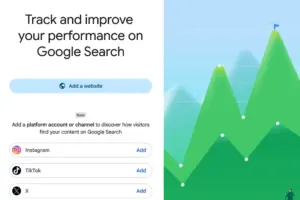
Google’s own product updates confirm this shift in philosophy. The introduction of social video performance metrics in Search Console is a watershed moment. It effectively tells publishers: “We are watching your performance on social media and using it to calibrate your authority in Search.”
Google is actively building a social network of its own within Discover. By integrating YouTube, X (formerly Twitter), and other creator-led platforms directly into the feed, they are creating an ecosystem where "following" and "engaging" are the new ranking signals. As noted in recent Google blog updates, Discover is moving to make it easier to "find, follow, and engage with creators." This is a clear move away from the purely transactional search of the past toward a model of persistent audience loyalty.
Future Outlook: Navigating the Post-SEO Landscape
If SEO is no longer enough, what is the path forward? The successful marketer of the future must be a generalist who masters specific, high-leverage skills.

1. From Last-Click to Incremental Uplift
Attribution models have been broken for years. Relying on last-click data to justify SEO spend is a vanity metric that ignores the complex, multi-touch journeys users take today. Organizations must move toward measuring incremental uplift—analyzing how content initiatives correlate with broader brand growth, direct traffic, and social engagement over time.
2. The Multi-Modal Content Requirement
If your strategy is to satisfy a broad audience, text-only content is a liability. The "Golden Hour" rule—thinking about distribution at the moment of creation—is essential. Are you producing a video for YouTube? Are you creating short-form snippets for TikTok? Are you building a newsletter list? If the answer is no, you are leaving the most valuable traffic on the table.
3. Building "Owned" Authority
You must build a platform that doesn’t rely on the whim of a search algorithm. This means:

- Personal Branding: If you are an SME or an individual, lean into your personality. People trust experts, not corporations.
- Purposeful Distribution: Treat publishing as the start of the lifecycle, not the end. If your content doesn’t have a distribution strategy, it shouldn’t be published.
- Data Literacy: LLMs are becoming the commodity; human insight is the premium. The ability to interpret data, visualize complex concepts, and tell a compelling story will define the next generation of marketing leaders.
4. Embracing the "Loyalty Ecosystem"
Google is not trying to kill the publisher; they are trying to kill the transactional publisher. If you are a site that only exists to answer a simple question—"What is the best X?"—you are vulnerable. If you are a site that builds a community, hosts a dialogue, and provides unique, first-hand expert analysis, you are exactly the kind of entity Google wants to promote.
Final Thoughts
The era where an SEO expert could simply "hack" a ranking is over. We have entered the era of the Brand-Builder. The technical aspects of SEO—site speed, schema markup, and crawlability—are now merely the price of admission. The real work, and the real profit, lies in the ability to command attention in a crowded, AI-saturated market.
Don’t fear this shift. While it makes the job harder, it also makes it more rewarding. By focusing on quality, original voice, and a diversified distribution strategy, you aren’t just protecting yourself from the next algorithm update; you are building a business that can survive, and thrive, in any digital environment.

The future belongs to the storytellers, the creators, and the marketers who understand that behind every search query is a human being looking for something they can trust. Be that trust.