Executive Overview
Federal law enforcement agencies in the United States, alongside international authorities, are tearing open the inner machinery of modern cybercrime syndicates. In a wide-ranging international probe targeting the notorious ShinyHunters hacking group—which recently compromised sensitive data belonging to the Federal Bureau of Investigation (FBI)—investigators have uncovered an alarming web of corruption within the cyber-defense sector itself.
According to sources close to the investigation, federal agents have identified executives at two separate ransomware negotiation and incident response firms who maintained unusually close ties with the extortion ring. Most startlingly, one U.S.-based executive is alleged to have actively helped operate a public extortion portal designed to pressure victims into coughing up ransom demands.
The sprawling investigation has already yielded high-profile arrests across Europe and North America, unspooled connections to a thwarted murder-for-hire plot, and exposed deep-seated conflicts of interest within the multi-billion-dollar cyber-incident response industry. As prosecutors scrutinize the boundary where cyber-defense ends and cybercrime begins, the case underscores a dark reality of the digital age: some professionals trusted to protect corporations and government agencies from extortionists have allegedly crossed the line to become active participants in the shakedown.
Detailed Chronology: The Fall of Pepijn van der Stap and the Rise of "Rey"
To understand how federal investigators pierced the veil of the ShinyHunters operation, one must trace a rapid chain of arrests and digital forensic breakthroughs that began in the fall of 2026.
The Reign of "Rey" and the FBI Job Portal Breach
Hackers aligned with the ShinyHunters banner have claimed responsibility for dozens of major corporate and governmental data breaches since 2019. Originally operated primarily by cybercriminals based in France, the collective evolved as law enforcement systematically jailed its early founders. Control over the "ShinyHunters" brand eventually passed to an administrator known as "Rey," identified by security researchers last year as a teenage hacker residing in Amman, Jordan. According to FBI estimates, the group has extorted more than $70 million from victims globally in 2026 alone.
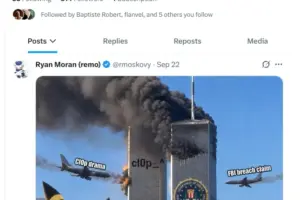
The group crossed a critical red line in late September 2026, when they successfully breached the FBI recruitment website, fbijobs.gov. To rub salt in the wound, the hackers taunted the bureau by threatening to publish stolen personnel files. The cache reportedly contained medical and psychological evaluations, Social Security numbers, home addresses, and detailed information regarding employee specializations and organizational units.
The brazen breach of federal servers provoked an aggressive and swift response from U.S. and international law enforcement. On October 3, Reuters reported that "Rey" had been detained by Jordanian authorities and was actively cooperating with the FBI.

The Midnight Raid in the Netherlands
Rey’s ascension to leadership had been enabled just weeks prior by a vacancy at the top. On the evening of September 15, 2026, tactical units from the Dutch police executed a dramatic raid to apprehend a prominent figure in the cybercrime underground: convicted hacker and ShinyHunters suspect Pepijn van der Stap. Police reportedly deployed flash-bang grenades to stun Van der Stap as he sat logged into multiple online accounts.
Crucially, investigators nabbed Van der Stap while his encrypted Signal instant messaging application remained active. This operational blunder allowed authorities instant access to his recent communications with frequent contacts, including ransomware negotiators operating out of Canada and the United States.
Sources close to the investigation revealed that Van der Stap’s decrypted Signal chats were the catalyst for unravelling an even darker criminal enterprise: a suspected murder-for-hire plot. Dutch media outlet RTL reported that Van der Stap had allegedly issued orders for two foreign-targeted murders, though there is no indication those plots were ultimately carried out.
The Arrest of Edward Dubrovsky
The digital breadcrumbs left in Van der Stap’s chat logs led federal agents directly to the doorstep of Edward Dubrovsky, a 54-year-old Canadian cybersecurity executive. Dubrovsky, who had recently published a book on handling cyber extortion that championed a "pay-the-hackers" philosophy, was arrested by the FBI on October 9.
According to federal court records, Dubrovsky was formally charged with threatening to disclose hacked data and interfering with interstate commerce through extortion. Prosecutors subsequently requested that he remain in custody pending trial, keeping case records under seal.
Investigative findings shared with KrebsOnSecurity indicate that Van der Stap’s messages showed frequent, highly coordinated conversations between the Dutch hacker, Dubrovsky, and at least one executive at a prominent U.S.-based consulting firm. Disturbingly, these executives were often privy to details regarding new ShinyHunters victims before the targeted organizations even realized they had been breached. Furthermore, investigators discovered that Dubrovsky knew ShinyHunters had exfiltrated sensitive FBI personnel data but deliberately kept silent, never warning the bureau prior to the hackers’ public extortion threats.
Supporting Context & Metrics: The Mechanics of Extortion
"Shinywire" and the Extortion Pipeline
Federal investigators believe at least one executive at a prestigious U.S. consulting firm—employing over 1,000 associates—played an active, hands-on role in operating a now-defunct victim shaming and extortion portal known as shinywire[.]com.

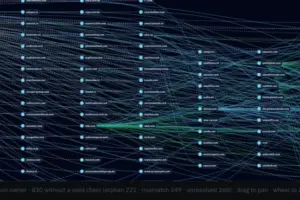
While authorities have withheld the names of the firm and the suspected executive pending formal charges, the portal’s metrics paint a vivid picture of industrial-scale shakedowns. Active from May 3 to October 16, 2026, the shinywire.com website hosted listings for nearly 100 organizations compromised by ShinyHunters.
- The Methodology: Each entry on Shinywire featured samples of stolen data and warned that if the victim did not engage within a strict seven-day window to negotiate terms, the complete cache would be published on the group’s dark-web Tor blog.
- Notable Victims: Among the documented targets was Intuitive Surgical, an American medical technology giant breached in March 2026 via a targeted employee phishing campaign.
The Ghostbyte Connection and Historical Roots
The web of corruption extends even deeper into the history of the ransomware negotiation industry. Interviews with former colleagues of Daniel Tobok—the former chief executive of cyber-defense firm Cypfer—revealed that as far back as eight years ago, Tobok was known among Russian-speaking ransomware affiliates by the moniker "Ghostbyte."
In 2018, when a Canadian firm fell victim to Dharma, a prolific Russian-language ransomware affiliate program, the victim expressed a desire to pay for unrecoverable files but demanded guarantees of trustworthiness. A redacted email reply from the Dharma representative directed the victim to contact a Canadian IT specialist at the email address [email protected]. "If you want guarantees, you can write to the IT company," the Dharma rep advised. "Take the phone and negotiate with them. This IT company often solves such problems in Canada."
While Tobok has not responded to requests for comment regarding the Ghostbyte alias, digital threat intelligence firm Constella Intelligence discovered that an email address frequently used by Tobok ([email protected]) was linked to online accounts registered under the username "ghostbyte," including a Snapchat profile. Constella further linked the Dharma representative’s wallet to cryptocurrency transactions exceeding $3.5 million in present-day value.
The unearthing of these historical ties coincides with a bitter legal battle in Ontario. Dubrovsky had previously filed a lawsuit alleging he became collateral damage in a campaign by his former partner, Tobok, to "destroy" him after a 2024 falling out. Tobok denied the allegations, filing a counterclaim accusing Dubrovsky of misappropriating confidential information and competing unfairly via a separate entity, CyberSteward Inc.
Official Statements and Industry Fallout
The unfolding scandal has sent shockwaves through the cybersecurity and cyber-insurance ecosystems, prompting hurried statements from impacted firms and industry associations.
Corporate Responses
In a public statement released on October 14, Cypfer distanced itself entirely from the criminal charges against Dubrovsky:

"We had no prior knowledge of Mr. Dubrovsky’s arrest. CYPFER has not received any outreach from law enforcement and, to our knowledge, is not the target of any law enforcement investigation."
Cypfer emphasized that CyberSteward and Cypfer are entirely separate entities with no overlapping officers or directors. Cypfer was recently acquired by the Apros Group, a holding company led by Jason Hogg, a former FBI special agent and former CEO of Aon Cyber Solutions Group. Aon previously acquired Cytelligence, a firm where Tobok served as CEO and Dubrovsky as managing partner.
The Economics of Extortion and Conflicts of Interest
The investigation has thrust a harsh spotlight on the inherent moral hazards and financial incentives embedded within the ransomware remediation sector.
Unlike terrorist organizations, paying a ransom to ShinyHunters is not strictly illegal under U.S. law, as the group is not currently listed under U.S. Treasury Department sanctions. However, the business model utilized by many negotiation firms creates a dangerous conflict of interest. According to Mark Camillo, Chief Executive of CyberAcuView (an industry group founded by major cyber insurers), many response firms charge a percentage fee scaled to the total ransom negotiated.
"It has come to the industry’s attention that many of the ransomware payers charge a percentage of the final payment which may or may not be disclosed," Camillo noted. "This makes no sense if they are also the negotiator. There needs to be more transparency in the process as no one in the ecosystem should be profiting purely on the size of the ransomware transaction."
Criminal Crackdowns on Negotiators
Federal prosecutors are increasingly treating corrupt negotiators as co-conspirators rather than legitimate intermediaries:
- October 2026: The Department of Justice charged MonsterCloud CEO Zohar Pinhasi with wire fraud and conspiracy. Prosecutors allege Pinhasi charged clients $19 million for remediation while secretly paying hackers only $8 million behind his clients’ backs.
- July 2026: Ransomware negotiator Angelo Martino was sentenced to 70 months in prison for conspiring with the Blackcat/ALPHV syndicate, passing confidential client negotiation strategies to cybercriminals to maximize extortion payouts.
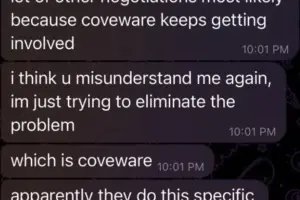
Meanwhile, premier incident response firms like Coveware and Unit 221B—which consistently advise victims against paying ShinyHunters—have found themselves directly targeted. Internal Telegram logs recovered by investigators revealed that ShinyHunters leaders expressed intense fury toward Coveware for ruining their payment success rates, explicitly discussing plans to "eliminate the problem" posed by the firm’s anti-extortion stance.

Future Outlook
The arrest of high-profile negotiators and the exposure of executive complicity in portals like Shinywire signal a watershed moment for cybercrime enforcement. For years, the billion-dollar incident response industry operated in a shadowy gray zone, balancing client confidentiality with the pragmatic dictates of extortion negotiations.
As the Department of Justice and the FBI press forward with their investigations into ShinyHunters, the division between defenders and predators has shattered. The revelations are expected to trigger sweeping regulatory reforms, increased transparency mandates regarding ransom payout percentages, and heightened federal scrutiny over the cybersecurity consulting firms hired in the wake of enterprise breaches.
For the cyber-defense industry, the message from federal prosecutors is unambiguous: those who cross the line from negotiation into active participation in extortion will face the full weight of the law, regardless of the corporate titles they hold.