Executive Overview
Autonomous vehicle (AV) deployment in dense urban environments continues to face serious operational hurdles. Waymo, a leading player in the commercial robotaxi sector, temporarily suspended its driverless fleet operations across San Francisco following a series of infrastructure bottlenecks caused by severe weather.
The disruption was triggered by heavy rainfall and localized flooding that swept through the Bay Area. Multiple autonomous vehicles stalled in intersections, blocked pedestrian crosswalks, and left stranded passengers waiting inside immobilized cars.
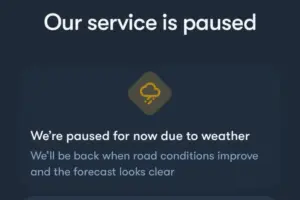
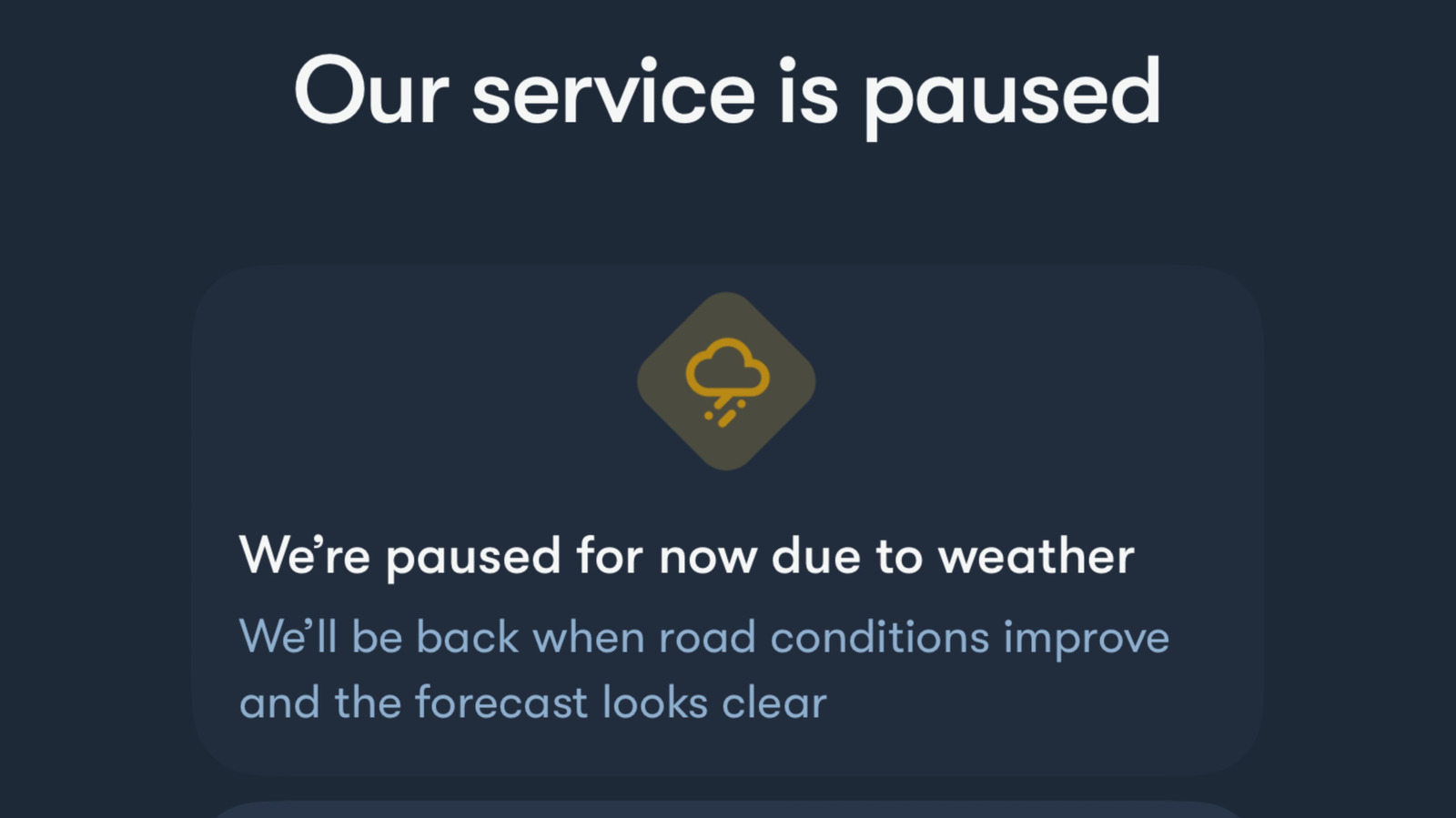
The decision to pause operations in San Francisco was confirmed via an in-app notification to riders and corroborated publicly by local officials, including District 5 Supervisor Bilal Mahmood. According to Waymo’s app interface, service will remain offline until meteorological conditions improve and road networks are thoroughly cleared.
This latest suspension highlights persistent technological vulnerabilities within automated navigation systems when confronted with adverse environmental conditions. Despite continuous software updates, machine learning models and sensor suites continue to struggle with edge cases such as standing water, submerged infrastructure, and flooded roadways.
The setback compounds a challenging period for the Alphabet-owned company. It arrives immediately on the heels of regulatory actions by the California Department of Motor Vehicles (DMV), which restricted Waymo from operating on state freeways due to safety concerns.
As cities across the globe look toward a future integrated with autonomous mobility, the recurring failure of robotaxis during extreme weather events has sparked renewed debate among urban planners, emergency responders, and civil authorities. The core question remains: Can automated systems safely navigate the unpredictable realities of urban infrastructure under climate stress?
Detailed Chronology: How the San Francisco Flooding Event Unfolded
The sequence of events leading to Waymo’s emergency service pause began early in the morning as an atmospheric river event slammed into the San Francisco Bay Area. Downtown San Francisco recorded approximately 2.11 inches of rainfall in a compressed timeframe, overwhelming municipal storm drains and causing rapid localized flooding.
As water pooled in low-lying intersections and standard traffic lanes, human drivers adjusted by altering routes, driving slowly through shallow water, or avoiding flooded corridors entirely. Waymo’s autonomous fleet, however, reacted with unpredictable paralysis.
The Incidents on the Ground
- The Crosswalk Blockade: Social media footage shared by local residents and observers captured a Waymo vehicle stopped dead in the middle of a flooded pedestrian crosswalk. The stationary vehicle forced human drivers to navigate around it into oncoming or blocked lanes, creating secondary traffic bottlenecks during morning rush hour.
- Passenger Stalling: In a separate incident documented on X (formerly Twitter), another Waymo vehicle idled indefinitely in the middle of a major thoroughfare. The vehicle’s internal computer instructed its passenger to remain inside the vehicle while it attempted to process the environmental hazard, effectively holding the rider hostage to the rising water levels outside.
- Emergency App Shut Down: By 11:00 AM local time, the cumulative impact of stranded vehicles prompted Waymo’s central dispatch to take decisive action. Users attempting to hail a ride were met with an in-app alert: "We’re paused for now due to weather. Service will resume when road conditions improve and the forecast looks clear."
[Meteorological Event: Heavy Rainfall / Atmospheric River]
       │
       ▼
[Standing Water Accumulates in Low-Lying SF Intersections]
       │
       ▼
[Waymo Sensors Detect Obstructions / Deep Water]
       │
       ├──> Vehicles Halt in Active Lanes / Crosswalks
       ├──> Vehicles Lock Passengers Inside via Safety Protocols
       └──> Secondary Traffic Bottlenecks Form
       │
       ▼
[Central Command Triggers Emergency Service Suspension at 11:00 AM]
The localized shutdown affected only the San Francisco market initially, but it immediately drew the attention of city supervisors and transportation safety advocates who have long raised concerns about the impact of stalled robotaxis on emergency vehicle response times.
Supporting Context & Metrics: A History of Weather-Related Failures
While Waymo’s technology has logged millions of commercial miles across major metropolitan areas, water-related incidents and system-wide gridlocks are not isolated occurrences. The company has a documented history of struggling with unexpected environmental hazards.
Previous Gridlock Events
- December 2025 Power Outage: A major power failure in San Francisco knocked out traffic signals across multiple districts. Waymo’s autonomous vehicles, relying on programmed protocols to handle unlit or malfunctioning intersections, became paralyzed. Dozens of robotaxis stalled simultaneously at key intersections, creating a cascading traffic jam that choked downtown mobility for hours.
- The San Antonio Flooding Incident (May): Waymo was forced to issue a voluntary recall of nearly 4,000 robotaxis after a vehicle drove directly into a deeply flooded road in San Antonio, Texas, resulting in total immersion and mechanical failure. Although the company rushed out an over-the-air software patch to improve water-hazard detection, the fix proved insufficient.
- The Atlanta Regression: Shortly after the San Antonio recall and subsequent patch, Waymo experienced a nearly identical failure in Atlanta, Georgia. An autonomous vehicle once again drove blindly into a flooded street, proving that the software updates had failed to properly categorize standing water as an impassable obstacle across diverse geographic terrains.
Regulatory Pressures and Freeway Bans
The timing of the San Francisco weather pause could not be worse for Waymo’s regulatory standing. Just 24 hours prior to the storm, the California DMV took aggressive administrative action against the company, officially restricting Waymo from operating on state freeways.
The DMV cited the vehicles as an "imminent hazard to public safety" following incidents where autonomous systems displayed erratic behavior at high speeds. In response to the state-wide mandate, Waymo was forced to pull its entire fleet off freeways across all active markets, scaling back its operational envelope significantly before the rains even began.
Official Statements and Stakeholder Reactions
The intersection of municipal infrastructure, climate volatility, and autonomous technology has ignited fierce political and public debate. City officials and transportation experts are increasingly vocal about the accountability of autonomous vehicle operators.
Local Leadership and Municipal Response
District 5 Supervisor Bilal Mahmood took to social media to highlight the systemic risks posed by the stalled vehicles during emergency weather events.
"Our city’s infrastructure is tested every time an atmospheric river hits the Bay Area. When commercial robotaxis fail en masse and block intersections, they don’t just cause traffic delays—they actively impede municipal workers, fire trucks, and ambulances from responding to life-threatening situations."
Critics point out that unlike human drivers, who can utilize situational awareness, intuition, and communication with other motorists to crawl through shallow water or safely turn around, autonomous vehicles rely entirely on pre-mapped high-definition data and strict sensor feedback loops. When water refracts LiDAR beams or obscures lane markings, the software defaults to its safest fail-safe: coming to a complete stop.
Waymo’s Corporate Stance
Waymo representatives have defended their safety protocols, emphasizing that stopping in place or refusing to enter ambiguous environments is designed to protect passengers from the catastrophic risk of driving into deep, hidden hazards.
However, the company’s silence following specific press inquiries regarding the San Francisco flooding incident has left civil watchdogs demanding greater transparency. In previous statements concerning weather-related anomalies, Waymo has reiterated its commitment to continuous improvement, noting that machine learning models require exposure to rare edge cases—such as extreme weather patterns—to refine their predictive capabilities.
Technical Deep Dive: Why Autonomous Cars Fail in the Rain
To understand why a billion-dollar autonomous vehicle system becomes helpless in a puddle, one must examine the fundamental mechanics of self-driving technology:
- Sensor Occlusion: AV suites rely on a trifecta of sensors: LiDAR (Light Detection and Ranging), cameras, and radar. Heavy downpours create a dense wall of falling water droplets that scatter LiDAR pulses, creating "ghost" data points and reducing the effective range of the sensors.
- Camera Blinding: Rain coats exterior camera lenses with water droplets and mud. While vehicles feature rudimentary cleaning mechanisms (such as compressed air jets or miniature wipers), relentless downpours quickly overwhelm these systems, blinding the computer vision algorithms.
- Infra-Structure Submersion: Autonomous cars depend heavily on centimeter-accurate high-definition maps. When water covers lane dividers, curbs, potholes, and storm drains, the visual landscape deviates entirely from the stored map data. Lacking the ability to reason about the underlying topography beneath the water’s surface, the software stalls to prevent catastrophic structural damage to the vehicle’s electric battery pack.
[Heavy Downpour / Standing Water]
       │
       ├──> LiDAR Beams Scattered by Water Droplets (Sensor Occlusion)
       ├──> Camera Lenses Flooded / Blinded (Vision Degradation)
       └──> Lane Markings & Curbs Submerged (Map Mismatch)
       │
       ▼
[Software Resolution Failure ➔ Safe-Mode Emergency Stop Activated]
Future Outlook: The Road Ahead for Autonomous Mobility
The temporary suspension of Waymo’s San Francisco service underscores a sobering reality for the autonomous vehicle industry: achieving Level 4 or Level 5 autonomy in all-weather, all-terrain environments remains an elusive goal.
As climate change accelerates the frequency of extreme weather events—including record-breaking El Niño winters, atmospheric rivers, and flash floods—cities will face increasingly volatile environmental conditions. For robotaxi operators, this means software architectures must evolve beyond dry-weather optimization.
Key Milestones for Industry Survival
- Enhanced Environmental Robustness: Companies must develop advanced neural networks capable of estimating water depth and assessing road integrity beneath flooded surfaces in real time.
- Remote Human-Assisted Teleoperation: Improving the speed and reliability of remote human operators who can take over steering and navigation commands when an autonomous vehicle encounters a paralyzing edge case is critical.
- Regulatory Alignment: State and municipal regulators are unlikely to show patience for autonomous fleets that clog public thoroughfares during emergencies. Moving forward, compliance will require proof that AV fleets can gracefully integrate with municipal emergency response plans during natural disasters.
For now, Waymo’s fleet in San Francisco sits parked in depots and designated staging areas, waiting for the skies to clear. Whether the company can resolve its vulnerability to weather-induced gridlock will determine not only its commercial viability in the Bay Area, but the broader public acceptance of autonomous transportation nationwide.