Executive Overview
The landscape of personal fabrication and small-business manufacturing has undergone a seismic shift over the past half-decade. What was once an ecosystem defined by single-purpose hardware—bulky laser cutters relegated to industrial garages, dedicated desktop inkjet printers restricted to paper stock, and standalone vinyl cutters requiring precise calibration—has rapidly converged into a streamlined, multi-functional desktop paradigm. At the forefront of this evolution is xTool, a brand rapidly cementing its reputation as a pioneer of accessible, high-performance maker technology.
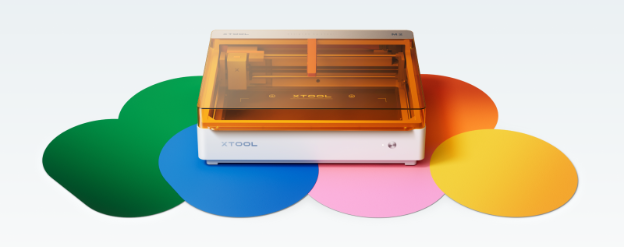
Amidst the current retail landscape, the introduction of substantial seasonal markdowns has brought one of the company’s flagship hybrid devices into sharp focus. The xTool M2 Color Craft, a sophisticated 2-in-1 laser cutter and CMYK inkjet printer, has received a notable Black Friday discount, dropping from its standard retail price of $699 down to $474 at Amazon in the United States, and down to £529 for UK consumers.
This dramatic price correction serves as an opportune moment to examine the device not merely as a discounted holiday purchase, but as a watershed piece of hardware for home studios, independent designers, and micro-entrepreneurs. Combining high-speed diode laser capabilities with full-color inkjet printing and infrared engraving, the M2 Color Craft represents a concerted effort to eliminate the traditional bottlenecks of multi-step craft production. By consolidating the roles of a laser cutter, a rotary-compatible engraver, and a direct-to-object color printer into a single footprint, xTool is championing the concept of the "mini merchandise factory"—a decentralized production unit capable of turning raw materials into finished, retail-ready goods within the confines of a spare bedroom or home office.
Detailed Chronology of the xTool M2 Evolution
To fully understand the market positioning and technical capabilities of the xTool M2 Color Craft, one must trace its development and the strategic rollouts that preceded and followed its release.
The Foundation of Hybrid Crafting
Prior to the proliferation of consumer-grade hybrid machines, creators looking to launch micro-brands—producing custom apparel, personalized wooden signage, etched leather goods, and branded sticker sheets—were forced to invest heavily in a fragmented equipment chain. A typical workflow demanded a vinyl cutter for decals, a heat press for textiles, a separate laser enclosure for cutting acrylic or wood, and a conventional desktop printer for paper mockups. The capital expenditure required for this setup often proved prohibitive for hobbyists and emerging startups.
xTool identified this market friction early. By engineering machines that bridged the gap between industrial-grade precision and consumer-friendly safety enclosures, the brand captured a dominant share of the desktop crafting segment. The conceptual groundwork laid by earlier diode laser systems eventually culminated in the architectural framework of the M2 series.
Launch and Initial Market Reception
The xTool M2 officially landed in the market on May 27, 2026, generating immediate interest across digital design and maker communities. Reviewers and early adopters quickly noted that the machine was designed to address a specific niche: creators who needed both structural cutting power and aesthetic, full-color detailing without the administrative and spatial headache of coordinating two entirely separate peripheral ecosystems.
Upon release, the hardware garnered uniformly positive reviews for its mechanical reliability and software integration. Testers highlighted its dual-camera alignment system—a feature historically reserved for higher-end commercial laser systems—which drastically reduced material wastage by allowing precise visual placement of cuts and prints directly on the workspace bed.
Iterative Expansion and the Ecosystem
The launch of the M2 Color Craft did not happen in a vacuum. It forms part of a broader, aggressive product strategy by xTool to dominate every facet of desktop manufacturing. Following the rollout of the M2 platform, the company introduced complementary hardware designed to interface seamlessly within the same software environment (xTool Creative Space).
Innovations such as the xTool WonderPress for thermal transfer applications and the advanced xTool Omni OM1 UV printer underscore a corporate vision where the traditional boundaries separating hobby crafting from industrial manufacturing are systematically erased. The M2 sits comfortably in the middle of this hierarchy: robust enough for continuous batch production, yet intuitive enough for a first-time user to unbox and operate within an hour.
Supporting Context & Technical Metrics
An evaluation of the xTool M2 Color Craft requires a granular look at its specifications, capabilities, and the tangible compromises inherent in designing an all-in-one desktop apparatus.
Specifications at a Glance
- Device Classification: 2-in-1 Laser Cutter and CMYK Inkjet Printer
- Work Area: 426mm x 320mm (approximately 16.8 x 12.6 inches)
- Laser Options: Available in 10W and 20W diode laser configurations; supplemented by a 3W infrared laser module for specific material marking.
- Maximum Operational Speed: Up to 600 mm/s.
- Material Compatibility: Support for over 100 distinct materials, including wood, acrylic, leather, anodized aluminum, coated metals, cardstock, and specialized sticker vinyl.
- Core Technological Features: Dual smart cameras for auto-framing and alignment, integrated air-assist system, and direct CMYK color inkjet printing capabilities.
Performance Analysis: Speed, Power, and Precision
The inclusion of a diode laser capable of operating at speeds up to 600 mm/s places the M2 at the faster end of the consumer desktop spectrum. For vector cutting of thin basswood, MDF, or craft acrylics, the 20W laser variant provides adequate thermal energy to cleanly slice through materials in fewer passes, minimizing scorching and edge discoloration.
The integration of an air-assist system—a mechanism that blows a pressurized stream of air directly at the laser focal point—is a critical inclusion. It prevents flare-ups, clears smoke and debris from the optical path, and ensures clean, professional-looking cuts on flammable substrates like paper and wood.
Furthermore, the integration of a 3W infrared laser module allows the machine to address bare metal surfaces that typically reflect the wavelengths of standard blue diode lasers, expanding its utility into jewelry making, anodized tech accessories, and metal business card production.
The Real-World User Experience: Praise and Pain Points
Synthesizing feedback from independent reviews, user forums, and long-term testing reveals a nuanced picture of the M2 Color Craft’s performance in practical daily operations.
What Users Love:
- Camera Alignment Accuracy: The dual-camera setup eliminates guesswork. Users can place scraps of material anywhere on the bed, pull up the live feed in the software, and drag their design elements directly over the physical item with pinpoint visual accuracy.
- True Black Ink and Color Fidelity: Unlike standard desktop inkjet printers that struggle to render deep, opaque blacks on non-porous specialty substrates, the M2’s proprietary ink formulations deliver striking visual contrast, making sticker sheet creation and color-accented wood engraving exceptionally vibrant.
- Streamlined Setup: The out-of-the-box experience has been widely praised as plug-and-play, with automated calibration routines reducing the steep learning curve typically associated with laser safety and focus depth.
Areas for Improvement and Architectural Compromises:
- Absence of a Blade Cutter: While the machine excels at laser cutting and inkjet printing, it lacks a mechanical drag-knife or rotary blade cutter. For pure vinyl decal production where laser heat might melt or warp delicate PVC films, users must rely exclusively on printable sticker paper rather than traditional adhesive vinyl rolls.
- Spatial Limitations: The 426x320mm work area, while generous for a desktop footprint, imposes hard limits on large-scale project fabrication. Creators looking to cut full 12×12-inch scrapbooking sheets with perimeter margins or larger signage must carefully segment their work.
- Consumable Costs: The proprietary CMYK inkjet cartridges and specialized non-refillable ink system components represent an ongoing operational expense. Reviewers note that while the print quality is exceptional, heavy users running commercial print volumes may find consumable overhead higher than open-tank refillable alternatives.
Official Statements and Industry Insights
The strategic pivot toward multi-functional desktop manufacturing tools has been a key talking point for industry analysts and company executives alike. As consumer demand shifts away from single-use gadgets toward versatile, high-utility home production units, manufacturers are responding with hardware ecosystems designed to lock users into comprehensive creative software suites.
Industry observers note that products like the xTool M2 Color Craft represent a mature phase in the democratisation of manufacturing tools. "We are no longer asking consumers to adapt their workflows to the limitations of single-purpose industrial machines," notes a leading digital fabrication analyst. "Instead, manufacturers are shrinking the capabilities of print shops and fabrication labs into desktop-friendly footprints. The economic barrier to entry for launching a direct-to-consumer merchandise brand has never been lower."
While xTool has positioned the M2 as a definitive bridge between creative expression and small-business viability, company communications emphasize safety, accessibility, and software integration as the primary pillars of their design philosophy. By enclosing high-power laser systems within fully certified, class-safe cabinetry equipped with auto-lock mechanisms and smoke-filtration compatibility, xTool has successfully mitigated the historical safety anxieties that kept laser cutters confined to industrial workshops and academic makerspaces.
Future Outlook: The Horizon of Desktop Fabrication
As the market absorbs the impact of seasonal discounting—exemplified by the current drop to $474 in the US and £529 in the UK—the broader trajectory of personal manufacturing points toward even deeper technological convergence.
Looking ahead, several key trends are likely to shape the next generation of crafting hardware:
- AI-Assisted Design and Placement: The integration of computer vision is only in its infancy. Future iterations of desktop hybrid machines will likely leverage advanced artificial intelligence to automatically detect material types, calculate optimal laser power and print density profiles on the fly, and suggest vector modifications directly within companion applications.
- Material Science Innovations: As manufacturers collaborate closely with chemical and material engineers, we can anticipate a broader array of proprietary substrates engineered specifically to react cleanly with hybrid diode-and-inkjet systems, reducing toxic off-gassing and improving environmental sustainability.
- The Rise of the Micro-Enterprise: The democratization of professional-grade fabrication tools is fundamentally altering employment patterns and side-hustle economics. As machines like the xTool M2 become standard fixtures in home studios, the traditional supply chain for custom merchandise—traditionally reliant on overseas bulk manufacturing and minimum order quantities—is being bypassed in favor of on-demand, hyper-localized production.
For creators, designers, and entrepreneurs evaluating the market today, the convergence of advanced hardware capabilities and aggressive holiday pricing makes the current window an ideal time to transition from fragmented workflows to integrated desktop production. Whether the goal is crafting bespoke holiday gifts, prototyping a new product line, or running a full-scale micro-merchandise operation, tools like the xTool M2 Color Craft signal a permanent, empowering transformation in how physical goods are brought to life.