Executive Overview
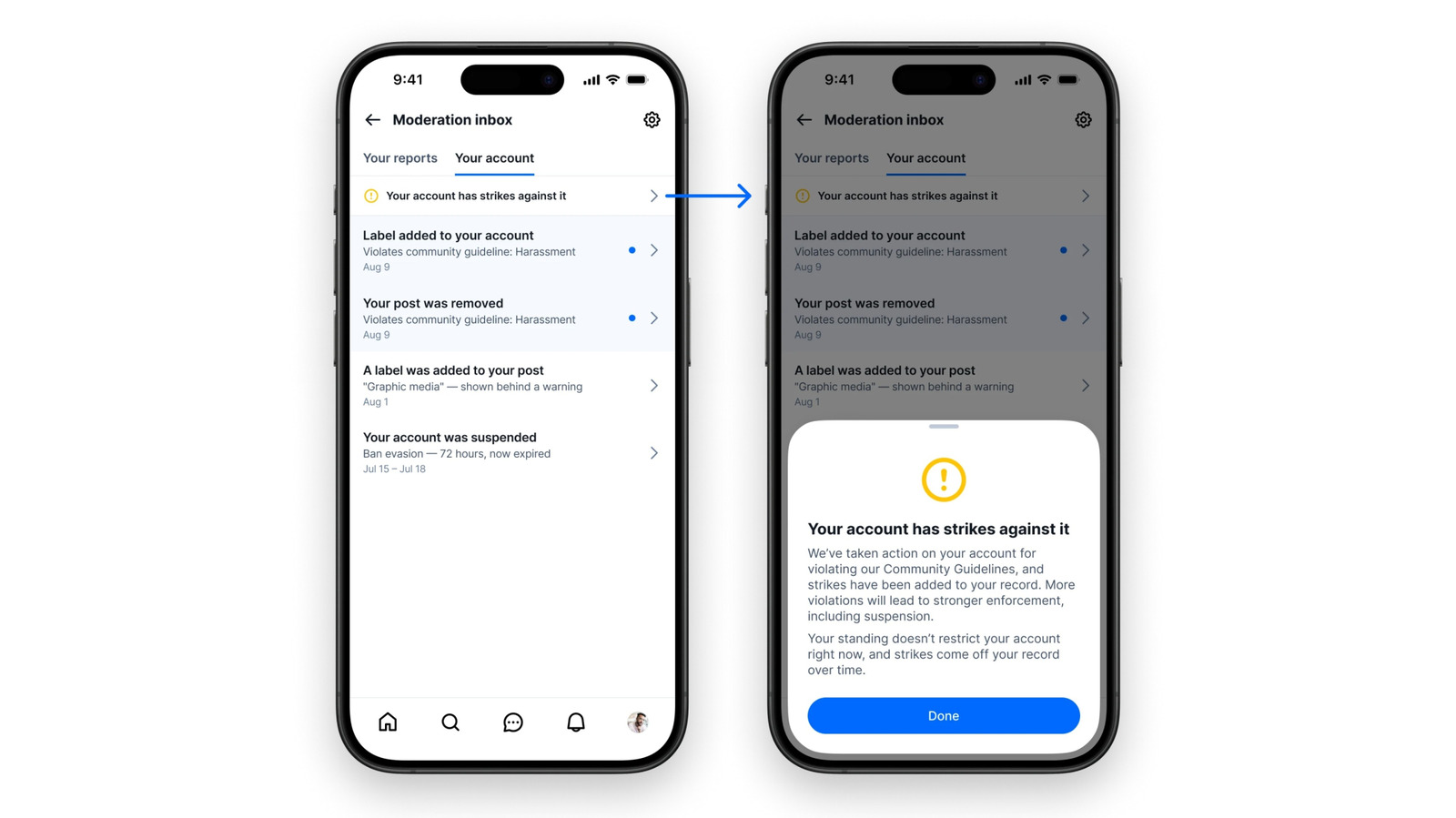
In an ongoing effort to refine its trust and safety operations, decentralized social media platform Bluesky has officially announced the rollout of a dedicated "moderation inbox" currently available in beta. Designed to streamline how the platform communicates safety updates, account strikes, and report statuses to its growing user base, the new feature centralizes a process that was previously fractured across external communication channels, primarily email.
By aggregating user reports, account statuses, and administrative actions into a single in-app dashboard, Bluesky is attempting to bring unprecedented transparency to its moderation pipeline. The move comes at a critical juncture for the platform, which has experienced explosive growth alongside intense public scrutiny regarding its automated filtering systems, handling of sensitive political discourse, and cross-server communication challenges.
Beyond the core moderation upgrade, the latest platform refresh introduces an optional home-screen widget displaying trending topics, signaling Bluesky’s continuous balancing act between empowering user autonomy and improving centralized platform engagement. This report examines the mechanics of the new moderation inbox, the historical context driving its development, the criticisms Bluesky has faced regarding its safety protocols, and what this architectural shift means for the future of decentralized social networking.
Detailed Chronology & Mechanics of the Beta Rollout
The rollout of the moderation inbox marks a notable shift in how Bluesky handles administrative touchpoints with its community. Previously, the platform relied heavily on email notifications to inform users of policy violations, content removals, or account strikes. However, this legacy method proved structurally inadequate for a decentralized ecosystem.
According to Bluesky’s engineering and trust and safety teams, relying on email created massive communication hurdles, particularly for users operating on independent, federated servers where routing direct notifications can be technically complex. Furthermore, the email-based system created a high-threshold communication bottleneck: official notices were typically reserved only for severe policy violations or punitive actions, leaving users entirely in the dark regarding the status of routine content reports they submitted.
To bridge this gap, Bluesky engineers developed the moderation inbox as an in-app utility. To access the feature during its initial beta phase, users must navigate the following steps:
- Open the Bluesky mobile or desktop application.
- Access the Settings menu.
- Opt-in by toggling on Beta Features.
- Navigate to the Moderation Tools menu, where the dedicated inbox will now be accessible.
Bluesky has clarified that the inbox will initially populate as a blank slate for all users upon activation. Even individuals who have accumulated prior account strikes will not see retroactive logs; rather, the inbox is designed to dynamically capture new data points moving forward. As users submit reports regarding abusive posts or accounts, and as the platform’s moderation team takes action—such as applying warning labels, temporary mutes, or account strikes—these updates will be cleanly cataloged in real-time.
Crucially, the interface doubles as an adjudication portal. Most moderation decisions rendered by Bluesky can now be appealed directly within the app via the inbox, drastically shortening the feedback loop between the platform and the user. The only notable exception remains account-level suspensions, which will still require processing at the standard login screen for security and authentication purposes.
Alongside this core safety feature, the platform also released an optional home-screen widget designed to surface trending topics directly to a user’s device display, bridging the gap between passive consumption and active platform monitoring.
Supporting Context & Metrics: The Architectural Challenge of Decentralized Moderation
To understand the significance of Bluesky’s moderation inbox, one must examine the unique architectural framework of the platform. Built upon the Authenticated Transport (AT) Protocol, Bluesky operates under a federated model. Unlike monolithic social networks where all data, user profiles, and safety actions are housed within a single centralized database, the AT Protocol allows for independent server hosting (PDS or Personal Data Servers) while maintaining a unified global social graph.
While federation grants users unprecedented freedom to migrate servers and curate custom algorithmic feeds, it introduces profound complexities for trust and safety operations. When a platform spans multiple independent domains, notifying users of safety infractions via standard external channels like email often results in delivery failures, misrouted messages, or delayed communication.
By pulling moderation tracking directly into the client application layer, Bluesky bypasses the friction of federated email delivery. The app acts as a secure, authenticated bridge to the user’s core identity record on the network, ensuring that notifications regarding strikes, reports, and content labels are delivered reliably, regardless of which server hosts the user’s account.
This technical pivot aligns with broader industry metrics pointing toward an escalating volume of digital safety disputes across all major social networks. As regulatory bodies in the European Union (under the Digital Services Act) and various international jurisdictions tighten compliance mandates regarding transparency reports and user appeal mechanisms, platforms are under mounting pressure to provide clear, accessible, and auditable trails for every moderation decision executed. Bluesky’s new inbox acts as a direct compliance and UX solution to these growing regulatory expectations.
Official Statements & Platform Philosophy
In official documentation and blog posts accompanying the beta launch, Bluesky representatives emphasized that the primary motivation behind the moderation inbox is human-centric communication.
"The goal for the feature is to make it significantly easier to communicate with our users transparently," a company spokesperson noted. By shifting away from exclusive email notifications, Bluesky aims to normalize safety interactions, transforming what was once a punitive, high-anxiety warning system into an ongoing, transparent dialogue between the platform and its community.
Furthermore, the company highlighted the granular nature of the new system. In the past, users who reported harmful behavior experienced a "black box" phenomenon: they would flag a post or account, receive a generic acknowledgment, and never learn whether the report was reviewed, dismissed, or acted upon. The moderation inbox grants reporters visibility into the lifecycle of their submissions, fostering a greater sense of collaborative safety across the network.
Bluesky has long championed user-directed moderation—pioneering features such as custom block lists, user-generated moderation services (mod lists), and algorithmic feed choices that allow communities to self-police. However, the introduction of the moderation inbox underscores an important realization: while community-driven filtering is vital, top-down platform governance, policy enforcement, and formal appeals require a centralized, frictionless administrative infrastructure.
Controversies, Criticisms, and Public Backlash
Despite Bluesky’s reputation for cultivating a thoughtful, user-empowering digital environment, the platform’s top-down moderation practices have frequently faced fierce public criticism and journalistic investigation. The rollout of the moderation inbox arrives at a time when the platform is actively working to repair trust following high-profile moderation missteps.
In August 2025, an investigative report published by The Guardian revealed significant flaws in Bluesky’s automated spam detection systems. The report detailed how automated algorithms repeatedly deactivated the accounts of Palestinian civilians in Gaza who were utilizing the platform for emergency crowdfunding to secure basic living supplies and humanitarian aid. Human rights advocates and affected users severely criticized the platform, arguing that the rigid automation protocols treated desperate human beings like malicious bot networks, cutting off vital lifelines without human review.
Similarly, the platform faced intense scrutiny regarding its handling of political discourse, notably during controversies surrounding the online commentary and reactions tied to the assassination of political figure Charlie Kirk. Users across the political spectrum questioned the consistency and transparency of Bluesky’s content removal policies, citing arbitrary enforcement and a lack of clear channels to challenge administrative rulings.
Critics have long pointed out that opaque moderation fosters an atmosphere of anxiety and mistrust, where users feel entirely vulnerable to arbitrary algorithm shifts or sudden account penalties. By introducing an in-app moderation inbox coupled with a direct appeal mechanism, Bluesky is directly addressing these historical pain points. While an inbox alone cannot fix systemic policy flaws, it provides the structural transparency required to ensure that future moderation errors can be swiftly identified, contested, and corrected.
Future Outlook: The Evolution of Trust and Safety on the AT Protocol
As Bluesky transitions the moderation inbox from a beta experiment into a permanent, core component of its application ecosystem, the broader implications for decentralized social media are substantial.
The success of the AT Protocol and other federated networks hinges entirely on their ability to match or exceed the safety, reliability, and user experience standards set by centralized legacy giants like Meta, X (formerly Twitter), and TikTok. Trust and safety infrastructure is no longer a secondary consideration; it is the fundamental bedrock upon which sustainable digital communities are built.
Looking ahead, industry analysts anticipate that Bluesky will expand the capabilities of the moderation inbox. Potential future iterations could include:
- Granular Transparency Metrics: Personal dashboards that summarize a user’s standing over time, providing clear warning thresholds before severe penalties are applied.
- Expanded Appeal Workflows: Incorporating automated peer review or community-backed moderation panels into the appeal process for disputed content labels.
- Federated Safety Standards: Developing cross-server reporting standards that allow independent server administrators (PDS hosts) to integrate seamlessly with the central moderation notification pipeline.
Ultimately, Bluesky’s introduction of a dedicated moderation inbox demonstrates a maturing platform willing to address its operational shortcomings head-on. By replacing opaque email notices with an accessible, in-app safety dashboard, Bluesky is taking a crucial step toward building a more accountable, transparent, and resilient decentralized social network.