Executive Overview: A New Era for Design Operations
At its inaugural Config event in India, design powerhouse Figma unveiled a suite of transformative tools designed to fundamentally reshape how software is conceived, documented, and built. The centerpiece of this announcement is "Figma Specs," a sophisticated Markdown-based editor that aims to bridge the long-standing divide between abstract design language and concrete engineering execution.
By integrating design systems, code libraries, and headless content management systems like Payload, Figma is positioning itself as the "source of truth" for the entire product development lifecycle. This strategic shift is not merely about aesthetic layout; it is a calculated effort to bring order to the chaotic, non-deterministic nature of AI-generated code. As Figma expands its influence—now serving 40% of India’s top 100 listed companies—the platform is evolving from a mere prototyping tool into a robust, AI-steerable ecosystem that prioritizes shipping speed and technical accuracy.
Detailed Chronology: From Concept to Public Beta
The trajectory of Figma’s recent updates reveals a clear intent: to move design closer to the metal.
The Advent of Figma Specs
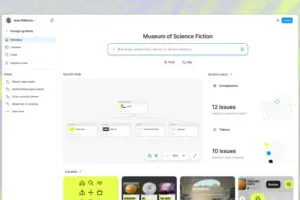
Figma Specs represents a significant departure from traditional design documentation. By utilizing a Markdown-based interface, designers and developers can now define, store, and reference brand design rules directly within the Figma environment. Unlike static documentation that lives in external wikis or PDFs, Specs can exist as a standalone file or reside directly on the canvas alongside active design work.
This functionality allows for deep linking; users can reference specific elements, embed FigJam diagrams, and integrate live code layers. By centralizing this information, Figma provides a “north star” for both human designers and AI agents, ensuring that every iteration adheres to the established design system.
Public Beta: Code Layers
First introduced in a private beta in June, Figma’s "Code Layers" feature is now graduating to public beta. This feature allows users to infuse their designs with actual code, enabling the creation of highly interactive, functional prototypes. During the India Config event, the company demonstrated how users can leverage AI agents to transform design files into production-ready code or iterate on existing code blocks directly within the interface. This feature is a crucial step toward "Design-to-Code" parity, reducing the friction that typically occurs during the handoff phase between design and development teams.
Supporting Context & Metrics: The "Shipping" Gap
Figma’s aggressive roadmap is fueled by a profound observation regarding modern software engineering. According to Figma’s Chief Design Officer, Loredana Crisan, there is a systemic inefficiency in the current development landscape.
The Disconnect Between Coding and Shipping
In her address at Config, Crisan highlighted a startling disparity: while the advent of AI has led to a 17x increase in the volume of code being generated, the actual output of new software releases has only increased by a factor of 1.3.

"A lot of that code is not necessarily built to ship," Crisan noted. "It’s built to discover what the product is. It’s built to design."
This insight underscores why Figma is investing so heavily in integration. By creating an environment where the "discovery" phase of building is tightly coupled with the "shipping" phase, Figma hopes to help companies convert that massive volume of generated code into actual, deployable products.
Market Dynamics: The India Growth Story
Figma’s choice to host its first Config event in India is a testament to the region’s burgeoning tech ecosystem. Having established its first local office last year, the company has seen India become its largest market outside the United States. With deep penetration into the Bombay Stock Exchange’s top 100 companies, the region serves as a critical proving ground for Figma’s enterprise-grade tools. The success of this market expansion validates the need for tools that can scale alongside the rapid digital transformation occurring across the continent.
The Role of Ecosystem Integration
Figma is not attempting to build this future in isolation. By leveraging the Model Context Protocol (MCP), the company is supporting over 20 new integrations, including advanced tools like Open Code, Dia, Grok Bot, and the Indian AI innovator, Sarvam.
The Payload Integration
A major pillar of this ecosystem strategy is the integration of Payload, the open-source headless CMS that Figma acquired last year. With Payload’s download volume increasing sixfold over the past 12 months, the integration into "Figma Make"—a tool for generating dynamic websites—is timely. This allows teams to manage content and design in tandem, ensuring that dynamic data-driven designs are not just visually accurate, but also functionally connected to the content management backend.
Official Statements: Steering the AI Revolution
A recurring theme throughout the event was the challenge of "non-determinism" in generative AI. While AI agents are powerful, they are often unpredictable, which can be catastrophic for established brand guidelines.
Figma’s solution is to provide "guardrails." By using the Specs feature as a centralized, immutable source of truth, teams can constrain an AI agent’s behavior. When an agent is prompted to create a new interface, it can be directed to consult the Specs file, ensuring that color palettes, typography, and component usage remain consistent with the company’s design language.
"We see Figma as the place where software teams come to decide what they build and ship," Crisan emphasized. By forcing AI to operate within the bounds of a company’s unique design system, Figma is transforming AI from a loose creative assistant into a disciplined production engine.

Future Outlook: A Unified Development Platform
Looking ahead, Figma’s roadmap suggests a transition away from being a "design tool" toward becoming a "product development platform." The convergence of design (canvas), documentation (Specs), and development (Code Layers and CMS integration) suggests that the boundary between design and engineering will continue to dissolve.
The Next Frontier: Autonomous Design Ops
As these features mature, we can expect to see the rise of "Autonomous Design Operations." In this future, a design lead will define a company’s "Spec" (the rules), and an AI agent will handle the bulk of the repetitive layout and component-binding work, leaving the human designer to focus on higher-level product strategy and user experience flows.
However, the success of this vision depends on adoption. Figma’s ability to convince enterprise teams to migrate their complex, legacy design systems into the new Specs format will be the true test of this strategy.
Final Synthesis
The announcements in India signal that Figma is betting big on the idea that the future of design is structural. By prioritizing the "definition" of design through Markdown and the "execution" of code through integrated layers, the company is attempting to standardize the creative process in a way that aligns with the speed of AI.
If successful, Figma will not just be the tool that designers use to create interfaces; it will be the operating system for the next generation of software products—a platform where the intent of the product is perfectly mirrored in the code that powers it. As the industry grapples with the productivity paradox of high code volume versus low output, Figma’s focus on the "design-to-ship" pipeline may prove to be exactly the correction the industry needs.
For now, the integration of Payload, the expansion of the public beta for Code Layers, and the rollout of Specs provide a clear, ambitious path forward for teams striving to maintain quality and consistency in an increasingly automated world.