Executive Overview
The foldable smartphone market has officially entered its hyper-competitive maturity phase. While Apple’s long-awaited entry into the category—the iPhone Duo—has dominated recent headlines and captured the collective imagination of the tech industry, the Cupertino giant is a relative newcomer to a space that Android manufacturers have aggressively pioneered, refined, and iterated upon for years.
With heavyweights like Samsung, Google, and Motorola having spent the better part of a decade perfecting the book-style "passport" foldable, consumers are no longer asking if folding phones are viable, but rather which device reigns supreme. The iPhone Duo makes a powerful statement upon arrival, weighing in at a substantial 9 ounces and commanding a $1,999.99 starting price for its 256GB base model. However, finding a direct Android equivalent is far from straightforward.
When stacking Apple’s maiden voyage against the likes of the Samsung Galaxy Z Fold 8, the Google Pixel 11 Pro Fold, and the Motorola Razr Fold, prospective buyers are met with a complex matrix of compromises. Differences in display footprints, camera configurations, durability standards, battery capacities, and pricing tiers mean that no single Android device completely mirrors the iPhone Duo across every single metric. Instead, the market is defined by nuanced tradeoffs. While the Samsung Galaxy Z Fold 8 emerges as the closest physical and functional analog available to US consumers, alternatives like Google and Motorola push boundaries in durability and battery endurance.
This comprehensive analysis investigates how Apple’s premier foldable stacks up against the reigning Android elite, dissecting every specification, design choice, and market implication to help consumers navigate the most expensive and advanced mobile category on earth.
Detailed Chronology: The Evolution of the Foldable Form Factor
To understand the current landscape—and why comparing the iPhone Duo to Android alternatives requires such granular analysis—we must examine the timeline of how the book-style foldable evolved from a fragile novelty into a productivity powerhouse.
The Pioneers and Early Stumbles
Years before Apple even acknowledged the viability of flexible OLED panels, Android manufacturers were throwing everything at the wall. Early iterations of book-style foldables suffered from pronounced creases, fragile internal ultra-thin glass (UTG), abysmal battery life, and staggering price points north of $2,000 that relegated the form factor to early-adopter luxury status.
Samsung largely defined the category’s trajectory through successive generations of its Galaxy Z Fold series. By iterating on hinge mechanisms, introducing multitasking software suites optimized for square-ish canvases, and slowly slimming down the chassis, Samsung transformed the book-style foldable from a bulky prototype into a daily driver for enterprise users and media consumers alike.
The Competition Expands
As Samsung refined its hardware, competitors realized that the passport-style foldable—devices that open up from a standard smartphone footprint into a mini-tablet roughly the size of a small book—represented the pinnacle of mobile productivity. Google entered the fray with its Pixel Fold line, betting heavily on clean software integration, Tensor processing optimizations, and a wider, more traditional outer display aspect ratio that addressed one of the most common complaints of early foldables.
Simultaneously, Motorola expanded its footprint beyond its iconic flip-phone style Razr series to challenge the heavyweight book-style segment with massive internal displays and aggressive battery specifications.
Apple’s Late, Measured Entrance
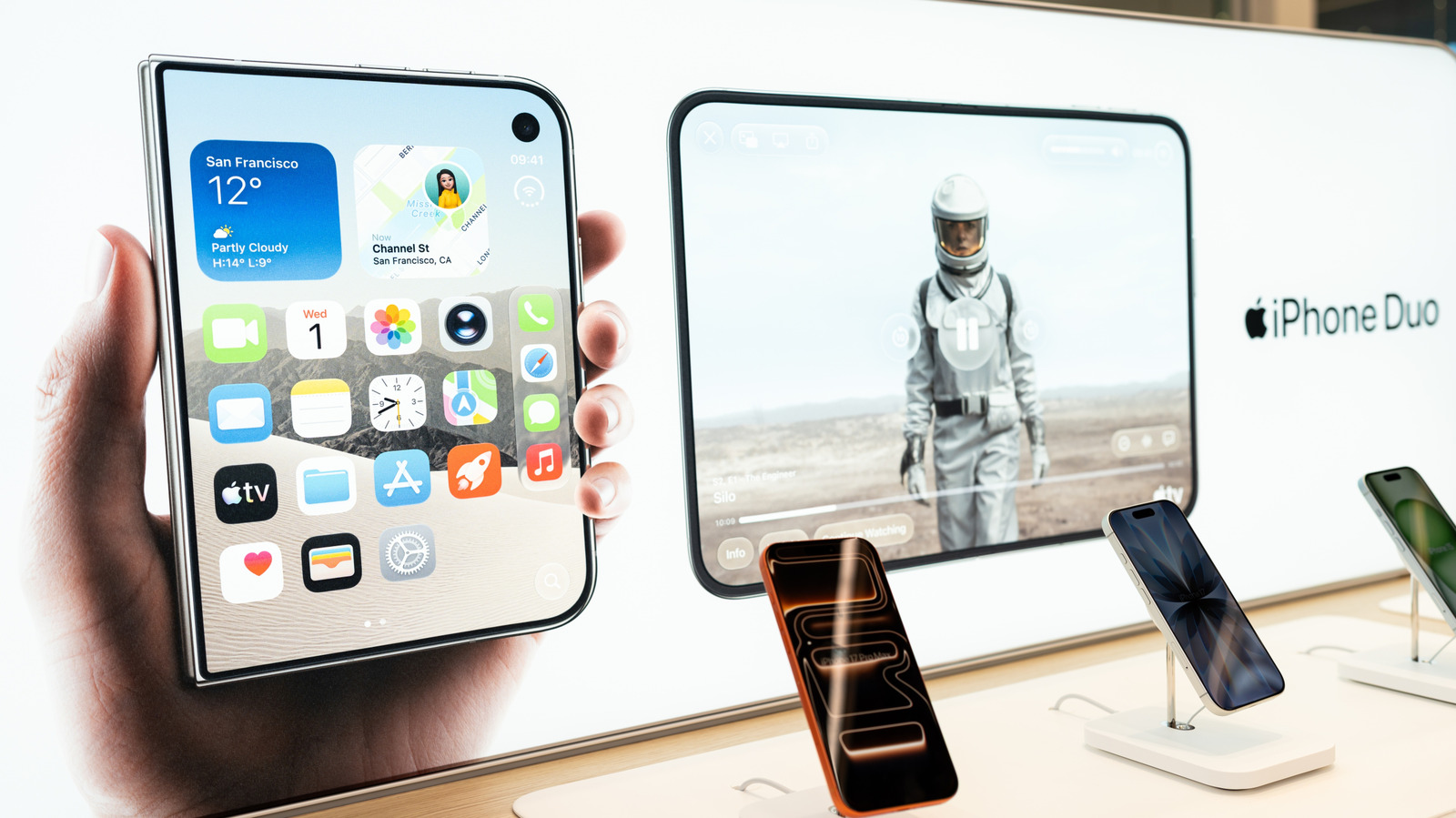
Apple’s entry into the market with the iPhone Duo follows the company’s classic playbook: let the competition test, break, and refine the technology, then enter with a polished, tightly integrated ecosystem product that commands immediate attention. Announced to immense fanfare, the Duo bridges the gap between traditional iPhone architecture and the expansive utility of a tablet. Yet, because Apple spent years observing the pitfalls of early Android foldables—such as dust ingress vulnerabilities and inconsistent aspect ratios—the Duo arrives with specific design constraints. It is heavier than almost all of its Android contemporaries, sits in a very particular sizing sweet spot, and relies heavily on Apple’s proprietary hardware-software synergy to justify its steep entry barrier.
Supporting Context & Metrics: Spec-by-Spec Comparison
Evaluating the iPhone Duo against its primary Android rivals requires diving deep into the hardware metrics. Below is an exhaustive breakdown of how display sizes, physical weight, camera systems, durability ratings, and power management stack up across the market’s leading contenders.
1. Display Footprints and Ergonomics
Book-style foldables are fundamentally defined by their screens. They must function as normal, single-handed devices when closed, yet transform into immersive media and multitasking hubs when opened.
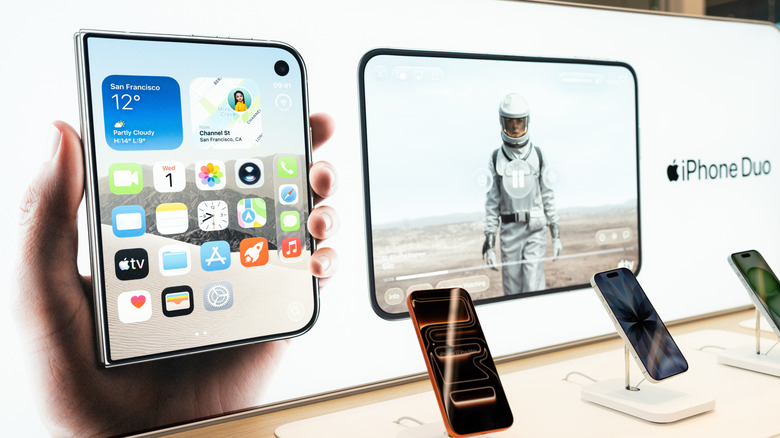
- Apple iPhone Duo: Features a 5.4-inch outer cover screen and a 7.6-inch inner folding display.
- Samsung Galaxy Z Fold 8: The closest mirror to Apple’s dimensions, sporting a 5.5-inch cover screen and a matching 7.6-inch interior display.
- Google Pixel 11 Pro Fold: Goes significantly larger, housing a spacious 6.5-inch outer screen and an expansive 8.0-inch inner display.
- Motorola Razr Fold: Currently the largest of the major domestic group, offering a 6.6-inch cover display paired with a sprawling 8.1-inch interior canvas.
While larger screens are generally favored for split-screen multitasking and streaming movies, ergonomics play a massive role in daily use. At 9 ounces, the iPhone Duo is the heaviest device in this cohort. By comparison, the Samsung Galaxy Z Fold 8 weighs a remarkably light 7.09 ounces, the Google Pixel 11 Pro Fold hits the scales at 8.4 ounces, and the Motorola Razr Fold sits at 8.6 ounces. For users concerned about hand fatigue during extended reading or social media sessions, the weight disparity between the iPhone Duo and the Samsung Z Fold 8 is significant.
2. Camera Systems: Megapixels vs. Processing
Camera versatility is a critical battleground for ultra-premium smartphones.
- Apple iPhone Duo: Equipped with a 12-megapixel Center Stage front-facing camera and a dual-lens rear array featuring twin 48MP sensors. Notably, the Duo lacks a dedicated optical telephoto lens, relying instead on sensor-crop zooming and digital enhancement.
- Samsung Galaxy Z Fold 8: Features a 10-megapixel front cover camera and a powerhouse rear system utilizing dual 50MP primary sensors alongside enhanced optical zoom capabilities.
- Google Pixel 11 Pro Fold: Mirrors Apple with a 48MP main camera setup, but separates itself by incorporating a 10.8MP telephoto lens, giving it native optical zoom capabilities that the base Duo lacks.
- Motorola Razr Fold: On raw specifications alone, Motorola dominates the megapixel race, packing a 50MP main sensor, a 50MP ultrawide lens, a 50MP telephoto camera, and a high-resolution 20M cover selfie camera.
3. Durability and Environmental Protection
Because folding mechanisms introduce moving parts and complex hinge assemblies, durability remains the number one anxiety for buyers investing close to $2,000 in a phone.
- Google Pixel 11 Pro Fold: Stands out as the gold standard in this specific comparison, matching Apple’s elite IP68 rating for total dust and water resistance—a notoriously difficult engineering feat for folding devices.
- Apple iPhone Duo: Features robust water and dust sealing, matching the IP68 tier.
- Samsung Galaxy Z Fold 8 & Motorola Razr Fold: Both trail slightly behind in dust-ingress protection, landing at IP48 (and IP48/IP49 respectively), meaning they offer superior water submersion resistance but leave minor exposure paths to fine particulate matter like sand or heavy pocket lint.
4. Battery Capacity and Power Endurance
Real-world battery longevity is notoriously difficult to compare across operating systems due to Apple’s famously optimized silicon and iOS efficiency.
- Apple iPhone Duo: Apple officially declines to publish exact milliamp-hour (mAh) metrics, instead rating the Duo for up to 24 hours of mixed, real-world usage on a single charge.
- Samsung Galaxy Z Fold 8: Relies on a concrete 4,800mAh battery.
- Google Pixel 11 Pro Fold: Features a slightly larger 4,806mAh power cell.
- Motorola Razr Fold: Blows past the competition with a massive 6,000mAh battery, which Motorola heavily markets as the largest energy reserve ever integrated into a commercial foldable chassis.
5. Pricing and Storage Configurations
The barrier to entry for folding phones remains sky-high, yet manufacturers have essentially standardized their pricing strategies around the $1,900 mark.
- Apple iPhone Duo: Starts at $1,999.99 for the 256GB base configuration and scales up to extreme storage tiers, uniquely offering a massive 2TB configuration for power users.
- Samsung Galaxy Z Fold 8 (256GB): Starts at $1,899.99, topping out at a 1TB option.
- Google Pixel 11 Pro Fold (256GB): Starts at $1,899.99, also offering a 1TB ceiling.
- Motorola Razr Fold: Starts at $1,899.99, though it generously doubles the base storage tier to 512GB out of the box.
Official Statements and Industry Insights
The release of the iPhone Duo and its subsequent comparison against established Android flagships has prompted significant commentary from industry analysts, manufacturing executives, and consumer advocacy groups.
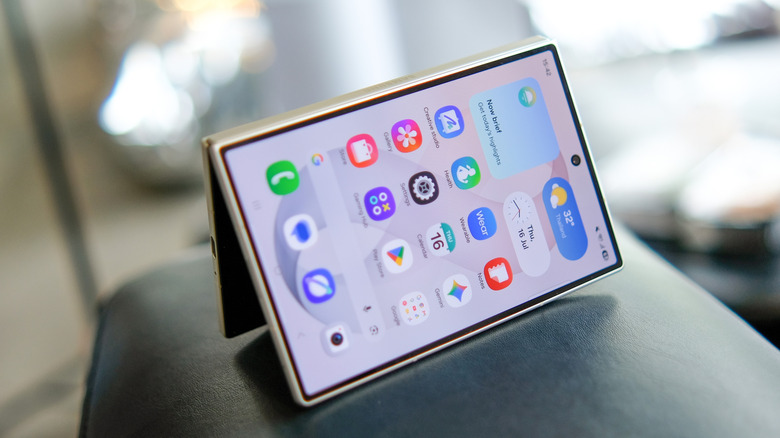
Industry analysts emphasize that Apple’s entry into the market validates the form factor for the mainstream consumer base. For years, Android OEMs marketed foldables as niche, experimental gadgets for tech enthusiasts. Now, with Apple staking its reputation on the Duo, foldable phones have crossed the psychological threshold from novelty to mainstream luxury standard.
However, supply chain insiders and hardware engineers point out the immense engineering compromises Apple had to make to achieve its hardware design. Achieving an IP68 dust-and-water resistance rating while packing dual 48MP cameras into a tightly sealed chassis resulted in the Duo’s heavier 9-ounce footprint.
Competitors have similarly noted the market shift. In recent product briefings, representatives from leading Android manufacturers have publicly welcomed Apple to the arena, arguing that increased marketing expenditures from Cupertino will ultimately lift the entire foldable ecosystem, driving down component costs and accelerating consumer adoption globally. Furthermore, the absence of state-side distribution for international marvels like the Xiaomi 18 Fold—which boasts a stunning 7.68-inch unfolded display and near-identical physical dimensions to the Z Fold 8 and iPhone Duo—keeps the spotlight firmly fixed on Samsung, Google, and Motorola as Apple’s sole domestic rivals.
Future Outlook: Where Goes the Foldable Market?
As the dust settles on the initial wave of reviews and spec-sheet comparisons, the trajectory of the foldable smartphone market points toward aggressive refinement in three core areas: weight reduction, crease elimination, and battery density.
1. The Weight and Thickness Wars
Consumers are no longer willing to tolerate pocket sag. While the iPhone Duo leans into a heavier, ultra-rigid chassis to ensure structural integrity and premium feel, Android competitors are actively shedding grams. The Samsung Galaxy Z Fold 8 proves that a book-style foldable can approach the weight of a traditional slab phone without sacrificing screen real estate. Future iterations of the iPhone Duo will undoubtedly be pressured to slim down.
2. Durability and Dust-Proofing
The holy grail of foldable engineering has always been full IP68 certification. With Google successfully proving that a folding phone can achieve robust dust resistance on the Pixel 11 Pro Fold, consumer expectations have shifted. Competitors operating at an IP48 standard will face mounting pressure from buyers demanding the same peace of mind against everyday debris.
3. Software Ecosystem Maturity
Hardware is only half the battle. As screen sizes push past 8 inches on devices like the Motorola Razr Fold and Google’s Pixel Pro series, the software experience—split-screen multitasking, app continuity between cover and inner screens, and AI-driven productivity integrations—will dictate market dominance. Apple’s deeply entrenched developer ecosystem gives the iPhone Duo a distinct advantage in third-party app optimization, forcing Android manufacturers to rely on heavy software customization and custom AI tooling to retain their competitive edge.
Conclusion: Which Phone Wins?
For consumers deeply entrenched in the Apple ecosystem who demand a passport-style folding experience without leaving iOS, the iPhone Duo is the undisputed destination, provided they can stomach the 9-ounce heft and top-tier pricing.
However, for users agnostic to operating systems who want the closest physical and functional equivalent available today, the Samsung Galaxy Z Fold 8 stands out as the most balanced alternative—matching Apple’s display dimensions and premium camera output while offering a noticeably lighter, more ergonomic daily carry. For those prioritizing raw battery capacity or absolute dust-proofing, options like the Motorola Razr Fold and Google Pixel 11 Pro Fold carve out undeniable victories. Ultimately, the foldable war is no longer a one-sided contest; it is a fierce, multi-front technological race that benefits the consumer above all.