Executive Overview
The cultural landscape of 21st-century television is about to experience a seismic jolt of nostalgia, anxiety, and painfully accurate millennial introspection. Nearly a decade after HBO’s seminal, generation-defining dramedy Girls signed off with its hauntingly ambiguous beachside finale in 2017, the network has officially greenlit a limited five-episode revival series.
At the center of this impending creative reunion is series creator, showrunner, and star Lena Dunham, who is once again marshaling her troops to chronicle the next phase of life for Hannah Horvath and her intricately flawed inner circle.
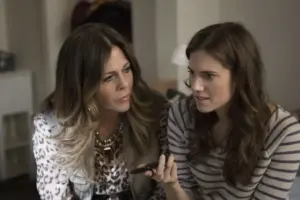
Adding fuel to the mounting excitement, veteran actress and producer Rita Wilson has strongly hinted at her return to the franchise. Wilson, who memorably brought to life the neurotic, overbearing, and deeply eccentric Evie Michaels—the mother of Allison Williams’ impeccably uptight character, Marnie—recently revealed to People magazine that she is heavily anticipating reprising her role.
"That is what I’m hearing, so I don’t think Lena would be lying about that," Wilson quipped when asked about stepping back into Evie’s designer shoes.
Wilson’s enthusiastic confirmation joins a growing chorus of returning talent. All four core cast members—Dunham, Williams, Jemima Kirke, and Zosia Mamet—alongside fan-favorite Andrew Rannells, are officially locked in for the upcoming production slated to begin in 2027.
As the television industry shifts increasingly toward limited-run revivals of peak-TV era properties, the return of Girls promises to offer a unique perspective: examining a group of women who once weaponized their twenties, now navigating the unpredictable realities of their late thirties and early forties. With behind-the-scenes heavyweights like Judd Apatow returning as executive producer, the revival is positioned not merely as a cash-grab nostalgia trip, but as a calculated, timely artistic statement from a creative collective that helped alter the DNA of modern prestige television.
Detailed Chronology: From 2012 Genesis to the 2027 Revival
To understand the weight of the upcoming Girls revival, one must trace the winding, often controversial, and undeniably influential history of the original HBO series.
The Peak-TV Era Breakthrough (2012–2017)
When Girls premiered on HBO in April 2012, it arrived in a television ecosystem still dominated by anti-hero prestige dramas helmed by complex men (think Mad Men and Breaking Bad). Created by a then-25-year-old Lena Dunham, Girls offered an unfiltered, ungllamorous, and occasionally excruciating look at the financial, emotional, and social realities of post-collegiate life in New York City.
The series centered on Hannah Horvath (Dunham), an aspiring writer financially cut off by her parents, alongside her best friends: the tightly wound Marnie Michaels (Allison Williams), the bohemian artist Jessa Johansson (Jemima Kirke), and the neurotic, fast-talking Shoshanna Shapiro (Zosia Mamet).
Throughout its six-season run, the show became a cultural touchstone. It sparked intense debates regarding representation, privilege, millennial entitlement, and Dunham’s boundary-pushing use of nudity. Yet, beneath the media storms, the show carved out a reputation for razor-sharp writing, deeply human performances, and a willingness to let its characters be profoundly unlikable.
The 2017 Finale and the Intervening Decade
The series concluded on April 16, 2017, with the Season 6 finale, "Locker Room." The episode offered a muted, realistic conclusion rather than a neat narrative bow. Hannah, now a mother to infant son Grover, is shown struggling with the mundane, exhausting reality of domesticity, highlighted by a poignant scene where she attempts to coax the baby into breastfeeding. The final image of Hannah finding temporary peace in her new role resonated as a fitting, albeit jarring, transition away from the chaotic autonomy of youth.
In the years following the finale, the core cast and creators dispersed into diverse professional landscapes. Dunham directed feature films (Birdseye, Catherine Called Birdstein) and television projects, establishing herself as a prolific auteur. Williams transitioned into critically acclaimed prestige horror and thriller cinema, most notably starring in Jordan Peele’s cultural phenomenon Get Out and Blumhouse’s M3GAN. Kirke, Mamet, and Rannells continued to build robust portfolios across theater, film, and television (with Rannells earning Tony recognition and starring in high-profile streaming series).
The Greenlight and the 2027 Production Timeline
Earlier this month, rumors culminated in a formal announcement from HBO: Girls is officially coming back. Eschewing a multi-season commitment, the network has ordered a targeted, five-episode limited series.
Production is scheduled to commence in 2027, precisely a decade after the cameras stopped rolling on Season 6. This temporal alignment is deliberate; the passage of ten real-world years mirrors the exact amount of time that has elapsed for the characters within the show’s internal timeline, allowing the actors to explore the seismic shifts that occur when transitioning from the turbulence of youth into full-fledged adulthood.
Supporting Context & Metrics: The Cultural and Economic Footprint of Girls
The revival of Girls is not merely an artistic whim; it represents a calculated strategic move within the modern streaming and cable landscape, where recognizable intellectual property (IP) with built-in cultural resonance commands immense value.
Critical Reception and Accolades
During its original run, Girls was a critical darling, regularly appearing on top-ten television lists compiled by major publications. The series amassed numerous accolades, including:
- Primetime Emmy Awards: 14 nominations, with wins including Lena Dunham taking home trophies for directing and writing.
- Golden Globe Awards: Winning Best Television Series – Musical or Comedy in 2013, alongside Dunham winning Best Actress in a Television Series – Musical or Comedy.
The Economics of Prestige Revivals
In the current media ecosystem, platforms are increasingly leaning toward limited revivals to drive subscriber acquisition and retention. Girls occupies a unique space: while it never pulled the astronomical live-linear ratings of epic fantasy or sprawling crime dramas, its cultural footprint vastly outweighed its raw numbers. It practically invented the "discourse-driven" television model on early social media platforms, a metric that modern networks prize above all else when evaluating engagement.
Furthermore, the involvement of Judd Apatow via Apatow Productions ensures a steady hand at the operational helm. Apatow, a titan of contemporary comedy, recognized Dunham’s singular voice early on, serving as a protective and guiding producer throughout the show’s original run. His return, alongside key production partners like Ilene S. Landress and Michael P. Cohen under Dunham’s Good Thing Going banner, guarantees that the revival will maintain the aesthetic, tonal, and production values of the original series.
Official Statements: Rita Wilson and the Creative Team Speak Out
The announcement of the revival has prompted an outpouring of affection and anticipation from the creative team, with Rita Wilson’s recent comments highlighting the profound familial bonds forged on set.
Speaking exclusively to People magazine regarding her anticipated return as Evie Michaels, Wilson expressed absolute devotion to the project and its creator:
"Oh my gosh, yes. I mean, Lena is one of the most talented people I’ve ever worked with. I would do anything for her. I would bend over backward. And then I love Allison Williams who, you know, I was lucky enough to play her mom."
Wilson, who first joined the cast during Season 2 in memorable guest arcs that exposed the deeply complex, often passive-aggressive mother-daughter dynamic between Evie and Marnie, emphasized her trust in Dunham’s artistic vision:
"That is what I’m hearing, so I don’t think Lena would be lying about that. I know Lena’s gotta be cooking up something very good."
The enthusiasm is mutual across the board. The core cast members—Dunham, Williams, Kirke, and Mamet—will not only reprise their iconic roles as Hannah, Marnie, Jessa, and Shoshanna, but have also stepped up to serve as co-executive producers. This elevated behind-the-scenes status indicates a collaborative, mature creative environment where the actors possess direct agency in shaping how their characters’ narratives evolve a decade later.
Andrew Rannells, returning as the fiercely witty and eternally resilient Elijah Krantz, rounds out the principal ensemble, ensuring that the dynamic ecosystem of queer friendship, professional failure, and romantic misadventure remains entirely intact.
Future Outlook: What to Expect from the 5-Episode Limited Series
As pre-production ramps up ahead of the 2027 filming schedule, fans and industry analysts alike are left to speculate on the narrative directions Lena Dunham might take for this five-episode limited event.
The Realities of Aging Millennials
When Girls premiered, its characters were navigating the raw, unpolished chaos of their early twenties—a demographic that felt underrepresented in prestige television at the time. Today, those same characters would be navigating the complexities of their late thirties.
The themes that defined the original series—career instability, the shifting nature of female friendships, romantic disillusionment, and the pursuit of identity—will inevitably manifest differently in middle age. Will Hannah be balancing motherhood with professional ambition as a writer in a radically altered media landscape? How has Marnie’s perpetual search for validation and aesthetic perfection aged? Have Jessa and Shoshanna found peace, or are they still running from their demons across different continents and corporate boardrooms?
A Measured, Controlled Narrative
By opting for a strict five-episode limited run rather than an open-ended multi-season pickup, Dunham and HBO are signaling a disciplined approach to storytelling. This format allows the creative team to tell a focused, highly concentrated narrative arc without the narrative bloat that often plagues contemporary television revivals. It provides a definitive chapter—perhaps a final punctuation mark—to a story that defined a generation.
As Rita Wilson noted, Lena Dunham is undoubtedly cooking up something very good. For the millions of viewers who watched their own tumultuous twenties reflected in the messy lives of Hannah, Marnie, Jessa, and Shoshanna, 2027 cannot come soon enough. The girls are finally growing up, and television will never be the same.