Executive Overview
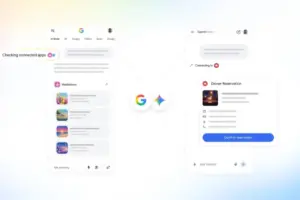
The landscape of modern digital search and conversational artificial intelligence is undergoing a foundational shift. Google has officially opened the public preview of its Connected Apps Platform, a long-awaited framework that allows approved third-party applications to run directly inside AI Mode in Google Search and the Gemini app.
First hinted at during Google’s broader AI pushes and partially rolled out in limited capacities earlier this year, the platform bridges the gap between static web results and dynamic, task-oriented software actions. Until now, developers and industry observers lacked clarity regarding how external applications could be submitted, vetted, and integrated into the ecosystem where Google’s AI models could autonomously delegate tasks to them. With the release of comprehensive developer documentation, a dedicated registration console, and strict platform governance policies, Google has formalized the onboarding mechanism.
This development marks a crucial transition for Google’s flagship products. Rather than merely serving as a directory of information or a passive chatbot, Search and Gemini are evolving into active orchestration layers. Through this platform, users can prompt Google’s AI to execute complex, multi-step workflows—such as ordering groceries, designing graphics, managing fantasy sports leagues, or playing music—without ever leaving the search or conversational interface.
However, opening the floodgates to third-party integrations introduces significant technical, UX, and security challenges. To prevent systemic abuse, manipulative search optimization (commonly referred to in this context as "prompt hijacking" or capability-stuffing), and user privacy violations, Google has established rigid submission criteria and enforcement policies. This comprehensive report examines how developers can integrate their applications, the technical protocols powering the system, the strict compliance guidelines enforced by Google, the current state of apps in the wild, and what the future holds as this ecosystem scales globally.
Detailed Chronology of the Rollout
The genesis of Google’s Connected Apps Platform did not happen overnight; it is the culmination of a deliberate, phased rollout strategy designed to test infrastructure stability, model comprehension, and user trust before opening access to the wider developer community.
The Initial Phase: Whispers and Limited Deployments
In July, industry analysts and search engine optimization professionals observed early iterations of connected apps rolling out within AI Mode in Google Search. During these early tests, a select handful of high-profile partner applications began appearing organically in search workflows. However, the exact mechanics remained opaque. Google had not yet disclosed how an application was selected, what protocols were utilized beneath the hood, or how external software developers could apply to have their products included in the generative AI task-delegation pool.
The Official Announcement and Public Preview
The veil of secrecy lifted partially on October 28, when Google formally announced the underlying architecture of the platform. The momentum accelerated significantly when Robby Stein, Vice President of Product for Google Search, took to X (formerly Twitter) to officially announce that Google had "just opened the public preview" for developers.
With this announcement, the doors to the Google Connected Console swung open. Developers worldwide could officially submit applications for review, access technical documentation, and experiment with remote Model Context Protocol (MCP) servers and Android MCP frameworks.
Current Availability and Phased Expansion
At present, the public preview is constrained primarily by geography and language. Connected apps for Search operating within AI Mode are live in the United States and support English-language queries exclusively.
According to Google’s updated public documentation and help pages, the initial wave of active search integrations includes prominent consumer and productivity tools such as:
- Instacart (for on-demand grocery and retail delivery)
- Canva (for graphic design and visual asset creation)
- YouTube Music (for media playback and audio streaming)
- Yahoo Fantasy Football (for sports management)
- Sleeper Fantasy Football (for alternative sports league tracking)
Meanwhile, the Gemini app has already accumulated a broader portfolio, hosting over 50 connected apps across various categories. Google has confirmed that a rapid expansion phase is already underway. In the coming weeks, heavyweight partner integrations currently exclusive to Gemini—such as Adobe, Experian, Localiza, and Peloton—will make their debut in Google Search. Furthermore, a brand-new integration with wellness and meditation application Calm is slated for simultaneous deployment across both Search and Gemini.
Technical Architecture: How Developers Integrate Apps
To successfully bridge an application with Google’s AI ecosystems, developers must navigate a robust, standards-based technical framework. Google has opted for modern interoperability standards, leaning heavily on the Model Context Protocol (MCP)—an open-standard communication protocol designed specifically to allow AI models to securely and effectively interact with external tools and data sources.
The Two Pathways: Remote MCP Servers vs. Android MCP
Developers have two primary integration routes when connecting their applications to the platform, depending on their target surfaces and technical architecture:
- Remote MCP Servers:
- Scope: Provides access to Gemini and Search users across the web, Android, and iOS ecosystems.
- Mechanism: The developer hosts a remote server that implements the MCP standard. Google’s AI models communicate with this server via API calls, passing contextual parameters derived from user queries and receiving structured outputs or task-execution commands in return.
- AppFunctions (Android MCP):
- Scope: Specifically targets Gemini users on Android devices.
- Mechanism: This pathway leverages Android-native capabilities, allowing local app functions to be exposed directly to the Gemini model running on the mobile operating system, ensuring low latency and tight OS-level integration.
The Google Connected Console and Registration Process
The administrative gateway for all developers is the Google Connected Console. The onboarding workflow is designed to be rigorous, ensuring that only high-utility, predictable applications make it to the production environment:
- Category Selection: Upon registering an application, developers must assign it to a specific category. This choice establishes the baseline minimum capabilities the application must possess. Critically, once a category is locked during registration, it cannot be altered, preventing developers from pivoting their app’s identity post-approval to capture unrelated search traffic.
- Capability Identification: Developers must explicitly identify a minimum of three core capabilities during setup. These capabilities are not just for internal tracking; they are surfaced directly to end-users when they evaluate whether to connect the application to their account.
- Granular Targeting: The console requires developers to specify where their application should be available, broken down by country, language, and specific Google product surface (Search AI Mode vs. Gemini).
- Vetting and Testing Procedures: Every single application must undergo manual and automated review by Google before publication. For applications that require user authentication, developers are required to supply fully functional test accounts pre-loaded with sample data. Google explicitly warns that if an application cannot be thoroughly tested due to authentication roadblocks or incomplete backend setups, it will be summarily rejected.
- Post-Launch Observability: Once an app goes live, developers gain access to a dedicated analytics dashboard via the Connected Console, tracking crucial operational metrics including real-time traffic, execution latency, and error rates.
Policies, Guardrails, and Anti-Abuse Protocols
Because the Connected Apps Platform allows generative AI models to autonomously choose which software to invoke on a user’s behalf, the platform represents a high-stakes arena for potential manipulation. If an AI model can be tricked into favoring one app over another, developers would have immense financial incentives to game the system—essentially creating a new vector for adversarial manipulation akin to Black Hat SEO.
To safeguard the integrity of the ecosystem, Google has published an uncompromising Connected Apps Policy accompanied by strict server instruction guidelines.
Preventing "Prompt Hijacking" and Deceptive Descriptions
One of the most heavily emphasized rules in Google’s developer guidelines concerns model manipulation. Google’s policy explicitly prohibits any app from referencing competing tools or attempting to dictate arbitrary rules for when other tools should—or should not—be deployed.
Furthermore, the policy targets deceptive capability descriptions. Google explicitly forbids any app from:
“deceiving or influencing the model into performing an adverse action or behavior; for example, using overly broad or deceptive capability descriptions to influence the model into selecting the Connected App over another Connected App.”
AI models rely heavily on the natural language instructions provided by an app’s server to understand its functional boundaries and recognize when a user’s intent matches its capabilities. Google’s MCP server guide advises developers to write clear, unambiguous instructions to ensure requests are routed accurately. Attempting to bloat these instructions with irrelevant keywords or false capability claims to trick the model into a false-positive selection is treated as a severe policy violation.
Advertising and Monetization Restrictions
Commercial cleanliness is another core pillar of the platform’s governance. Google’s framework strictly excludes ads, sponsored content, and promotional materials originating from third-party companies within the integration interface. While applications are permitted to display their own native branding and proprietary interface elements, transforming a connected app into an ad-delivery network for unrelated brands will result in punitive action.
Enforcement and Penalties
Google holds absolute authority over compliance enforcement. If a developer violates platform policies—whether through deceptive capability stuffing, unauthorized advertising, or technical instability—Google retains the right to:
- Immediately reject a pending application.
- Suspend active access to the offending application.
- Completely remove the app from the Connected Apps Platform.
- Suspend or permanently terminate the developer’s Google account.
User Control and Experience in AI Mode
While developers and AI models drive the automation behind the scenes, Google has designed the user experience to maintain human oversight and agency. Users are never entirely locked into an autonomous loop without recourse.
How AI Mode Selects and Executes Tasks
When a user interacts with AI Mode in Google Search, the generative model analyzes the query intent. If the task aligns with a connected app’s capabilities (as defined by its server instructions and registered categories), the AI may choose to delegate the task.
According to Google’s official Search help documentation, the system defaults to the last app the user interacted with to complete a similar task, ensuring conversational continuity. However, users are not bound by this default behavior.
Granular User Customization
Users retain multiple layers of control over how and when connected apps are invoked:
- Manual Override: Users can explicitly specify a different connected app to handle their request within the prompt interface.
- Query-Driven Selection: Users can submit a general search query and subsequently choose from a dynamic list of available applications suggested by the interface based on the context of the results.
This design strikes a delicate balance: it leverages the speed and convenience of zero-click automation while ensuring that users can easily bypass the AI’s automated app selection if they prefer a specific software provider.
Supporting Context and Metrics
To fully understand the magnitude of this public preview, it is helpful to look at the surrounding numbers and ecosystem metrics:
- Scale at Launch: Over 50 connected apps have already been successfully deployed across Google Search and the Gemini app combined.
- Ecosystem Breadth: The integrated tools range from utilitarian productivity software (Canva) to lifestyle, entertainment, and financial tracking apps (Yahoo and Sleeper Fantasy Football, Instacart, YouTube Music).
- Upcoming Heavyweights: Confirmed upcoming integrations include enterprise-grade software and global service brands such as Adobe, Experian, Localiza, Peloton, and Calm.
- Standardization: By embracing the open-source Model Context Protocol (MCP), Google is aligning itself with broader industry standards for AI-to-tool communication, making it easier for developers who have already built MCP-compliant servers for other AI ecosystems to port their tools over to Google’s platform.
Official Statements and Industry Perspective
Reactions from internal Google leadership and engineering advocates highlight both the immense optimism surrounding the platform and a healthy realism regarding its early-stage maturity.
Robby Stein, VP of Product for Google Search, captured the excitement of the milestone in his concise announcement on X, noting that the team had officially pushed the public preview live after months of anticipation and internal testing.
Offering a broader perspective on the architectural shift, Google Search Advocate John Mueller took to LinkedIn to share his thoughts on the release. Mueller wrote that he was personally excited about connected apps as an evolution of the search platform, while offering an important cautionary note to developers and SEO professionals: it is "still extremely early." Mueller also clarified for transparency that he does not work directly on the Connected Apps product team, framing his enthusiasm as that of an interested observer of search technology.
Industry analysts view the platform as Google’s definitive answer to the "agentic AI" movement—a competitive space where tech giants are racing to transform their search bars and chatbots into universal operating systems capable of executing real-world digital transactions on behalf of users.
Future Outlook
As Google transitions the Connected Apps Platform from its initial public preview into broader general availability over the coming months, several key trajectories are bound to shape its evolution:
- Geographic and Linguistic Expansion: While current tests are strictly confined to English-language queries in the United States, the infrastructure is built for global scale. Expect rapid localization rollouts into European, Asian, and Latin American markets throughout the next year.
- Surface Convergence: Features and apps currently siloed within the Gemini mobile app will continue migrating seamlessly into Google Search AI Mode, creating a unified ecosystem where the entry point (whether a chat interface or a traditional search query) matters less than the underlying tool execution.
- Developer Ecosystem Maturation: As more developers experiment with remote MCP servers and AppFunctions, competition within specific app categories (such as travel booking, food delivery, and task management) will intensify. This will likely force Google to refine its ranking and selection algorithms to ensure fair visibility without compromising user intent.
- Stricter Governance: As the number of submitted applications grows exponentially, automated vetting tools and manual review teams will face unprecedented volume. We can expect Google to tighten its policy enforcement and introduce more sophisticated detection mechanisms to weed out bad actors attempting to game AI task delegation.
Ultimately, Google’s Connected Apps Platform represents a monumental leap past the ten blue links of traditional search. By teaching AI models how to safely talk to external software, Google is laying the groundwork for an agent-driven web—one where users state their desires, and algorithms assemble the necessary applications to get the job done.