Executive Overview
The consumer technology landscape is defined by an uncompromising push toward convergence. Modern smartwatches and fitness trackers are increasingly expected to double as miniature smartphones—capable of managing communications, streaming music, tracking complex biological metrics, and handling financial transactions with a flick of the wrist. Yet, hardware design remains an exercise in calculated compromise. Every millimeter of internal casing, every millampere of battery capacity, and every line of software architecture requires manufacturers to make difficult trade-offs.
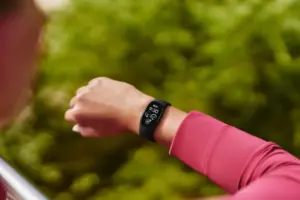
When Google unveiled the Fitbit Edge, its latest slim-profile fitness band, tech enthusiasts immediately praised its sleek aesthetic, vibrant 1.34-inch AMOLED display, and a surprisingly practical upgrade: a replaceable battery. Positioned as a direct successor to the popular Fitbit Charge 6, the Edge bridges the gap between ultra-minimalist bands (like the screenless Fitbit Air) and fully-fledged smartwatches (such as the Google Pixel Watch 5). However, eagle-eyed consumers quickly noted a glaring omission in the spec sheet: the complete absence of a Near-Field Communication (NFC) chip.
For years, contactless tap-to-pay functionality has been marketed as a flagship feature for wrist-worn wearables, allowing users to effortlessly settle transactions at coffee shops, grocery stores, and turnstiles without pulling out a smartphone or wallet. The sudden retreat from NFC in a prominent mid-tier device has sparked considerable discussion across consumer tech forums. Why would Google strip away a feature that has spent nearly a decade becoming an industry standard?
The answer, as internal usage metrics and corporate strategy reveal, lies in cold, hard data. According to Google’s telemetry, an overwhelmingly small fraction of users actually utilized tap-to-pay capabilities on previous-generation devices. By ditching the NFC hardware, engineers were able to redirect valuable physical space, financial overhead, and software resources toward health-centric ecosystems and requested performance enhancements. This deep-dive investigation explores the rationale behind the Fitbit Edge’s missing NFC chip, analyzes historical user data, maps out the broader ecosystem implications, and assesses what this hardware shift means for the future of the Fitbit brand under Google’s stewardship.
Detailed Chronology: The Evolution of Fitbit’s Tap-to-Pay and the Road to the Edge
To fully understand why the Fitbit Edge lacks NFC, it is necessary to retrace the evolutionary arc of contactless payments within the Fitbit ecosystem. The journey of wrist-based payments transformed from a niche, experimental luxury into a mainstream expectation, only to experience a strategic contraction under Google’s unified hardware vision.
The Rise of Wrist-Based Commerce (2018–2023)
The integration of Near-Field Communication technology into consumer fitness bands began in earnest during the late 2010s. When Fitbit introduced special editions of the Fitbit Charge 3 in 2018, it marked a turning point for the brand. Consumers were no longer tethered strictly to step counts and heart-rate monitoring; they could theoretically leave their wallets at home during a morning jog.
This momentum carried through successive generations. The Fitbit Charge 4, Charge 5, and the critically acclaimed Fitbit Charge 6 (launched in 2023) all featured native NFC chips. Simultaneously, Fitbit’s smartwatch lines—including the Versa series (Versa 2, Versa 4, and later iterations of the original Versa) and the Sense lineup (Sense and Sense 2)—fully embraced contactless payments.
During this era, transactions were processed through Fitbit Pay, a proprietary platform built to compete with Apple Pay and Google Pay. However, the ecosystem was fragmented. Users had to manually provision supported credit and debit cards through the Fitbit mobile application, navigating a patchwork of compatible financial institutions that varied wildly by country and banking partner.
The Google Transition and the Shift in Strategy (2024–Present)
Following Google’s acquisition of Fitbit, a massive consolidation effort took place. A major milestone in this transition occurred in 2024, when Google officially shuttered Fitbit Pay, migrating all legacy wearable payment operations over to Google Wallet. This streamlined the software backend, ensuring that modern devices utilized Google’s unified financial ecosystem.
Yet, even as the software backend became more cohesive, hardware usage patterns were telling a different story behind closed doors. While marketing departments continued to tout tap-to-pay as a premier convenience, product development teams analyzing telemetry data from millions of active users began noticing a stark reality: active adoption rates for NFC transactions on fitness trackers were abysmal.
When Google engineers began mapping out the blueprints for the Fitbit Edge—a device designed to reclaim the crown in the slim-band market—they faced a fundamental architectural crossroads. They could either include the NFC chip out of historical obligation, or they could excise the component to optimize interior layout, manufacturing costs, and power delivery. They chose the latter. The Fitbit Edge arrived in late 2024/early 2025 as a streamlined fitness tracker that explicitly traded financial convenience for deep, health-focused utility.
Supporting Context & Metrics: Why Google Pulled the Plug on NFC
The decision to omit NFC from the Fitbit Edge is not an arbitrary cost-cutting measure; it is rooted in empirical user analytics. In the hardware industry, every component added to a printed circuit board (PCB) exacts a toll. It consumes physical volume, introduces potential points of failure, complicates regulatory certifications, and draws standby power.
The Telemetry Behind the Decision
According to official disclosures from Google regarding telemetry data gathered from active Fitbit Charge 6 owners, fewer than one percent (1%) of users actively utilized NFC for contactless payments on a regular basis.
For the average consumer, this statistic may come as a surprise. In urban environments, tap-to-pay via smartphones is ubiquitous. However, the user demographic that purchases dedicated fitness trackers differs significantly from the smartwatch or smartphone demographic. Fitness band buyers are traditionally hyper-focused on biometric monitoring, battery endurance, lightweight comfort, and uninterrupted activity tracking.
When out for a rigorous run, a cycling session, or a strength-training workout at the gym, the vast majority of fitness band users either:
- Carry their smartphone with them anyway (making phone-based NFC payment more accessible and familiar).
- Prefer to complete errands outside of their active workout windows, rendering wrist-based payment redundant.
When Google weighed the engineering costs of maintaining NFC hardware against a utilization rate of less than 1%, the mathematical justification for its inclusion evaporated.
Reallocating Real Estate: What Replaced NFC?
By removing the NFC controller, antenna loops, and associated security secure-element chips from the Fitbit Edge, Google’s hardware engineers freed up vital internal real estate within the slim chassis. This spatial and financial budget was directly reallocated toward features that scored vastly higher in user demand surveys:
- The Health Guardian Suite: Part of the overhauled Google Health app ecosystem, enabling advanced tracking for blood pressure trends and insulin resistance indicators.
- Intelligent Automatic Activity Tracking: Enhanced algorithms that recognize and log workouts without manual user intervention.
- Upgraded Multi-Band GPS: Offering superior spatial accuracy for outdoor runs, walks, and cycling routes.
- A Replaceable Battery: A massive win for consumer right-to-repair advocates, allowing users to swap out degrading power cells without discarding the entire tracker.
- Vibrant AMOLED Display: A crisp, 1.34-inch screen that balances power efficiency with high-legibility layout for notifications, media controls, and Google Maps integrations.
While the Fitbit Edge does include media controls and smart notifications, it is worth noting that it also lacks certain high-end safety features found on the more expensive Google Pixel Watch 5, such as automated fall and crash detection. This delineates a clear product hierarchy within Google’s portfolio: the Pixel Watch series handles heavy smartwatch duties (including NFC and safety sensors), while the Fitbit Edge focuses strictly on wellness, ergonomics, and battery longevity.
Official Statements and Industry Impact
The removal of NFC from a mainstream fitness tracker has triggered debates among tech analysts, environmental advocates, and loyal Fitbit users. While the general consensus acknowledges the logic of Google’s data-driven approach, questions remain about how the company communicates hardware downgrades to long-time buyers.
Google’s Official Rationale
In corporate briefings addressing the product architecture of the Fitbit Edge and its screenless companion, the Fitbit Air, Google executives emphasized a philosophy of "intentional curation."
"When we audited extensive usage data from the Fitbit Charge generation, the metrics showed that contactless payment via our wrist-worn bands was an edge-case feature utilized by a tiny fraction of our community," noted a product development spokesperson. "Engineering a modern wearable requires ruthless prioritization. By stepping away from NFC on the Edge, we were able to invest those engineering hours and internal board real estate directly into high-demand health monitoring tools, superior GPS accuracy, and long-requested user-serviceable hardware features like a replaceable battery."
Industry Reception and Consumer Fallout
Consumer technology journalists and reviewers have offered mixed reactions:
- The Pragmatist View: Many reviewers agree that if 99% of users ignore a feature, manufacturers should feel empowered to remove it if doing so improves core functionality, such as battery life or price points.
- The Convenience Loss: A vocal minority of power users have expressed disappointment. For gym-goers who lock their smartphones in a locker and rely solely on their fitness band to purchase a post-workout protein shake or bottled water, the absence of NFC makes the Fitbit Edge a non-starter. These users are being steered either toward older hardware (such as the Charge 6) or more expensive smartwatches (such as the Pixel Watch 5 or Apple Watch equivalents).
Furthermore, the ecosystem lock-in remains a point of friction. Because Google fully integrated Google Wallet into the Fitbit ecosystem while deprecating Fitbit Pay, users of non-Pixel devices face software boundaries. While the Fitbit Edge can sync health data to the Google Health app on an Apple iPhone, users cannot leverage Apple Wallet through the device—a limitation driven by Apple’s tightly controlled iOS security architecture.
Future Outlook: The Trajectory of Fitness Trackers Without NFC
As the consumer wearable market matures past its initial gadget-boom phase, manufacturers are moving away from the "throw everything at the wall" approach. Devices are becoming increasingly specialized.
The Divergence of Bands and Smartwatches
The omission of NFC from the Fitbit Edge signals a permanent bifurcation in wearable product design:
- Dedicated Fitness Bands (Edge, Air): Optimized for low weight, supreme battery efficiency, medical-grade biometric tracking, and physical durability. They shed power-hungry, rarely used smartphone accessories like cellular modems and NFC chips.
- Smartwatches (Pixel Watch Series): Positioned as wrist-bound extensions of the smartphone, packed with NFC chips for tap-to-pay, cellular LTE options, advanced safety crash detection, and full app-store ecosystems.
This clarity benefits consumers who know exactly what they want out of their tech. If a buyer views a wearable primarily as an invisible health guardian that tracks sleep stages, heart-rate variability, blood pressure trends, and outdoor runs while lasting days (or weeks) on a single charge—all while being repairable via a swappable battery—the Fitbit Edge represents an evolutionary leap forward.
What Lies Ahead for Fitbit
Google’s long-term vision for the Fitbit brand appears centered on deep integration with the broader Google Health ecosystem. As chronic disease management, proactive wellness alerts, and predictive health modeling take center stage in consumer tech, hardware design will naturally follow suit.
The sacrifice of NFC on the Fitbit Edge may sting for a very small cohort of digital-wallet purists, but it serves as a case study in modern product management. By listening to telemetry over vocal minority complaints, Google has crafted a focused, highly functional wellness tracker that delivers where it matters most to its core audience. For the vast majority of consumers who keep their smartphones close at hand, the missing NFC chip won’t be missed at all.