Executive Overview
In a decisive move to protect consumer privacy and platform integrity, home appliance giant LG Electronics USA has announced plans to purge its smart television ecosystem of applications that convert consumer displays into "always-on" residential proxy nodes. This policy shift follows groundbreaking security research revealing that an alarming 42 percent of applications available on LG’s webOS app store quietly routed external Internet traffic through unsuspecting users’ living room televisions.
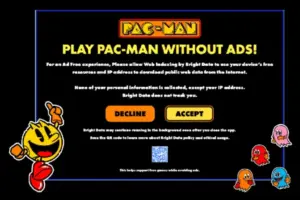
The inclusion of residential proxy software development kits (SDKs) in mainstream smart TV software—ranging from simple puzzle games like Pac-Man to utility apps and screensavers—represents a significant escalation in the monetizable monetization of domestic hardware. While app developers and proxy network operators defend the practice as an opt-in monetization model, cybersecurity professionals argue that smart TVs are poorly suited for auditing, lack traditional security oversight, and expose households to unintended network risks. LG’s forthcoming enforcement actions mark a critical turning point for connected home security, forcing platform operators to reckon with the invisible vectors of data monetization operating inside millions of living rooms worldwide.
Detailed Chronology: From Security Discovery to Corporate Enforcement
The Catalyst: Spur’s July 2026 Disclosure
The crisis began unfolding at the start of July 2026, when threat intelligence and security firm Spur published a comprehensive analysis detailing the extensive integration of residential proxy SDKs within modern smart TV ecosystems. Spur’s investigation specifically targeted webOS, the proprietary operating system powering LG televisions, alongside Tizen OS, the equivalent platform used by Samsung.
The findings stunned industry observers. Spur discovered that more than 42 percent of all applications listed on the LG webOS store contained embedded SDKs capable of transforming a residential television into an indefinite proxy node. Furthermore, a quarter of all applications built for Samsung’s Tizen operating system harbored similar components. These kits effectively turned consumer hardware into relay stations for third-party web traffic, often without the primary account holder’s explicit, informed, or ongoing awareness.
Corporate Reaction and Ultimatum
Confronted with the data compiled by Spur, leadership at LG Electronics moved swiftly to address the structural vulnerabilities in its app store. John Taylor, Senior Vice President at LG Electronics USA, issued a definitive statement outlining the corporation’s stance. Taylor clarified that routing proxy traffic through a living room display violates the intended use case of LG hardware.
According to Taylor, LG is actively collaborating with third-party app developers to strip residential proxy options and associated SDK components from all applications currently hosted on the webOS platform. Developers who resist compliance or attempt to bypass review frameworks face a stark ultimatum: remove the functionality or have their applications summarily suspended from the official storefront.
“A residential proxy network is not an intended use for LG smart TVs, and LG Electronics is working with developers to remove the residential proxy option from their apps on the webOS platform,” Taylor stated. He further emphasized that internal audits of submitted and legacy applications are already "well underway," signaling an institutional commitment to purging these monetization tools from the platform entirely.
Broadening Concerns: The McAfee Integration Controversy
Even as LG earns praise for cracking down on unauthorized residential proxy nodes, the corporation has simultaneously faced severe criticism on other fronts regarding invasive software practices. Just days after the proxy announcement, prominent hardware review channel Gamers Nexus exposed a controversial partnership between LG and security vendor McAfee.
According to the report, high-end LG LCD monitors automatically push an application promoting paid McAfee antivirus subscriptions directly to connected Windows PCs. Most concerning to users and privacy advocates is the delivery mechanism: the software arrives via standard Windows Update channels, silently installing itself without requiring explicit user approval or generating a standard prompt. This convergence of aggressive smart TV monetization SDKs and unsolicited PC software installations has intensified public scrutiny of LG’s broader software ecosystem and partnership evaluations.
Supporting Context & Metrics: How Residential Proxies Invaded Smart TVs
To fully understand the scope of LG’s intervention, one must examine the operational mechanics of the residential proxy industry and its convergence with consumer entertainment hardware.
The Economics of Proxy Monetization
App developers operating in crowded app stores constantly search for alternative revenue streams beyond traditional ad banners or upfront purchase prices. Residential proxy networks offer a lucrative alternative. These networks purchase bandwidth from third parties by paying developers to bundle proprietary SDKs into consumer applications.
Once installed, the application leverages the host device’s residential Internet connection to route web traffic for paying enterprise clients. These clients—ranging from market research firms to data scrapers—use residential IP addresses to bypass anti-scraping blocks, access geo-restricted content, or perform large-scale data collection without triggering corporate firewall bans.

However, Spur’s research demonstrated that this monetization model has migrated far beyond traditional computers and mobile devices into Internet of Things (IoT) hardware. On LG and Samsung platforms, proxy SDKs were discovered hidden inside:
- Arcade-style casual games (such as branded variants of Pac-Man).
- Decorative screensavers and background animation packages.
- System file utilities and media players.
The Dominance of Bright Data
Spur’s analysis identified prominent proxy network provider Bright Data as the primary driver behind the proxy SDKs found across both Samsung and LG television environments. Bright Data accounted for the overwhelming majority of proxy integrations discovered during the platform audit.
In response to inquiries regarding Spur’s findings, Bright Data defended its operational model, emphasizing strict adherence to transparency, consent frameworks, and regulatory compliance.
"Every peer opts in through a dedicated screen and receives value in return; every customer is vetted, and our practices have now undergone a second independent audit by PwC," Bright Data shared in an official statement. "We remain committed to an open, transparent internet where legitimate businesses, researchers, and institutions can responsibly access data that lives in the public domain."
Industry Protections vs. Inherent Risks
Bright Data and competing proxy platforms maintain that they enforce rigorous "Know Your Customer" (KYC) protocols to weed out malicious actors and prevent illicit use cases. Furthermore, proxy providers assert that advanced technical safeguards are implemented to prevent proxy customers from probing, interacting with, or commanding other connected devices residing on the same local area network (LAN).
Despite these assurances, security experts remain deeply skeptical of embedding proxy infrastructure in consumer electronics. Trevor Sutter of Spur argued that the core issue is not the legal existence of residential proxy networks, but rather their stealthy integration into devices that consumers perceive as passive entertainment appliances rather than active network nodes.
“A one-time consent prompt buried in a TV app is not a substitute for meaningful transparency, ongoing control, and platform oversight,” Sutter noted. The risk factor scales exponentially in multi-user environments—such as family homes—where minor children or guests may unknowingly click through complex user agreements or permission prompts without comprehending the long-term security implications.
Official Statements and Industry Impact
The swift pivot by LG Electronics highlights a growing tension between consumer electronics manufacturers and aggressive software monetization firms. As smart TVs evolve into fully fledged computing environments complete with advanced operating systems, app stores, and persistent broadband connectivity, they increasingly mirror the security vulnerabilities traditionally associated with desktop computers.
| Stakeholder | Official Position / Action Taken |
|---|---|
| LG Electronics (John Taylor) | Commenced an immediate review of webOS apps; mandating the removal of residential proxy options under threat of app suspension. |
| Spur (Trevor Sutter) | Published foundational research exposing that 42% of LG apps and 25% of Samsung apps incorporate proxy SDKs. |
| Bright Data | Defended its services, citing explicit user opt-in screens, rigorous KYC customer vetting, and independent PwC security audits. |
LG’s decisive stance establishes an important precedent for the consumer electronics industry. By refusing to treat smart TVs as passive vectors for bandwidth monetization, the company is setting a higher baseline of accountability for third-party developers hoping to access captive living room audiences.
Future Outlook: The Road Ahead for Connected Ecosystems
As platform holders like LG begin cleaning house, the broader smart TV and IoT industry faces a reckoning regarding software supply chain security. Several key trends are likely to shape the immediate future:
- Stricter App Store Vetting: Major television manufacturers—including Samsung, Roku, Amazon (Fire TV), and Google (Android TV)—will likely face mounting pressure to implement rigorous automated static and dynamic code analysis to detect hidden proxy SDKs prior to app publication.
- Regulatory Scrutiny: Privacy watchdogs and consumer protection agencies are increasingly turning their attention to ambient data sharing and bandwidth monetization models that rely on obscure, long-form end-user license agreements (EULAs).
- Consumer Awareness: Incidents like the Spur disclosure and the Gamers Nexus hardware controversy are gradually educating consumers about the hidden software layers operating inside modern appliances, driving demand for greater transparency and granular privacy controls.
Ultimately, LG’s proactive enforcement signals that the era of unvetted, background monetization in smart home environments is drawing to a close. For developers and proxy networks alike, the message from hardware manufacturers is clear: consumer televisions belong to the user, not the highest bidder for domestic bandwidth.