
Executive Overview
Air travel has become an indispensable component of modern global mobility, yet passing through airport security remains one of the most universally stressful experiences for passengers. As reliance on personal technology deepens, travelers increasingly board aircraft laden with smartphones, laptops, portable power banks, smart luggage, and grooming appliances. However, the proliferation of lithium-ion batteries and complex electronics has forced transportation security authorities to enforce stringent regulations to mitigate severe safety hazards, most notably in-flight fires.
A seemingly routine security screening can quickly devolve into an extended delay if an agent flags an unlisted device, a high-capacity power bank, or an unexpectedly buzzing gadget in a carry-on bag. Understanding Transportation Security Administration (TSA) guidelines—and the distinct policies enforced by individual commercial airlines—is no longer optional for the frequent flyer; it is a critical component of journey preparation. This report examines the top electronic categories that consistently trigger security checkpoints, analyzes the underlying chemical and safety mechanisms driving these regulations, and provides an authoritative roadmap to ensure a seamless airport experience.
Detailed Chronology of Evolving Airline Tech Security
The regulatory landscape governing electronics and lithium batteries aboard commercial aircraft has not materialized overnight. It represents a reactive, adaptive framework shaped by decades of aviation safety incidents, technological milestones, and evolving threat vectors.
Pre-2000s: The Analog Era and Simple Screeners
In the decades preceding the widespread adoption of consumer lithium-ion batteries, airport security was primarily focused on metal detection, firearms, and explosives. Passengers routinely traveled with standard alkaline batteries, basic film cameras, and pocket calculators. Electronics posed minimal thermal risks, and baggage rules were largely concerned with weight limits rather than the chemical composition of power sources.

The 2006 Liquid Plot and the Rise of Device Inspection
A pivotal shift occurred in August 2006, when British authorities thwarted a transatlantic terrorist plot involving liquid explosives disguised as beverages. While this introduced the infamous 3-1-1 liquids rule, it also ushered in an era of heightened scrutiny over electronic devices. Security personnel began demanding that laptops be removed from carrying cases to allow X-ray machines to achieve an unobstructed view of internal components.
2014: The Power-On Mandate
Responding to heightened intelligence regarding advanced improvised explosive devices (IEDs) capable of mimicking functional consumer electronics, the TSA and international aviation bodies implemented a rigorous new protocol in July 2014. For certain international flights bound for the United States, security agents began requiring passengers to turn on their smartphones, tablets, and laptops. If a device failed to power on due to a dead battery, it was confiscated, highlighting the operational necessity of keeping personal tech charged during transit.
2016: The Samsung Galaxy Note 7 Crisis
The most dramatic catalyst for battery safety regulations arrived in late 2016 with the global recall of the Samsung Galaxy Note 7. Following multiple documented incidents of the smartphone’s lithium-ion battery overheating, smoking, and bursting into spontaneous combustion, the Federal Aviation Administration (FAA) and the TSA took the unprecedented step of issuing an emergency ban. The device was formally classified as a forbidden hazardous material, barred entirely from both checked and carry-on baggage on all commercial flights.
2017–Present: Smart Luggage, High-Capacity Power Banks, and Standardization
As the market flooded with smart suitcases featuring integrated USB chargers, Bluetooth tracking modules, and motorized ride-on mechanisms, aviation authorities faced a new challenge: unremovable lithium batteries embedded deep within checked baggage. A series of cargo and cabin fire incidents linked to unregulated power banks prompted the International Air Transport Association (IATA) and the TSA to codify strict watt-hour thresholds, fundamentally altering how travelers must pack portable energy storage.

Supporting Context & Metrics: The 5 Major Red Flags
To demystify the screening process, security experts categorize consumer technology into specific domains that frequently prompt manual baggage searches. Travelers carrying these five items must exercise heightened awareness regarding capacity limits, packing locations, and power states.
+-----------------------------------+------------------------+---------------------------------------+
| Electronic Item                   | Permitted Location     | Key Restrictions & Warnings           |
+-----------------------------------+------------------------+---------------------------------------+
| 1. Lithium Batteries (>100Wh)     | Carry-On Only          | Max 2 spares with airline approval.   |
| 2. E-Cigarettes & Vapes           | Carry-On Only          | Forbidden in checked bags; no use/chg.|
| 3. Smart Luggage & Ride-On Bags   | Variable (Carry-On/Chk)| Batteries must be removable if checked.|
| 4. Electronic Toothbrushes        | Carry-On or Checked    | Must be fully powered down (no buzz). |
| 5. Smartphones & Standard Tech    | Carry-On / Bin         | Remove for X-ray; must power on if req|
+-----------------------------------+------------------------+---------------------------------------+
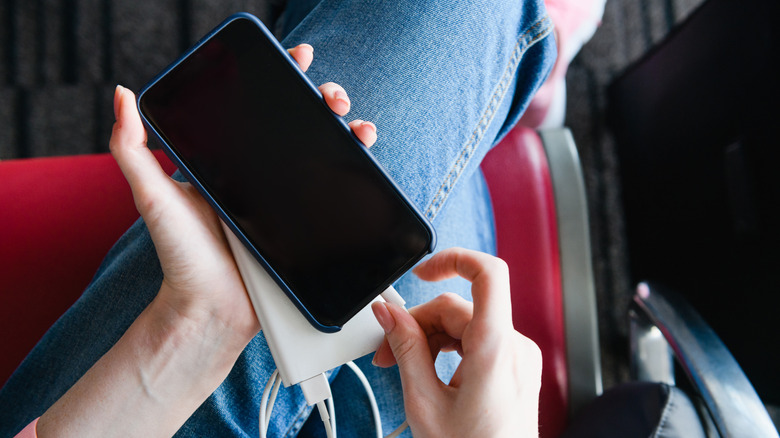
1. Lithium-Ion Batteries and Power Banks Exceeding 100 Watt-Hours
Lithium-ion batteries are the lifeblood of modern portable technology, powering everything from smartphones to professional audiovisual production gear. However, these energy-dense power sources possess a known vulnerability: "thermal runaway," a self-sustaining chain reaction wherein a damaged or overheated cell can ignite fires that are exceedingly difficult to extinguish using standard aircraft suppression systems.
- The 100Wh Rule: Most standard consumer portable power banks fall comfortably beneath the 100 watt-hour (Wh) threshold. For instance, a typical 20,000mAh power bank operating at 3.7 volts yields approximately 74Wh, rendering it fully compliant for air travel when packed strictly in carry-on baggage.
- The Formula: Travelers can calculate their battery’s capacity by multiplying milliamp-hours (mAh) by voltage (V) and dividing the product by 1,000.
- High-Capacity Exceptions: Power banks or professional equipment batteries ranging between 100Wh and 160Wh are permissible only under special circumstances and with explicit airline approval, capped at two spare batteries per passenger. Anything exceeding 160Wh is strictly prohibited.
- Checked Bag Ban: Under no circumstances may loose lithium batteries or external power banks be placed in checked luggage. They must travel in the cabin under passenger supervision.
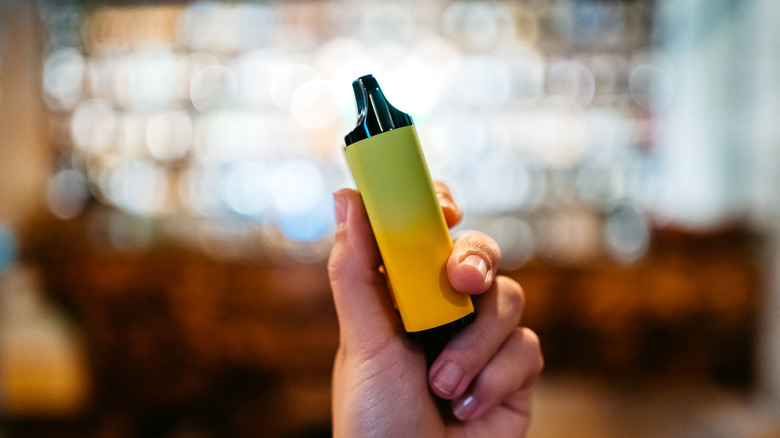
2. Electronic Cigarettes and Vapes
Vaping devices and electronic nicotine delivery systems have become ubiquitous, yet their internal heating elements and lithium-ion power cells represent a documented fire hazard when left unattended in cargo holds.
- Carry-On Mandate: E-cigarettes, vape pens, and related atomizers must be packed exclusively in carry-on luggage or kept on the passenger’s person.
- Operational Restrictions: Major carriers, including Southwest Airlines and Delta Air Lines, explicitly prohibit passengers from charging or using e-cigarettes while onboard the aircraft. Furthermore, many airlines limit passengers to two devices per person.
- Secondary Scrutiny: While travelers are generally not required to remove vapes from their bags during standard X-ray screenings, their dense metallic components and integrated batteries frequently trigger automated X-ray flags, prompting manual inspection by TSA agents. Similar items, such as laser pointers, occupy a gray area; while federally approved by the TSA, regional carriers like Air Canada forbid them in the cabin entirely, requiring them to be checked.
3. Smart Luggage and Motorized Ride-On Bags
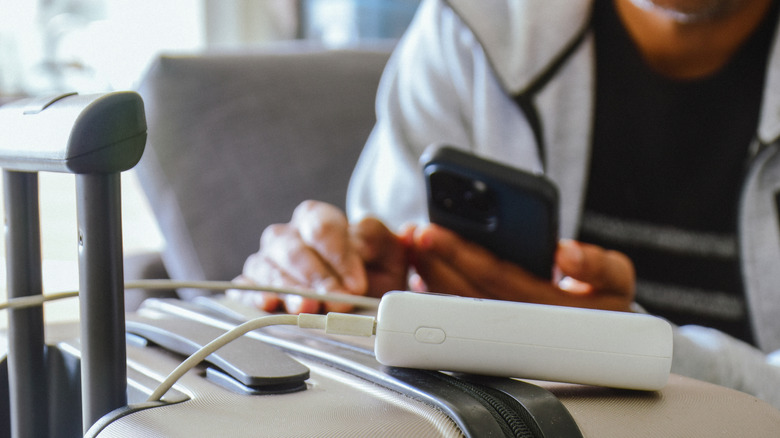
The fusion of traditional travel gear with consumer electronics has yielded "smart luggage"—suitcases equipped with integrated GPS tracking units, digital Bluetooth locks, remote-controlled drive mechanisms, and built-in USB charging ports.
- The Removable Battery Requirement: If a traveler checks a smart bag, internal lithium batteries must be completely removed prior to handing the bag to ticketing agents. The battery must be carried into the cabin, while the unpowered suitcase may proceed into the cargo hold.
- Non-Removable Power Sources: Suitcases featuring non-removable lithium batteries present an administrative nightmare at security checkpoints. If the battery cannot be detached, the entire piece of luggage may be rejected for travel, regardless of whether it is intended for the cabin or the hold.
- Motorized Ride-Ons and Hoverboards: Hoverboards, motorized ride-on suitcases, electric skateboards, and self-balancing unicycles are almost universally banned across global commercial aviation. Due to their oversized lithium-ion power packs and historical safety incidents, carriers such as American Airlines, Delta Air Lines, and Air Canada enforce blanket prohibitions against these devices.
4. Electronic Toothbrushes and Grooming Appliances
Personal care appliances such as high-end electric toothbrushes, facial cleansers, and portable massage guns represent an unexpected source of checkpoint confusion.
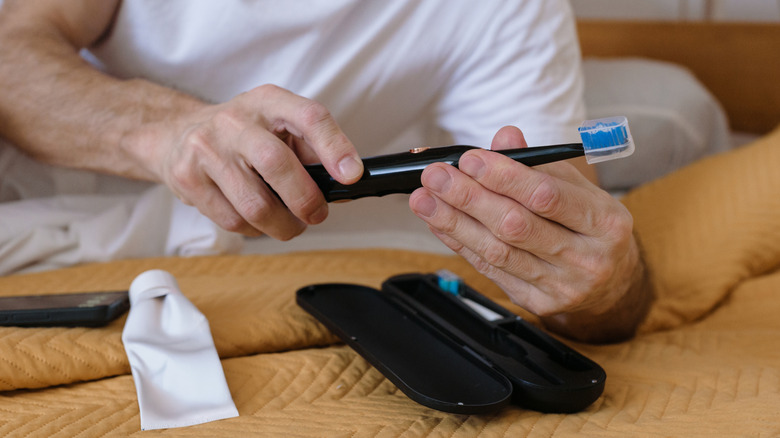
- The Acoustic Trap: While electric toothbrushes are permitted in both carry-on and checked baggage, their internal electric motors and rechargeable batteries frequently trigger manual bag checks for a surprising reason: accidental activation.
- Preventing the Buzz: If a toothbrush, razor, or facial massager shifts inside a tightly packed toiletry bag during transport through the X-ray tunnel, the device can spontaneously activate. The resulting continuous buzzing sound mimics the acoustic signature of prohibited mechanical devices, immediately drawing the suspicion of security personnel. Travelers should ensure all grooming appliances are locked or powered down entirely before placing them in security bins.
5. Smartphones and Standard Personal Tech
Smartphones, tablets, e-readers, and laptop computers are foundational elements of contemporary travel. With the historic exception of the recalled Samsung Galaxy Note 7—which remains banned on all commercial aircraft globally—smartphones are welcome in the aircraft cabin.
- Bin Placement Protocols: TSA screening procedures dictate that laptops must be removed from their sleeves or backpacks and placed flat in a separate security bin. While rules regarding smartphones and tablets vary by airport security lane and the presence of advanced 3D Computed Tomography (CT) scanners, agents frequently instruct passengers to divest all pocket electronics into bins.
- Protecting Devices: Passengers reluctant to place unprotected smartphone glass directly onto heavily used plastic security bins can safely layer their devices on top of a fabric jacket, woolen scarf, or travel pillow.
- The Operational Battery: In accordance with long-standing international aviation security directives, travelers must ensure their devices remain charged. Security personnel retain the legal authority to command a passenger to power on any electronic device to verify its authenticity as functional consumer technology rather than an explosive concealment.
Official Statements & Regulatory Guidance
Global aviation authorities maintain an unwavering stance on the primacy of passenger safety over passenger convenience.
In official releases, the Transportation Security Administration (TSA) emphasizes that cooperation during the screening process significantly reduces delays:
"Our primary mission is the security of the traveling public. When passengers understand the limitations surrounding lithium-ion energy storage and prepare their carry-on bags accordingly, we eliminate bottlenecks at the checkpoint and prevent dangerous thermal incidents at 35,000 feet."
Similarly, the Federal Aviation Administration (FAA) underscores the chemical reality of lithium energy storage through its ongoing “Safe Travel” public awareness campaigns:
"Lithium metal and lithium-ion batteries are capable of catching fire if damaged, short-circuited, or improperly packaged. By restricting high-capacity power sources to the cabin—where flight crews can immediately detect and respond to thermal events—we dramatically lower the risk of catastrophic in-flight emergencies."
International bodies like the International Civil Aviation Organization (ICAO) continually update their technical instructions for the safe transport of dangerous goods by air, ensuring that domestic security agencies like the TSA remain harmonized with global standards.
Future Outlook: The Horizon of Airport Security Technology
As global air passenger volumes continue to rebound and surpass pre-pandemic highs, the aviation security sector is undergoing a massive technological transformation aimed at eliminating friction while preserving rigorous safety standards.
1. Advanced 3D Computed Tomography (CT) Scanners
The widespread deployment of Computed Tomography scanners at major international airports is fundamentally changing how electronics are processed. Unlike older 2D X-ray machines that produced flat, overlapping silhouettes, CT scanners generate high-resolution, 360-degree volumetric images of baggage contents. This advanced imaging allows security algorithms to automatically distinguish between organic materials, explosives, and dense electronics. Consequently, airports equipped with CT technology increasingly permit passengers to leave laptops, tablets, and compliant power banks safely inside their luggage during screening, slashing processing times.
2. Artificial Intelligence and Automated Threat Detection
The integration of machine learning algorithms into security checkpoint hardware is accelerating. Future screening lanes will rely less on human visual inspection to interpret ambiguous metallic shapes. AI-driven threat recognition software can analyze the complex internal circuitry of unfamiliar tech items in milliseconds, reducing the frequency of manual bag searches and minimizing human error.
3. Solid-State Battery Innovations
On the hardware horizon, the commercial maturation of solid-state battery technology promises to mitigate the primary safety hazard associated with air travel. By replacing volatile liquid electrolytes with stable solid-state ceramic, glass, or polymer compounds, next-generation consumer electronics will be virtually immune to thermal runaway and spontaneous combustion. While widespread adoption in smartphones and laptops remains years away, solid-state advancements will eventually render airline battery restrictions obsolete.
Conclusion
Navigating airport security with modern technology requires a proactive approach. By verifying watt-hour ratings, packing power banks and vapes exclusively in carry-on luggage, removing batteries from smart luggage, ensuring grooming devices are powered completely down, and complying with screening officer instructions, travelers can transform security from a stressful bottleneck into a seamless transition. A few minutes spent auditing your tech pack before leaving home guarantees a smooth journey from the terminal to the skies.