Executive Overview: Cutting Through the Digital Noise
In the contemporary landscape of software development and digital design, few topics have sparked as much polarization as Artificial Intelligence. We are currently navigating a period of profound "AI fatigue"—a collective exhaustion stemming from the deafening noise of two opposing extremes: the relentless, often utopian, evangelism of tech titans and the existential dread whispered in the corridors of creative studios.
However, beneath this tumultuous surface lies a more pressing, practical question that remains largely unanswered: Where does AI actually fit into a professional development workflow, and how can it serve as a catalyst for human ingenuity rather than a replacement for it?
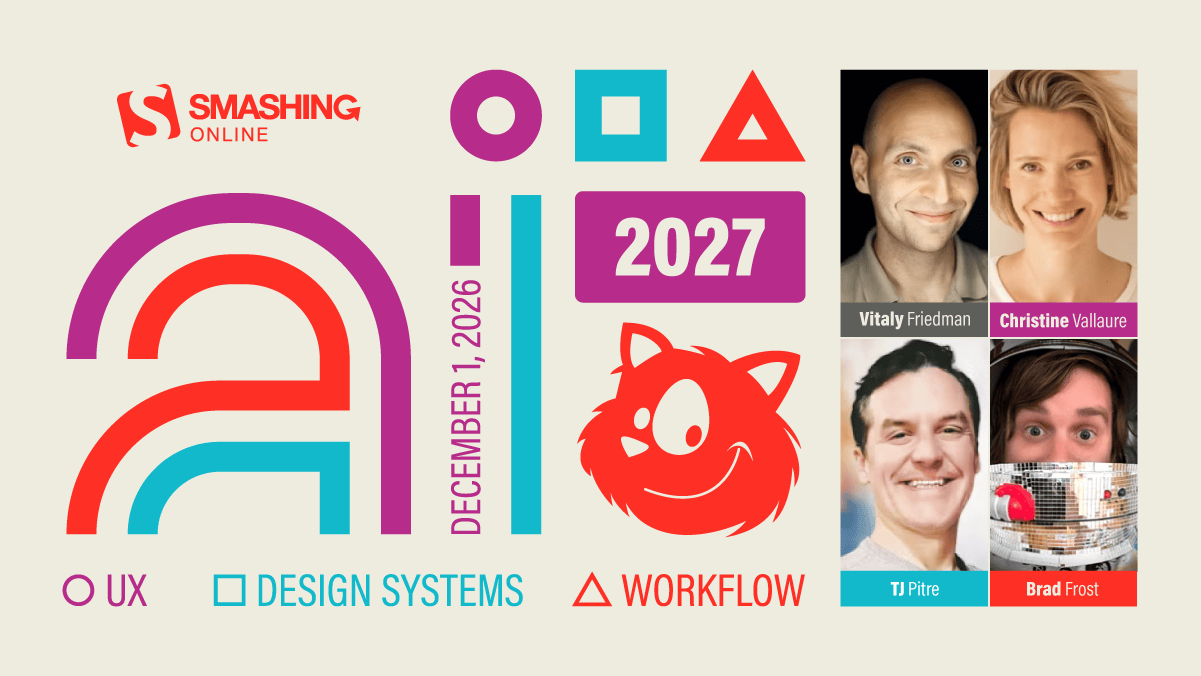
As we approach the end of the year, the industry is preparing for a critical deep-dive into this intersection. Smashing Magazine—an organization long regarded as the gold standard for pragmatic, high-signal web development discourse—is hosting its highly anticipated AI conference on December 1st. This event is not another trade show for generative gimmicks; it is a carefully curated exploration of AI’s role in design systems, architecture, and long-term maintainability. By focusing on the "how" rather than the "wow," Smashing is positioning itself to define the mature phase of the AI adoption curve.
Detailed Chronology: From Experimental Toy to Enterprise Tool
The trajectory of AI in design and development has been rapid and, at times, dizzying. To understand why this upcoming conference is so significant, we must examine the timeline of how we arrived at this point of critical evaluation.
Phase 1: The Emergence of Generative Utility (2022–2023)
The initial wave of AI integration was marked by a "Wild West" mentality. LLMs and image generation tools were introduced into the wild, leading to a period of indiscriminate experimentation. Developers began using AI for boilerplate code generation, while designers toyed with prompt-based visual prototyping. During this phase, the primary metric was novelty—how quickly could a user generate a component or an illustration?
Phase 2: The Integration Crisis (2023–2024)
As the novelty wore off, teams encountered the "Integration Crisis." They found that AI-generated code often lacked the architectural integrity required for large-scale design systems. It was here that the fatigue began to set in; practitioners realized that prompting an AI to create a button component was vastly different from maintaining a robust, accessible design system across a global enterprise.
Phase 3: The Current Shift—Context and Craft (Late 2024–Present)
We have now entered the third phase: the Era of Context. The focus has shifted from "can AI do this?" to "should AI do this, and how can it be governed?" Industry leaders are now emphasizing the importance of human-in-the-loop systems, where AI acts as a sophisticated assistant that understands the nuance of design tokens, token-driven development, and the specific needs of a team’s architectural constraints.
Supporting Context & Metrics: The Design System Challenge
Design systems are arguably the most complex environments for AI implementation. They are living, breathing ecosystems that require strict adherence to accessibility standards, brand guidelines, and cross-platform consistency.
The Metrics of Disruption
Recent industry surveys suggest that while 70% of front-end developers have experimented with AI-assisted coding, only 15% feel confident integrating those tools into a production-grade design system. The discrepancy lies in the "context gap." Standard AI models are trained on the open web—a vast, chaotic dataset that rarely aligns with the proprietary design language of a specific company.
Bridging the Gap
The upcoming Smashing AI conference aims to close this gap by focusing on:
- Token Management: Using AI to automate the tedious task of updating design tokens without sacrificing structural integrity.
- Documentation and Governance: Training models on internal documentation to ensure AI-suggested components remain within the guardrails of the brand.
- Human-Machine Synergy: Identifying which stages of the design-to-code pipeline are ripe for automation (e.g., unit testing, accessibility audits) versus those that require human intuition (e.g., user empathy, creative strategy).
Official Statements: The Voices of Authority
The significance of this event is underscored by the caliber of its speaker lineup. These are not mere observers of the industry; they are the architects who have shaped modern web development.
Brad Frost: On Atomic Design and AI
Brad Frost, the visionary behind Atomic Design, has long advocated for systems-first thinking. His presence at the conference suggests a focus on how AI can bolster the structure of design systems rather than fragmenting them. His perspective is rooted in the belief that "automation should liberate the designer to solve harder, more human problems."
Vitaly Friedman and the Smashing Ethos
Vitaly Friedman, co-founder of Smashing Magazine, has built a career on separating the signal from the noise. In previous discussions, Friedman has emphasized that "the value of a tool is measured by the quality of the output it helps sustain over five years, not the speed at which it helps you prototype on day one." By hosting this conference, he is essentially providing a forum for the "thoughtful consideration" that the industry currently lacks.
The Role of Design Engineering
With speakers like Christine Vallaure and TJ Pitre, the conference bridges the gap between the aesthetic and the functional. Vallaure brings a deep, research-backed understanding of design systems, while Pitre specializes in the technical implementation of these systems. Together, they represent the modern "Design Engineer"—a role that is increasingly essential in an AI-augmented world.
Future Outlook: The Professional Imperative
As we look toward 2027 and beyond, the role of the designer and developer will continue to evolve. The fear that AI will "destroy" our work is largely predicated on the idea that our work is purely mechanical. However, as the industry matures, we are realizing that our value is not in the syntax we type, but in the decisions we make.
The "Assistant" Paradigm
The future of development is not an autonomous machine that builds websites in a vacuum. It is a collaborative partnership where AI handles the heavy lifting of maintenance, regression testing, and boilerplate standardization, allowing developers to focus on the high-level architecture and the complex user experience challenges that define successful products.
Preparing for the Next Decade
Attending events like the Smashing AI conference is an investment in professional longevity. It is about understanding the tooling that will become the industry standard. Whether you are a designer struggling with the loss of creative agency, a developer concerned about the degradation of code quality, or a stakeholder trying to understand the ROI of AI investment, this conference offers a grounded, expert-led roadmap.
A Call to Action
For those interested in participating in this conversation, the Smashing AI Conference on December 1st is an essential destination. The registration fee of €50 is a nominal investment for access to the front lines of industry thought leadership.
Furthermore, we are pleased to offer a special discount to our community. Use the code AITRICKSCSS during registration to secure your spot. We are also committed to fostering this dialogue, and as a gesture of support, we are offering two free tickets to the first two individuals who comment on this article with their thoughts on AI’s place in their own workflow. (Please ensure you provide a valid email address so we can reach out to you with your access details.)
The AI revolution is not an event that happens to us; it is a process that we must steer. By engaging with the right experts, asking the difficult questions, and prioritizing context over hype, we can ensure that the future of design and development remains a human-centric endeavor.