Executive Overview
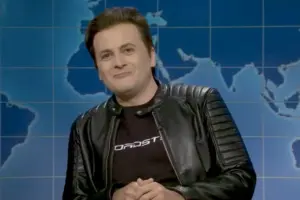
In a biting political satire that resonated deeply with viewers, Saturday Night Live featured player Jeremy Culhane stepped into the shoes of tech billionaire Elon Musk during a recent "Weekend Update" segment. The sketch arrived on the heels of a tumultuous political cycle, targeting the stark disconnect between the real-world billionaire’s massive financial investments in conservative candidates and the stunning, unexpected blue wave that swept through his adoptive home state of Texas.
Culhane’s portrayal of Musk relied on rapid-fire, chaotic deflection, bringing up viral car crashes, imaginary leather armor, and his controversial AI chatbot, Grok, to avoid confronting the harsh reality of the midterm results. The sketch crystallized a broader cultural and political narrative: a high-stakes gamble by the world’s wealthiest individual that ultimately backfired at the ballot box. By weaving together real-world headlines—including massive campaign expenditures, the halting of Tesla’s Cybertruck production, and shifting tax landscapes in the Lone Star State—Saturday Night Live delivered a masterclass in topical political comedy, anchoring its humor in the absurdities of modern tech-bro culture and contemporary political polarization.
Detailed Chronology of the "Weekend Update" Appearance
The segment began with "Weekend Update" anchor Colin Jost wasting no time diving into the heavy political fallout of the midterm elections. Jost addressed the elephant in the room: the billions of dollars spent by political action committees and high-net-worth donors, specifically highlighting Musk’s near-$500 million investment aimed at tilting state and federal races in favor of Republican candidates, particularly in Texas.
The Art of the Deflection
When Jost confronted "Elon" (played by Culhane) about the wasted half-billion dollars, the satirical Musk immediately pivoted away from politics. Instead, he fixated on an entirely unrelated piece of social media noise: a viral video of his vehicle flipping over.
"No, I’m in the news because my car did a flip," Culhane’s Musk stammered defensively, gesturing wildly. "My car did a flip. Remember? It was like a freaking Hot Wheel. It was like, and then pop, but I was like totally chill. I was like thug life. Imagine."
Undeterred, Jost redirected the conversation to another major corporate development coming out of Texas that week: the sudden halt in production on Tesla’s much-hyped Cybertruck. Rather than addressing supply chain issues, labor markets, or production hurdles, the fictional Musk leaned further into adolescent bravado:
"Hey, remember when my car did a flip? It was epic," he insisted, before spiraling into an elaborate, daydream-like fantasy involving co-anchor Michael Che, a fictional public roasting session, and a leather jacket transforming into a sci-fi suit of armor.
Exasperated, Jost delivered one of the segment’s standout punchlines: "I cannot believe you are the richest person in the world."
Confronting the Texas Tax Reality
Jost then methodically unpacked the geopolitical corner into which Musk had painted himself. The anchor summarized the billionaire’s migration from California to Texas—a relocation driven by a desire to escape progressive regulatory frameworks and state-level income taxes—only to watch the political tide shift beneath his feet.
"You moved to Texas because California was run by Democrats. You moved all your companies to Texas because you didn’t want to pay taxes. You even built your own town in Texas. And now Texas is run by Democrats. So now you’re going to have to pay taxes. So how does that make you feel?" Jost asked.
After a brief, pained pause, the satirical Musk delivered a blunt, deadpan response: "Bad."
When Jost dryly remarked that he would feel the same way, Culhane’s Musk clutched his chest, crying out, "Ouchie! Ouchie! That is another epic vulgar roast from Colin Jost, my poorest friend."
The Grok AI Finale
This led to the introduction of "Grok," Musk’s signature artificial intelligence chatbot, framed in the sketch as an unleashed agent of brutal self-deprecation. "Elon" invited Grok to generate a series of "epic vulgar roasts" at his own expense. The AI’s digital barbs proved remarkably sharp:
- "Elon Musk, you’re the worst thing South Africa has ever done."
- "When you’re on TV, it feels like an episode of ‘Hate on the Spectrum.’"
- "If you have 100 more kids, one of them will talk to you."
Overwhelmed by the precision of his own creation, Culhane’s Musk shrieked, "Ouchie Wouchie! Shut it down, Grok, shut it down!" before fleeing the desk.
Supporting Context & Metrics: The Reality Behind the Satire
While the Saturday Night Live sketch played heavily for laughs, it was grounded in a series of very real financial, geographic, and political developments that have defined Elon Musk’s public footprint over recent years.
The $500 Million Midterm Gamble
Reports leading up to and following the midterms highlighted unprecedented spending by ultra-wealthy donors attempting to influence legislative and gubernatorial races. Musk, whose political alignment has shifted increasingly rightward, poured vast resources into conservative political action committees. A significant portion of these funds was funneled into Texas races, where Republicans traditionally held unassailable majorities. However, shifting demographic trends, suburban voter fatigue, and energized progressive organizing resulted in a surprising night of Democratic victories across several key statewide offices, rendering Musk’s massive financial outlay largely ineffective.
The Great Migration to Texas
Musk’s corporate exodus from Silicon Valley to Austin, Texas, has been one of the defining business stories of the decade. Citing high taxes, burdensome regulations, and ideological disagreements with California’s political leadership, Musk relocated the headquarters of Tesla, SpaceX, and The Boring Company, while also establishing residential and corporate developments in the Lone Star State.
However, political landscapes are rarely static. The rapid influx of tech workers, coupled with shifting urban and suburban voting patterns, has steadily eroded the absolute monopoly held by the Texas Republican party. The recent electoral shift toward Democrats threatens to undo the very tax-haven calculus that originally motivated Musk’s migration.
Corporate Headwinds: The Cybertruck and Beyond
Compounding his political frustrations, Musk’s business empire has faced mounting operational challenges. The temporary halting of Cybertruck production in Texas highlighted ongoing manufacturing hurdles, supply chain pressures, and consumer skepticism regarding futuristic vehicle designs. By pairing these real-world corporate stumbles with political miscalculations, the SNL writers room crafted a comprehensive portrait of a mogul experiencing friction on multiple fronts simultaneously.
Official Statements and Industry Reactions
Following the broadcast, reactions poured in across social media platforms, television networks, and political commentary circles.
- Television Critics: Media analysts praised Jeremy Culhane’s physical comedy and timing, noting that his ability to capture Musk’s distinctive cadence—characterized by nervous laughter, abrupt subject changes, and a blend of supreme self-assurance and awkward vulnerability—elevated the sketch above standard impression work.
- Political Observers: Pundits noted that the sketch successfully captured the precarious nature of billionaire political spending. While financial capital can secure airtime and campaign infrastructure, it cannot easily manufacture grassroots enthusiasm or stop shifting demographic tides.
- Corporate Silence: Representatives for Tesla, SpaceX, and xAI (the developer of Grok) did not issue formal statements regarding the SNL segment, adhering to a general corporate policy of avoiding direct engagement with late-night comedy satire.
Future Outlook
As the political and technological landscapes continue to evolve, the cultural dialogue surrounding billionaires in politics shows no signs of slowing down.
- Electoral Adaptation: With the political map of Texas proving far more competitive than previously assumed, major donors on both sides of the aisle are re-evaluating their strategies ahead of upcoming federal and state election cycles. The myth of the guaranteed political investment has been shattered, prompting a more cautious approach to super-PAC funding.
- AI Satire and Public Perception: The inclusion of Grok in the sketch underscores how deeply artificial intelligence has penetrated mainstream pop culture. As AI tools become more ubiquitous, their integration into public discourse—and political comedy—will likely expand, providing new avenues for self-referential humor.
- The Corporate Horizon: For Musk and his enterprises, weathering the current storm of production halts, shifting tax environments, and public scrutiny will require significant strategic pivots. Whether future innovations will match the grandiose promises made by the billionaire—or whether late-night comedy will continue to find rich material in his public missteps—remains one of the most compelling storylines in modern media.