Executive Overview
The intersection of media and politics in the United Kingdom has reached a pivotal juncture, casting a sharp spotlight on regulatory frameworks that govern broadcast media. A landmark investigative report published by the prominent think tank Demos reveals a striking divergence between the British broadcasting landscape and that of its European neighbours. Authored by Dr James Painter of the Reuters Institute for the Study of Journalism, the study investigated regulatory policies across 37 European nations via the European Platform of Regulatory Authorities (EPRA).
The findings are unambiguous: the United Kingdom stands apart from almost every other European country by permitting serving politicians to host current affairs and news programmes on national television and radio channels.
In an era defined by intense political polarisation, plummeting institutional trust, and the proliferation of information disorder, the UK’s permissive regulatory stance has ignited a fierce debate. Critics argue that allowing members of parliament—particularly those holding or aspiring to high office—to act as broadcasters compromises the perceived impartiality of public interest journalism and blurs the lines between political spin and objective reporting. Conversely, defenders of the practice maintain that it fosters democratic engagement, provides transparency, and offers audiences direct access to political figures unmediated by traditional journalistic framing.
This comprehensive analysis examines the Demos report in detail, exploring the comparative data across Europe, the historical and regulatory context in the UK, the implications for modern newsrooms, and the future outlook for British broadcasting standards.
Detailed Chronology of the Debate
To understand how the United Kingdom arrived at its current regulatory outlier status, it is necessary to trace the historical evolution of broadcasting rules and the shifting boundaries between Westminster and the television studio.
The Post-War Settlement and the Birth of Impartiality
The bedrock of British broadcasting has long been the statutory requirement for due impartiality. Established with the creation of the BBC’s Royal Charter and subsequently extended to commercial television with the launch of Independent Television (ITV) under the Television Act 1954, impartiality was designed to prevent any single political viewpoint from dominating the airwaves. For decades, this framework treated serving politicians not as broadcasters, but as subjects of scrutiny. While politicians frequently appeared on programmes to be interviewed, challenged, or debate opponents, the idea of an active Member of Parliament anchoring a regular current affairs show was fundamentally contrary to the prevailing broadcasting ethos.
The Commercialisation of Broadcast Media
As the media landscape expanded through the late 20th and early 21st centuries with the advent of multi-channel digital television, the economic models underpinning news production began to shift. Broadcasters faced mounting pressure to capture fragmented audiences in an increasingly competitive market. Concurrently, the lines between political communication and entertainment began to blur. Politicians increasingly recognised the value of bypassing traditional journalistic gatekeepers to communicate directly with the electorate through alternative media formats.
The Rise of the Politician-Presenter
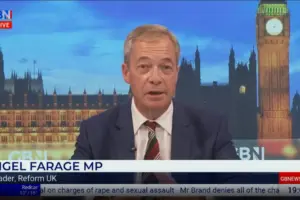
The modern phenomenon truly accelerated with the launch of new news channels and the restructuring of existing programming slots. Over the past decade, several high-profile UK politicians—most notably from the Conservative Party, but also featuring figures from other political backgrounds—secured regular presenting roles on national broadcast networks. These appointments transformed political figures into media personalities, capable of shaping news agendas not merely through parliamentary action or press releases, but through direct editorial control over broadcast airtime.
The Demos Investigation and the EPRA Survey
Recognising the growing international divergence on this issue, Demos commissioned Dr James Painter to conduct a rigorous comparative study. Surveying 37 media regulators across Europe via the EPRA network, the research set out to establish whether the UK’s permissive environment was an outlier or part of a broader continental trend. Published in late 2023 and early 2024, the findings confirmed that the UK’s approach is virtually unique in the European democratic sphere, prompting renewed calls from media ethicists, academic institutions, and parliamentary committees to review current regulatory guidelines.
Supporting Context & Metrics: How the UK Compares with Europe
The data compiled by Dr Painter through the European Platform of Regulatory Authorities provides empirical weight to the argument that the UK occupies a unique position in European media regulation.
The European Landscape at a Glance
The survey of 37 European media regulators yielded stark and decisive results:
- Zero Tolerance in the Vast Majority: In 35 out of the 37 countries surveyed, there were no active examples of a serving politician presenting a news or current affairs programme on a national television channel.
- The Rare Exceptions: Only two countries—Iceland and Malta—recorded any historical or limited exceptions to this rule. However, in both cases, the practice was strictly circumscribed, highly exceptional, and proved to be short-lived, often resulting from unique local media market constraints rather than a deliberate, permissive regulatory policy.
- Explicit Bans and Restrictions: Out of the 37 jurisdictions examined, 34 countries either explicitly ban serving politicians from presenting broadcast news and current affairs or impose substantial, legally binding restrictions that effectively prohibit the practice.
- The UK Exception: The United Kingdom permits serving politicians to host these programmes, provided that broadcasters adhere to the overarching principle of "due impartiality" as regulated by Ofcom (the Office of Communications). Rather than an outright ban, the UK relies on post-broadcast monitoring and editorial compliance to balance the output.
The Regulatory Mechanics: Ofcom vs. Continental Models
The core difference between the UK and its European counterparts lies in regulatory philosophy. Most European nations operate under strict structural and preventative rules. Their media laws view the independence of broadcasting from active party politics as a constitutional or statutory safeguard essential for the protection of democratic integrity. In these countries, the separation of powers extends conceptually to the media sphere: those who make laws and hold executive power cannot simultaneously act as broadcasters of current affairs.
In contrast, the UK model managed by Ofcom is largely post-hoc and qualitative. Ofcom’s Broadcasting Code does not explicitly bar serving politicians from presenting programmes. Instead, it places the onus on the broadcaster to demonstrate "due impartiality" across a series of programmes or through alternative viewpoints. This means that a politician-presenter is theoretically permissible, provided the broadcaster can show that sufficient counter-balancing perspectives are offered elsewhere in the schedule.
Official Statements and Stakeholder Perspectives
The publication of the Demos report has intensified an ongoing debate involving media regulators, politicians, journalism unions, and civil society organisations.
The Perspective of Media Regulators and Watchdogs
Proponents of tighter regulation argue that the UK’s reliance on "due impartiality" is increasingly untenable in a fractured media ecosystem. Speaking on the findings, media ethicists and former regulatory officials have pointed out that Ofcom’s framework was designed for a pre-digital era dominated by a small number of public service broadcasters, rather than a crowded market of opinion-led channels.
A spokesperson for a major European media regulatory body noted during the EPRA discussions:
"The public trust in the independence of news and current affairs is a fragile asset. When active politicians control the microphone, the audience’s baseline assumption of editorial detachment is inevitably compromised, regardless of internal compliance checks."
Broadcasters and Defenders of the Status Quo
Conversely, representatives from commercial news channels and networks that employ politician-presenters defend the practice as a vital exercise in transparency and audience engagement. They argue that viewers are fully aware of a presenter’s political affiliation and can evaluate the content accordingly.
A senior broadcasting executive commented:
"In a modern democracy, audiences do not want sanitised, sterile journalism. Having politicians engage directly in current affairs programming brings authenticity, deep subject-matter expertise, and rigorous debate to the screen. Our viewers are sophisticated enough to judge these contributions on their merits, and our adherence to Ofcom’s due impartiality rules ensures balance is maintained."
Journalistic Unions and Civil Society
The National Union of Journalists (NUJ) and various press freedom organisations have consistently expressed deep concern over the trend. They argue that the practice threatens the job security and professional standing of impartial journalists, while further eroding public confidence in the integrity of newsrooms.
An NUJ representative stated:
"Journalism must hold power to account. When the politician holding power is simultaneously anchoring the current affairs broadcast, the fundamental dynamic of accountability is inverted. This practice risks turning newsrooms into extensions of party political machinery."
Future Outlook: Implications for UK Newsrooms and Regulation
As the media landscape continues to evolve under the influence of artificial intelligence, social media algorithms, and shifting consumption habits, the debate over politician-presenters is unlikely to subside. The Demos report serves as a catalyst for a broader reckoning within the British media sector.
Potential Regulatory Shifts
Pressure is mounting on policymakers and Ofcom to re-evaluate the effectiveness of current guidelines. While an outright legislative ban remains politically contentious, experts suggest several potential pathways for reform:
- Stricter Interpretation of Due Impartiality: Ofcom may face demands to adopt a much narrower definition of what constitutes acceptable current affairs presentation by serving elected officials, effectively raising the compliance bar so high that the practice becomes commercially unviable for broadcasters.
- Voluntary Industry Codes: Major broadcasters, mindful of reputational risks and declining audience trust, may introduce internal self-regulatory measures that voluntarily restrict serving politicians from hosting news and current affairs slots.
- Parliamentary Scrutiny: Select committees in the House of Commons and the House of Lords are expected to examine the implications of the Demos findings further, potentially leading to formal legislative recommendations for media reform.
Impact on Journalistic Integrity and Newsrooms
For UK newsrooms, the presence of politician-presenters creates a complex internal dynamic. Editorial teams must navigate the competing demands of high-profile political hosts and the rigorous standards of professional journalism. Maintaining a clear firewall between political output and independent news reporting will remain a critical operational challenge.
Ultimately, the UK stands at a crossroads. As the only major European democracy navigating this uncharted territory, the decisions made by regulators, broadcasters, and lawmakers in the coming years will shape the future of British journalism and determine whether public trust in the nation’s broadcast media can be sustained in an increasingly polarised world.