Executive Overview
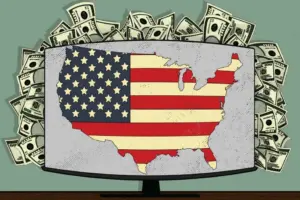
The streaming industry, long heralded as the "promised land" of curated, ad-free entertainment, is currently navigating a volatile shift in consumer behavior. As political spending reaches unprecedented heights during election cycles, a secondary, unintended consequence has emerged: the "Election Effect." A recent study by the global research firm Savanta reveals that nearly 10% of U.S. adults have actively altered their streaming habits specifically to circumvent the onslaught of political advertising.
Whether by upgrading to premium ad-free tiers, abandoning platforms entirely, or reducing overall screen time, consumers are sending a clear signal to media conglomerates: political saturation is becoming a primary driver of subscription fatigue. This phenomenon poses a significant dilemma for streaming networks that have increasingly pivoted toward ad-supported tiers to bolster stagnant revenue growth. As we move deeper into an era of hyper-politicized media consumption, the industry faces an existential question: can ad-supported streaming survive if the very nature of its advertising becomes a deterrent to the viewer?
Detailed Chronology: The Evolution of Ad-Supported Streaming
To understand the current tension, one must look at the recent history of the Streaming Wars.
The Shift to Ad-Supported Tiers
Following a decade of "subscriber-at-all-costs" growth, the streaming sector faced a sobering reality in 2022. Wall Street, no longer satisfied with mere growth metrics, began demanding profitability. This triggered a massive strategic pivot: the introduction of lower-cost, ad-supported tiers across major services including Netflix, Disney+, and Max.
For a time, this strategy appeared flawless. It captured the price-sensitive demographic while creating a new, lucrative inventory for advertisers. By 2023, the industry had successfully normalized the presence of commercials in the living room once again.
The Rise of Political Saturation
However, the integration of political advertising into these digital ecosystems has introduced a new variable. Historically, political ads were confined to linear television—the domain of older demographics. As streaming platforms gained market share, political campaigns followed suit, shifting their budgets to Connected TV (CTV) to reach younger, cord-cutting audiences.
By the mid-2024 election cycle, the saturation had reached a tipping point. Unlike product commercials, which viewers may find benign, political advertisements are inherently polarizing and persistent. The repetitive, often aggressive nature of these spots has transformed the ad-supported streaming experience from a source of relaxation into a source of stress, leading directly to the behaviors identified in the Savanta report.
Supporting Context & Metrics: The Consumer Backlash
The Savanta data, which surveyed nearly 1,800 U.S. adults, offers a granular look at how viewers are reacting to this digital deluge.
Breaking Down the 10%
The 10% of users who have changed their behavior are not a monolith; they represent three distinct defensive strategies:
- The "Premium Pivot": These users view ad-free subscriptions as a necessary luxury to maintain their mental peace. They are upgrading to the more expensive, ad-free tiers of services like Hulu or Peacock specifically to escape political spots.
- The "Churn Specialists": A segment of the population is canceling subscriptions altogether, opting for free, ad-free, or non-political media alternatives (such as long-form podcasts, physical media, or gaming).
- The "Passive Resistors": These users are not necessarily canceling, but are drastically reducing their time spent on streaming platforms during peak election windows, signaling a broader loss of engagement for the networks.
The Psychology of Avoidance
Shaun Austin, global head of media at Savanta, notes that this behavior is rooted in environmental perception. "People will always try to find ways to avoid advertising," Austin explains. "I think behaviors will change depending on the environment, how much advertising it is, and whether it’s persistent."
When advertisements shift from commercial pitches for household goods to high-stakes political messaging, the "persistence" factor increases exponentially. This creates a "toxic inventory" scenario where the advertiser’s goal (message saturation) directly undermines the platform’s goal (user retention).
The Economics of Political Ad Spend
It is crucial to note why streaming networks are so conflicted. Political advertising is incredibly lucrative. During election cycles, campaigns are willing to pay premiums for specific demographic targeting—data that streaming platforms possess in abundance.
For the streaming provider, political ads represent a massive short-term revenue windfall. However, the data suggests that this revenue comes at a "hidden cost": the loss of long-term subscribers who grow frustrated with the platform experience. If a user upgrades to an ad-free tier to avoid politics, the network may earn more on the subscription fee, but if they churn entirely, the lifetime value of that customer is wiped out.
The Demographic Divide
The impact is not felt equally. Younger, urban, and politically active demographics are the most likely to employ avoidance strategies. These are precisely the cohorts that advertisers usually fight the hardest to reach. By alienating these viewers with repetitive political messaging, platforms may inadvertently be diminishing the overall effectiveness of their ad inventory, making their platforms less attractive to commercial advertisers in the long run.
Official Statements and Industry Perspective
While many streaming executives have publicly touted the success of their ad-supported tiers, there is a quiet acknowledgement within the industry that the current model is under stress.
"The goal for any platform is to create a seamless experience," says an industry analyst who requested anonymity to speak candidly. "When the ad break becomes a series of attack ads, the ‘seamless’ experience is shattered. We are seeing a measurable uptick in ‘ad-load sensitivity’ during election cycles. It’s no longer just about the quantity of ads; it’s about the content of the ads."
Some networks are experimenting with "political ad caps" or allowing users to opt out of political messaging specifically. However, these tools are currently in their infancy. The challenge lies in the complexity of programmatic advertising—where automated bidding systems often place ads without the platform’s direct editorial oversight.
Future Outlook: A Changing Landscape
As we look toward future election cycles, the streaming industry must prepare for a more sophisticated, and potentially more resistant, audience.
The Move Toward First-Party Data
To combat the "Election Effect," platforms will likely double down on using first-party data to personalize ad experiences. If a platform can identify that a user is highly sensitive to political messaging, they may prioritize non-political commercial inventory for that user, thereby maintaining engagement without sacrificing revenue.
The Rise of Hybrid Models
We may see a shift toward more flexible subscription tiers—perhaps a "political-free" tier that sits between the ad-supported and the premium ad-free options. This would allow platforms to monetize the user’s preference for non-partisan viewing.
The Content-Ad Synergy
Finally, the industry must reckon with the concept of "contextual relevance." If streaming platforms continue to host high-stakes, polarized content, they must ensure that the advertising environment reflects the user’s desire for entertainment, not a continuation of the public discourse.
Conclusion
The streaming industry’s pivot to advertising was meant to ensure long-term viability in a saturated market. Yet, as the lines between entertainment and political discourse blur, the industry faces a delicate balancing act. The "Election Effect" is not a temporary anomaly; it is a symptom of a broader consumer shift toward digital autonomy. Platforms that prioritize user experience and provide meaningful controls over the ad environment will likely thrive. Those that continue to prioritize short-term political ad revenue at the expense of user frustration may find themselves with a dwindling audience when the next election cycle inevitably arrives.
The future of streaming depends on the industry’s ability to recognize that in the modern digital age, the viewer’s time is a commodity, and their patience is not infinite.