
Executive Overview: A Season of Unprecedented CSS Innovation
The landscape of front-end development is currently undergoing one of its most rapid periods of evolution. As we move deeper into the latter half of the year, the web platform is benefiting from a flurry of high-impact updates, ranging from refined user interface behaviors to sophisticated structural querying. This edition of What’s !important captures the synthesis of community ingenuity and browser implementation.
From the standardization of "interest invokers" to the long-awaited arrival of the <geolocation> element and the promise of the class prefix selector, the technical ceiling for CSS developers continues to rise. This report analyzes these developments, providing a comprehensive look at how these tools are not merely incremental improvements, but fundamental shifts in how we architect the web.
Detailed Chronology: Technical Breakdowns
1. The UX of Intent: Tooltips and Interest Invokers
User experience is often defined by the micro-interactions that go unnoticed until they break. Abhishek Jakhar recently highlighted the critical importance of temporal control in tooltips—specifically, the need for a delay before triggering, followed by an instant dismissal. This dual-state behavior prevents accidental triggering while maintaining a responsive feel.
However, the industry is moving beyond manual JavaScript-heavy implementations. Chris Coyier has championed the use of "interest invokers," a modern browser-native approach. By utilizing the interest-delay-start and interest-delay-end CSS properties, developers can offload the logic of interaction to the browser engine. While currently restricted to Chrome, the adoption of progressive enhancement strategies allows developers to implement these native solutions today while providing reliable fallbacks for other rendering engines.
2. The <geolocation> Element: Simplification and Restrictions
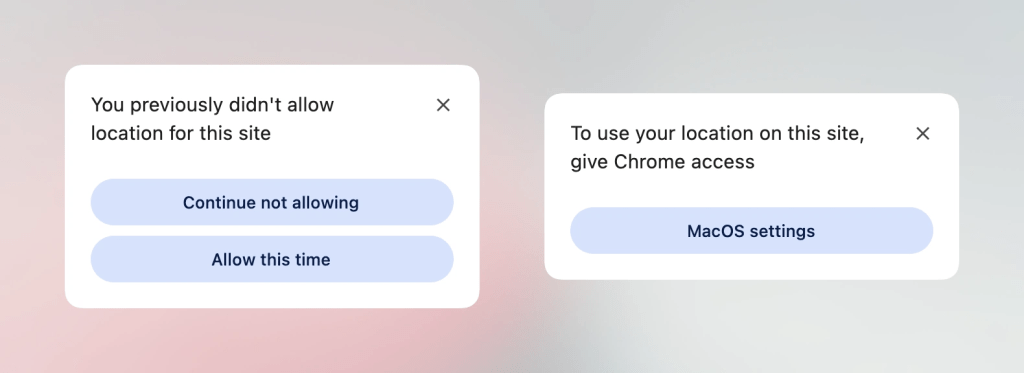
Historically, the Geolocation API has been a source of frustration for developers, hampered by the complexities of hardware abstraction and the volatility of permission statuses. The new <geolocation> element aims to standardize this interaction. As noted by the team at Piccalilli, while this element removes much of the boilerplate code previously required, it introduces specific styling restrictions that developers must navigate. By treating this as a progressive enhancement, developers can successfully bridge the gap between legacy API calls and the new, streamlined declarative approach.
3. Syntax Highlighting via ::highlight()
The era of heavy, library-dependent syntax highlighters is drawing to a close. Dave Rupert’s MicroLighter project demonstrates the power of the Custom Highlight API. By leveraging the ::highlight() pseudo-element, developers can manipulate text ranges programmatically without the DOM-bloat associated with traditional span-based coloring. This represents a significant performance win for documentation-heavy sites and code-centric platforms.
4. Structural Intelligence: CSS Grid and Custom Properties
Temani Afif has unlocked a new dimension of CSS layout capability by demonstrating how to extract CSS grid information—such as row/column counts and cell coordinates—directly into custom properties. This "grid-awareness" allows for context-sensitive styling that was previously locked behind JavaScript calculation. The implications for responsive design are profound: elements can now respond to their own position within a grid container, enabling sophisticated proximity-based hover effects and adaptive layouts that were once considered computationally prohibitive.
Supporting Context & Metrics: The Debate on Modern UX
The Dark Mode Dilemma
A recurring theme in modern UI design is the management of color schemes. The discourse between Lea Verou, who advocates for a two-state toggle, and Bramus, who posits the case for a tri-state approach (Light, Dark, and System-Auto), highlights a broader tension in web design: should the browser lead, or should the user control? The consensus seems to be coalescing around an "auto-until-overridden" two-state model, which respects the user’s system preferences by default but provides an explicit escape hatch for those with specific aesthetic requirements.
The Rise of the Class Prefix Selector
Perhaps the most anticipated addition to the CSS specification is the class prefix selector. As Bramus noted, the syntax .something-* would offer a performant and readable alternative to existing attribute selectors like [class^="something-"]. Currently, developers rely on the latter to perform partial matching, which is both computationally expensive and syntactically verbose. The introduction of a dedicated prefix selector would not only optimize the browser’s style-matching engine but also clean up the codebase for large-scale design systems.
Official Statements and Community Perspectives
The community reaction to these updates has been overwhelmingly positive, particularly regarding the move toward browser-native solutions for tasks that previously required third-party dependencies.
- On Performance: Geoff Graham has noted that the transition to native features like the class prefix selector is a "logical evolution" for the language, prioritizing developer ergonomics alongside execution speed.
- On Progressive Enhancement: The general sentiment among leading front-end architects is that while we wait for cross-browser compatibility for features like
flex-wrap: balanceandnamed-feature(), the current "detect-and-apply" workflow is more robust than ever. Ahmad Shadeed’s analysis offlex-wrap: balanceserves as a blueprint for this: it provides a elegant, readable way to distribute content across containers without the need for manual width adjustments.
Future Outlook: Where the Web is Heading
As we look toward the final quarter of the year, several trends are becoming clear:
- Declarative Logic: We are moving away from imperative JavaScript for layout and UI state. The browser is increasingly capable of handling complex logic via CSS, as evidenced by the integration of grid-data into custom properties.
- Performance-First Styling: The adoption of the Custom Highlight API and the push for native syntax selectors suggest a future where the browser engine does more heavy lifting, resulting in lower TBT (Total Blocking Time) and faster LCP (Largest Contentful Paint) metrics for content-heavy sites.
- Refined Interactivity: The push for "interest-based" interactions and balanced text/flex wrapping demonstrates an industry-wide focus on "micro-polishing." Developers are no longer satisfied with functional layouts; they are chasing fluid, seamless, and hardware-accelerated user experiences.
The Path Forward
The immediate future for developers involves a rigorous commitment to testing. With Chrome leading the way on experimental features like named-feature() and interest invokers, the onus is on the developer community to provide feedback during the experimental phase.
Furthermore, the integration of these features into existing workflows requires a shift in mindset. We must move beyond the "if it works, don’t touch it" mentality and embrace the "can I optimize this with a native feature?" approach. By leveraging these advancements, we are not just building websites; we are contributing to a more performant, semantic, and resilient web ecosystem.
As autumn approaches, the tools at our disposal are more potent than they were in the spring. It is time to audit our codebases, shed the legacy dependencies that are no longer required, and embrace the new standards that will define the web of tomorrow. The "wrap" on this season of development is not an ending, but a springboard into a more capable, native-first future.