Executive Overview
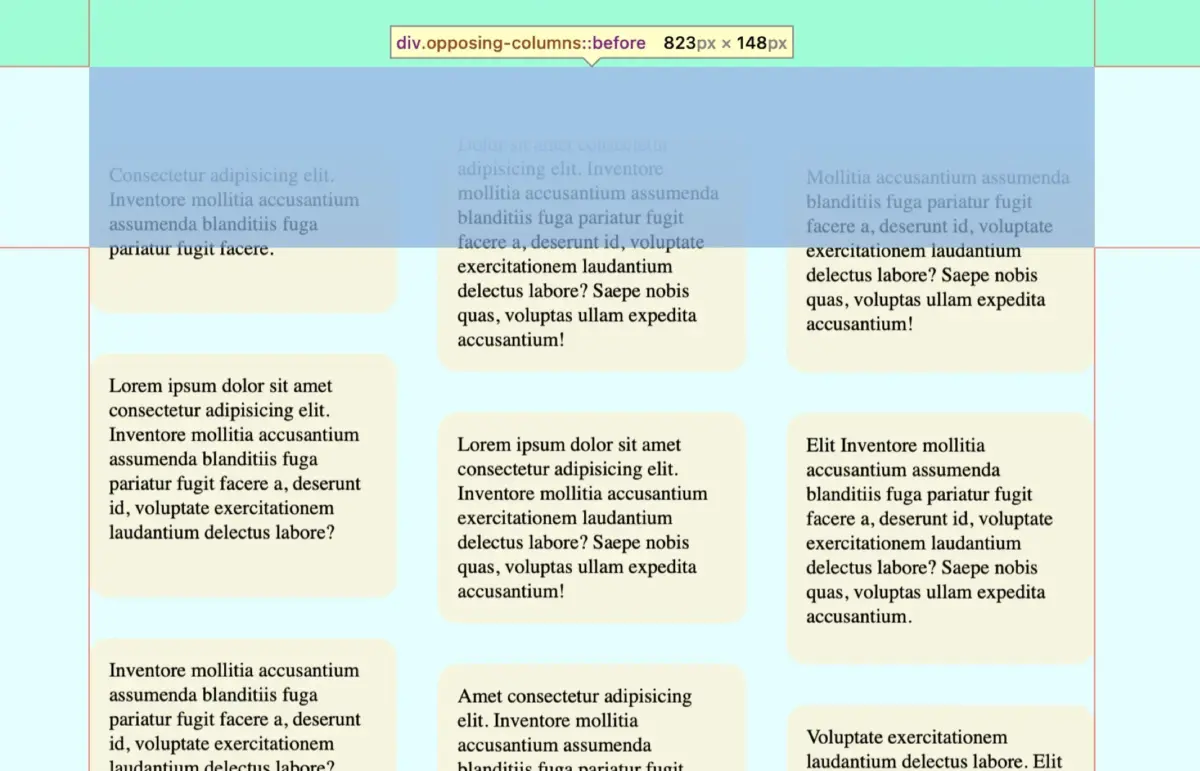
In the evolving landscape of web design, a subtle shift is underway—one that favors the unpredictable, the organic, and the emergent over the rigid, pixel-perfect layouts of the last decade. As creators of digital experiences move away from the "myth of meritocracy" in design, where every element must be manually positioned, they are increasingly embracing controlled chaos. At the heart of this movement lies a new frontier in front-end development: the CSS random() specification.
Currently, this feature is in its nascent stages, supported primarily within the Apple ecosystem via WebKit. However, the developer community’s desire to "pave the cowpaths" of web standards has led to a fascinating intersection of browser-native features and sophisticated polyfilling. This article investigates the emergence of CSS random(), the challenges of cross-browser compatibility, and how a new generation of developers is bridging the gap between today’s constraints and tomorrow’s potential.
Detailed Chronology: From Philosophy to Browser Specs
The journey of random() began not in a terminal, but in the realm of moral philosophy. Michael Schur, creator of the critically acclaimed sitcom The Good Place, explored the concept of "The Luck of the Draw" in his book How to Be Perfect. Schur argues that human beings frequently underestimate the role of pure chance in their success, a concept that mirrors the current design zeitgeist.
In the digital world, "controlled chaos" has become the modern hallmark of sophisticated UX. In late 2025, Safari became the first browser to implement the random() CSS spec, signaling a departure from static design. This move was part of a larger initiative to reduce dependency on JavaScript for standard UI patterns.
However, the industry remains in a state of flux. While Safari users enjoy native random effects—such as twinkling starfields and fluid layouts—Chrome and Firefox users remain on the sidelines. As of mid-2026, while there are indications of activity in the Chromium and Gecko issue trackers, no definitive timeline for cross-browser adoption exists. This has created a "Browser-Lottery" environment, where the functionality of a website depends entirely on the engine powering the user’s browser.
Supporting Context & Metrics: The Mechanics of Chaos
The technical implementation of random() is surprisingly complex, involving elaborate caching, keying semantics, and interval logic. When developers attempt to harness this power, they encounter the "Rule of Least Power," a W3C principle suggesting that one should solve a problem using the least powerful language capable of expressing it. In this case, CSS is proving itself to be the most suitable language for presentational randomness, outperforming heavy JavaScript-based confetti or animation libraries.
The Polyfill Paradox
To address the current lack of universal support, developers have turned to polyfilling. Unlike traditional CSS polyfills—which often require expensive, performance-heavy runtime CSS parsing—the current approach to random() polyfilling is elegantly minimalist.
By utilizing intermediate custom properties (e.g., --random-star-size), developers can define "placeholder" random values that are processed via JavaScript only when the browser does not support the native spec. This technique relies on getComputedStyle to identify variables prefixed with --random, injecting calculated values directly into the element’s style object. This approach offers a significant advantage: it is future-proof. Once a browser gains native support, the script simply detects it and yields control back to the engine, allowing the native implementation to take over seamlessly.
Official Statements and Industry Discourse
The reception within the development community has been overwhelmingly positive, albeit cautious. Chris Coyier, a prominent voice in CSS education, described the initial Safari demos as "pretty darn compelling," noting that the ability to declare randomness in CSS is a paradigm shift.
However, some voices express skepticism regarding the long-term implications. The YouTube community, reacting to Google’s experimental usage of Generative UI (GenUI) in search, has voiced concerns about "unpredictable UX." There is a fine line between a delightful, randomly generated confetti effect and a search interface that feels unreliable.
The W3C’s editor’s draft for css-values-5 remains in an "early exploration phase." The CSS Working Group has warned that major breaking changes are expected. This creates a high-stakes environment for early adopters: you can build with random(), but you must be prepared to refactor your code as the specification hardens.
Technical Deep-Dive: Building for the Future
The beauty of the current random() proposal lies in its syntax. For example:
.star
  --random-top: random(0%, 100%);
  --random-left: random(0%, 100%);
  top: var(--random-top);
  left: var(--random-left);
This declarative approach is infinitely cleaner than the imperative JavaScript loops developers have used for years. Furthermore, the inclusion of random-item()—a proposed function to select from a list of values—could revolutionize how we handle theme variations and randomized content.
While random-item() is not yet implemented, innovative developers have found ways to simulate it using CSS custom functions and if() conditionals. By combining @function definitions with style() queries, developers can now create a "choose-one-from-list" experience that, while technically an emergent use of current standards, functions with remarkable stability.
Future Outlook: Embracing the Unknown
Looking ahead, the web is poised to move away from the static, deterministic pages of the early 2000s. We are entering an era where a website is no longer a static snapshot, but a living, breathing entity. Just as Heraclitus once remarked that one cannot step into the same river twice, the modern web will soon ensure that no two page loads are identical.
The success of the random() spec will depend on three pillars:
- Browser Convergence: The commitment of the Chromium and Firefox teams to adopt the standard is the most critical hurdle.
- Standardization of Caching: Developers need to know how long a "random" value lasts—is it per session, per load, or per element? The spec’s handling of these semantics will determine its real-world viability.
- Developer Restraint: The ultimate challenge is not technical, but aesthetic. With the power to randomize anything, developers must exercise the restraint necessary to keep websites functional and accessible.
The "random guy" philosophy—a nod to those who spend their weekends polyfilling the future—remains the driving force behind this progress. By testing these boundaries today, we ensure that when native support eventually lands, it is not just a feature, but a tool refined by years of experimentation.
As we wait for native support to hit baseline, the message is clear: randomness is not just a bug or a gimmick—it is a design language. Embracing the chaos, within the bounds of modern CSS, will define the next generation of web interfaces. Whether through native browser implementation or community-driven polyfills, the future of the web is inherently, beautifully, and predictably unpredictable.